Research overview
What is the “tea oil” on the surface of tea? Usually not fat, and not automatic proof of better nutrition: rethinking surface film, fine particles, temperature, and water chemistry
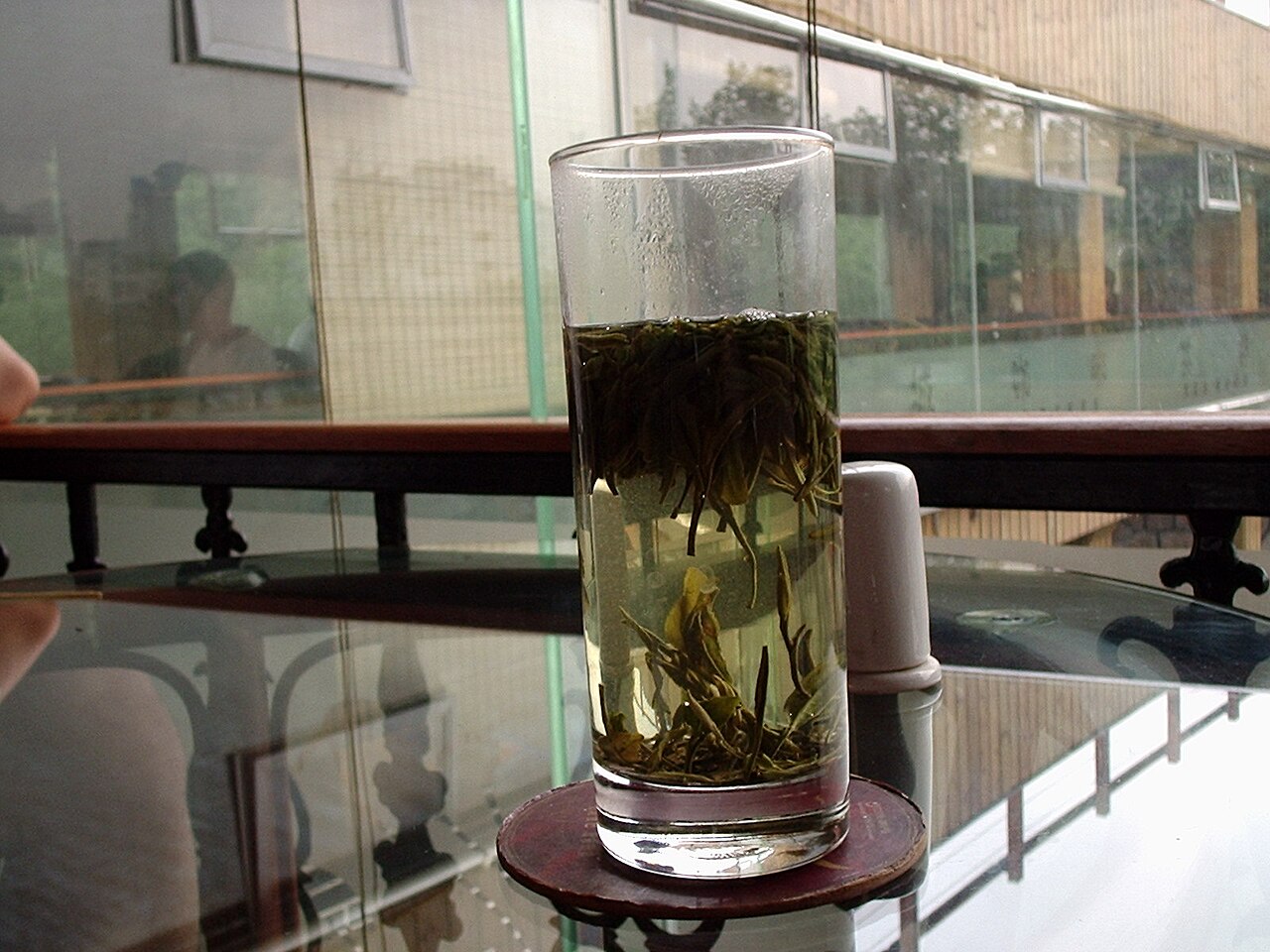
Many tea drinkers have seen this happen. A cup looks clear at first, then after sitting briefly, a shiny film appears on the surface. Sometimes it looks like a thin oil slick; sometimes it looks more like a faint luminous sheen. People then rush to call it “tea oil,” and from there the claims quickly multiply: the tea must be richer, older, more nutritious, more authentic—or, on the other side, contaminated or dirty. The more scientifically careful explanation is much less dramatic: the surface sheen often called “tea oil” or tea film is usually not literal fat oil separating out of the tea. It is more often a surface-layer or visual effect formed as temperature drops, involving surface tension, very fine tea particles, tea polyphenols, caffeine-related complexes, water minerals, and light. It is a real phenomenon, but not a shortcut to one fixed conclusion.
This phenomenon is easy to over-mystify because “it looks oily” is such a persuasive impression. The moment people see a glossy, floating, gathering surface, they compare it to kitchen oil films. But tea is not a frying pan, and tea leaves are not a system that simply releases visible cooking oil into hot water under ordinary brewing conditions. Tea leaves do contain lipids and waxes, of course, but these are usually not the main reason a drinker sees a thin visible surface sheen. In most everyday cups, what you are seeing is closer to a complex liquid whose surface becomes more visibly structured as temperature, interface conditions, and light angle change.
That is exactly why so many tea-film judgments need to be unpacked. Seeing a surface sheen does not automatically mean the tea is better. Not seeing one does not automatically mean the tea is worse. A stronger-looking film does not automatically mean higher nutrition. And the appearance of a film should not be treated as instant proof of contamination either. The better question is: under what conditions did this become visible? Did it appear as the tea cooled, as it sat still, with finer particles, with harder water, with a stronger brew, or in a certain vessel? Once the question is framed that way, many confident online claims start to look far too crude.
Core judgment card
Phenomenon: a shiny surface film, faint rainbow-like sheen, or oil-like reflection on tea More likely explanation: a surface-layer effect shaped by cooling, fine particles, and dissolved compounds at the liquid interface Conclusions to avoid: not automatic proof that tea leaves are “releasing oil,” not automatic proof of higher nutrition, not automatic proof of better tea, and not automatic proof of contamination Variables worth checking: whether the tea cooled, whether it sat still, whether there are many fine particles, what kind of water was used, how concentrated the tea is, and how the surface is being viewed in the light
1. Why is the phrase “tea oil” itself so misleading?
Because it turns “looks like oil” into “therefore is oil.” That is too fast a jump. In everyday speech, “tea oil” is usually not a strict chemical label. It is a folk description for a shiny film on the surface of tea. The problem is that once the word oil enters the conversation, many people immediately start imagining fat, lipid-rich nutrition, proof of old tea, or some refined internal richness. But under ordinary tea-brewing conditions, those inferences are usually doing too much.
Tea leaves certainly are not free of lipids. Leaf waxes, lipid fractions, and aroma-related precursors all exist. But in an everyday cup, what determines whether you visibly notice a surface sheen is often not a simple story of “oil being extracted.” More often, the key is a change in interface conditions: surface tension shifts as tea cools, very fine particles gather more easily near the surface, some polyphenol- and caffeine-related complexes change their visible behavior, and minerals such as calcium and magnesium in the water also influence how the surface presents itself. Under light, the result can look very much like a thin oil film even when that label is chemically imprecise.
That is why “tea oil” works better as a folk phrase than as a scientific conclusion. If we want a more careful term, surface film or surface sheen is usually closer to what is actually happening.
2. How does the film usually appear? Cooling and stillness are often the main triggers
Many drinkers notice that the film is not always obvious at the very hottest moment. A tea may look clear right after pouring, then after thirty seconds or a few minutes, the sheen becomes easier to see, sometimes with a faint wave-like or rainbow quality. That strongly suggests we are often not looking at a simple impurity that was already floating visibly on top from the start. Instead, it is often an interface phenomenon that becomes easier to see as the cup cools.
As hot tea cools, surface tension, solute behavior, and the resting pattern of micro-particles all change. Extremely fine particles and some dissolved or complexed substances that were dispersed throughout the liquid may become more visually active at the surface boundary. Once the liquid is still and the light angle is right, the human eye can detect the film much more easily. Many people interpret that as “oil coming out only after cooling,” when the more accurate point may be that cooling made the surface effect visible.
This is also why the effect is often easier to notice in glass cups, white porcelain, open gaiwans, and fairness pitchers. Those vessels make the surface more visible from a shallow angle. In dark vessels, narrow cups, or tea that is constantly moving, a similar interface condition may exist but remain much harder to notice.
3. Why do fine tea particles make the “oily” look more obvious?
Because the visible surface effect is not determined only by dissolved compounds. It also relates to very fine suspended particles. If the tea is broken, if there is more dust, if the brew is strong, if the pouring action stirs up more fine material, or if the filtration is loose, then the number of tiny particles in the liquid increases. Some of those particles are light enough to linger near the surface or participate in a thin surface-layer structure that reflects light more strongly. That can make the tea look as though something is floating on top.
This helps explain why the last little bit in a teapot, fairness pitcher, or cup can look especially prone to a “tea oil” effect. It is not necessarily because the final sip suddenly contains more profound nutrition. Often it is simply more concentrated, richer in fine particles, slower-moving, and more likely to sit still. Under those conditions, the interface effect becomes easier to see.
That point matters because it directly shows something important: a more obvious surface sheen may only mean that viewing conditions and particle conditions are more favorable for seeing it. It does not automatically mean the tea itself is of higher grade.

4. Why does water chemistry matter so much? Harder water often makes the film easier to notice
Water chemistry is one of the most overlooked variables in this discussion. Surface films are not determined only by the tea leaf. They are also shaped by calcium, magnesium, bicarbonate, and other dissolved minerals in the water. Tea polyphenols interact with mineral ions, and those interactions can change clarity, astringency, and visible surface behavior. In harder water, films, surface aggregation, and a tea-scum-like look often become easier to produce and easier to see.
That is why the same tea can behave differently with different waters, kettles, and brewing setups. Someone using softer purified water may see very little film, while the same tea brewed in harder tap water or some mineral waters may develop a visible sheen after sitting briefly. If water chemistry is ignored, people often misread the whole phenomenon as being entirely about the tea itself.
So instead of asking “does this tea produce oil,” the more scientific question is often: why is this tea more likely to form a visible surface layer under this temperature and water condition? That question is slower, but far more accurate.
5. Is this the same as what some people call tea sheen or tea aura? Why is the language often so mystical?
In Chinese tea language, words sometimes used for this effect can describe a soft, luminous, almost gauzy look on the surface of tea. Those expressions carry aesthetic meaning and accumulated experience, but they are usually not strict modern scientific terms. They overlap with what many people call “tea oil” because both refer to a visible surface condition. The difference is that one is more poetic and aesthetic, while the other sounds more material and substance-like.
The trouble begins when aesthetic vocabulary is inflated into a total proof of quality. Some people treat any visible surface sheen as evidence of old tea, mountain terroir, fine storage, strong craft, or inherent richness. Others go to the opposite extreme and treat any film as a sign of dirt. Both reactions are too fast. The more careful position is to admit that tea can indeed form visible surface states under certain conditions, and that these may relate to fine particles, concentration, temperature, water chemistry, and brewing style. Whether someone finds that visually beautiful is an aesthetic question. But it should not be promoted into a universal scientific verdict.
In short, surface sheen may be a real phenomenon and even a real aesthetic experience, but it should not be allowed to replace analysis.
6. If you see the film, should you worry about pesticides, dust, or contamination? Usually not on sight alone
This is where anxiety often enters. Of course, if the vessel is dirty, the room has oily smoke, detergent residue remains in the cup, or the floating layer is thick, irregular, broken, and smells wrong, contamination should absolutely be investigated. But in most normal tea situations, the mere presence of a thin, even, light-dependent surface film is not enough to support the conclusion that it must be pesticide residue or pollution.
The reason is simple: a truly external oily contaminant cannot be identified accurately just because it looks oily. You need to consider smell, vessel cleanliness, water source, surroundings, whether every tea behaves this way, and whether the effect remains after changing water and equipment. Jumping directly from a reflective film to “this tea has a problem” is just as overconfident as jumping from the same film to “this tea is premium.” In both cases, a surface phenomenon is being asked to carry more meaning than it safely can.
So the mature response is neither naive enthusiasm nor automatic fear. It is first to distinguish whether this is a common hot-tea surface film or a genuinely abnormal external contaminant. The former is not unusual in tea. The latter usually comes with stronger clues such as smell, residue source, or a more irregular, broken, greasy-looking pattern.

7. Does it prove the tea is better? At most, it shows that certain conditions made the film easier to see
This is the most important point in the article. Many people want a visual shortcut. A visible sheen feels like evidence: if the film is there, they assume the tea must be thicker, older, richer, or more substantial; if it is absent, they assume the tea is weak. Real tea behavior is not that neat. Different tea categories, leaf tenderness, roasting levels, dust content, water chemistry, and vessel choices can all change how often the film appears and how obvious it looks.
In other words, the most it can safely say is that, in this brew, the interface conditions were favorable for making the surface layer visible. It may relate to stronger concentration, finer particles, harder water, cooling, and a calmer liquid surface. It cannot by itself tell you that the tea is excellent, and it certainly cannot prove that it is better than another tea that shows no visible film.
Reliable quality judgment still has to return to cleaner criteria: whether the aroma is clean, whether the liquor is coherent, whether bitterness and astringency are proportionate, whether the aftertaste feels natural, and whether endurance is built on structure rather than blunt heaviness. Turning “I can see a film” into “I can see the tea’s true quality” is a very tempting simplification, but not a stable one.
8. What is the most practical takeaway for ordinary tea drinkers?
The most practical takeaway has four parts. First, if you see an oily-looking sheen, do not immediately imagine literal fat oil. Second, ask whether it appeared as the tea cooled, sat still, or caught the light differently. Third, pay attention to water type, fine particles, and brew strength. Fourth, do not translate it straight into “more nutritious,” “higher grade,” or “contaminated.”
If you want to test this yourself, the best method is not mystical talk but a small comparison. Brew the same tea once with softer water and once with harder water. Drink one cup immediately and let another sit for two minutes. Filter one more carefully and leave one less filtered. You will quickly notice that the visible surface sheen changes. That alone shows it is first of all a conditional surface phenomenon, not a secret quality switch.
In plain language: the oil-like sheen on tea is usually telling you that the surface state of the tea has changed, not that it has already delivered a final verdict on quality, nutrition, or safety.
Conclusion: treating “tea oil” as a surface phenomenon is closer to reality than treating it as a value judgment
To sum up, the shiny surface film often called “tea oil” or tea sheen is usually not a straightforward story of oil coming out of tea leaves. It is more often a surface-layer or visual phenomenon that appears as tea cools, shaped by surface tension, fine particles, polyphenol-related complexes, water minerals, and light. It is real, and it is worth noticing. But it is better understood as an interface clue than as an automatic answer.
So the better question is usually not “is this tea producing oil?” but “why did this film become visible in this tea, at this moment, with this water, under this viewing condition?” Once the question is asked that way, many exaggerated claims cool down on their own. Science does not make the phenomenon less interesting. It simply puts it back where it belongs: inside ordinary reality, where it can be observed, compared, and explained rather than worshipped.
Continue with What exactly is the relationship between tea polyphenols, catechins, and EGCG?, If brewing hotter and longer extracts more, does that automatically make tea better?, and Are astringency, mouth-drying, and “dehydrated feeling” actually the same thing?.
Source framing: a synthesis of public tea-science common knowledge about beverage surface films, hard-water film formation, interactions between tea polyphenols and mineral ions, and the role of fine particles and optical reflection. The goal here is to avoid mistaking the folk phrase “tea oil” for a literal fat-oil diagnosis.