Research overview
Can you drink unlimited unsweetened tea? Where fluoride in tea comes from, and who really should pay closer attention
Across the Chinese internet, people increasingly treat unsweetened bottled tea, real tea bases, and freshly extracted leaf tea as cleaner, safer, and more defensible than high-sugar drinks. Often that direction makes sense. But once tea enters a high-frequency daily role, the question can no longer stop at sugar and calories. Fluoride is one of the clearest examples. It is not added to tea, and it does not mean tea is inherently harmful, but it does remind us that tea-health discussions become weaker the moment they focus only on sweetness and ignore total exposure.
Many consumers now place bottled unsweetened tea, tea-shop pure tea, and “real tea base” drinks into the same broad mental category: more reasonable than sugary drinks. In many cases that is a fair first judgment. The problem is that high-frequency use changes the level of the question. A single cup being a decent choice is not the same thing as a long-term pattern being automatically low-risk.
Fluoride makes that difference visible. In public health, fluoride is not a simple villain. At appropriate levels it has a real relationship to oral health. But when total exposure rises and stays high, risk logic becomes more relevant. What deserves caution is usually not an occasional cup of tea. It is the habit of assuming that because tea looks healthier, it can be consumed with no real upper boundary.
Research card
Topic: fluoride in tea, release during brewing, and total-exposure judgment in real drinking scenarios Key issues: leaf part, tea-type differences, steeping time, bottled unsweetened tea, children, and high-frequency drinkers Best for: readers who drink unsweetened tea often, prefer strong tea, or want a more careful framework than “real tea means you can drink more” Core reminder: this is not a simple “tea is harmful” conclusion. It is a classic question of dose, frequency, and cumulative exposure.
1. Why this topic deserves a standalone discussion now
Because Chinese internet ideas about “healthier” tea have clearly moved into a new phase. Earlier conversations focused on lower sugar, sweeteners, calories, and caffeine. Now more brands and more consumers have started to assume that real tea bases, fresh extraction, and bottled unsweetened tea belong to a cleaner, more premium, and more repeatable category of drinks. The problem is that once a beverage is promoted into a frequent everyday role, judgment can no longer stop at whether it is less sweet, lower in calories, or lighter than milk tea.
A research-oriented view naturally asks an extra question: if this really becomes a high-frequency drinking pattern, are there compounds beyond sugar and energy that matter over time? For tea, the answer is yes. Caffeine is one part of that picture, but fluoride is another recurring variable in the literature that receives far less front-stage discussion.
That is why fluoride in tea is not trivia. It is directly tied to the broader modern tea-drink story. It forces us to separate “this cup looks healthier” from “this long-term pattern is necessarily sensible.”
2. Where fluoride in tea comes from: the key is accumulation, not addition
Public research and review papers are consistent on this point: tea plants have a clear ability to absorb and accumulate fluoride. In other words, fluoride is not something later added by the beverage industry. It is a naturally present component that the tea plant gathers from its environment and that then enters the liquor through brewing.
The most important consequence is practical: different leaf parts, different tea forms, different processing styles, and different extraction intensity can all shape the amount of fluoride that finally appears in the cup. A 2025 scoping review covering 88 studies reported a clear gradient across plant parts, with mature leaves generally carrying more fluoride than buds. For consumers, that means “what kind of leaf became the tea base” is not only a flavor question. It can also influence the eventual mineral profile of the drink.
Push that one step further into today’s tea culture and it connects directly to current language about stronger tea character, fuller extraction, more leaf presence, and a deeper lingering finish. Those phrases describe flavor, but they often rely on a stronger extraction logic underneath.
3. What the research is really warning about is not “don’t drink tea,” but “don’t ignore brewing intensity”
When people hear that tea contains fluoride, reactions often split into two weak extremes. Some dismiss the issue completely. Others jump straight to fear. A more accurate understanding is that fluoride exposure from tea is a classic problem of intensity × frequency × total amount.
Several directional conclusions matter. First, longer steeping usually releases more fluoride into the liquor. Second, broken leaf, small particles, and tea-bag formats can release more soluble compounds quickly. Third, different tea categories do not sit at identical exposure levels, and the literature often suggests that brick tea or other heavy-extraction scenarios deserve more attention than ordinary lighter-drinking contexts.
This is also why “real tea base” cannot automatically be translated as “safe to drink more of.” A real tea base may indeed make more structural sense than a drink built mostly on syrup and image, but it brings with it not only flavor and aroma; it also brings the naturally present compounds of tea itself. Research is not denying the value of real tea. It is simply reminding us that the more tea-like, the more intensely extracted, and the more frequently consumed a drink becomes, the more total exposure deserves a place in the judgment framework.
4. Bottled unsweetened tea, tea-shop pure tea, and strong office tea: how does the risk logic differ?
If we ask only “which one is more dangerous,” the question is too blunt. A more useful question is: which scenario is more likely to push someone into higher long-term exposure? Under that framework, a few common situations can be separated.
First, long-steeped and repeatedly refilled strong tea. The defining feature here is not whether a single cup tastes good. It is the combination of long extraction time, large total volume, and repeated weekday use. That makes it a sustained-exposure pattern rather than an occasional beverage event.
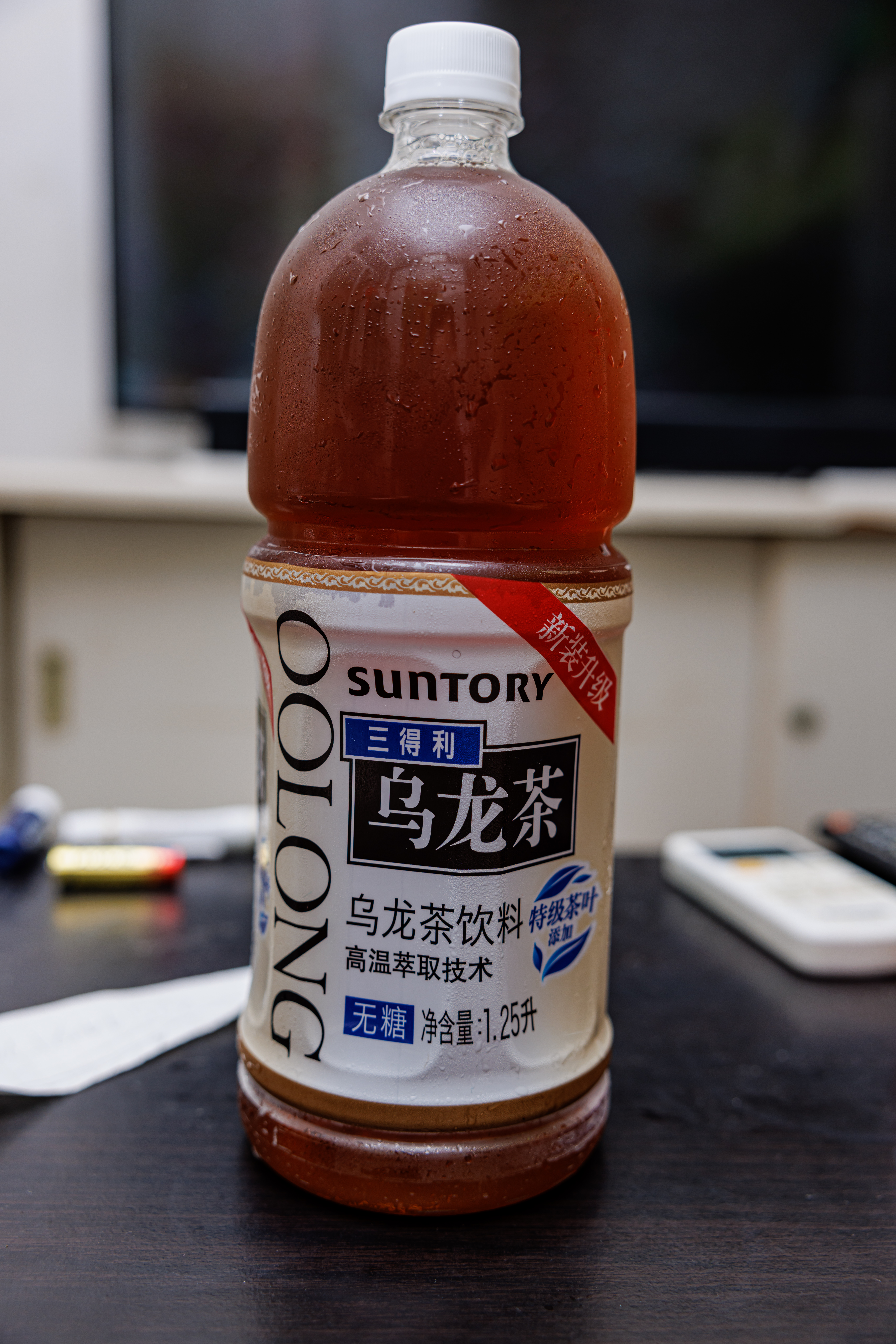
Second, using bottled unsweetened tea as all-day hydration. Zero sugar absolutely matters in sugar-reduction terms, but “unsweetened” is not the same as “identical to water.” If someone keeps a large bottle of unsweetened tea on the desk and drinks it through the day, the logic has shifted from “replacing one sugary drink” to “becoming a high-frequency base beverage.” Research may not give a single fixed number for every brand, but that pattern shift matters a lot.
Third, ordinary home tea at moderate strength. For most healthy adults, this is usually not the scenario that deserves the most anxiety. What most often creates the problem is not tea itself, but placing tea inside a high-intensity, high-frequency, assumed-to-be-limitless pattern of use.
5. Who really deserves more caution, instead of treating everyone the same?
From a research and public-health perspective, the people who deserve more attention are usually not healthy adults drinking tea at ordinary frequency, but several more specific groups.
First are children. Lower body weight makes long-term exposure easier to raise on a body-weight basis. Second are long-term heavy drinkers of strong tea. That includes office “steep all day” users, people who rely on large bottles of unsweetened tea, and drinkers who strongly prefer heavily extracted black tea, dark tea, or brick-tea contexts. Third are people living where background fluoride in water is already elevated. For them, tea is not the only source; it can become an added layer on top of baseline exposure. Fourth are people who need to pay extra attention to kidney function or long-term mineral burden.
On the other hand, if you are a generally healthy adult who drinks tea at normal frequency, does not brew excessively strong tea, and does not use high-concentration unsweetened tea as a stand-in for water, current evidence does not support talking about ordinary tea drinking as a universally high-risk behavior. The point of the research is stratification, not panic.
6. Why the sentence “fluoride is harmful” also distorts the issue
Because fluoride is exactly the kind of element that has both public-health value and an upper-bound problem. At appropriate levels, it has long been tied to dental-health and anti-caries discussion. At higher exposure, cumulative burden can become a real concern. That is why the most misleading thing is often not the research itself, but the temptation to compress it into one over-absolute slogan.
A more accurate way to say it is this: fluoride is neither a tiny natural detail that can always be ignored nor a contaminant that should trigger instant fear. It is a variable that has to be placed inside a total-exposure framework. The real question is not “does this cup contain fluoride?” but “what does my long-term combined exposure from water, tea, swallowed toothpaste, regional background, and other sources actually look like?”
This is also where research-minded writing differs from social-media simplification. Short-form media prefers a one-line verdict. Real health judgment works more like an accumulation problem. Fluoride in tea is not a moral test. It is an exposure-assessment question.

7. If we bring this back to daily life, what are the most useful takeaways?
First, do not treat strong unsweetened tea as identical to water. It may be a better sugar-reduction substitute, but that does not mean it behaves like plain water across every compound dimension.
Second, the combination that matters most is strong brewing + high frequency + long duration. More often than not, what deserves adjustment is the habit of steeping all day at work, leaving tea bags in too long, refilling endlessly, or turning large-format unsweetened tea into a default all-day drink.
Third, do not judge tea drinks by sugar alone. Lower sugar and zero sugar matter, but if they create a psychological exemption in which “real tea base” automatically means safer in unlimited amounts, the judgment becomes unbalanced. Tea has many real advantages, but it is still a beverage with dose, structure, and boundaries.
Fourth, children and high-frequency drinkers deserve more active boundary-setting than ordinary adults. This is not a call for total avoidance. It is a reminder that “more everyday” and “limitless” are not the same thing.
8. Conclusion: the real thing to watch is not one cup of tea, but the assumption that a healthier-looking category has no upper limit
If this page had to be compressed into one line, it would be this: fluoride in tea does not tell us that tea should be avoided; it tells us that tea should not be treated as a limitless health substitute just because it is often better than high-sugar drinks.
Bottled unsweetened tea, real tea bases, and freshly brewed pure tea may still be more reasonable than sugary milk tea, soda, and dessert-like drinks in many real situations. But the research also makes clear that once drinking enters a high-frequency, strong-extraction, long-duration pattern, the right question changes from “is this cup good?” to “is my total exposure getting high?” That is the real value of the fluoride discussion: it forces tea-health imagination back out of slogans and into structure.
Continue with Tea-drink caffeine, sleep windows, and labeling tensions, Do real-leaf brewing, low sugar, and short ingredient lists automatically mean a healthier tea drink?, and Why bottled unsweetened tea keeps talking about polyphenols, caffeine, and real tea feeling.
Source references: NIH ODS: Fluoride Fact Sheet for Health Professionals, WHO: Drinking-water, and the 2025 scoping review by Jayasingha et al. on fluoride in tea.