Research guide
Does Tea at Night Affect Melatonin and Sleep Onset? It’s usually more useful to look at caffeine, timing, dose, and sensitivity than to say “tea suppresses melatonin”
“Will this cup of tea at night suppress my melatonin?” “Does any tea in the evening automatically ruin sleep?” These questions are common because they compress a complex sleep issue into a neat causal line: tea → less melatonin → worse sleep. But the evidence is rarely that clean. In most real-world cases, tea’s role in sleep is not that it acts as a context-free melatonin switch. More often, it enters the picture as a source of caffeine, late stimulation, awkward timing, and individual sensitivity. That means the better first questions are usually: was it a caffeinated tea, how much did you drink, how close was it to bedtime, and how strongly do you personally respond to caffeine?
Sleep Foundation’s public overview on caffeine and sleep lays out the core mechanism clearly: caffeine promotes wakefulness by blocking adenosine receptors rather than by replacing real sleep. It can delay sleep onset, shorten total sleep time, reduce subjective sleep quality, and decrease deep sleep. That logic is not exclusive to coffee. If a cup of tea brings enough caffeine, and it shows up too close to bedtime, it enters the same sleep-disruption framework. In other words, evening tea is often a caffeine-timing problem before it is a “tea” problem.
As for melatonin, research does contain signals suggesting caffeine can affect circadian timing and melatonin onset under certain conditions. But those findings are easy to over-translate. A careful reading is not “tea always suppresses melatonin,” but rather that caffeine may, in some designs and populations, delay melatonin timing or disturb sleep-wake timing. That is very different from treating every evening tea as a direct, uniform melatonin blocker.
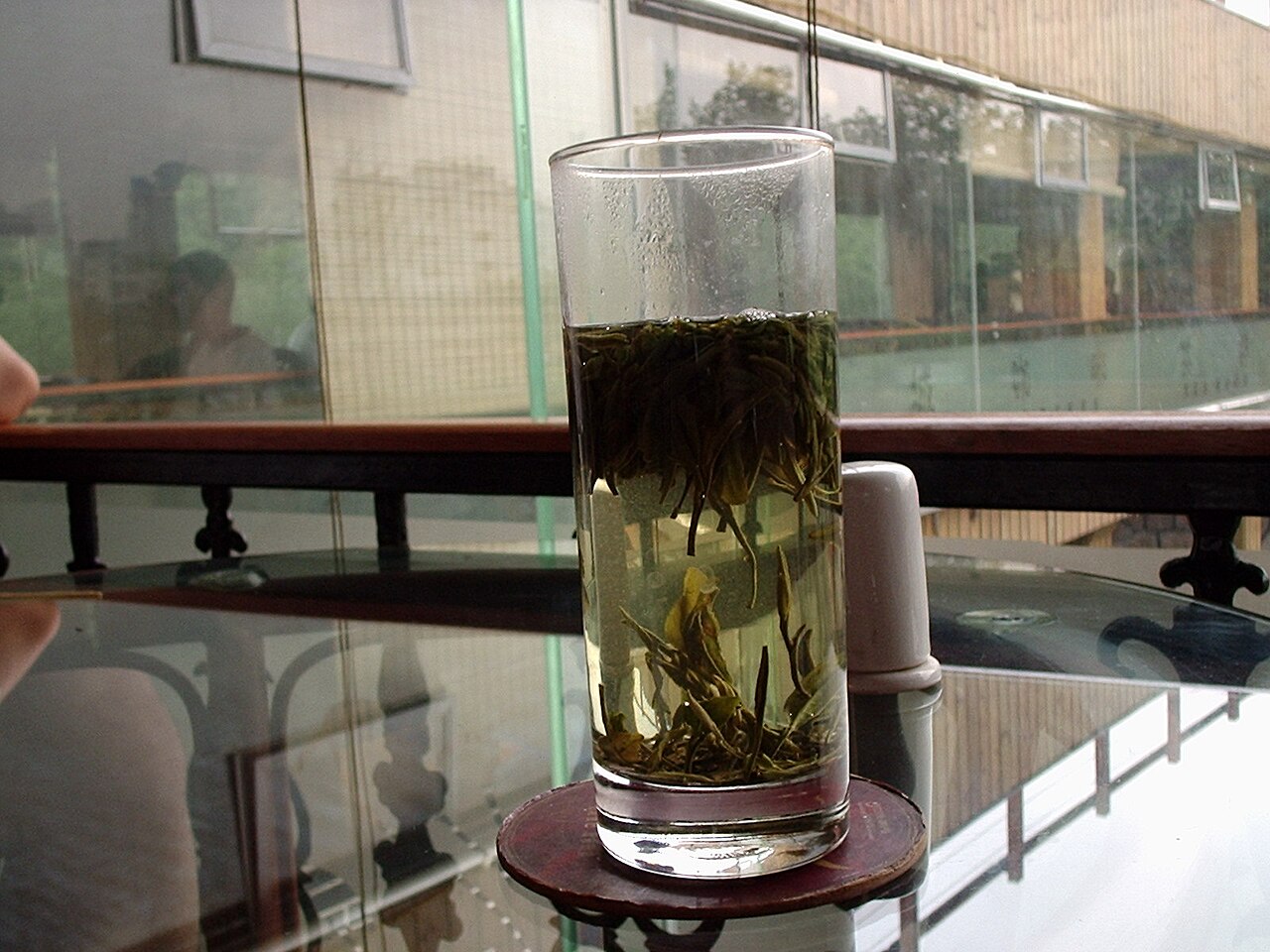
Research card
Topic: evening tea, caffeine, melatonin timing, and sleep quality Core question: does tea at night directly suppress melatonin, or does it more often affect sleep through caffeine timing and stimulation? Who this is for: people who drink tea after dinner, while studying, or while working late and wonder whether it makes sleep lighter or later Key reminder: public evidence more strongly supports “evening caffeine can delay sleepiness, push sleep later, and reduce sleep quality” than the much harder claim that “tea suppresses melatonin” in a simple, context-free way
1. Why the question “does tea suppress melatonin?” often starts in the wrong place
Because it assumes the main mechanism has already been identified. It frames the problem as if tea directly acts on melatonin and all that remains is a yes-or-no answer. But real-world sleep rarely works that way. Trouble falling asleep at night often reflects multiple variables at once: total caffeine intake across the day, stress, light exposure, meal timing, exercise timing, screen use, anxiety, and personal caffeine sensitivity.
So the main risk is not that the question is totally false. The risk is that it makes everything else look secondary. In sleep science, however, sleep pressure, wake-promoting input, circadian timing, and bedtime behavior interact constantly. Evening tea usually enters that system not as an isolated ingredient drama but as one more alerting input layered onto a body that is supposed to be winding down.
A better version of the question is usually: what role is this cup of tea playing in my evening timing? If it appears two or three hours before bed, comes in a large or strong serving, and you are personally sensitive to caffeine, then it deserves much more attention than the same tea consumed earlier, weaker, or by someone with higher tolerance.
2. The most stable public-evidence headline: caffeine promotes wakefulness by blocking adenosine
Sleep Foundation explains this in plain terms: caffeine blocks adenosine receptors. Adenosine is one of the signals that builds across waking hours and increases sleepiness. The longer you stay awake, the more that pressure tends to rise. Caffeine interrupts part of that “you should be getting sleepy now” message, which is why people feel sharper or less tired after drinking it.
That also explains why many people translate “tea made me feel more awake” into “tea is fine at night.” It may indeed make you feel temporarily more alert, but that does not mean it is free. The same public review points to later sleep onset, less total sleep, lower satisfaction, and less deep sleep. The key practical point is simple: evening caffeine often buys alertness by pushing sleepiness later.
Once that mechanism is clear, many arguments about evening tea become easier to sort out. The first thing to evaluate is caffeine exposure and timing—not whether tea feels culturally gentler than coffee. Gentle is not the same as sleep-neutral.
3. What about melatonin specifically? There are signals in the literature, but they should not be turned into a slogan
PubMed-indexed studies do include evidence that caffeine can affect nighttime melatonin timing in some settings. Earlier human work reported delayed melatonin onset under certain caffeine conditions, and later adolescent crossover trials also discussed disturbed sleep and circadian timing after caffeine. So the idea that caffeine and melatonin timing may interact is not invented out of thin air.
But this is exactly where overstatement begins. These findings are shaped by dose, timing, habitual caffeine use, age, hormonal background, and laboratory conditions such as light control. Once those limits disappear in popular writing, “caffeine may alter melatonin timing in some contexts” becomes “tea suppresses melatonin,” which is much stronger than the evidence can comfortably support.
It also matters that not every study points in the same direction with the same strength. A 2020 study on repeated caffeine intake and adaptation reported no significant effect of caffeine or withdrawal on melatonin timing measures in its design. That does not erase earlier findings. It simply means the literature does not support a crude universal claim. A careful conclusion is that caffeine may influence melatonin timing under certain conditions—not that every evening tea predictably and directly suppresses melatonin.
4. Why do some people barely notice evening tea while others obviously sleep worse?
Because caffeine response varies a lot. Sleep Foundation notes that caffeine half-life can range broadly—roughly 2 to 12 hours—depending on metabolism, genetics, use pattern, smoking, pregnancy, and other factors. That alone explains why “my friend drinks tea at night and sleeps fine” is never enough to settle the question for you.
Some people rarely consume caffeine and feel distinctly more alert, tense, or mentally “lit up” from a modest evening tea. Others use caffeine daily and feel subjectively tolerant, yet may still experience shallower or less restorative sleep even if they technically fall asleep. Some are especially vulnerable to palpitations, anxiety, or sleep fragmentation, so the issue is not just a few extra minutes before sleep onset but a more activated pre-sleep state overall.
That is why this topic should not be handled as a universal commandment. The sleep risk of tea changes quickly with caffeine dose, brew strength, cup size, timing, and personal sensitivity.
5. Often, the more useful question is not “did I drink tea?” but “how close was it to bed?”
Sleep Foundation gives a broad rule of thumb: avoid caffeine for at least eight hours before bedtime. That may sound strict, but the logic is practical. If caffeine can linger for a long time, then “tea at 8 p.m., bed at 11 p.m.” is not a small detail for many people.
This is why I usually dislike vague statements like “a little tea after dinner should be fine.” They are not always wrong; they are just too dependent on dose, metabolism, and your actual bedtime. For someone who sleeps at midnight and tolerates caffeine well, a small weak tea after dinner may be very different from the same drink in someone who goes to bed at 10:30 and rarely consumes caffeine. The more useful variable is not the phrase “after dinner.” It is how much time remains before real sleep.
So rather than arguing endlessly about whether tea is gentler than coffee, it is often better to ask a simpler question: how far is this cup from the time I genuinely want to fall asleep? If the answer is “not very far,” then it deserves to be treated as a sleep variable, not just a comforting beverage.

6. Why “I still fell asleep” does not mean “the tea had no sleep effect”
Because falling asleep and sleeping well are not the same thing. Sleep Foundation explicitly notes that even if you can fall asleep after consuming caffeine, you may not sleep as deeply or get the same quality of sleep. Many people judge sleep impact only by whether they had dramatic insomnia. But caffeine effects are often subtler: slower sleep onset, lighter sleep, more awakenings, less deep sleep, or simply lower next-day restoration.
That is also why personal anecdotes such as “my father drinks strong tea at night and sleeps fine” are weak evidence. He may truly be less sensitive. He may also have normalized shallow sleep, early waking, or low recovery as age or routine. And individual stories cannot replace the average patterns described in sleep research.
A better self-check is not only “did I stay awake all night?” but also: am I getting sleepy later, taking longer to drift off, feeling more mentally switched on in bed, waking more easily, or needing more caffeine the next day? If those patterns are appearing, the evening tea may already be affecting sleep even without dramatic insomnia.
7. What should an ordinary reader actually do—without demonizing tea or underestimating evening caffeine?
First, break “tea” back down into caffeine content, strength, and serving size. Not all teas hit the same way. The main sleep burden comes from caffeine exposure, not from the abstract identity of tea.
Second, if you are already dealing with insomnia, light sleep, early waking, delayed sleep timing, anxiety, or palpitations, do not treat evening tea as a trivial detail. In that context, reducing evening stimulation is usually more practical than arguing that tea is culturally milder than coffee.
Third, judge by the time window before bed, not by the label “after dinner.” For many people, keeping caffeine out of the last eight hours before sleep is a safer default. If you are very sensitive, you may need an even longer gap.
Fourth, do not only track whether you fell asleep. Also track whether you slept deeply, stayed asleep, and felt restored the next day.
Fifth, if what you really want is a nighttime hot-drink ritual, consider genuinely low-caffeine or caffeine-free options instead of assuming every tea-like drink is harmless. The problem for many people is not the warmth or ritual. It is the hidden evening stimulation that comes with it.
8. Conclusion: a better summary is not “tea suppresses melatonin,” but “evening caffeinated tea can affect sleepiness, timing, and sleep quality”
If I had to compress the article into one sentence, it would be this: when evening tea affects sleep, current public evidence more strongly supports a pathway through caffeine, timing, dose, and personal sensitivity—delaying sleepiness, shifting sleep later, and reducing sleep quality—than a blanket claim that tea simply “suppresses melatonin.”
So the mature answer is neither “never drink tea at night” nor “tea is always gentle enough to ignore.” A better real-world answer is this: if sleep matters to you—especially if you already struggle with sleep onset, shallow sleep, anxiety, palpitations, or delayed rhythm—then evening caffeinated tea deserves to be managed as a real sleep variable. And if you want to keep tea in your life, the most useful first steps are usually to reduce late-evening dose, increase the gap before bedtime, and honestly observe whether your sleep is actually worse.
Continue reading: Can tea make you more anxious? It is usually more useful to look at caffeine load, timing, sleep debt, and sensitivity, Can tea trigger palpitations? It often makes more sense to look at dose, timing, fasting, sleep loss, and stacked stimulation, and Zero-sugar tea does not mean caffeine-free: why “0 sugar” does not automatically mean “fine at night”.
Sources: Sleep Foundation: Caffeine and Sleep, Caffeine effects on sleep taken 0, 3, or 6 hours before going to bed, Wide awake at bedtime? Effects of caffeine on sleep and circadian timing in male adolescents, Acute effects of bright light and caffeine on nighttime melatonin and temperature levels, and Caffeine-dependent changes of sleep-wake regulation: Evidence for adaptation after repeated intake.