Research overview
Why fruit-and-veg tea, kale drinks, fiber, and “light-body bottles” so easily read as healthier
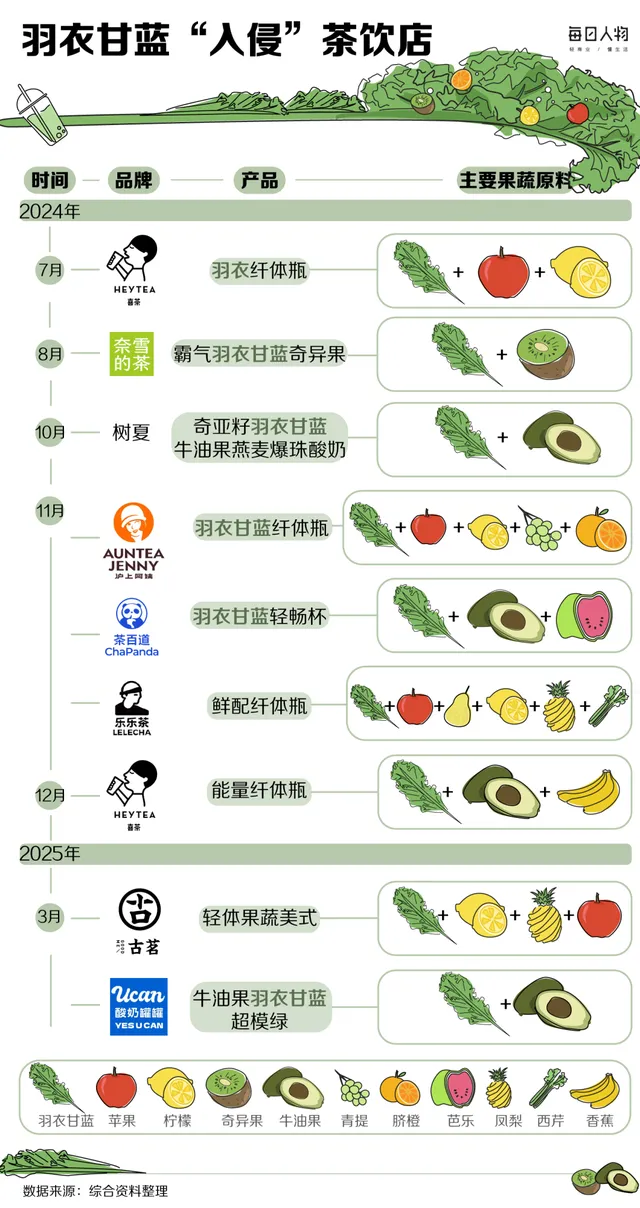
In the latest Chinese internet cycle around tea drinks, kale mini-green drinks, fruit-and-veg tea, light-body bottles, fiber, satiety, and meal-replacement vibes have started to function as one tightly linked semantic cluster. Most consumers do not separate them with the precision of a nutrition paper. They read them more intuitively: lighter than milk tea, more body-managing than ordinary fruit tea, more functional than a standard sweet drink, and—on chaotic workdays—closer to “at least I did not completely neglect myself” than a random snack. That is exactly why this topic deserves a slower research reading. What evidence can usually support is not “this drink is healthier, so frequent use is now safe,” but something much narrower: some fruit-and-veg tea formats may indeed be more defensible than high-sugar, high-milk, topping-heavy drinks; fiber language, vegetable ingredients, and a cleaner structure may alter subjective fullness and guilt; but these changes do not automatically make the drink equivalent to a complete breakfast, a valid meal replacement, or the kind of body-management shortcut that short-form internet language likes to imply.
At the level of circulation, the boom is easy to understand. Kale and fruit-and-veg tea are rare tea-drink themes that can simultaneously satisfy visual distinction, health-coded language, lifestyle aspiration, and controversy. The colors are strong, the naming feels disciplined, and the drinks connect smoothly to fiber, lightness, office self-rescue, spring reset, anti-bloat mood, and body-management narratives. For consumers, that combination is extremely attractive because it does not demand a serious nutrition program or a complete exit from the tea-shop world. It still arrives as an orderable, photogenic, portable commercial drink—just one that appears to lean in a more controlled, body-aware direction.
The problem sits in the same place as the attraction. Modern tea drinks rarely mislead through bluntly false claims alone. More often, they mislead through a chain of very smooth inferences: it has kale or vegetable ingredients, so it must be closer to vegetables; it mentions fiber, so it must be more substantial; it tastes less sweet, so it must be more suitable as a meal bridge; the bottle says light-body, lightness, fiber, or greens, so it must be closer to health management. Research matters because it breaks that chain apart and asks, one step at a time, which parts are reasonable and which parts have simply been amplified too quickly by platform language.
Research card
Topic: why fruit-and-veg tea, kale drinks, mini-green waters, and fiber-heavy tea-drink narratives are so quickly interpreted as healthier in modern tea culture Key issues: fiber versus whole produce, subjective fullness, meal-replacement misreading, low-burden language, sugar and calorie transfer, platform health signaling, substitution value, and repeat frequency Best for: readers who buy kale drinks, fruit-and-veg tea, or fiber-coded modern tea drinks and want to know where research support stops Core reminder: some fruit-and-veg tea drinks may be relatively lighter commercial beverages, but “feels more body-managing” does not equal complete nutrition, valid meal replacement, or inspection-free health status.
1. Why are fruit-and-veg tea, kale drinks, and “light-body bottles” so easy to push viral right now?
Because they perform two jobs at once: they look healthier, and they still fully behave like consumer products. Traditional milk tea sells pleasure too directly—sweetness, milkiness, thickness, and reward are obvious, and so is the burden. Fruit-and-veg tea and kale drinks do something more sophisticated: they repackage beverage pleasure as a gesture of repair, discipline, and body awareness. The consumer does not need to leave the tea-shop ecosystem, learn nutrition, or commit to proper meal preparation. They just buy a drink that feels easier to forgive.
This power is strongly visual too. Green hues, transparent cups, tall bottles, sliced fruit and vegetable imagery, and names suggesting lightness or cleansing are ideal for social circulation. These drinks look more like something an office worker could carry in daylight than a dessert drink, more like “I am trying” than “I am indulging,” and less clinical than an actual functional supplement. In other words, they are almost perfectly designed to occupy a middle zone: not ascetic health, but no longer open-ended indulgence either.
The Chinese internet also gives these drinks major semantic support. Kale is no longer just a cruciferous vegetable in platform culture. It has been trained into a symbol of fat-loss discipline, spring reset, anti-bloat aspiration, and visible self-management. Fiber works similarly. It begins as a nutrition concept, but in consumer speech it becomes shorthand for fullness, regularity, body lightness, and “this drink has substance.” Brands know exactly how useful that is, which is why they keep tying fiber and greens to tea drinks.

2. Why do “contains vegetables,” “contains kale,” and “contains fiber” trigger an instant health halo?
Because those words come from parts of daily diet that already carry strong positive framing. Vegetables imply “good for you” almost automatically. Fiber implies gut health, fullness, regularity, and body-management seriousness. Mixed fruit-and-veg language implies something more natural and less industrial. Kale adds a layer of platform sophistication: not just healthy, but knowingly healthy. Once those signals appear on a tea menu, the drink is no longer read as just flavor—it becomes a form of lifestyle positioning.
This is a sharp contrast with classic milk-tea logic. Older sweet milk-tea consumption was easier to read as an obvious reward: today I deserve something rich and comforting. Kale and fruit-and-veg tea often sell a different emotional sentence: today I am at least trying to make a smarter choice. Many consumers do not literally believe they are performing a serious nutrition intervention. But they do very easily believe they have moved a little farther from sugar-heavy burden and a little closer to bodily care. That small psychological shift is already enough to drive repeat purchases.
It also matters that produce and fiber language feels gentler than direct performance claims. These words do not sound like medicine, fat-burning, or formal clinical outcomes. They sound like food, daily rhythm, and everyday correction. That makes them especially good at creating a fuzzy but powerful middle ground where brands do not need to say very much before consumers complete the rest of the health meaning themselves.
3. Why does fiber become such a powerful amplifier in these drinks?
Because “fiber” is one of the most efficient modern nutrition words on the Chinese internet. It sounds technical enough to feel real, but familiar enough to spread quickly. It connects to experiences people think they can feel: fullness, gut rhythm, anti-bloat, staying less hungry, and drinking something that seems more substantial than plain sweet liquid. For brands, that is an ideal word. It signals content without sounding too abstract.
But research needs to slow down the expansion of that word. Many consumers see “dietary fiber” and immediately complete a longer story in their own heads: whole produce, healthier eating, fat-loss support, blood-sugar friendliness, acceptable meal replacement. Research does not move that fast. Fiber may matter, but it is still only one variable inside a whole beverage system. Its meaning depends on source, dose, formulation, and context. Turning “contains fiber” directly into “close to a real meal” is exactly the kind of over-translation that science tries to resist.
There is also a structural issue. Even if a beverage contains some fiber, that does not automatically reproduce the full value of eating whole produce. Whole foods involve chewing, bulk, eating pace, and a different behavioral rhythm. A drink can still create satiety or subjective comfort, but research is usually careful not to collapse beverage fullness and food completeness into the same category.

4. Why does satiety become such a frequent word in fruit-and-veg tea discussion?
Because satiety is the shortest bridge between “drink” and “meal-replacement fantasy.” Once a beverage makes people feel not quite empty, able to hold them over, or more substantial than ordinary fruit tea, it is very easy for that beverage to be read as more suitable for workdays, more aligned with body management, and more acceptable as a partial stand-in when real eating becomes inconvenient. Platform language loves this because satiety feels embodied and requires little explanation.
That bodily feeling is not necessarily imaginary. Produce elements, higher volume, slightly thicker texture, lower sweetness, or stronger green notes can all contribute to a subjective sense that the drink “contains more.” Fiber language then intensifies that interpretation. It becomes easy for consumers to translate a short-term sensation into a more ambitious conclusion about nourishment.
Research reads that much more cautiously. First, subjective fullness is not the same thing as nutritional completeness. Second, feeling less hungry for a short period does not guarantee a more stable long-term eating pattern. Third, a drink that seems to “hold you over” can sometimes be a practical compromise in real life—but it can also encourage people to overestimate what the drink is actually doing for the structure of a day’s eating. The real question is not whether fullness exists, but how far that fullness is being interpreted.

5. Why is the “meal-replacement vibe” both powerful and risky?
Because it fits perfectly into a real urban problem. Many people are not trying to master nutrition; they are just trying to survive commutes, meetings, sitting all day, late work, and irregular meals with something that feels a little better than chaos. Fruit-and-veg tea and light-body bottle products seem designed for that gap. They do not demand the effort of a real meal, but they also do not feel as nutritionally empty as a pure pleasure drink. So they are easily granted the role of “good enough for now.”
The risk is that research applies a higher bar to the idea of meal replacement. What exactly is being replaced? How often? Does the drink reliably support nutrition? Does it reduce or increase compensatory eating later? Is it genuinely stabilizing the day’s intake, or merely offering a more respectable excuse for under-structuring meals? If those questions are not asked, the meal-replacement halo can become a polished version of nutritional wishful thinking.
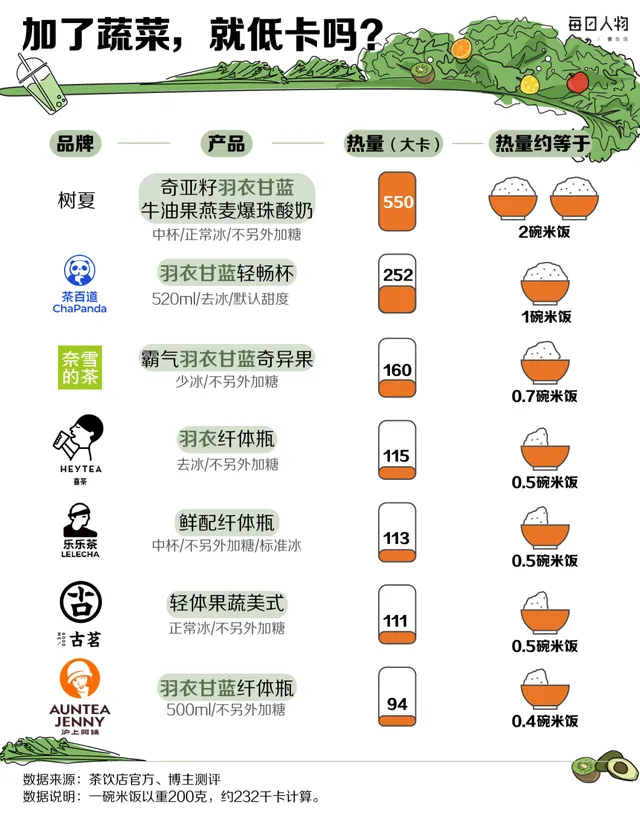
I would rather describe many of these drinks as a relative improvement path inside commercial beverages than as already-valid light nutrition solutions. That language sounds less exciting, but it is much closer to what research can actually support. In some cases they may well be more reasonable than very sugary, milk-heavy, topping-heavy tea drinks. But that still does not mean they can inherit the role of breakfast, lunch, or a dependable body-management tool.
6. What research really worries about is not only the cup, but the habit it changes
In modern tea drinks, the health meaning of a product often ends up depending less on one serving and more on how that serving changes buying behavior. Fruit-and-veg tea and light-body bottles are important precisely because they can change psychological permission. Faced with traditional milk tea, many consumers retain some hesitation. Faced with kale, fiber, mini-green water, or light-body language, they relax. The drink feels less like indulgence and more like repair.
If that psychological shift helps someone replace heavier high-sugar beverages with cleaner, less dessert-like options, it may have real value. But if its main effect is to create new beverage occasions, increase purchase frequency, or encourage people to cover over poorly structured eating with something that merely looks responsible, then the long-term meaning becomes much less straightforward.
This is where research tends to be cautious. It does not deny improvement. It simply refuses to ignore the possibility that a partial improvement gets consumed back through higher frequency. Commercial drinks are often most powerful not because each cup is excellent, but because they are extremely good at lowering resistance and increasing repetition.
7. What must be separated most clearly: whole produce, produce beverages, and fruit-and-veg tea are not the same thing
The key distinction is between food structure and beverage structure. Whole fruits and vegetables usually enter eating with chewing, bulk, pace, and a different relationship to the rest of a meal. That changes fullness, satisfaction, and later behavior. Fruit-and-veg tea, even when it contains produce or fiber language, is still first of all a beverage. Beverages have their own advantages—convenience, portability, easy entry into busy routines—but because they are beverages, they are also psychologically easy to consume more often and with less friction.
That is one reason research-style writing resists equations like “drinking vegetables is basically eating vegetables.” The point is not that beverage produce content is meaningless. It is that the form changes the meaning. Once intake shifts from eating to drinking, a whole set of variables around fullness, control, pacing, and dietary order shifts with it.
So the careful conclusion is not “fruit-and-veg tea has no value,” but “fruit-and-veg tea may have substitution value in some contexts, while still not being a true stand-in for complete food structure.” The less clearly that boundary is stated, the easier it is for consumers to overestimate the drink.
8. In real life, when is this kind of drink genuinely a “relatively better” choice?
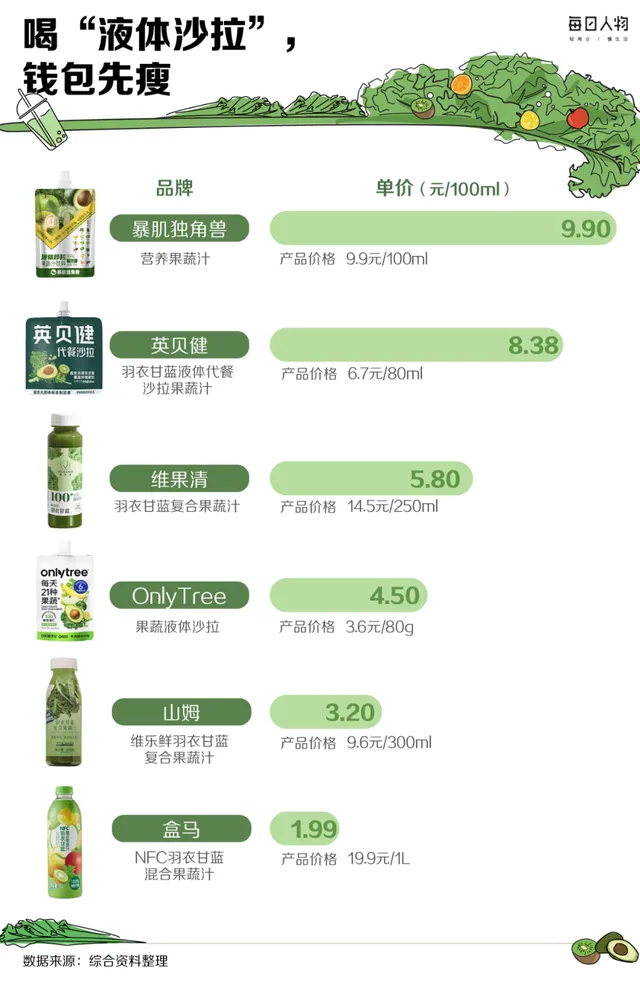
First, when it truly replaces something heavier. If a kale or fruit-and-veg tea drink displaces a high-sugar, milk-heavy, topping-heavy beverage and comes with a cleaner structure and less dessert-like burden, that substitution usually does carry real meaning. It does not need a miracle narrative to be worthwhile.
Second, when it helps move a person’s beverage pattern back toward “drink” rather than “dessert.” Many fruit-and-veg tea products at least attempt that shift through lighter sweetness and cleaner product language. That does not make them full meals. It just means they may fit more plausibly into a restrained daily beverage pattern.
Third, when the consumer does not let the green-fiber-lightness halo replace judgment about frequency and total burden. In other words, the drink remains understood as a commercial beverage that may be relatively preferable in some scenarios—not as a fully justified, endlessly repeatable body-management instrument.
9. For ordinary readers, what are the five most useful questions?
First, what does this drink replace? If it replaces a heavier high-sugar product, its value is easier to defend. If it only adds another purchase, the value changes.
Second, are the fiber and produce elements central or mostly decorative? Not because consumers need perfect numbers, but because a few keywords should not automatically be inflated into complete nutrition.
Third, what kind of fullness is this? Is it simply a short-term feeling of not being empty, or have you already started misreading it as a stable meal substitute?
Fourth, are you drinking it more often because it looks healthier? Frequency is often the true issue.
Fifth, what happens after the drink? Does it support steadier eating later, or does it mainly give you a temporary feeling of having done enough?
10. Conclusion: fruit-and-veg tea may be lighter, but “feels body-managing” is not the same as “close to a real meal”
Kale, produce ingredients, dietary fiber, and a cleaner structure can indeed make some modern tea drinks more worth considering than traditional high-sugar, heavy-milk formats. But “feels more body-managing” never automatically means “healthy enough,” and it certainly does not mean “close to a complete meal,” “valid meal replacement,” or “safe to scale up without thought.” What research is more willing to support is narrower: in some substitution relationships, these drinks may be relatively better commercial beverage choices. What research is not eager to support is turning that relative improvement into a full health conclusion.
Continue with How kale became a tea-drink star, Milk does not automatically mean lighter burden, Do real-leaf brewing, low sugar, and short ingredient lists automatically mean a healthier tea drink?, and Why ingredient-list transparency became a tea-drink obsession.
Source references: Harvard T.H. Chan School of Public Health: Fiber, NHS: Why 5 A Day?, WHO: Healthy diet, plus Chinese internet discussion signals and site trend material around kale mini-green drinks, fruit-and-veg tea, fiber, satiety, and meal-replacement narratives (2025–2026).