Fresh tea drink trend analysis
How kale went from landscaping vegetable to tea-drink star: little green bottles, body-management marketing, and the business of healthy-looking indulgence
This is not just a story about one vegetable suddenly showing up in cup drinks. It is a story about how China's fresh tea industry has learned to sell "health feeling" as one of its strongest viral product formats. Across the Chinese internet, kale drinks, little green bottles, "slim cups," and "light-body" fruit-and-tea blends have become highly discussable because they sit exactly where modern consumers feel conflicted: wanting pleasure, convenience, and a sense of bodily control at the same time.
If the earlier years of new-style tea were defined by cheese foam, fruit overload, and topping abundance, the kale wave points to a different phase of competition. Brands are no longer only trying to make drinks look richer, sweeter, or more extravagant. They are trying to make them feel more defensible. A bright green drink suggests self-discipline, fiber, cleansing, and a lower-burden lifestyle before anyone checks what is actually inside. That symbolic power is why kale matters. It is not merely an ingredient choice. It is a packaging system for aspiration, guilt management, and visual health signaling.
That is also why the topic deserves a deeper article rather than a short trend note. Kale drinks are simultaneously about ingredients, naming, design, pricing, social-platform distribution, nutritional ambiguity, and contemporary Chinese consumer psychology. They reveal how tea brands are responding to a market where people still want daily treats, but increasingly want those treats to come with a plausible story about control, balance, and not completely betraying the body.
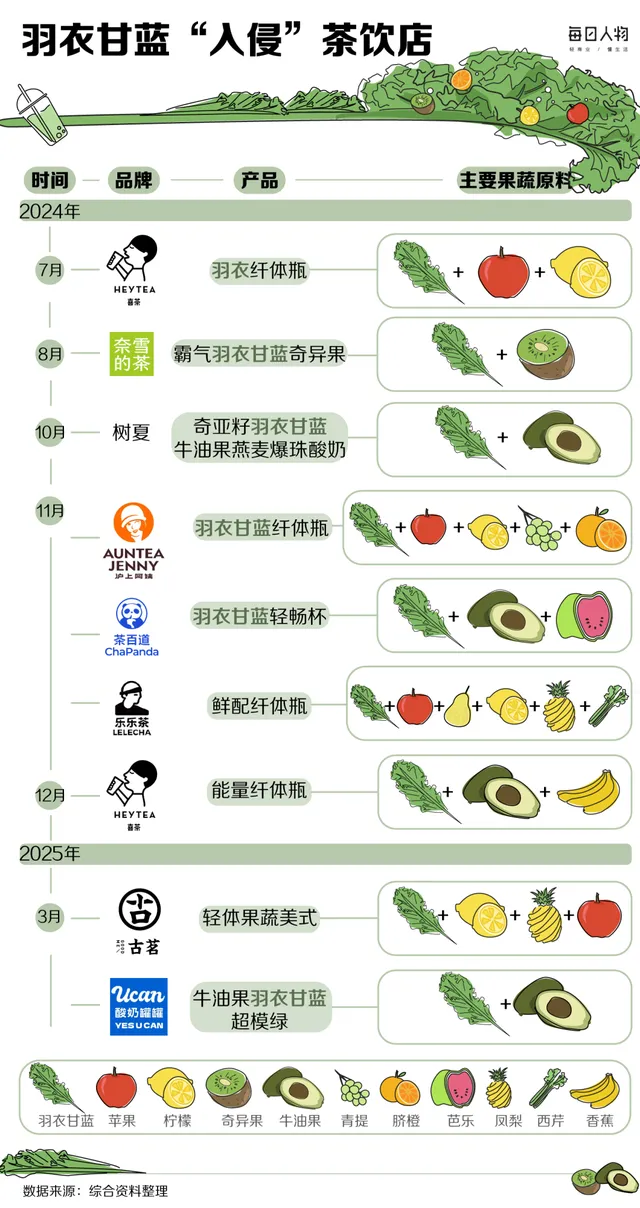
1. Why kale, specifically, became the breakout ingredient
On the surface, kale seems to have won because it is "healthy." That explanation is far too shallow. What really makes kale powerful is that it satisfies several branding conditions at once. First, it already arrived with a preloaded reputation. In fitness culture, salad culture, juice culture, and "superfood" discourse, kale had been circulating for years as a recognizable sign of disciplined eating. Many consumers may not have eaten it often, but they already knew what it was supposed to mean. Second, it is visually excellent. Its saturated green color photographs well, distinguishes itself from ordinary fruit tea, and works beautifully with transparent bottles, slim cups, clean labels, and social-media thumbnails. Third, it does not taste conventionally comforting in the way mango, peach, or strawberry do. Paradoxically, that helps. A drink that feels slightly grassy or bitter can more easily be read as serious, functional, and therefore morally superior.
This makes kale unusually useful for tea brands. It can be paired with apple, lemon, grape, avocado, chia, coconut milk, or tea base and still feel legible as a "better-for-you" product. It can justify a higher price more easily than common fruit. It sounds niche enough to feel elevated, but not so alien that people refuse to try it. In other words, it gives brands novelty, visual power, and health-coded language all at once.
Most importantly, kale has already acquired symbolic value beyond being a cruciferous vegetable. In the Chinese internet imagination, it is not just food. It signals someone who is trying to control sugar, reduce guilt, slim down, or at least look like they are making a better choice today. That symbolic layer is more commercially important than the vegetable itself.
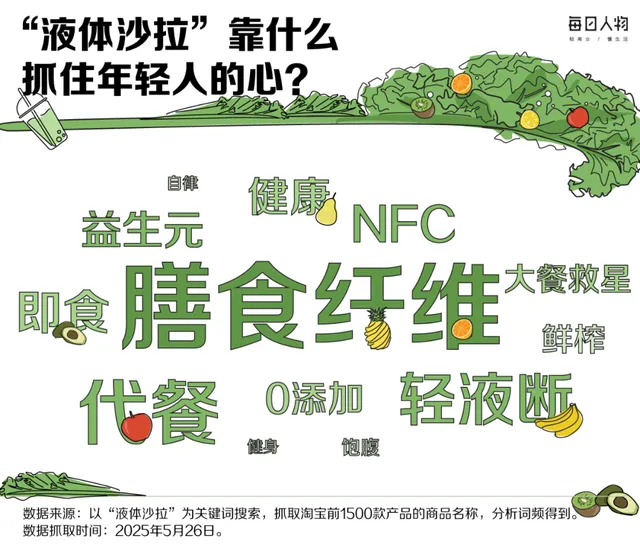
2. What these drinks really sell is not nutrition, but permitted indulgence
Public arguments about kale drinks often split too neatly. One side calls them a scam. The other says they are at least better than a sugar-heavy milk tea. The more interesting truth is that neither side fully captures the core commercial logic. Kale drinks do not succeed because consumers believe they are undergoing precise nutritional intervention. They succeed because they allow people to keep buying a café-style prepared drink while feeling less morally compromised by the purchase. They are not outside indulgence culture. They are indulgence culture rewritten in a more defensible vocabulary.
That matters because many urban consumers are not choosing between perfect health and reckless pleasure. They are choosing inside an already constrained life: delivery food, sedentary work, late nights, stress, occasional gym effort, and intermittent guilt. The most commercially successful products are often not the most scientifically rigorous ones. They are the ones that fit seamlessly into actual routines while offering a sense of repair. A kale drink offers exactly that. It can be bought at the same tea counter, at a tolerable premium, in a stylish format, and consumed as if one is doing something slightly corrective rather than simply rewarding the self.
Seen this way, kale is not trying to destroy milk-tea culture. It is giving milk-tea culture a new alibi. It says you do not have to leave the world of branded cups, shareable packaging, and impulse drink purchases. You can remain in that world and simply switch to a drink that feels more controlled, cleaner, and easier to justify.
3. Why the "little green bottle" format spreads so easily online
Kale tea drinks are ideal internet material because they work across images, short video, complaint culture, and identity performance. Visually, the bright green liquid is instantly different from ordinary tea drinks. It pairs well with transparent containers, fruit slices, slim bottle silhouettes, and minimalist packaging. Linguistically, product names such as "slim bottle," "light-body cup," or "little green bottle" are unusually efficient. They are not selling flavor first. They are selling a projected outcome. Before tasting anything, consumers already understand the intended mood and promise.
They are also excellent controversy generators, and controversy is one of the strongest distribution engines on Chinese platforms. Some users say the drink tastes bad but feels worth it for body management. Others mock it as expensive grass juice. Some compare sugar and calorie numbers. Others debate whether words like "slim" or "light" amount to suggestive marketing. Unlike a standard fruit tea, kale drinks naturally invite discussion about nutrition, value, manipulation, aspiration, and whether one is buying health or merely the performance of health.
That gives them a wider discussion field than ordinary tasty-versus-not-tasty products. A normal milk tea may trigger cravings. A kale drink triggers interpretation. That makes it a stronger topic object.
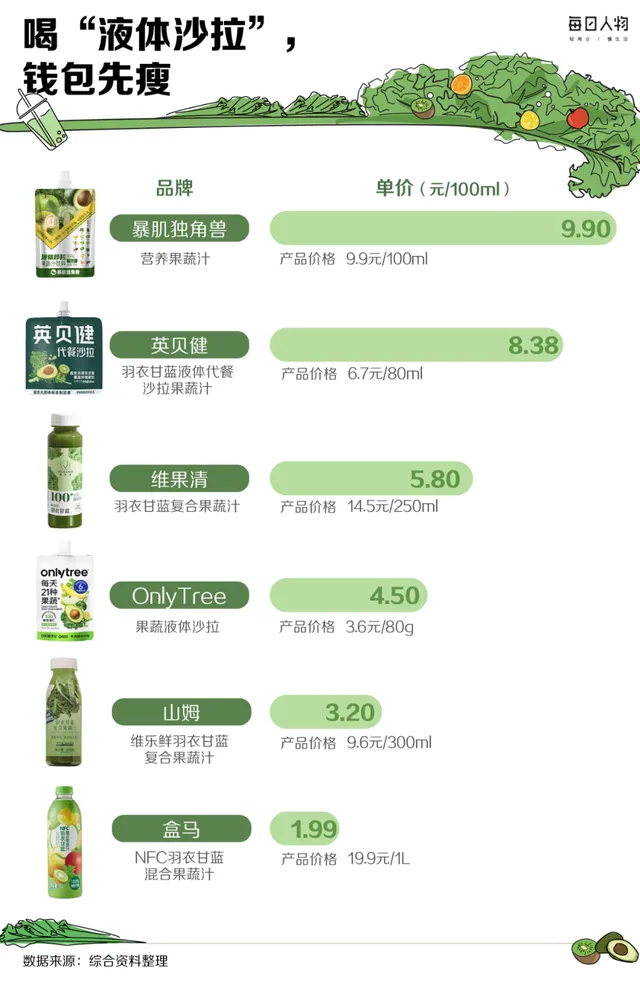
4. Are they actually healthy? Why the argument keeps intensifying
Recent Chinese reporting and discussion around kale drinks share a common pattern: people are no longer satisfied with health vibes alone. Reports have pointed out that some drinks use only a small amount of kale per cup, while relying on fruit, yogurt, coconut elements, or sugar for drinkability. Others have noted that some products framed as light or slimming are not especially low in calories or sugar. Still others remind consumers that juicing changes how fiber and satiety are experienced, so a kale beverage cannot simply be equated with eating vegetables in a straightforward way.
This does not mean kale drinks are meaningless. It means they cannot be treated as magical. The most reasonable reading is probably that some may indeed be preferable to heavier sugar-and-topping drinks, but that does not automatically turn them into genuinely functional health products. The friction comes from the gap between suggestive branding and exact interpretation. Brands love suggestive zones because suggestion leaves room for aspiration. Consumers increasingly want firmer answers.
That is why kale drinks fit into the broader trust battle now shaping the fresh tea market. The same logic appears in the demand for ingredient-list transparency, real tea base, and fewer additives. Consumers are becoming less willing to buy atmosphere by itself. They want atmosphere to be explainable in product terms.
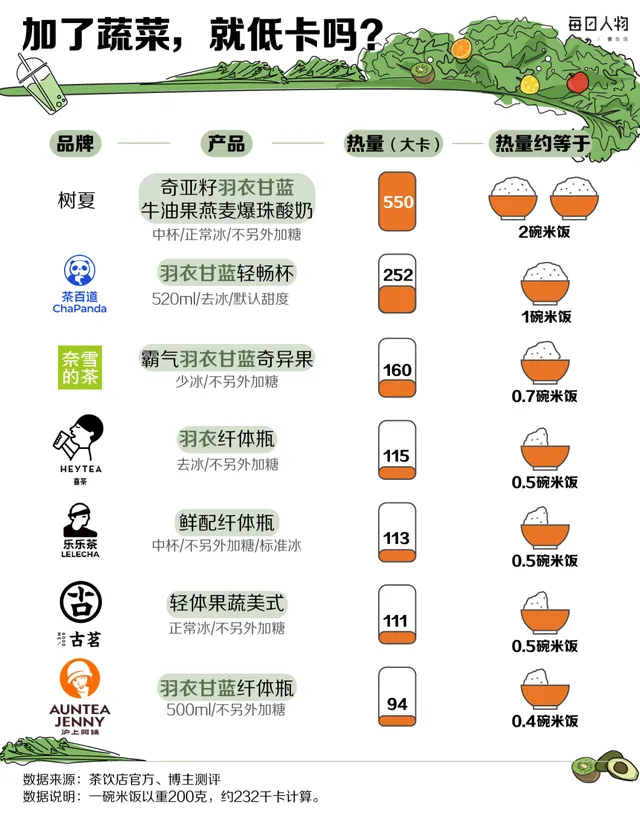
5. Why brands love kale: it fits today's tea-drink competition almost perfectly
Commercially, kale is an extraordinarily useful trend ingredient. First, it enables rapid product iteration. Once kale is combined with different fruits, seeds, grains, tea bases, or dairy-adjacent elements, brands can produce a whole series of line extensions while still sounding coherent. Second, it supports premium pricing. A standard fruit tea needs more explanation to justify a high price. Kale arrives pre-framed as special, disciplined, and "better," so the psychological pricing ceiling moves upward.
Third, it connects easily with almost every currently popular language cluster: low sugar, light burden, superfood, fiber, cleansing, office wellness, post-gym recovery, spring-summer freshness, and self-management. For tea brands fighting for attention in an oversaturated market, that is extremely valuable. Kale is not only a flavor source. It is a content engine.
More broadly, it fits the directional change now visible across the category. Earlier tea-drink hype was often about more abundance: cheese foam, pearls, toppings, overload, sweetness, excess. The newer wave is more about subtractive virtue: lighter, clearer, less guilty, more ingredient-legible, more compatible with repeat purchase. Kale is not an isolated oddity. It is one of the most visible expressions of that shift.
6. The real star may not be kale, but anxiety
If we push the question deeper, the object really being consumed may not be the vegetable itself, but modern urban anxiety about the body. Sedentary work, delivery diets, poor sleep, appearance pressure, interrupted fitness routines, and the desire to seem both relaxed and disciplined all feed this market. Brands simply translate those diffuse tensions into something easier to buy: a drink.
That is why the little green bottle is such an effective object. It is softer than supplements, easier than strict dieting, and less openly indulgent than traditional milk tea. It occupies an extremely profitable middle zone. It preserves the pleasure and convenience of a prepared drink while supplying a health-coded excuse. It can be consumed seriously or semi-ironically. It can be posted as evidence of effort even when it functions mostly as emotional compensation. That double role is exactly what makes it fit contemporary platform culture and Chinese beverage consumption so well.
In that sense, kale drinks are a high-finish commercialization of bodily anxiety. They turn the vague thought "I should probably be a bit more careful lately" into a scannable cup at the counter.
7. What happens next: the trend probably stays, but the scrutiny gets harder
I do not think kale will disappear quickly. It has already passed the market-education stage. Consumers recognize it. Brands know how to narrate it. Platforms know how to amplify it. Upstream suppliers have already felt the demand effect. The more important question is not whether it can continue selling, but whether brands can keep selling it as effortlessly as before.
The Chinese internet is clearly moving toward stricter scrutiny. Users are now checking calories, sugar, naming, legal boundaries, and the difference between a small amount of kale and a large amount of implied function. That means the brands most likely to endure will not simply make drinks greener or slogans sharper. They will need to explain the structure of the drink more convincingly and avoid letting health-flavored language drift too far from the actual product.
For consumers, that scrutiny is good news. It pushes the category from health-feeling marketing toward health-feeling explanation. For tea observers, the kale wave is worth following because it reveals one of the most important shifts in Chinese beverage culture right now: people are not only asking what they want to drink, but whether that drink can let them feel they have not completely betrayed the body while still participating in everyday pleasure.
If the early era of new tea was about making tea feel more like youthful fun, the kale era asks a sharper question: can brands fuse pleasure, health aspiration, urban anxiety, and price logic into a single cup that people will keep buying? So far, the answer looks like yes.
For related reading, continue with Why low-sugar tea drinks are booming and Why ingredient-list transparency is becoming a tea-drink obsession. The kale wave is not separate from those stories. It is another face of the same consumer shift.