Research explainer
Why Tea on an Empty Stomach More Easily Causes Nausea and Stomach Discomfort
“Don’t drink tea on an empty stomach” is one of the most common warnings in Chinese tea culture. The more evidence-aligned reading is this: without food buffering, strong tea, hot tea, rapid intake, large servings, caffeine, and some higher-exposure catechin conditions can make certain people more likely to feel nausea, a hollow shaky feeling, upper-GI irritation, palpitations, or reflux-like discomfort. That is not quite the same thing as saying tea simply “damages the stomach.”
Many people know the feeling. You wake up, eat nothing, drink a large strong green tea, and suddenly feel hollow, slightly nauseated, or oddly uncomfortable in the upper stomach. Others skip lunch, lean on tea to keep working, and end up with “alertness” turning into “I feel terrible.” These experiences are common, but they do not automatically prove that tea is injuring the stomach. More often, they suggest that the timing and mode of intake were badly matched to the body’s state.
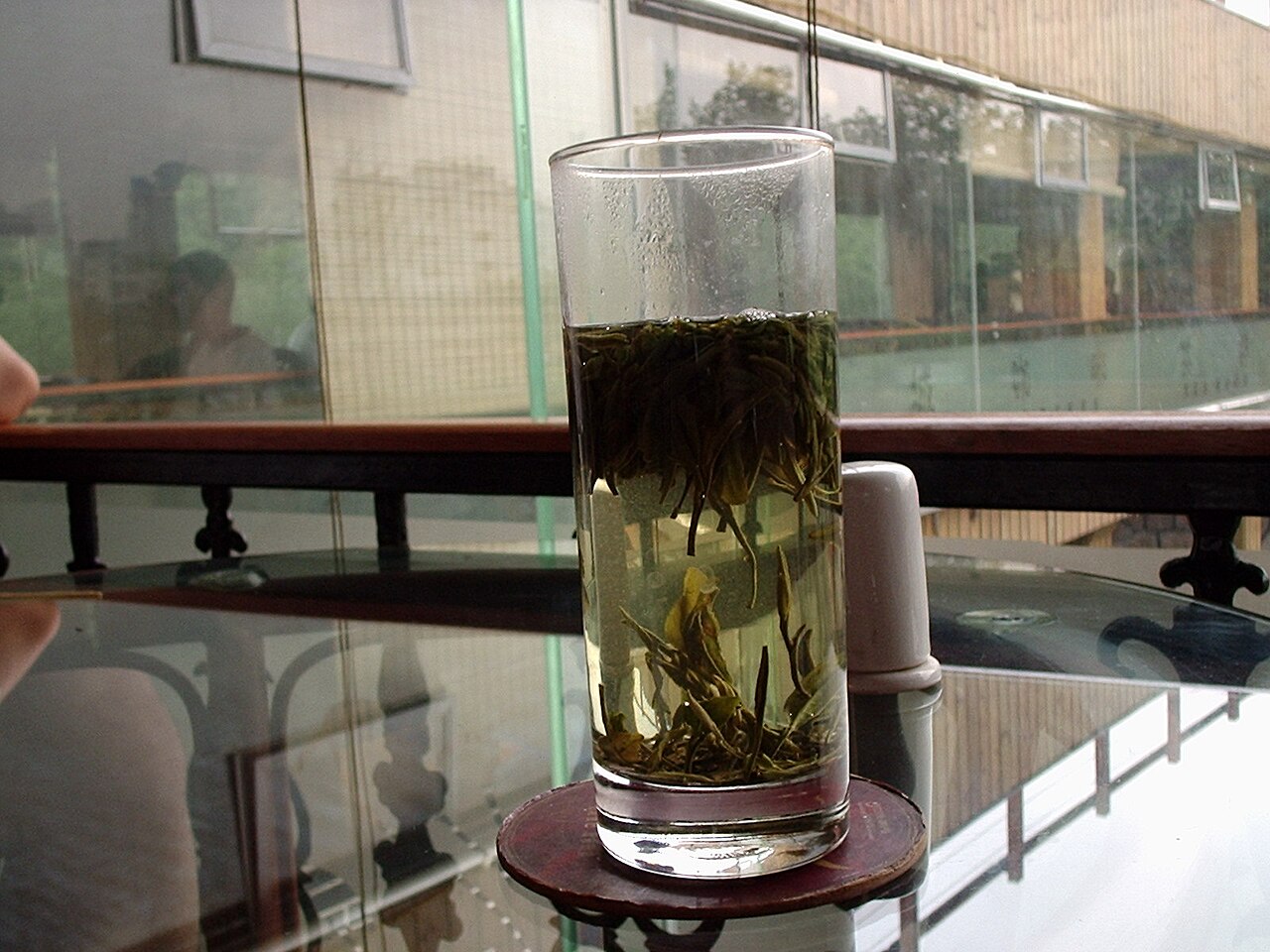
Research snapshot
Topic: tea on an empty stomach and its link to nausea, hollow shaky feelings, and upper-GI discomfort Core question: why can the same tea feel much worse while fasting than after food? Keywords: empty stomach tea, nausea, stomach discomfort, caffeine, EGCG, catechins, bioavailability, food buffering Who this is for: readers who often drink tea first thing in the morning, use tea to push through hunger, or repeatedly feel sick after strong tea without food
1. First separate the symptom: empty-stomach tea discomfort is not one single diagnosis
Everyday discussion tends to compress many upper-GI sensations into one loose phrase. But discomfort after fasting tea can mean nausea, hollow weak feelings, jitters, palpitations, upper abdominal irritation, burning, reflux-like discomfort, or even an anxious overstimulated state after caffeine. These should not all be treated as one neat diagnosis. That is why empty-stomach tea discomfort is better understood as a high-risk intake context than as a mystical absolute ban.
2. The simplest and most important explanation: without food, nothing is buffering the drink
In a fasting state, there is no food buffer in the stomach. Tea is not plain water. It carries caffeine, polyphenols, catechins, soluble compounds, heat, and whatever brewing strength you chose. Tea after food and tea on an empty stomach are not really the same event.
This is why people often notice a practical difference even with the same tea. After breakfast, it feels mildly alerting. As the very first thing in the morning, especially if strong and fast, it feels unpleasant. Food does not necessarily erase the problem, but it often makes the stimulus blunter, slower, and less concentrated.
3. Caffeine is the first practical layer: fasting makes it easier for “alertness” to tip into nausea and shakiness
Tea is not coffee, but it can still carry meaningful caffeine load. For some people, taking caffeinated drinks in a fasting state is more likely to bring nausea, shakiness, a hollow weak feeling, palpitations, mild anxiety, or upper-GI discomfort. Some of these reactions are not strictly “stomach” reactions at all. They are whole-body stimulation reactions that get interpreted as stomach trouble.
This is why one person may tolerate a small light tea, while another feels much worse after a large strong green tea taken quickly with no food. The meaningful variables are not only tea-category labels. They include how much caffeine entered, how fast it entered, and what state the body was already in.
4. The second layer is catechin exposure: in some fasting conditions, certain compounds are absorbed more strongly
Another research-relevant layer comes from catechins, especially EGCG. Human studies and reviews repeatedly note that when EGCG or green tea extract is taken under fasting conditions, systemic exposure and bioavailability are often higher; food tends to suppress that exposure substantially. In other words, fasting is not only a feeling difference. It can also be an exposure difference.
This point needs careful wording. Much of the clearer evidence concerns green tea extract, EGCG capsules, or more concentrated intake conditions. That is not mechanically identical to every cup of ordinary brewed tea. But it still teaches an important lesson: fed versus fasted intake changes how key green-tea compounds behave in the body.

5. The real problem is often not just “empty stomach,” but “empty stomach + strong + hot + fast + large volume” all at once
In real life, people rarely get into trouble because of one variable alone. More often it is a cluster of bad conditions: first thing in the morning, no breakfast, a desire to wake up quickly, so the tea gets brewed stronger, drunk faster, served hotter, and poured into a large cup. That combination almost looks designed to increase the chance of discomfort.
This also explains why the practical response is more nuanced than “never drink tea before food again.” Eat a little first. Make the first tea lighter and less hot. Use a smaller cup. Do not chug it. If necessary, move the most stimulating green teas to after food. These are usually more useful than simply repeating the slogan that tea “hurts the stomach.”
6. Do not confuse normal brewed tea with concentrated green-tea extract—but do not pretend they are unrelated either
The more careful reading is that extract research cannot be directly equated with ordinary brewed tea, but it clearly points to a direction—fed versus fasted intake changes exposure, and higher-concentration intake deserves more caution. If you are drinking ordinary brewed tea of moderate strength and volume after food, that is obviously not the same story as swallowing high-dose green-tea extract while fasting. But if you already like very strong brewing, quick intake, large amounts, or more concentrated green-tea products, then the lesson should not be brushed aside.

7. Who should be more careful about empty-stomach tea?
If you are already sensitive to caffeine, easily get palpitations, shakiness, anxiety, or hollow feelings, have repeatedly felt sick after fasting tea, have reflux or upper-GI sensitivity, sleep poorly, live under high stress, or often use tea to suppress hunger, then empty-stomach tea is a place to be more conservative.
8. The most useful takeaway: do not mythologize “tea hurts the stomach,” but do not force yourself through fasting strong tea either
The more realistic reading is that tea is not poison, but in a fasted state it really can amplify discomfort for some people, especially when caffeine load, catechin exposure, brew strength, heat, speed, and volume all pile up in the stimulating direction.
So the mature response is not to memorize a taboo. It is to rank the variables. If empty-stomach tea repeatedly makes you feel sick, stop drinking it on an empty stomach. If small, lighter tea is fine but large strong green tea while fasting is not, then the answer is not “I cannot drink tea.” The answer is “I cannot drink tea like that.” If the discomfort improves clearly when you move tea to after food, lower the concentration, reduce volume, and slow down, then the problem is probably in the setting, not in some mystical body narrative.
Research limits
- Everyday reports of “feeling bad after fasting tea” often mix together nausea, reflux-like discomfort, shakiness, hollow feelings, and anxiety rather than one single clinical endpoint. - The clearer evidence on EGCG and green-tea extract cannot be mechanically equated with every ordinary brewed tea, though it clearly shows that fed versus fasted intake changes exposure. - Individual tolerance varies a great deal. - The lived experience is usually shaped not by one variable alone, but by fasting, strength, temperature, drinking speed, total volume, and sleep/stress state stacking together.
Continue with Can tea make acid reflux and heartburn worse?, Does tea reduce iron absorption?, and Will this afternoon tea still affect sleep tonight?.
Sources: Food Inhibits the Oral Bioavailability of the Major Green Tea Antioxidant Epigallocatechin Gallate in Humans, USP comprehensive review of the hepatotoxicity of green tea extracts, and Bioavailability of Epigallocatechin Gallate Administered With Different Nutritional Strategies in Healthy Volunteers.