Research overview
Is cold brew tea healthier, lower in caffeine, and better for everyday drinking? Don’t turn “smoother to drink” into a research conclusion
If this article has to be reduced to one core judgment, it is this: cold brew tea can absolutely be an enjoyable, refreshing, and less bitter way to drink tea, but “smoother” does not automatically mean “healthier,” and it does not automatically mean “much lower in caffeine” or “better in polyphenols” either. The real outcome still depends on leaf material, tea-to-water ratio, time, temperature, liquid volume, refrigeration, and what the drink is actually replacing in your daily routine.
In recent Chinese online discussion, cold brew tea is often described with a familiar chain of claims: it is cleaner, less bitter, lower in caffeine, more suitable for summer, gentler on the body, and therefore better for frequent drinking. Not every part of that chain is baseless. The problem is that it often moves too quickly from taste experience to health conclusion. A research-led reading slows that move down.
Cold brew tea is easy for modern content culture to love not only because it tastes pleasant, but because it looks like restraint. Cold water, long infusion, clear color, glass bottles, refrigerators, portability, and a light summer mood all naturally signal cleanliness, control, and lower burden. When people first drink cold brew tea, many really do feel that it is less bitter, less sharp, and easier to drink than a strong hot infusion. That subjective experience is real. It also makes it very easy to translate the drink into “probably healthier.”
Research, however, asks a different set of questions. What was actually extracted? How much was extracted? Did lower temperature also lower total extraction efficiency? Was slower caffeine release partly made up for by much longer steeping time? And if the tea sits too long at room temperature, has the safety discussion been ignored? Cold brew tea is worth writing about not in order to glorify it, but in order to separate these variables again.
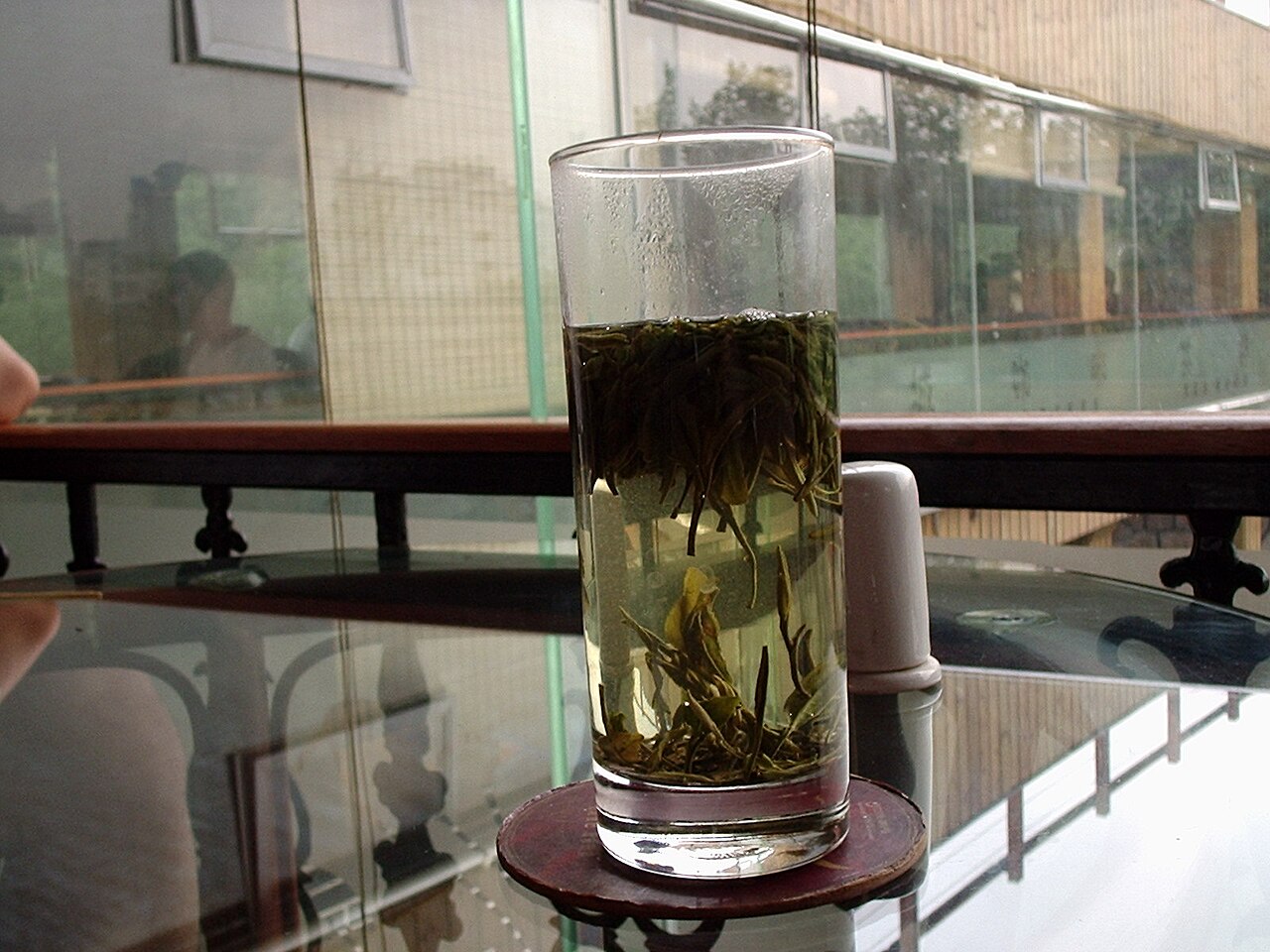
Research card
Topic: the real differences between cold brew tea and hot tea in taste, caffeine, polyphenol extraction, and drinking safety Core question: is cold brew tea naturally healthier and lower in caffeine, or is it mainly easier to perceive as lighter and smoother? Key reminder: temperature changes extraction pathways and taste structure, but it does not automatically award a drink a “healthier” conclusion; time, leaf-to-water ratio, source material, and storage conditions still matter. Best for: readers who drink cold brew tea often in summer, treat it as a low-caffeine or light-wellness option, or want to know what the real differences from hot tea actually are
1. Why is the phrase “cold brew tea is healthier” so easy for people to accept?
Because it fits today’s beverage intuition almost perfectly. Many people already have a sensory template for what a “healthier” drink is supposed to feel like: lighter, clearer, not too sweet, not too bitter, not too aggressive, easy to carry, and low in visible burden. Cold brew tea fits nearly all of those cues. It does not feel like a sugary soft drink, and it does not hit with the bitterness, astringency, and intensity of a very strong hot infusion. So it is easily placed into the category of “probably easier for the body.”
Chinese online content also tends to turn “easy to drink” into “gentle,” and then turn “gentle” into “better for long-term frequent drinking.” From a communication point of view, this is efficient. No one has to explain complicated chemical differences. Readers just need to remember that cold brew feels less sharp, and many will naturally take the next step and assume it must therefore be better.
The problem is that research does not really allow that jump. A softer taste can only tell you, first of all, that the structure of bitterness, astringency, and stimulation as you perceive it has changed. It does not automatically prove that caffeine has dropped dramatically, that polyphenol retention is necessarily better, or that drinking frequency can be increased without paying attention to total intake.
2. The most stable difference between cold brew and hot brew is taste structure first, not health status
This is the simplest place to start. Lower temperature changes the speed and profile by which different compounds enter the cup. The most immediate result is usually not that the tea suddenly becomes medically superior, but that it tastes softer, clearer, less bitter, and often lighter in aromatic expression. For many people who do not enjoy strong hot tea, that difference is very real. Cold brew tea absolutely has practical value on that basis alone.
But because the difference is first a sensory one, it is also easy to overread. People often move from “less bitter” to “less stimulating,” then from “less stimulating” to “much lower caffeine,” and then from “lower caffeine” to “safe to drink more casually.” Research does not let those steps fuse together so quickly. Bitterness, caffeine, catechins, polyphenols, amino acids, aroma compounds, and total extraction are related, but they do not all move like a single switch.
In other words, the most defensible advantage of cold brew tea is that it may help more people bring tea into daily life without forcing themselves through a cup that feels too strong, too hot, or too astringent. That is a real experience benefit. It is just not the same thing as having completed the full physiological judgment.
3. Is caffeine in cold brew tea definitely lower? The research-facing answer is closer to: not necessarily
This is one of the most overstated claims in the cold brew conversation. Intuitively, people assume that if the temperature is lower, caffeine must extract more slowly, and therefore the drink must contain much less of it. Part of that logic is reasonable: under similar conditions and similar time windows, lower temperature can indeed slow the extraction of some compounds. But real cold brew tea is not just “low temperature for a short time.” In practice it is usually low temperature plus long time, and sometimes a higher leaf dose as well.
Once steeping time becomes much longer, some of the earlier “slow extraction” advantage may be partly made up again. Different tea categories, leaf size, whether the material is broken or whole, whether the bottle is agitated, and how concentrated the ratio is all change the final caffeine level in the cup. That means you usually cannot look at the words “cold brew” alone and know how much lower the caffeine really is. Some cold brews may indeed be lower. Some may not differ very much. Some, if made with heavy leaf loading and long extraction, may not be the near-caffeine-free drink people imagine.
That is why research-minded writing is usually more careful: temperature, time, and ratio jointly shape caffeine release, so “cold brew” should not be treated as an automatic low-caffeine label. If caffeine matters to you, the better questions are total amount consumed, steeping duration, tea type, time of day, and your own sensitivity—not just whether the tea was cold brewed.
4. What about polyphenols and other compounds? Why can’t “cold brew preserves more nutrition” be stated as a simple conclusion either?
Because this is another case where a complicated set of changes gets compressed into a very convenient slogan. Tea does not move in a single chemical direction. Some compounds enter the liquor more readily at higher temperatures, some flavor dimensions appear more directly, and some bitterness and astringency become more obvious. Lower-temperature cold brewing may make overall extraction slower and flatter, so the parts people experience as harsh arrive less aggressively. That can make the drink feel cleaner. But a cleaner feeling is not the same thing as a completed nutritional conclusion.
Put more accurately, cold brew tea and hot tea are often better understood as different extraction distributions rather than one absolute winner and one absolute loser. Hot brewing does not automatically “damage the good parts,” and cold brewing does not automatically “preserve them better.” What ends up in the cup still depends heavily on leaf quality, temperature profile, time, and concentration.
So when content claims that “cold brew preserves more tea polyphenols and is therefore better for light wellness,” the main warning sign is usually the missing comparison frame in the middle. Compared with what kind of hot brew? Using what tea? A few minutes versus several hours? Measured per milliliter, or by the total amount you actually drink in a whole bottle? If those conditions are left vague, the conclusion is usually being stated too quickly.
5. The issue cold brew tea most seriously needs added back into the conversation is storage and safety
This is exactly what gets ignored most easily in “cold brew is gentler” content. Its visual language and tone are so light that people instinctively assume there is less to worry about. But from a food-handling point of view, low-temperature, long-time infusion is not a process that allows time and storage conditions to be ignored. If the tea is made cleanly, kept refrigerated, infused under controlled conditions, and consumed reasonably quickly, there is no need to dramatize the issue. But if it sits at room temperature too long, if containers are reused carelessly, or if the tea is stored for too long after brewing, then the phrase “gentler” does not solve the problem.
Many people discuss cold brew tea as if it were merely an aesthetic version of hot tea, and forget that it is also a food-preparation practice involving time management and cold storage habits. Neither research nor basic kitchen logic supports the idea that “because it is tea, it is naturally safe however you prepare it.” Tea is not a high-risk food, but any water-based drink that is steeped for a long time and intended for later consumption still needs ordinary rules of cleanliness, refrigeration, and timely drinking.
In other words, the part of cold brew tea that should not be romanticized is not its flavor but its handling. The more it is presented as a lifestyle routine—brew it the night before, carry it the next day, sip all day long—the more important it becomes to also mention whether it stayed cold, whether the container was clean, and whether it was finished promptly.
6. The real value of cold brew tea usually lies in replacement, not glorification
If someone used to spend summer drinking mostly sugary beverages, sweet milk teas, or heavier bottled drinks, and now switches to a homemade unsweetened or lighter cold brew tea, that can absolutely be a more reasonable beverage structure in practice. It makes tea more convenient, easier to sustain, and better suited to commuting, office life, and warm weather. Those are all real benefits.
But replacement value is not the same as glorified value. Cold brew tea may be a better option than some older habits without meaning that “once it becomes cold brew, it automatically enters the top health tier.” Research-guided judgment is usually not trying to force you into one extreme or the other—not worshipping cold brew tea, and not dismissing it as a gimmick. It is asking you to see what it replaces, whether it lowers sugar burden, whether it helps you avoid very hot drinking, and whether you are still keeping basic judgment around caffeine and storage.
Many useful everyday drinks do not earn their value by being perfect. They earn it by being easier to sustain than the previous option while carrying fewer obvious burdens. That is often where cold brew tea is strongest.
7. If you want to ask “is cold brew tea actually better for me?” in a more research-like way, start with these five questions
First, am I drinking it because I like the taste and convenience, or because I have already imagined it as a naturally low-caffeine wellness drink? The first is perfectly reasonable. The second needs more evidence.
Second, how much tea did I use, how long did it steep, and how much total liquid am I actually drinking? Those variables usually tell you more about caffeine and strength than the word “cold brew” alone.
Third, what is it replacing? If it replaces a sugary or heavier beverage, its practical value is often higher. If it simply adds another large tea drink to the day, the conclusion changes.
Fourth, have I mistaken “less bitter” for “barely stimulating” or “fine to drink late without thinking”? This matters especially for caffeine-sensitive people.
Fifth, is my preparation and storage routine actually solid? Refrigeration, container cleanliness, avoiding long room-temperature holding, and finishing it reasonably soon all matter, even if they are not glamorous.
8. Conclusion: cold brew tea can fit daily life very well, but it should not be marketed to your own mind as “naturally healthier”
If the whole article has to end in one sentence, I would put it this way: the most reliable strengths of cold brew tea are that it tastes softer, works well in summer, and can become a realistic replacement for higher-sugar drinks; but “cold brew” itself is not an automatic low-caffeine label, not an automatic nutritional upgrade label, and not a safety exemption label. Beyond temperature, time, leaf dose, total intake, and storage conditions still determine what the drink actually means for you.
In other words, cold brew tea is worth liking, but not worth mythologizing. Drinking lighter does not automatically mean research says it is better, and tasting less bitter does not mean all caution can be relaxed. A more mature way to judge it is to place it back into the framework any real drink deserves: look at the material, the extraction, the total intake, the replacement relationship, and the storage method. If you still genuinely like cold brew tea after doing that, that is usually a very solid reason to keep liking it.
Continue with Will one modern tea drink squeeze your sleep window more than you think?, When drinking tea, should you worry most about sugar, caffeine, or temperature itself?, and Are bottled unsweetened teas healthier, or just easier to drink more often?.
Source references: NCCIH: Tea, Theanine and Caffeine Content of Infusions Prepared from Commercial Tea Samples, Tea and Health: Studies in Humans, and publicly available review material on tea infusion and daily-consumption research. The goal here is to separate taste experience, extraction logic, and health conclusions more carefully.