Brand and research feature
Why Chagee keeps coming up in Chinese tea-drink debates: light milk tea, Oriental branding, caffeine concerns, and scale
Chagee is worth reading as more than another fast-growing tea chain. What it really magnifies is a larger formula in modern Chinese tea drinks: a product structure that feels more tea-forward than dessert-like, an “Oriental tea drink” identity that is easy to read at a glance, a light-milk-tea core that scales well across cities, and a consumer reality that naturally spills into caffeine, sleep, health-halo, and transparency debates.
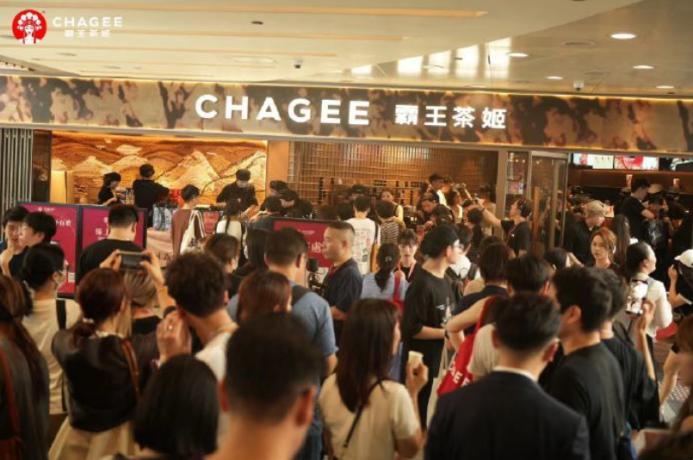
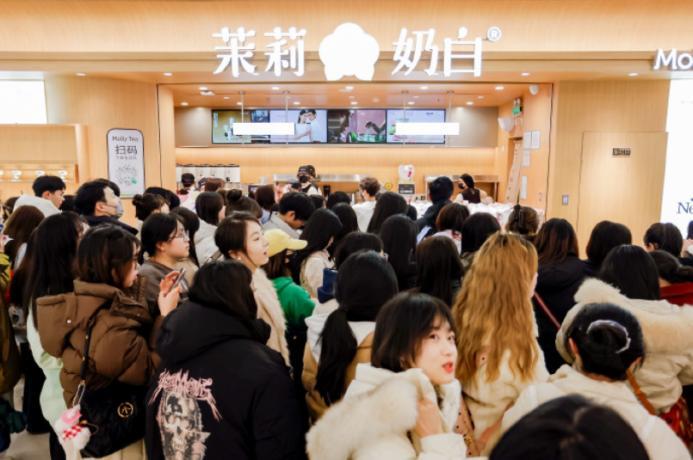
Recent Chinese internet discussion around Chagee has not been limited to launch buzz or queue photos. The brand keeps getting pulled into larger conversations: why light milk tea has become central again, why tea-base-heavy drinks now feel more appealing than fully dessert-like milk teas, why “real tea” branding has grown more powerful, and why the same brand can also become a flashpoint for caffeine, sleep disruption, and arguments over whether tea-forward positioning gets overstated as a health signal.
That is why Chagee deserves a longer treatment. It is not just a successful chain. It is a clear sample of how tea is being reassembled for modern urban consumption in China: compressed into recognizable symbols, repackaged for scale, translated into retail visuals, and then amplified through platforms that reward things that are both easy to identify and easy to argue about.
Reading card
Topic: why Chagee became a repeatedly amplified tea-drink brand in Chinese internet discussion Main threads: light milk tea structure, “Oriental tea drink” branding, replication at scale, tea-base signaling, caffeine and sleep debates, and the limits of the health halo around tea-forward drinks Best for: readers trying to understand why Chagee matters beyond brand heat, and why it keeps appearing in conversations about tea, health claims, and modern drink culture Approach: not a fan profile and not a takedown; the goal is to connect the business logic, product structure, and research-adjacent debate.
1. Why does Chagee keep getting amplified in Chinese internet discussion?
Because it sits exactly where several current consumer preferences overlap. Many drinkers no longer want only sweetness, heavy toppings, or pure novelty. They increasingly care about whether a drink feels lighter, whether it can fit repeated weekday consumption, and whether it seems closer to tea than to a dessert cup. At the same time, many brands talk about Chinese aesthetics or tea culture, but fewer manage to turn those ideas into a sharply recognizable modern chain language that can be repeated across cities and malls. Chagee does that unusually well.
It gives people a quick and useful shorthand: this is not just milk tea, not just coffee-shop modernity, and not quite traditional tea either. It is a tea drink that looks more refined, more tea-based, and more culturally framed than many competing chains, while still being easy to order, easy to photograph, and easy to keep buying. In platform terms, that is ideal. It is legible, shareable, and debatable all at once.
2. What actually distinguishes it from earlier waves of Chinese tea chains?
The difference is not that Chagee invented tea bases or milk tea. The difference is that it made “more tea-like” feel like the center of the proposition rather than a supporting note. Earlier waves of new tea brands often won through fruit tea color, richer dessert logic, large-format novelty, or premium social spaces. Chagee instead places more emphasis on tea presence, smoother but lighter milk structure, and a cup that still feels recognizably tea-forward rather than fully covered by sugar and dairy.
That shift matters because once a brand is read as more tea-like, it inherits several powerful associations. It becomes easier to connect it with real leaves, lighter burden, less sweetness, and a more “serious” or “adult” kind of daily drink. It also becomes easier to place it into commuting, office, and afternoon-focus routines instead of treating it only as an indulgence. But that same shift creates pressure: once consumers accept the “real tea” framing, they also start asking harder questions about caffeine, sleep timing, and whether tea-forward marketing is being overtranslated into health language.
3. Why is light milk tea such a crucial product structure for Chagee?
Because light milk tea is one of the most effective bridges between “this feels like tea” and “this is still easy for the mass market to enjoy.” Pure tea still has a relatively high entry barrier for many urban consumers: too bitter for some, too dry for others, too plain for people who are used to stronger sensory payoff. Traditional richer milk tea lowers the barrier, but it can now feel too sweet, too heavy, or too dessert-like. Light milk tea sits in the middle. It keeps enough softness and smoothness to stay approachable, while lifting the tea base high enough that consumers feel they are drinking something tea-led rather than only dairy-led.
Chagee’s strength is that it turned this middle structure into a repeatable brand identity, not just a few menu items. Light milk tea lets the company tell three stories at once: a flavor story, because the tea base still matters; a lifestyle story, because the cup feels more compatible with weekday repeat consumption; and a cultural story, because it can be framed as a modern “Oriental tea drink” rather than simply another sweet milk beverage. From a chain-operations perspective, that kind of core line is also easier to standardize and extend across many stores.
4. Why is its “Oriental tea drink” branding easier to remember than many competitors’ cultural positioning?
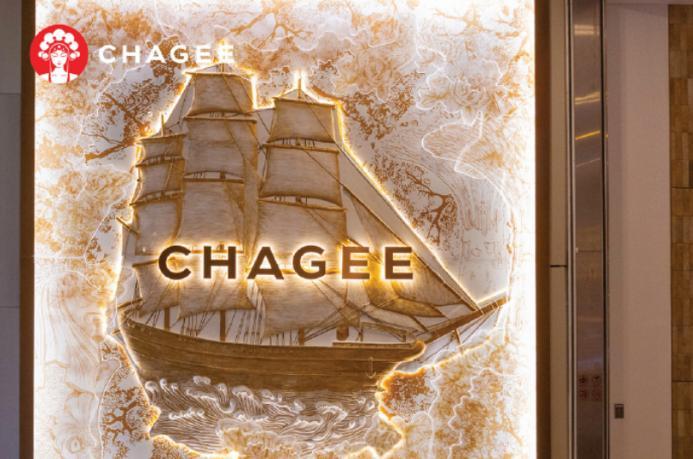
Because Chagee is not really asking consumers to learn culture. It is giving them a complete emotional and visual frame. Many brands use Chinese-style patterns or tea-language vocabulary; fewer manage to translate those references into a coherent retail shorthand. Chagee’s naming, visual contrast, store design, and tone all work toward a simple outcome: “tea, but modern; Chinese-coded, but not dusty; aesthetic, but still easy to buy.”
That kind of frame works extremely well on social platforms. It offers visible symbols, but also a small identity boost: the consumer is not just drinking any milk tea, but something that feels more stylized, more tea-based, and more narratively loaded. Chinese internet culture is very good at repeatedly amplifying brands that are easy to see and easy to summarize. Chagee fits that pattern almost perfectly.
Still, this should not be mistaken for a full cultural rendering of tea history. It is commercial storytelling, not scholarship. That does not make it meaningless. It simply means the brand functions more as a modern access point and a retail translation layer than as a faithful vessel of the whole complexity of Chinese tea culture.
5. Why does Chagee get pulled so easily into caffeine and sleep debates?
Because a brand that wins through tea-forward positioning also inherits tea-forward scrutiny. Once consumers believe a drink is based on real tea, less masked by sugar, and more dependent on actual tea taste, they naturally become more alert to the other side of that equation: caffeine exposure, timing, and sleep disruption. People are less likely to ask those questions first about a heavily flavored dessert-style cup, even though those drinks may also contain meaningful caffeine.
Recent Chinese internet conversation has made this especially visible. Chagee has repeatedly appeared in debates over whether some modern tea drinks are stronger than consumers expect, whether brands should communicate caffeine risk more clearly, and whether a tea-forward image can coexist with better consumer guidance around sleep-sensitive time windows. The point is not that the brand is uniquely guilty. The point is that success makes it a focal case.
A research-oriented reading should stay away from extremes. Not every bad night of sleep should be turned into scandal, and not every criticism should be waved away as panic. The more useful conclusion is simpler: when a tea chain becomes a high-frequency habit and also markets itself through real tea presence, consumers need better ways to judge when, how often, and for whom those drinks are a good fit.
6. Why do some people read Chagee as a “healthier” choice, and how far does that idea hold?
It holds partly, but it is easy to overstate. Compared with richer, sweeter, more dessert-like drinks, a light-milk-tea structure often does feel less burdensome, and a brand that stresses tea base, leaf identity, and cleaner sensory cues will naturally benefit from that contrast. In substitution terms, many consumers are not imagining things when they say it feels like a more sustainable everyday option.
But “more reasonable than some alternatives” is not the same as “healthy in the abstract.” Frequency, total sugar, dairy structure, caffeine timing, personal sensitivity, and the broader daily diet still matter. The cleaner and more tea-forward a brand looks, the easier it becomes for consumers to forget that it is still a commercially engineered drink system designed for consistency, speed, and repeat purchase.
The stronger version of the point is this: Chagee often represents a cup that may be easier to fit into repeated urban consumption than many sweeter competitors. It should not be treated as a product that automatically stands on the “healthy” side of the line, nor should a stronger tea identity be translated into permission to stop asking practical questions.
7. Its deepest advantage may be replication, not aesthetics
Many people first remember Chagee through a name, a store facade, or a single drink. But what turns that attention into a national phenomenon is replication. In today’s tea-chain market, it is not especially rare to have a breakout store or a viral launch. The hard part is making hundreds or thousands of stores deliver something close to the same expectation. Chagee’s relatively focused product language, consistent visual identity, and concentrated consumer understanding all help that process.
That is why the brand looks like a narrative-driven chain from the front, but depends on much harder operating capabilities underneath: site selection, tea-base management, dairy consistency, training systems, cup assembly speed, franchise control, supply chain scale, and the ability to keep marketing synchronized with expansion. Consumers see “Oriental tea drink” aesthetics; the real engine is a robust chain system.
8. Why is Chagee a useful example for how tea re-enters public life?
Because it brings many people back into contact with tea sensation without asking them to enter the world of traditional teahouses, specialist terminology, or formal tea education. Even if that contact is commercial, standardized, and symbolically compressed, it still shows something important: tea in China is not confined to origin stories, museums, and connoisseur spaces. It is being translated into malls, office zones, delivery platforms, and short-form content ecosystems.
That is what makes Chagee worth documenting. Not because it is equivalent to tea culture itself, but because it shows one contemporary way tea continues to circulate in mass public life: not through direct preservation, but through compression, translation, packaging, and scalable retail repetition.
9. Its next challenge is not simply staying hot, but avoiding a future in which it is only good at being hot
The larger a brand becomes, the more demanding the conversation around it gets. For Chagee, the next challenge is not only opening more stores. It is building a more durable trust structure around what “Oriental tea drink” really means in practice. Consumers are already asking more specific questions: can tea-base information become clearer, can caffeine guidance become more useful, is the tea-forward promise consistently delivered, and what exactly is “lighter” about light milk tea when people use that word so casually?
That is why Chagee is such a revealing case. It gathers many of the hardest modern tea-drink questions in one place: how culture, scale, efficiency, flavor, caffeine management, and health-adjacent language are supposed to coexist once tea becomes a high-frequency urban product. It is not a simple answer. It is a very good sample of the moment.
Continue reading: Modern tea drinks, caffeine, sleep windows, and labeling debates, Do real-leaf brewing, low sugar, and short ingredient lists automatically mean a healthier tea drink?, Protein, lactose, and the health halo around light milk tea, and Why light milk tea has moved back to the center of the market.
Source references: CHAGEE official site, Baidu Baike: Chagee, recent Chinese discussion traces aggregated through Google News around Chagee caffeine debate, sleep concerns, and expansion heat (2025–2026), and Xinhua: the overseas logic of new-style tea drinks.