History feature
Why Wang Ya’s Tea Monopoly Failed So Quickly: from the Dàhé 9 push for official monopoly and the destruction of private tea to the politics around the Sweet Dew Incident, why the late Tang court could not suddenly turn tea into a violently enforced long-term state monopoly
Today, when Chinese tea history is discussed, readers more easily notice larger institutional terms such as tea tax, tea monopoly, tea law, and the tea-monopoly envoy. By contrast, Wang Ya’s effort around Dàhé 9 under Emperor Wenzong of Tang is often compressed into one short line: Wang Ya pushed a government monopoly over tea profits, the method was excessively harsh, and it quickly failed. That line is not false, but it is still too light. What really deserves rewriting is not merely that “Wang Ya was harsh,” but why the late Tang court, even after recognizing tea’s high fiscal value, still failed to stabilize such an extreme monopoly scheme. To answer that, we cannot look only at the word cruelty. We have to place the episode back inside late-Tang fiscal anxiety, the salt-and-iron system, social circulation, the problem of illicit tea, and the political structure before and after the Sweet Dew Incident.
In other words, the most revealing thing about Wang Ya’s tea-monopoly experiment is not that it left behind a frightening story of burning private tea, moving tea trees, and banning private trade. It is that the episode looks like a very intense and very short-lived stress test of the system. The court had already seen that tea could become an important tax source and monopoly profit source, and it was no longer satisfied with ordinary tea taxation. It wanted to leap directly into stronger state control. But that leap was too abrupt, too hard, and too dependent on coercive command while lacking a sufficiently solid enforcement base. As a result, the policy quickly exposed its own political cost, social resistance, and administrative fragility. The speed of its collapse shows exactly this: the late Tang state already knew that tea had become heavy, but it still lacked the capacity to turn the heaviest possible form of control into a workable normal order.
That is also why this topic deserves a standalone place in the history section. It reconnects pieces the site has already treated in separate articles: tea tax, tea monopoly, the tea-monopoly envoy, and the tea tax office. The state first saw revenue in tea taxation, then pursued stronger control through monopoly, and then, in Wang Ya’s short-lived failure, exposed the problem that the state could imagine tea as very heavy without yet having hands steady enough to hold it. Once that step is clear, it becomes easier to understand why later monopoly institutions from the late Tang into the Song moved toward more durable forms.
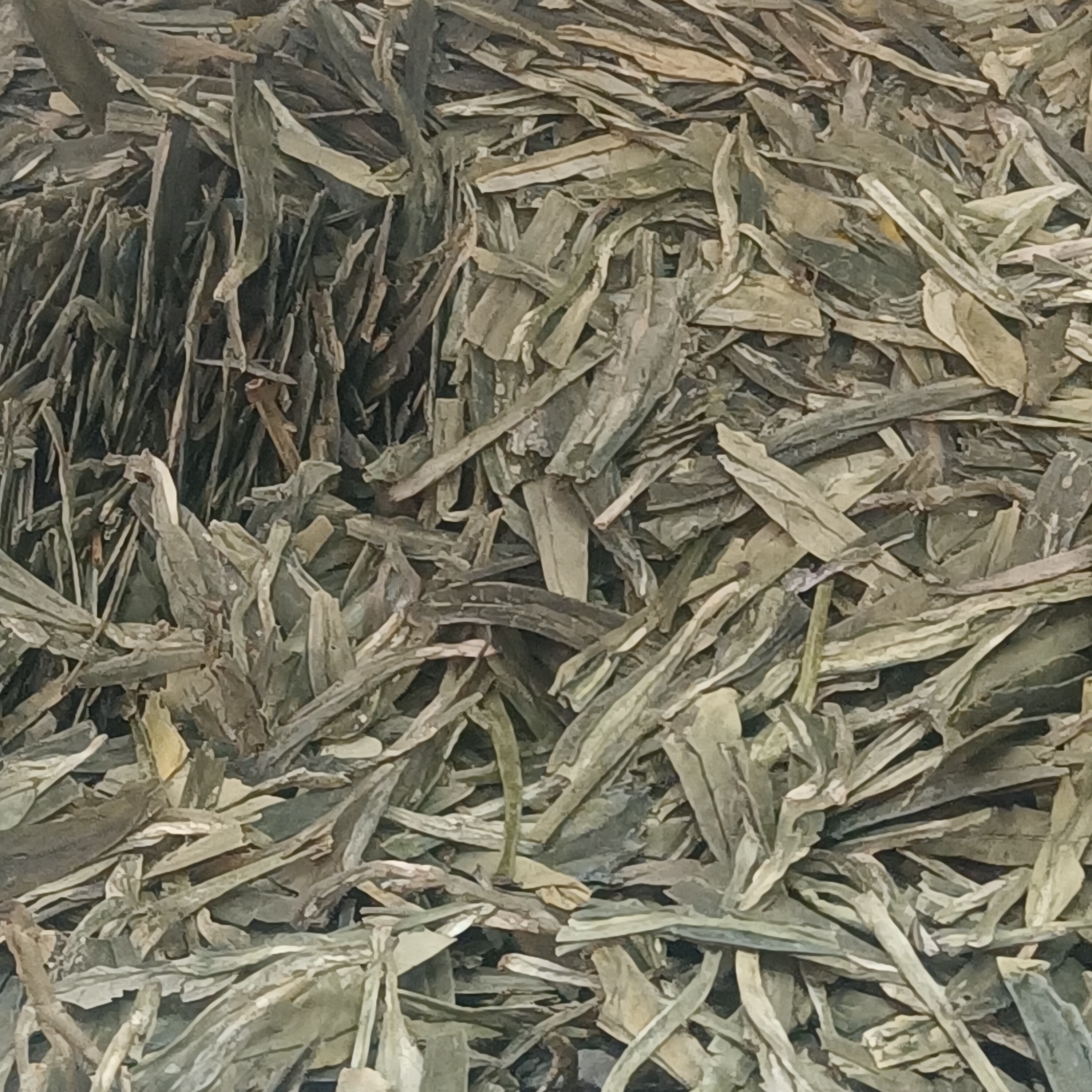
1. Why does Wang Ya’s tea monopoly deserve an article of its own? Because the real issue is not “someone in the Tang wanted to monopolize tea,” but why the state suddenly tried to grip tea so heavily
Many institutional problems become flattened once they enter later summary. The most common compressed version of Wang Ya’s tea monopoly goes like this: late-Tang finance was strained, Wang Ya proposed monopoly control over tea, the methods were too violent, and the policy quickly ended. The problem with that version is not that it is wholly wrong, but that it erases the part with the most explanatory force. If we only say “the method was too harsh, so it failed,” then we have explained almost nothing. What really needs explanation is this: why did the late Tang court think tea was worth seizing with such heavy methods at all? And why did those heavy methods, once imposed, so quickly show themselves to be unsustainable? Those two questions have to be answered together, otherwise Wang Ya’s tea monopoly remains only a failed policy instead of regaining its place in the institutional history of Chinese tea.
Across the longer history, the state did not begin with monopoly and exclusive control over tea. As the site’s earlier pieces on Fengshi Wenjianji and the spread of tea drinking in the Tang and on tea tax have already shown, tea first became more broadly consumed, transported, and traded, and only later was it seriously recognized by the court as something taxable, countable, and worth fighting over. The importance of Wang Ya’s case lies here: it was not the first moment when the state noticed tea’s value, but it was one especially radical attempt. The state no longer wanted merely to tax tea from outside the circulation chain. It tried to tighten production, possession, trade, and movement all at once, forcing tea to jump from a taxable commodity into something that the state believed should be tightly monopolized. That jump was very large, which is exactly why it deserves separate treatment.
Put differently, the point is not simply whether an official monopoly existed, but what happens when monopoly logic is pushed toward an extreme. Wang Ya’s policy pushed the state’s way of seeing tea to a very intense position: if tea profit is this large, why allow society to continue taking such a large share of it? Why not try to pull both the profit and the control of circulation back into official hands? It is at exactly this point that the late Tang state’s ambition becomes visible, and so do its limits.
2. Why did this kind of extreme monopoly impulse appear in the late Tang in particular? Because tea’s fiscal value had become visible and the court’s fiscal and political anxieties had become sharp enough
If Wang Ya’s tea monopoly is written only as one minister’s greedy design, the pressure of the age disappears. The late Tang was not a period of calm policy experimentation. It was an era of intense strain in finance, military expenditure, and political structure. After the An Lushan Rebellion, the Tang central government became much more sensitive to controllable revenue sources. The salt-and-iron system, transport administration, and various kinds of monopoly-style revenue became increasingly important. Tea, in this process, gradually shifted from a widely circulating consumer good into an object that the court watched carefully for income. By this point the key question was no longer merely whether tea could be taxed, but why so much tea profit should still be left in private hands. Wang Ya’s monopoly push grew directly out of that state of mind.
This point is especially important when placed against the background of existing Tang tea taxation. Tea tax already meant that the state had recognized tea as worth taxing and had already seen stable fiscal return in tea circulation. But tea tax was still a relatively external extraction. Goods were still produced, transported, and sold through substantial private networks, while the state taxed, checked, and regulated the chain from the outside. Wang Ya’s tea monopoly was clearly a step further. Its logic was simple: if tea profit is this large, then ordinary tea tax still leaves too much profit in private hands, while illicit tea, tax leakage, and detoured trade make the result insufficiently secure. The most radical answer, then, is not merely to tax tea but to take back control, routes, and goods along with the tax base.
So Wang Ya’s tea monopoly was not an isolated strange idea. It was an intense escalation of tea-tax logic under heavy fiscal anxiety. The problem, however, is that what looks “more thorough” in fiscal logic does not automatically become more workable in institutional reality. Many policies fail precisely because they follow revenue desire too aggressively into the future. Wang Ya’s case is one of them.

3. Why did Wang Ya’s plan look so especially shocking? Because it did not merely tighten tea tax. It tried to rewrite the order of tea production, stockholding, and trade itself
From the public historical lines that survive, what makes Wang Ya’s plan so memorable is not simply that it added one more tax burden. It attempted to rewrite the social order of tea itself. The measures most often repeated later—requiring tea trees to be brought into official control, burning private tea stock, strictly banning private trade, and backing the policy with severe punishment—show that this was not ordinary extraction. It was an effort to break existing private circulation chains at speed and force tea away from social circulation into official circulation. In other words, the state was not merely trying to take a share from the market. It was trying to redefine who could hold tea, who could sell it, and which routes could be used.
This point matters enormously. Ordinary tea taxation can also provoke resentment, but it still presumes that private networks continue to exist. Wang Ya’s monopoly, by contrast, looked more like an attack on the network itself. Tea growers, traders, transport nodes, stockholders, and local circulation habits were all suddenly placed under suspicion. The state was not trying to share the existing order. It was trying to displace it and move itself to the center. On paper that can look very efficient: if the state monopolizes production and sale, then in theory tea profit can be pulled back most fully. But precisely because the policy struck at the whole social structure of circulation, the resistance it provoked was not just resistance to tax weight. It was resistance against a comprehensive shock to livelihood, possession, routine exchange, and local economic networks.
Put simply, Wang Ya’s scheme looked so shocking not because it taxed a little more heavily, but because it tried to skip the middle stages and turn tea at once into a heavily monopolized state commodity. Such a leap is difficult even under stable politics and mature administrative networks. Under late-Tang conditions it was especially dangerous.
4. Why did it provoke such strong social resentment? Because it struck not a small group of speculators, but the everyday livelihoods and trade habits of the entire tea chain
Later retellings often imagine opposition to Wang Ya’s tea monopoly as little more than merchant complaint over profit loss, as if the issue were simply a conflict between official and private gain. But if we pay attention to the institutional actions themselves, it becomes clear that the damage extended much further. By the late Tang, tea was not a tiny luxury niche. It was a widely circulating commodity connected to multiple layers of society. People who grew tea in mountain zones, people who collected it locally, people who held stock for later sale, people who transported it along routes, people who retailed it in urban shops and markets, and people whose daily livelihood depended on tea stock and price movement—all of them were embedded in the same social network. Wang Ya’s hard measures effectively struck multiple points in that network at once.
That is why the resentment was not merely about paying more. It was about a general feeling that the policy had become inhumanly abrupt. Forced tree relocation, destruction of private stock, and severe punishment for private sale may have looked neat inside a command structure, but in social experience they would have been read as the state crossing beyond normal extraction and breaking directly into local production and property worlds. Once that feeling formed, resistance no longer remained a narrow economic issue. It became a political mood. People no longer felt simply that they were being taxed more heavily. They felt that the court no longer intended to let them continue living through the routines that had already organized tea trade and livelihood.
That is also why the historical language around the policy so often speaks of great resentment and violent government. Those phrases should not be dismissed as mere moral decoration. They reflect a practical reality: once a state suddenly cuts too many existing paths of interest and ordinary life, it no longer faces only localized evasion. It faces broad rejection. For any monopoly that hopes to last, that is lethal.
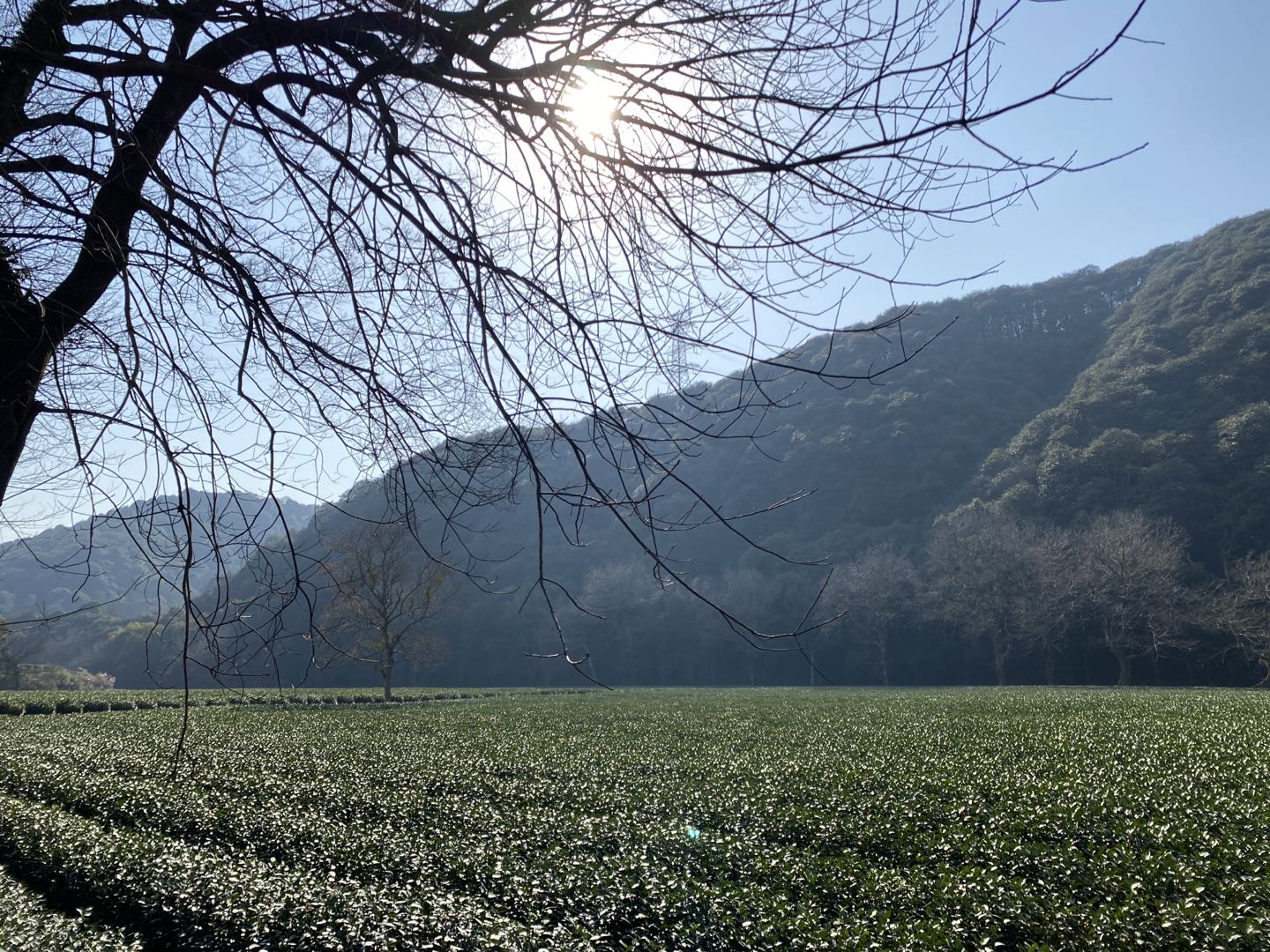
5. Why should we say that Wang Ya’s tea monopoly failed not only because it was too harsh, but because the late Tang state lacked the administrative basis to sustain such extreme control?
Excessive harshness was certainly one reason for failure, but stopping there still leaves the institutional weakness underexplained. History does know long-lasting monopoly systems backed by strong coercion. The real problem is that extreme control can last only when at least three conditions exist: a dense enough enforcement network, a stable enough political structure, and a social reality in which evasion can be consistently suppressed. Wang Ya’s tea monopoly reveals that late-Tang government lacked stability in all three respects.
First, the enforcement network. If the state truly wants to turn tea into a tightly monopolized commodity, one order and several punishments are not enough. It needs standing institutions able to reach into production zones, checkpoints, warehouses, transport nodes, and selling points. It needs ongoing capacity for checking, registration, shipment, inspection, and anti-smuggling action. In other words, it needs not just commands, but durable administrative arms. In Wang Ya’s short-lived attempt, the court seems to have imagined the command very fully while lacking the thicker administrative base needed to sustain it. You may burn private tea once, but can you take over the private network every day afterward? You may punish private traders once, but can you replace the circulation chain they had already built? Those are not the same thing.
Second, the political structure. The late Tang was not a moment of calm central authority and tightly unified bureaucratic execution. Relations among eunuchs, ministers, fiscal agencies, and local enforcement were all deeply strained. A heavy institution like Wang Ya’s tea monopoly—one that required long-term coordination across regions and levels—was especially vulnerable to a center that was itself unstable. Once the political core shook, the policy lost the support needed to keep accumulating practice. In other words, it was not laid over a stable regime. It was forced onto a highly tense power structure. Even if that kind of policy can frighten people for a moment, it has difficulty hardening into order.
Third, the conditions for evasion. Tea is by nature a dispersed, mobile, multi-node commodity. If the state wants to gather it all sharply back into official hands, the cost of supervision becomes extremely high. Unless the enforcement network is dense enough to close those gaps, private society will quickly search out concealed stock, detoured routes, divided shipments, and informal transfers. Tea is not easily trapped at one or two points. It is harder to discipline quickly than some more concentrated fiscal objects. Wang Ya’s failure shows that the state’s desire to control tea was already strong, but its understanding of tea as a circulation commodity was still too thin.
6. Why did the Sweet Dew Incident make this monopoly attempt appear even more short-lived and fragile? Because it revealed that the political center supporting the policy was itself profoundly unstable
Wang Ya’s tea monopoly is remembered so closely alongside the Sweet Dew Incident not merely because of chronological proximity. What matters is that the Sweet Dew Incident shows that the late-Tang center’s core problem was not simply whether one fiscal measure was clever. It was that the power structure itself had become deeply dangerous. Under those conditions, a monopoly scheme already burdened with severe social resistance could hardly transform from short-term coercion into long-term order. In the end, policy must be held up by political structure, not by fiscal desire alone.
The Sweet Dew Incident exposes how even the broader effort under Emperor Wenzong to rearrange the political structure could collapse instantly. In such a setting, a highly invasive economic monopoly had even less chance of maturing. Wang Ya himself stood close to the center of that political disaster, so his tea policy looks even more clearly like a high-pressure experiment attached to an overstretched center. Once the center failed, the policy no longer had the time or political protection to accumulate, adjust, soften, and institutionalize itself. It did not have the chance to move from coercive shock toward stable management. It fell together with the political rupture.
This is why Wang Ya’s tea monopoly cannot be read only as fiscal history. If we look only at finance, it seems like a court testing a higher-revenue formula. But once we place it back into the politics around the Sweet Dew Incident, a deeper fragility appears: the late-Tang state had no sufficiently stable core that could bear the costs of remaking tea’s social order on this scale. The failure was therefore not simply a matter of popular anger. It was also that the political center itself could not hold the policy up.

7. Why is this failure so important? Because it shows that seeing tea profit and having the ability to monopolize tea profit durably are not the same thing
The most historically important part of Wang Ya’s tea monopoly may be not what it achieved, but how quickly it failed and how much that failure exposed. It makes one thing unusually clear: once the state saw high fiscal value in tea, that still did not mean the state already possessed the capacity to convert tea into a stable monopoly institution. Recognizing profit is one thing. Building a durable structure of control is another. The first depends on fiscal vision; the second depends on a complicated fit among administrative networks, political stability, social carrying capacity, and the actual circulation nature of the commodity. Wang Ya’s failure exposes the gap between those two stages.
This matters greatly because it helps explain why later, more mature monopoly systems usually did not simply repeat the most extreme posture of burning private tea and pulling everything instantly into official hands. Instead they developed more intermediate techniques: more paperwork, more transport arrangements, more verification and licensing, more complex combinations of taxation and monopoly control. That was not because later states suddenly became kinder. It was because short-lived radical experiments of Wang Ya’s kind had already shown that trying to crush the whole social circulation network with raw command alone imposed enormous institutional and political costs, and still did not guarantee stability.
So Wang Ya’s failure is important because it was an expensive institutional lesson. It taught the state that tea really was heavy enough to justify ongoing attention, but precisely because tea was so heavy, it could not be mastered forever through one round of violent compression. The more important the commodity, the more it required a durable governing technique rather than a single theatrical strike.
8. How does this article relate to the site’s existing pieces on tea monopoly, the tea-monopoly envoy, and the tea tax office? This one explains a radical failure; the others explain longer paths of institutionalization
Placed back into the site’s existing history structure, this article is not meant to replace the broader piece on tea monopoly, nor to repeat the article on the tea-monopoly envoy or on the tea tax office. What it adds is a crucial missing layer: between the state’s desire to seize tea profit and its later ability to do so more durably, there was an extremely short-lived, highly violent, and institutionally revealing failed leap. The general tea-monopoly article explains why the state moved toward stronger control; the envoy article explains why tea became important enough to justify a dedicated office-holder; the tea tax office article explains the more routine machinery of long-term execution. This article explains what happened when the state tried to jump to the heaviest form too early, without the mature administrative devices needed underneath it.
That means this article does not duplicate the others. It illuminates them. Without this piece, readers can too easily imagine tea monopoly history as a smooth escalation in which the state saw tea profit and then simply kept tightening control ever more successfully. With this piece added, another line becomes visible: the state also failed abruptly when it moved too fast, too hard, and too crudely. Institutional history is not a straight line of increasing control. It also learns through failure.
That, in turn, makes Chinese tea history thicker. Tea was never only a cultural drink and never only an abstract fiscal category. It was also a real commodity capable of testing the limits of state capacity. Wang Ya’s tea monopoly was one such test.
9. Why is it still worth rewriting Wang Ya’s tea monopoly today? Because it corrects the easy story that whenever the state wanted control, it automatically had the capacity to achieve it
Many modern retellings of premodern institutions carry an unspoken assumption: if the court issued an order, if the law was harsh enough, and if the punishments were severe enough, then the institution would naturally land. That looks like a strong-state story, but it often flattens history. Wang Ya’s tea monopoly corrects exactly that habit. It shows that a state can certainly express its will very forcefully, but expressing will and realizing stable order are not the same thing. Especially with a commodity like tea—widely produced, widely circulated, and deeply embedded in everyday social life—any extreme form of concentrated control that ignores administrative basis and social structure may look strongest at the beginning and then prove most fragile almost immediately.
This matters especially for tea history writing. Tea history too easily gets split into two ends: on one side a graceful cultural history, on the other side an abstract state history. The former forgets the state; the latter can make the state look like a machine that automatically runs once a command is issued. The real value of Wang Ya’s story is that it puts the state back into reality. The state has desires, anxieties, fiscal calculations, and limits of capacity. It can see tea profit and still misjudge how that profit can be controlled. That kind of state is a historical state, not a conceptual one.
So rewriting Wang Ya’s tea monopoly is not about adding one more obscure anecdote. It is about making Chinese tea institutional history more real. Real means writing not only successful institutions, but also the experiments that failed quickly while exposing the central problems. Very often, those failures tell us most clearly what the actual distance was between the state and the commodity it wanted to control.
10. Conclusion: what Wang Ya’s tea monopoly really shows is not only that violent government could not last, but that the late Tang state had already recognized tea’s weight without yet being able to turn the most extreme form of monopoly into durable order
If this article has to be reduced to one shortest conclusion, I would put it this way: Wang Ya’s tea monopoly deserves to be revisited not simply because it left behind an image of cruelty and resentment, but because it makes one point extraordinarily clear. The late-Tang state had already fully recognized tea’s fiscal weight and even wanted to seize that weight back into official hands in one move. But it lacked a sufficiently stable political center, a sufficiently mature enforcement network, and sufficiently low social resistance to turn that most extreme form of monopoly into a lasting institution.
For that reason, this failure is not just one policy episode in the late Tang. It is a key moment of exposure in the institutional history of Chinese tea. It makes clear for perhaps the first time that seeing tea profit is not the same as securely holding tea profit, and wanting monopoly is not the same as having the capacity to maintain monopoly. The more important tea became, the less it could be subdued forever by one violent order. Instead, it required finer, steadier, more durable techniques of administration. The short life of Wang Ya’s monopoly exposed in advance why later monopoly systems, dedicated offices, tax offices, licensing, and verification devices would need to become more complicated.
So the best way to read Wang Ya’s tea monopoly today is not merely as a case of a bad minister or a chaotic age. It is better understood as a failed high-pressure institutional experiment. It lets us see how tea became a heavy commodity the state wanted to fight over, and also how the state could fail to turn its own ambition into order. It is exactly in that gap between ambition and capacity that Chinese tea institutional history becomes truly complex.
Continue with: Why tea tax deserves to be rewritten, Why the tea monopoly deserves its own history, Why the tea-monopoly envoy deserves a closer reading, and Why the tea tax office was more than a tax bureau.
Source note: this article is based on widely circulated public historical lines concerning Wang Ya’s role around Dàhé 9 in holding the office of tea-monopoly envoy, pushing an extremely harsh official monopoly over tea, destroying private tea and forbidding private trade, and the rapid collapse of the policy around the politics of the Sweet Dew Incident. It also builds on the site’s existing institutional pieces on tea tax, tea monopoly, the tea-monopoly envoy, tea law, and the tea tax office. The emphasis here is on explaining the structural reasons for failure and the historical place of Wang Ya’s monopoly attempt rather than line-by-line reconstruction of every regulation.