Why compressed tea fit whisked tea and loose tea fit steeping: a structural shift from the Song powdered-tea order to Ming-Qing leaf-tea daily life
Created: · Updated:
Today, many people summarize Chinese tea history with one smooth sentence: Song whisked tea, Ming-Qing steeped tea. Smooth is not the same as accurate. The real question is not simply that people once drank tea one way and later drank it another way. The harder and more useful question is this: why did the whisked-tea world naturally depend on compressed cakes, grinding, powder, and bowl-surface judgment? Why did the later world of steeping naturally depend on loose leaves, leaf expansion, hot-water soaking, and the rhythm of pouring? In other words, why did tea form and tea method lock into each other so tightly that vessels, aesthetics, standards of judgment, and even the meaning of “knowing tea” changed along with them?
Put more directly, this essay is not about whether compressed tea or loose tea was “better,” and not about which world was “more traditional.” It is about fitness. Compressed tea stood at the center of the whisked-tea world not because premodern drinkers simply liked making tea into cakes, but because roasting, grinding, sifting, pasting, and whisking required a tea that could be processed into fine powder and then rebuilt as a stable surface in the bowl. Loose tea later became central to steeping not because people suddenly wanted convenience for its own sake, but because direct infusion, leaf observation, aroma reading, liquor judgment, and multi-round comparison all work better when the leaf remains a leaf.
Once we understand the issue as one of fit rather than replacement, many apparently separate questions in Chinese tea history begin to connect. Why did Song doucha care so much about foam and bowl surface? Why did the Ming loose-leaf turn rewrite vessel order? Why did the move away from tribute cakes have such large consequences? And why do people today revive whisked tea while still using gaiwans and pots in ordinary life? Because this was never just one gesture replacing another. It was one complete tea world giving way to another.
To understand the difference between whisked tea and steeping, it is not enough to compare motions. We have to ask what kind of tea, what kind of vessel, and what kind of evaluative center each method actually requires.
compressed teawhisked tealoose teasteepingSong-Ming tea history
1. Why does this topic deserve its own essay? Because what is usually missing is not the headline, but the structural explanation in the middle
Most readers already know several conclusions. Song tea culture centered on whisked preparation. From the Ming onward, loose tea and steeping became mainstream. Zhu Yuanzhang’s move away from tribute cakes is often named as a turning point. Later gaiwans, Yixing pots, and gongfu-style brewing all stand on loose-leaf logic. None of that is false. The problem is that these points are often presented as disconnected facts. People know that the center changed, but not why it had to change in the way it did. The real work is to explain the middle layer.
That means answering why one tea form naturally leans toward one method, and why one method in turn shapes preference for one tea form. Whisked tea is not a method that simply grabs a few leaves and starts going. It needs highly refined tea powder, stable paste building, controlled whisking, and a bowl surface that can be watched, compared, and judged. Steeping is not merely hot water touching any tea at random. As a true method, it depends on wetting, opening, extracting, and following how aroma, liquor, and leaf change across time. Each world therefore has its own material ideal type.
Without this layer, tea history collapses into two lazy stories. One says loose tea was “more advanced” and therefore replaced whisked tea. The other says whisked tea was “more elegant” and was merely lost. Neither is good enough. Both turn history into a ranking exercise and fail to see that each method once belonged to a complete system supported by its own historical conditions. To explain why compressed tea fits whisked tea and loose tea fits steeping is to restore that systems view.
2. Why did compressed tea become the natural center of the whisked-tea world? Because whisked tea does not really work on “leaves,” but on finely reprocessed tea matter
The first key point is simple: the real object handled by whisked tea is not the intact leaf, but tea powder. From roasting and grinding to sifting, pasting, and whisking, the whole logic of whisked tea is to break tea down first and then reorganize it inside the bowl. It is not about letting leaves slowly unfold. It is about making tea powder interact with water and whisking to form a temporary, judgeable surface structure. Once the method is organized like that, it naturally fits teas that are convenient to press, store, grind, and turn into uniform powder—namely cake tea and other compressed forms.
This does not mean leaf tea could never be ground. It means that once whisked tea matured as a culture, it would tend to favor tea forms more easily converted into fine, controllable powder. Compressed tea had a built-in advantage because it already belonged to a world of processing and reshaping. It did not need to preserve the visual individuality of the leaf in water. It needed to become a refined base material that could be reworked. In the whisked-tea world, the leaf is not there to remain visible. It is there to be transformed.
That is also why Song whisked tea, doucha, and tribute tea systems locked together so tightly. Once judgment sits on the bowl surface, fineness and uniformity of tea matter enormously. Powder must be fine, color clean, whisking response stable, and foam durable enough to produce visible differences in a dark bowl. Compressed tea did not merely happen to coexist with whisked tea. It was structurally suited to a method based on pressing, grinding, and re-forming tea into a visible surface.
Whisked tea does not really look at leaves. It looks at the bowl surface. Once the center of judgment lies there, tea will be pushed toward forms that are finer, more even, and easier to rebuild as foam.
3. Why is whisked tea not simply “making foam”? Because it requires material, technique, vessels, and standards of judgment to revolve around powder at the same time
Modern revival content often isolates the most visible actions: adding water, building paste, whisking, raising foam. That is accurate as far as it goes, but it still underestimates what whisked tea demands of tea form. For whisked tea to work, powder must be fine enough, the bowl must cooperate, water temperature and pouring rhythm must be right, and standards of judgment must be centered on the bowl surface. In other words, whisked tea is not one floating trick. It is an entire system centered on powdered tea. Compressed tea fits it not by habit, but by structural compatibility.
Song doucha makes this obvious. What was being compared was not only who moved fast, but whose powder was fine enough, whose paste was stable enough, whose whisking was even enough, whose foam was whiter and more durable, and whose bowl edge showed water marks later. All these standards assume that tea has already passed out of leaf form and into a powdered stage. Whisked tea therefore does not “read leaves.” It “reads surfaces.” It does not foreground leaf individuality unfolding in water. It foregrounds the reconstruction of order across the bowl face. In sensory terms, that is a very different kind of training from later steeping.
That is also why the utensils of the whisked-tea world are not accidental. Tea mills, sifters, whisks, and bowls move to the center because they all serve the logic of powder. They handle distribution, suspension, foam formation, foam holding, and visual judgment rather than leaf opening. As long as that remains the core method, compressed tea or cake tea will not be just one raw material option. It will remain the natural base of the whole world.
4. Why did loose tea suit steeping better? Because steeping is not about rebuilding a bowl surface, but about allowing the leaf to release itself gradually in water
The logic of steeping is the reverse. It does not first break tea apart and then reassemble it in a bowl. It tries, as much as possible, to let tea enter water in leaf form and unfold through soaking, opening, and extraction. What matters is not the visible surface layer but the process: how the leaf rises and falls, how aroma opens, how liquor changes, how texture shifts from one infusion to another. Once the center of evaluation lies there, loose tea becomes the natural fit.
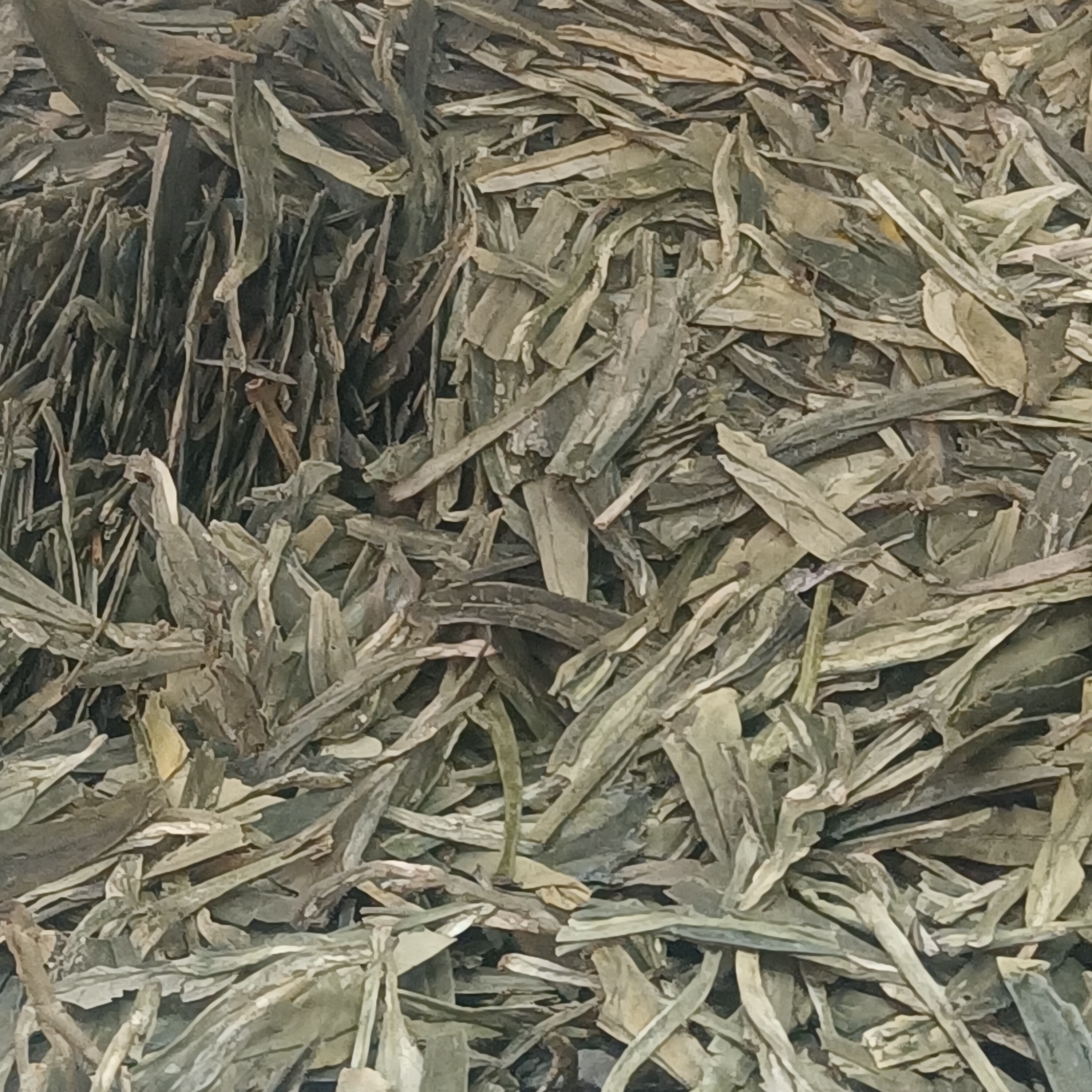
The real value of loose tea is precisely that it preserves the leaf as leaf. It avoids forcing tea first through compression and then re-fracture. Leaf shape, strip form, tenderness, firing, integrity, and breakage can all enter judgment directly. The world of steeping does not need to turn tea into highly standardized powder. It needs each leaf to act as a bearer of information in water. The leaf is not an obstacle. It is the thing being read. As soon as method is organized in that way, loose tea is not just convenient. It is structurally appropriate.
That is why later Chinese tea culture could so naturally turn toward looking at the spent leaf, smelling aroma, judging firing, and comparing multiple rounds. Steeping does not care most about whether a tea can create a beautiful white surface at one moment. It cares whether the tea can open in water and reveal layered change. Loose tea is therefore not merely another tea shape. It is another epistemic doorway into tea itself.
Steeping is process-centered rather than surface-centered. Once the focus falls on leaf opening, aroma release, and infusion rhythm, loose tea becomes the more natural material center.
5. Why was the definition of “knowing tea” rewritten too? Because changing method changes what counts as competence
No method rewrites a culture merely by changing motions. It rewrites what counts as expertise. In the whisked-tea world, someone who “knows tea” must know how to judge foam, read the bowl surface, compare powder, and evaluate whisking skill. Knowledge here is strongly tied to the ability to read and produce order on a visible surface. In the world of steeping, by contrast, “knowing tea” increasingly means something else: reading strip shape and leaf bottom, managing water temperature and time, smelling lid aroma, judging layered liquor, and adjusting vessel and method according to tea type.
These are not higher and lower forms of tea knowledge. But their centers are very different. The former builds tea into a visible surface and judges success there. The latter follows how tea unfolds in water and reads information through that unfolding. The former resembles the successful completion of a refined technical action. The latter resembles the controlled management of release over time. The former is more sensitive to uniformity, fineness, and instant surface effect. The latter is more sensitive to leaf character, aromatic progression, infusion rhythm, and multi-round variation.
So the move from whisked tea to steeping matters not only because later people stopped making foam. It matters because the knowledge center of Chinese tea culture moved. Once that center moved, vessel order, tea-type development, literati taste, and everyday training all had to move with it. That is why later gaiwans, pots, gongfu brewing, and leaf-led evaluative systems were not accidental add-ons. They were consequences of a deeper structural realignment.
6. Why did the move away from tribute cakes have such large consequences? Because it did not merely cancel one tea format, but weakened the central raw-material base of the older method world
If compressed tea and whisked tea fit each other structurally, and loose tea and steeping fit each other structurally, then the early Ming move away from tribute cakes mattered not merely because an emperor’s taste shifted. It mattered because the state touched the material center of the older world at a higher level. Compressed tribute tea did not vanish instantly, nor did whisked-tea knowledge disappear overnight. But once the state no longer kept pressed tribute tea at the top of its model order, the refined production logic, aesthetic logic, and procedural logic built around it began to lose mainstream support.
This is crucial because no method world remains central for long without institutional reinforcement. Song whisked tea flourished because tribute systems, tea writing, vessels, literati taste, and social judgment all reinforced one another. By the Ming, once compressed tribute tea was no longer placed in the highest exemplary position, loose tea and steeping no longer looked like secondary habits of convenience. They gained legitimacy, space, and daily force. In other words, the center of material gravity moved, and the center of method moved with it.
So the real consequence of that shift was not that “everyone from now on had to drink loose tea.” It was that the old world’s natural center ceased to be central. Once that happened, later literati studies, urban teahouses, household routines, and regional tea-type development could more easily build themselves around loose tea. What looked at first like policy eventually sank all the way down into daily habit.
Once loose tea ceased to be marginal and gradually acquired both institutional and everyday legitimacy, steeping stopped being merely “another method” and became common sense.
7. Why do gaiwans, pot brewing, and gongfu tea all stand more naturally on the side of loose tea? Because they manage the relation between leaf and liquor, not the competition of foam on a bowl surface
Later Chinese vessels and brewing styles did not drift toward loose tea by accident, nor merely because taste changed. The gaiwan matters because it lets the drinker observe leaves, control soaking time, and pour flexibly. Pot brewing matters because it can gather aroma, shape liquor texture, and manage multiple rounds. Gongfu brewing matters because it concentrates variables like water temperature, leaf amount, vessel size, and pouring speed in order to guide how leaf tea releases itself across repeated infusions. All of this is structurally different from the problem of turning tea powder into white foam in a bowl.
In other words, the later vessel order was not invented in a vacuum. It grew as an answer to the needs of the loose-tea world. Gaiwans, pots, aroma reading, shared cups, and infusion comparison all presuppose one thing: the value of tea is hidden in the interaction between leaf and water, not in a temporary surface structure. Once the former becomes the default, loose tea becomes the natural center. Once the latter becomes the default, compressed tea and powder gain the advantage.
That is why modern drinkers find gaiwan brewing “natural.” Not because it is closer to some eternal truth, but because we have lived inside the loose-tea and steeping world for so long that its assumptions now feel like simple common sense. Their historical constructedness disappears precisely because they succeeded so thoroughly.
8. Why is it not contradictory that people revive whisked tea today while still steeping loose tea every day? Because the two worlds now perform different functions
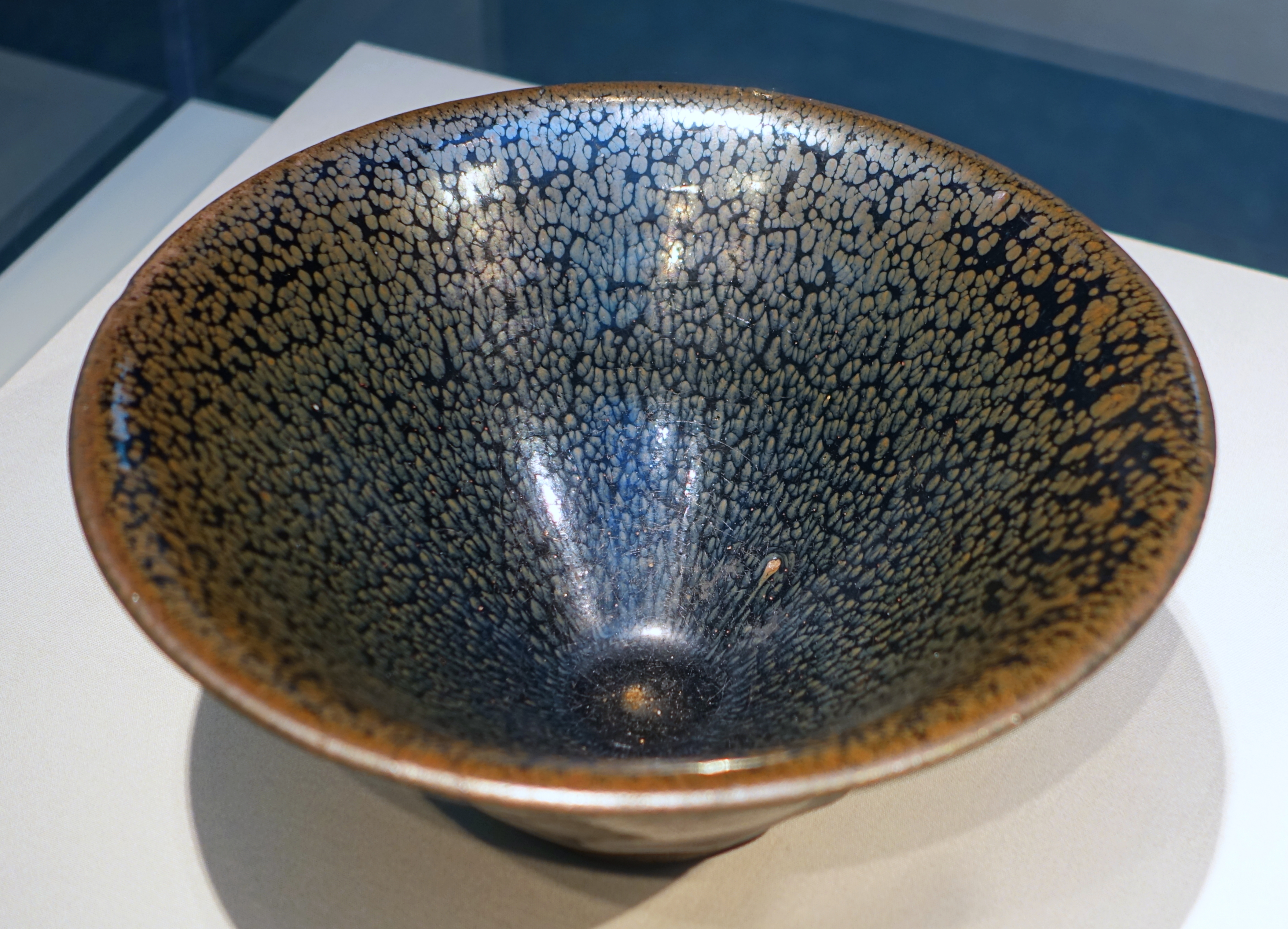
Contemporary tea culture is revealing. On one side, more and more people are drawn to Song whisked tea, tea play, Jian ware, and tea whisks. On the other side, almost everyone still relies on gaiwans, pots, fairness pitchers, and loose tea in ordinary life. This is not a failed revival, and it does not mean modern people are incapable of understanding old methods. It means the two worlds now do different things. Whisked tea functions as a visible, experienceable, reconstructable historical-cultural scene. Steeping remains the most workable underlying protocol for repeated daily use.
That in fact confirms the core argument of this essay. Whisked tea and compressed tea belonged to one tightly interlocked system of material, method, and vessel. Loose tea and steeping belonged to another. Today we can re-stage whisked tea as historical experience, but it is hard to imagine it truly replacing steeping as ordinary mainstream life. We can admire the beauty of Jian bowls, foam, and whisks, but if our everyday judgment still revolves around leaf bottom, aroma, and pouring rhythm, then we still inhabit the loose-tea world.
So contemporary “Song revival” is not history flowing backward. It is the people of the loose-tea age turning back to look at the method aesthetics of the compressed-tea age. It can be deeply compelling and absolutely worth studying. But it is compelling precisely because it is no longer our default. The default remains steeping, and that itself shows how complete the later victory of the loose-tea world really was.
9. Conclusion: what mattered most was not simple replacement, but deep internal fit within two different tea worlds
If this entire essay has to be reduced to one sentence, it would be this: compressed tea did not merely accompany whisked tea by accident, and loose tea did not merely drift into steeping by chance. Each was the more appropriate material center of a different tea-method world. Whisked tea deals with powder, surface, whisking, and bowl-surface judgment, so it naturally favors compressed tea forms that can be reprocessed into fine powder. Steeping deals with leaves, soaking, aroma, liquor, and repeated release, so it naturally favors loose tea forms that preserve the leaf as a bearer of information.
Once that fit is understood, many questions across Chinese tea history become clearer at once: why Song doucha cared so intensely about foam, why Ming loose tea changed vessels and daily life, why the move away from tribute cakes became a watershed, and why later standards of “knowing tea” turned more and more toward leaf, aroma, liquor, and water rather than bowl-surface victory. What changed was never just one tea. It was a whole method by which people lived with tea.
And that is why the point of this topic is not to stage a ranking contest between compressed tea and loose tea. It is to remember that tea form is never an isolated fact. Tea form joins with method, vessels, aesthetics, institutions, and daily routine to make a complete world. Once we see that, Chinese tea history stops looking like a string of easy slogans and starts looking like what it really was: a series of deeply structured choices about how tea should be made visible, judgeable, and livable.
Source references: this feature is synthesized from the site’s existing work on Song doucha, whisked tea, tea whisks, the Ming loose-leaf turn, and the shift away from compressed tribute tea. Its focus is the structural fit between compressed tea and whisked tea on one side, and loose tea and steeping on the other, rather than line-by-line philological annotation.