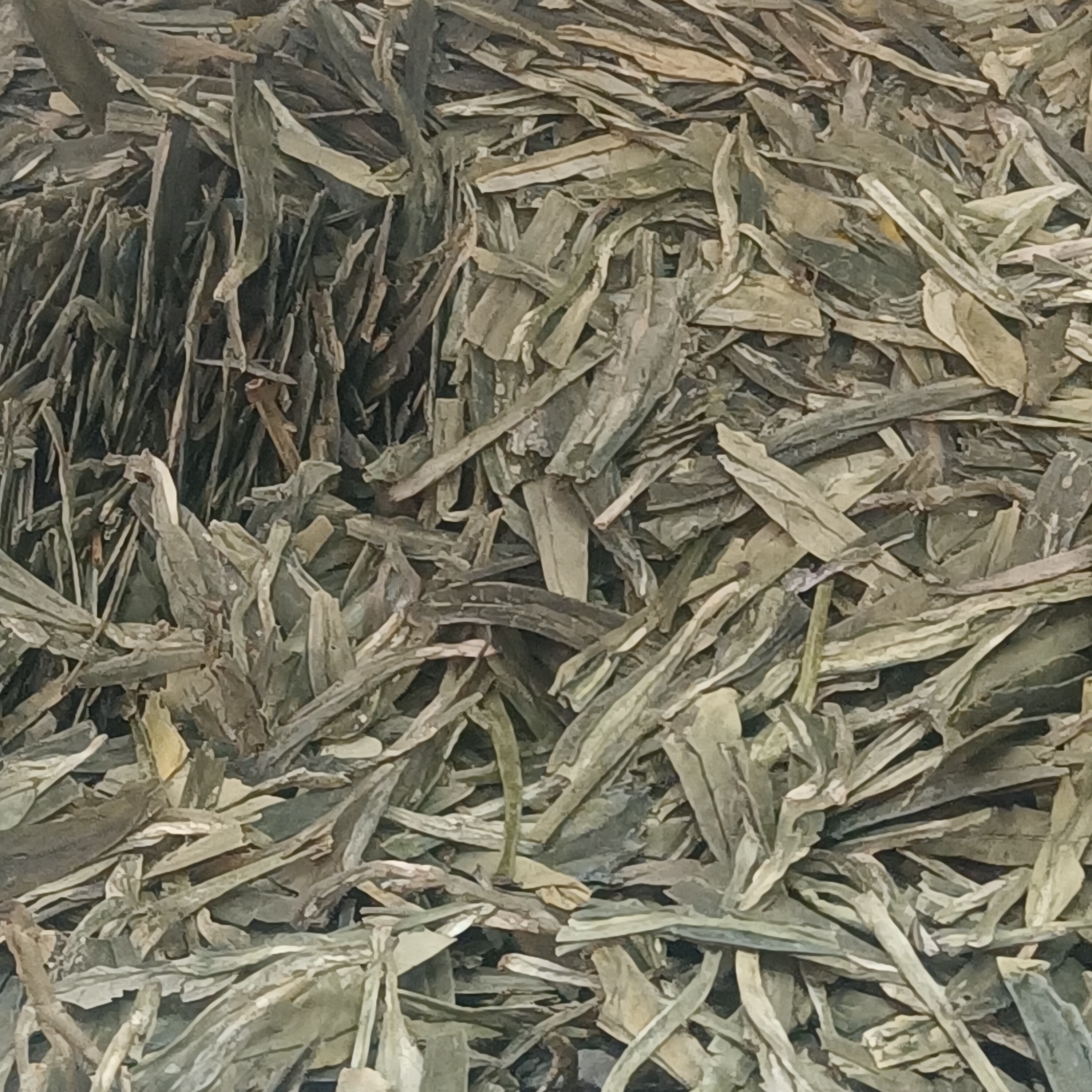
Why Zhu Yuanzhang Abolished Dragon Cake and Phoenix Cake Tribute Tea: not a simple matter of imperial taste, but a shift that pulled tea away from court burden and back toward everyday circulation
Published: · Updated:
When many people discuss Ming tea history today, they casually repeat one phrase: Zhu Yuanzhang ended compressed tribute tea and turned toward loose tea. The phrase is not wrong, but it is much too short. One common mistake is to treat the issue as a sudden change in the emperor's personal taste. Another is to treat it as nothing more than a technical upgrade. A third is to remember only the outcome—that loose tea later became mainstream—while forgetting why the early Ming state chose to cut dragon-cake and phoenix-cake tribute tea away from the center in the first place. What really deserves explanation is more concrete and harder: why was compressed tribute tea considered costly enough that the founding Ming court chose to cut it back at the institutional level, and how did that decision end up reshaping the whole later order of Chinese tea?
Put more directly, this article is not really about the shallow question “Did Zhu Yuanzhang prefer loose tea?” It is about why the early Ming state no longer wanted to keep paying the high institutional cost carried by compressed dragon-cake and phoenix-cake tribute tea. Such tribute teas had enormous prestige in the Song and Yuan worlds. They stood for craft, rank, court control over famous tea, and an extremely dense logic of palace-centered production. But that is exactly why they were expensive. Their beauty and symbolic power rested on heavy organization, skilled labor, selection, pressing, display, and tribute procedure. For a newly founded state trying to stabilize finance, restore agriculture, reduce excess, and rebuild rule, that system was not light.
So what matters most about Zhu Yuanzhang's move is not the simple after-the-fact slogan that “loose tea won.” What matters is that he cut back a way of organizing tea that was too court-centered, too labor-intensive, and too dependent on refined tribute display. In other words, tea was no longer required first of all to serve a highly elevated ritual of court offering. It was pushed toward forms that were cheaper in labor, more direct, more suitable for circulation, and better fitted to direct brewing. That is the only way to connect this shift clearly to other themes already present on the site, including the tribute tea yard, the Ming loose-leaf turn, and the tea-yin system.
The key to rethinking the end of compressed tribute tea is not to see it merely as a change in tea shape, but as a shift away from a highly court-centered, labor-heavy system and toward forms better suited to circulation and everyday use.
1. Why should the end of dragon-cake tribute tea not be written as one simple imperial order? Because it was really about the cost of the tribute-tea system
Many historical topics, once they enter popular writing, get compressed into conclusions that are too smooth to be useful. Zhu Yuanzhang's abolition of dragon-cake and phoenix-cake tribute tea is a perfect example. In the compressed version, the story sounds like this: Song and Yuan tea culture loved compressed cake tea; Zhu Yuanzhang found it troublesome; loose tea replaced it; Chinese tea culture changed. That version captures an outcome, but it removes the most important part. For a founding emperor—especially in the Hongwu political atmosphere of tight control, cost reduction, and social reconstruction—a matter important enough to be targeted was usually not merely a matter of taste. It was a matter of labor, organization, finance, and state style.
Compressed tribute tea was worth cutting not because it was bad tea and not because it was somehow backward, but because it depended on a high-cost system. Dragon cakes and phoenix cakes were never ordinary market tea. They belonged to the world of carefully selected leaf, fine processing, molded form, symbolic design, and court submission. Their value did not lie only in flavor. It also lay in the visible elaboration of the production process and in the display of hierarchy through tribute. The more symbolic and refined such tea became, the more labor, time, material, and local coordination it required.
Zhu Yuanzhang matters here because he was not adjusting tea culture inside a peaceful, wealthy age. He was ruling during the establishment of a new dynasty, under pressure to restore production, compress luxury, and rebuild order. If we reduce his move to a simple change from cakes to loose tea, we miss what he actually cut back: not just one tea form, but an expensive court consumption structure.
2. Why did dragon-cake and phoenix-cake tea become a problem the early Ming wanted to address? Because they were not only tribute masterpieces, but costly masterpieces
We should first be fair: dragon-cake and phoenix-cake tribute tea were not worthless old things. On the contrary, their historical fame proves how highly they stood within the political and cultural world of Song-Yuan tea. They were tied to compressed tea, powdered tea, whisked tea, tribute systems, and court capacity to command refined famous tea. In other words, they were not decorative excess in a trivial sense. They were among the most emblematic products of the tribute-tea order.
But that is exactly why they were expensive. Their cost did not lie only in rarity at the point of delivery. It lay in accumulated labor before delivery: selective leaf, careful processing, stable pressing, disciplined appearance, punctual tribute, and a long chain of standards that could not be treated casually. Once such tea is tied to a state tribute system, it is no longer simply a high-end tea product. It becomes a political task that local society must complete through organized labor and time. That sat awkwardly with the Hongwu state's larger temperament, which did not favor endless escalation of court refinement at the expense of broader recovery.
This is why phrases like “labor-intensive” and “wasteful in people and resources” matter in discussing the issue. The point is not melodrama. The point is how a state decides whether a prestige commodity is worth continuing in the same form. For Zhu Yuanzhang, matters that directly served political order and economic recovery took priority. Highly symbolic, display-oriented, labor-heavy palace goods were far more likely to be scrutinized. Compressed tribute tea stood precisely on that line: prestigious, but costly.
The more later readers imagine a court tea as supremely refined, the more necessary it is to ask how many layers of labor, extraction, and organization were required to support that refinement.
3. Why was Zhu Yuanzhang especially sensitive to this kind of problem? Because Hongwu politics itself was deeply anti-extravagance, reconstructive, and production-centered
Without understanding Zhu Yuanzhang's ruling style, it is hard to understand why he would intervene in tribute-tea production at all. The political temperament of the Hongwu reign is marked by several recurring themes: rebuilding order, restoring production, cutting excess, strengthening control, and distrusting waste detached from material recovery. That does not make Zhu Yuanzhang a modern technocrat, but it does mean he was highly sensitive to how much labor and resource a system consumed, and whether that burden could still be justified. At the founding of a dynasty, that sensitivity was even sharper.
Seen from that angle, dragon-cake and phoenix-cake tribute tea become much easier to understand as a target. For a state trying to restore agriculture, clean up old practices, and reduce elaborate burdens, maintaining a tribute form defined by court polish, complicated processing, and symbolic display would have looked increasingly ill-suited. Such tea certainly enhanced imperial prestige, but it also generated added burden. For a ruler like Zhu Yuanzhang, the practical question would be whether that burden still deserved to be carried. If the answer was no, the cut would naturally fall not on the least important tea, but on the most symbolically central and costly form.
That is why the issue should not be treated as the private preference of an emperor. A change in personal taste cannot explain why later tea history remembers this step as a watershed. What really explains it is the clash between Hongwu political style and the logic of tribute-tea production itself. One side emphasized reducing unnecessary cost; the other embodied an intensely court-centered form of refined production. Once those two met, dragon-cake and phoenix-cake tribute tea could no longer remain securely at the center.
4. Why is “ending compressed tribute tea and turning toward loose tea” first of all a matter of institutional burden rather than simple technical progress?
Many modern summaries like to describe the rise of loose tea in the Ming as if a better technique replaced an inferior one in linear fashion. That is convenient, but misleading. Compressed cake tea was not primitive, and loose tea did not become superior simply because it later became dominant. What really happened was that the state chose to support the form of tea organization that better suited the order it wanted. Loose tea mattered not only because it could be brewed directly, but because it was easier to manage, less labor-heavy, and better suited to reducing the burdens of tribute-oriented production.
The central shift was from making tea primarily “for tribute” to making tea more for tea itself and for circulation. Compressed tribute tea was closely tied to the court system in its craft precision, molded symbolism, and tribute role. Loose tea could detach from that strong court-centeredness much more easily. It could be processed more directly, stored more directly, transported more directly, and brewed more directly, without every stage revolving around tribute display. For the early Ming state, that difference was not secondary. It was decisive. It affected whether local society remained organized around an elaborate palace commodity or around a form of tea more capable of broad circulation and daily use.
So what mattered first was not an immediate revolution in taste. What moved first was the institutional center of gravity. The state no longer gave priority to the most expensive, most labor-intensive, most symbolically loaded tribute format. It shifted toward something plainer, more direct, and more socially extensible. That is the real force of the change: first burden reduction, then changes in taste; first a shift in structure, then a shift in drinking practice.
5. Why did this step directly affect later ways of drinking tea? Because once tea form changes, the whole sensory training around tea changes with it
Institutional questions can look far away from the cup, but in tea history the two are often tightly linked. A world centered on dragon cakes and other compressed tribute forms naturally leans toward grinding, whisking, powdered preparation, and judgment centered on the bowl surface. A world centered on loose tea naturally leans toward direct steeping, watching leaves open, smelling aroma, reading liquor, and comparing multiple rounds. So although Zhu Yuanzhang's cut first landed on the tribute system, its consequences would inevitably travel into later ideas of what “drinking tea” even meant.
Once the court no longer placed compressed tribute tea in the top demonstration position, the craft center, aesthetic center, and consumption center built around it would all begin, slowly, to retreat. The new mainstream did not have to appear overnight. The direction was enough. Tea increasingly no longer needed to be turned first into a highly elaborate compressed object before entering elite legitimacy. It could circulate and be consumed more directly as leaf. Drinkers could increasingly pay attention to what the leaf released in water, rather than to what powder and froth performed on the bowl surface.
Put differently, Zhu Yuanzhang did not instantly determine how every Chinese person would brew tea the next day. But he helped determine which tea form would possess greater institutional legitimacy, greater circulation space, and a stronger chance of becoming ordinary practice. Once that bottom line shifted, later vessels, methods, aesthetics, and routines could grow along the new grain.
The later Chinese order of watching leaves, smelling aroma, pouring liquor, and sharing cups did not appear from nowhere. It is closely tied to the gradual institutional and everyday rise of loose tea.
6. Why did this also change the meaning of “tribute tea” itself? Because tribute tea no longer had to mean the most elaborately molded compressed form
There is another issue that often goes unnoticed: Zhu Yuanzhang's move did not mean the state stopped needing tribute tea altogether. What changed was the standard for what tribute tea had to look like. For a long period, the prestige of tribute tea had been tightly tied to highly refined compressed forms, molded designs, and procedural elaboration, as if a tea became worthy of tribute only insofar as it became more ornate, more technically shaped, and more visibly courtly. Zhu Yuanzhang's step weakened that equation. Tribute tea could still exist, but it no longer had to exist in the most labor-heavy dragon-cake and phoenix-cake form.
This matters historically because it shows the state redefining what it meant for a tea to be tribute-worthy. Tribute-worthiness no longer first meant whether the tea could be made ornate enough, fine enough, and costly enough. It increasingly made room for a different standard: tea of genuine value, but without unnecessary burdens of labor and symbolic overproduction. That does not mean Ming tribute tea suddenly became plain in every respect. It means the bond between tribute and the most expensive compressed form was no longer absolute.
In that sense, the tribute system did not disappear. It was pushed toward a less form-heavy logic. For later Chinese tea history, that is crucial. It means that high-grade tea no longer had to be locked forever inside the same labor-dense court expression. Tea could increasingly carry value through the leaf itself, the craft itself, and the fragrance and liquor themselves rather than always through the most expensive external molding.
7. How does this relate to the site's article on the Ming loose-leaf turn? This article explains the reason; that one explains the result
If we place this essay beside the site's existing article on how Ming loose-leaf tea rewrote the Chinese way of drinking tea, the two pieces are really handling two ends of the same chain. That article focuses on outcomes: why loose tea eventually rewrote Chinese drinking logic, and why gaiwans, pot brewing, aroma talk, and leaf-bottom observation became common sense. This article focuses on the earlier question: why the state first chose to remove dragon-cake and phoenix-cake tribute tea from the center.
In other words, without this earlier institutional step away from the most labor-heavy tribute forms, later loose-tea mainstreaming would lose one of its key preconditions. Loose tea certainly did not conquer the whole country in a day because of one order. But once the state stopped keeping the most expensive, most court-centered, most labor-intensive compressed tribute form at the very top, the center of gravity had unmistakably started to shift. You can read this article as explaining why the old center had to be dismantled, and the other article as explaining how a new daily center grew once that happened.
Read together, the two essays make much more sense than the slogan “compressed tea out, loose tea in.” Ming tea change did not begin in the cup. It began in a new judgment about tribute burden, production cost, and institutional fit. Changes in drinking practice came afterward.
8. Why is it still worth retelling Zhu Yuanzhang's abolition of dragon-cake tribute tea today? Because it corrects our old habit of reading tea history through aesthetics alone and ignoring cost
Modern tea writing easily gravitates toward the most elegant and photogenic layer: vessels, tea tables, old paintings, famous products, reconstructed rituals, refined vocabulary. All of that matters. But if we write only that layer, a bias appears almost automatically—as if Chinese tea history always moved toward greater delicacy, greater refinement, and greater formal complexity, and as if whatever is most elaborate must best represent tradition. Zhu Yuanzhang's abolition of dragon-cake tribute tea is useful precisely because it reminds us that history does not always move in that direction. Sometimes what changes history most is the judgment that a system has become too costly and must be reduced.
This is not anti-aesthetic. It is a way of placing aesthetics back inside material structure. Dragon-cake tribute tea was beautiful and prestigious. But it was cut back not because people suddenly stopped understanding beauty. It was cut back because a new state order judged the cost of maintaining that beauty too high. In other words, aesthetics are never floating above history as pure spirit. They are entangled with extraction, labor service, production, finance, and power. Once we understand that, it becomes easier to see why Chinese tea history has never been only a history of tools and brewing methods, but also a history of institutions and cost.
That is why Zhu Yuanzhang's move deserves retelling now. Not because it supplies one neat historical factoid, but because it makes visible the organizational price hidden behind prestige tea. The early Ming state's most consequential statement here was simple: this price no longer deserved to be carried to the same degree.
9. Conclusion: what Zhu Yuanzhang abolished was not merely one kind of tea cake, but a tea order centered on high-cost court tribute
If this essay has to be reduced to one short conclusion, it would be this: what Zhu Yuanzhang really cut back was not simply one compressed tea form, but a whole order of tea production tied tightly to refined court tribute, layered labor cost, and palace display. The most important point is not merely that loose tea later became popular. It is that the state first gave a new answer to the question of whether the most elaborate tribute form still deserved to remain central. The key standard behind that answer was not pure taste, but institutional burden and practical governance.
That is exactly why the decision left such deep consequences in Chinese tea history. It pulled tea one step outward from an overly expensive court burden and gave it more room to return to leaf, craft, circulation, and daily use. The later mainstream of loose tea, direct steeping, gaiwan brewing, and pot-centered tea practice did not fall from the sky. All of it stands on this earlier shift in institutional gravity.
So when we speak today of the end of compressed tribute tea, it is better not to memorize it as a slogan but to reopen it as a question: why would a new dynasty decide that the most refined, expensive, and labor-heavy tribute tea form should no longer stand at the center? Answer that question carefully, and Ming tea history, tribute-tea history, and the larger story of how Chinese tea moved from court prestige toward broad daily life all become much clearer.
Source references: this article is based on widely circulated historical outlines, especially the common line that tribute tea was tea submitted by local authorities to the court, that the Hongwu emperor ordered compressed tribute tea to be replaced because its production was excessively burdensome, and that the early Ming state operated in a broader atmosphere of order reconstruction, anti-extravagance, and burden reduction. It also synthesizes the site's existing history pieces on tribute tea, loose tea, and tea institutions. The emphasis here is on explaining institutional logic and historical significance rather than reconstructing each edict line by line.