Why “Light Roast,” “Slow Roast,” and Roast-Forward Oolong Are Showing Up on Tea-Drink Menus: From Slow-Roasted Jinguanyin to Mid-Roast Oolong, Chains Are Selling a Tea Base with More Structure
Published: · Updated:
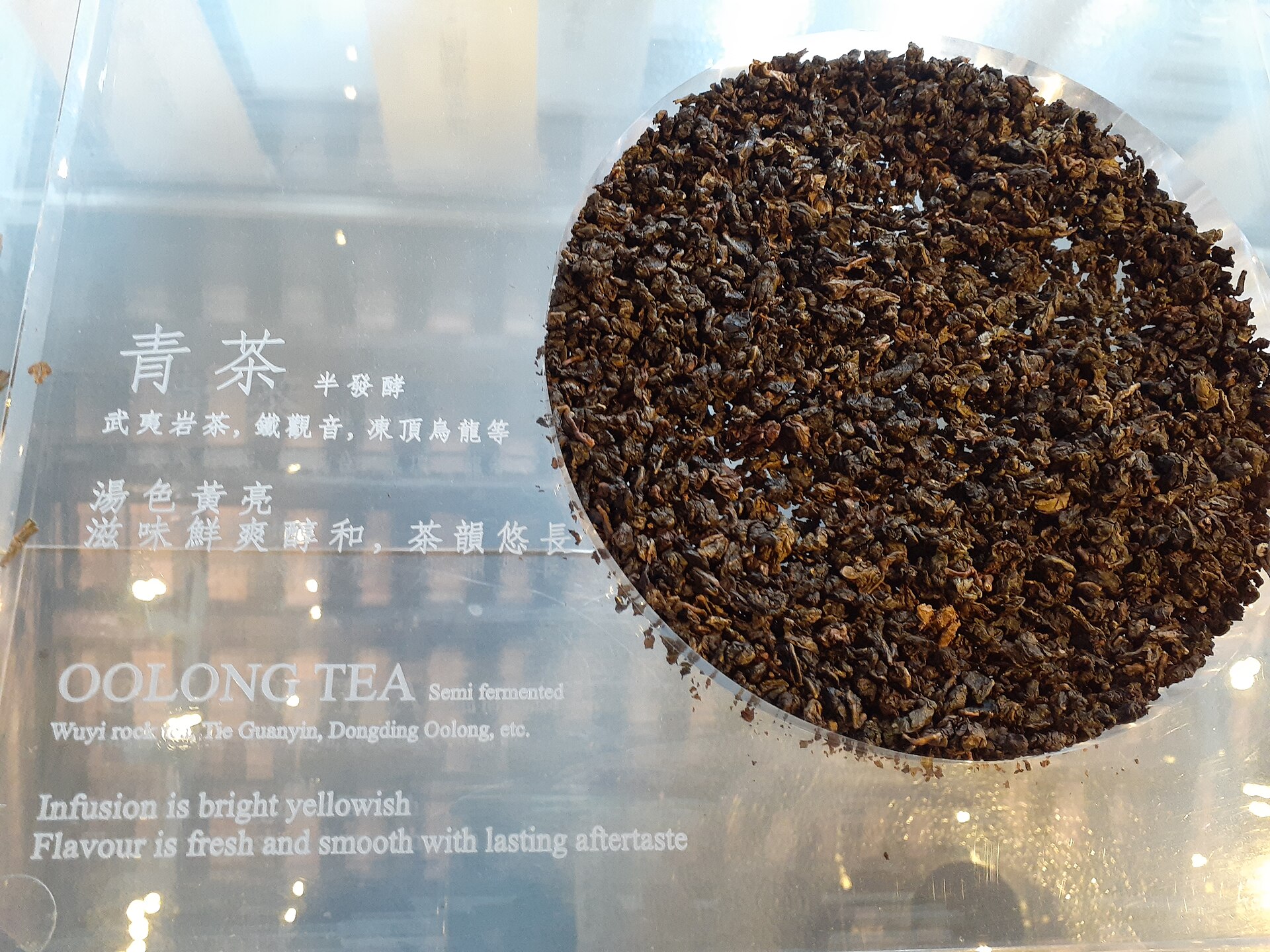
One of the most revealing changes in the latest round of tea-drink menu upgrades is that chains are no longer satisfied with broad phrases like “oolong tea base” or “richer tea aroma.” More and more are moving terms like “slow-roasted Jinguanyin,” “mid-roast oolong,” “roast aroma,” and “Guanyin yun” into the foreground. These used to feel more like language for tea insiders. Now they increasingly read like menu language meant for mass consumers. That is not a minor wording adjustment. It is a sign that brands are beginning to seriously operate the idea of a tea base with more structure.
If several earlier features on this site—such as tea-base identity, identity-card style menu copy, and the return of light milk tea—all pointed to the same larger shift, namely that brands want to explain more clearly what the tea in a cup actually is, then this piece pushes the question one step further. Once “real tea base” is no longer enough, and once floral lift, fruit notes, and light dairy have all become common language, how do chains explain that a drink feels deeper, steadier, and more layered? One answer is to bring roast-forward oolong to the front of the menu.
This matters because it is not merely about adding a more technical term. It changes how mass consumers are taught to understand a “good tea feeling.” Modern tea chains used to excel at selling freshness, floral brightness, and lower-burden language. Increasingly, they are trying to sell structure, depth, returning sweetness, and flavor that unfolds in stages. Roast-forward oolong is especially well suited to carrying that work.
Once a menu starts saying “slow-roasted Jinguanyin” or “mid-roast oolong,” the brand is no longer selling the word oolong alone, but a more explicit promise of depth, returning sweetness, and flavor structure.
roast-forward oolongslow-roasted Jinguanyinmid-roast oolongGuanyin yuntea-base identitymenu language
1. Why now? Why is roast-forward oolong moving to the front of menus?
Because freshness and floral lift are no longer enough on their own. For the last few years, the strongest language on tea-drink menus has revolved around lightness, freshness, cleanliness, and lower burden. Those words worked, and they still work. The problem is that once every chain uses the same language, the words become interchangeable. Consumers start hearing the same script everywhere: lighter, truer, cleaner, less heavy. So what comes next? The most natural answer is to build difference through stronger flavor structure.
Roast-forward oolong is perfect for that. Compared with a generic “oolong tea base,” phrases like “slow-roasted Jinguanyin,” “mid-roast oolong,” or “roast-aroma oolong” immediately give a drink a more concrete outline. It is no longer only clean or floral. It now suggests a little roast work, a little maturity, more depth, and a more persistent finish. Consumers do not need specialist tea knowledge to translate that into something intuitive: a drink that feels steadier, denser, more mature, and more like it truly has a tea center.
Just as importantly, this language connects directly to several 2026 trends already in place. On one side, brands are already working on recognizable tea bases. On the other side, light milk tea gives the tea base more room to perform. Once milk recedes a little, tea has to move forward. And once tea moves forward, brands naturally ask: what kind of tea feeling is actually worth selling? Roast-forward oolong is one increasingly common answer.
So this is not a sudden development. It is the next logical step in a maturing market. Once “contains tea” becomes a baseline, brands compete over what kind of tea it is. Once floral notes become routine, brands start competing over whether the cup has any real frame underneath the fragrance.
When roast-forward oolong moves to the foreground, brands are no longer satisfied with telling you that a drink contains tea. They want to tell you what kind of tea route that cup belongs to.
2. Why is roast-forward oolong especially suited to mass-menu language? Because it translates “deeper” into something ordinary consumers can quickly understand
Many specialist tea terms do not scale well because they are hard to translate quickly. Roast-forward oolong is different. It carries some expertise, but not enough to scare people away. Consumers may not know exactly what roast work, mid-roast, or Guanyin yun mean, but they can still grasp an intuitive difference: this cup is not merely airy and bright. It is a little thicker, steadier, and more grounded. Its aroma is not only floral lift. There is also a little mature warmth and a stronger returning finish.
That is what makes roast-forward oolong so communicable. It has enough technical flavor to distinguish a product, but it can still be absorbed through ordinary sensory language. You do not need a tea education to understand that “slow roast” probably means more steadiness and greater drinkability. You do not need a detailed understanding of Jinguanyin cultivar history to read “slow-roasted Jinguanyin” as something more layered and more structurally serious than a generic fresh oolong.
Put differently, roast-forward oolong is being pushed by brands not because the public suddenly became much more tea-literate, but because this language sits in exactly the right middle zone for menu communication. It is more specific than “oolong tea base,” but not so niche that it slows ordering to a halt.
That is entirely consistent with what we saw in identity-card style menu writing. Chains are not trying to turn consumers into tea scholars. They are trying to give them a difference language that is efficient enough to use while ordering. Roast-forward oolong is one of the most efficient forms of that language.
3. How is this different from floral tea-base language? Floral notes open the door; roast-forward structure helps the cup stand up
If floral tea bases are especially good at generating first-look attraction, roast-forward oolong is especially good at creating a sense of validity after the second sip. Floral products can make an immediate impression: fragrant, light, bright, photogenic, easy to narrate. But they also carry an obvious risk—if the tea skeleton is weak, the back half of the drink can feel empty, and memory stays trapped in the opening aroma. Roast-forward oolong is almost the reverse. It may not be the fastest way to win attention, but it is highly effective at making a consumer feel that the cup has substance.
That is one reason more chains are writing these dimensions together. Public product pages already show examples where “slow-roasted Jinguanyin” combines floral lift and roast depth at once: osmanthus and orchid-like notes remain present, but they are held by a slower roast and a denser tea frame. The roast is not there to suppress the floral side. It is there to support it. The result is not just a fragrant drink, but one whose fragrance feels more structured.
That structure matters in modern tea drinks because these products do not live in the same environment as traditional gongfu brewing. Ice, sugar, milk, fruit, and speed of consumption all compete with the tea base. A very light fragrance-forward tea can disappear inside that system. Roast-forward oolong acts like a sturdier chassis. It can work with milk, fruit, and floral notes without being erased quite so easily.
So from a product-design perspective, roast-forward oolong is not the enemy of floral language. It solves one of floral language’s main weaknesses. And from a menu perspective, it is not a rejection of freshness. It is another way of making a cup feel complete.
For chains, the real value of roast-forward structure is not that it makes a drink darker or harsher, but that it gives the back half of the cup more staying power than a purely fragrance-led build.Once milk moves backward and tea moves forward, roast-forward oolong can more easily become the explanation for why a cup feels as though it has more substance.
4. Why does it pair so naturally with light milk and fresh-milk structures? Because roast-forward tea can give “light” some actual content
In the old heavy-milk era, a tea base often counted as successful as long as it was not completely buried. Today the dominant direction is different: lighter dairy, fresh milk, lower sugar, and more visible tea character. That changes the question. If a product no longer relies on heavy milk and sugar to create satisfaction, what makes the cup feel complete? The answer is often not sharper stimulation. It is more structure. Roast-forward oolong fills that role well.
Its relationship to light-milk architecture is almost that of an invisible support. Fresh milk and light dairy provide smoothness, roundness, and broad public appeal. Roast-forward oolong keeps the sweetness and dairy from floating away into generic softness. The result is a drink that does not feel heavy, but also does not feel empty. It is less oppressive than older thick milk tea, but more memorable than a too-light tea drink that vanishes as soon as you finish it.
That kind of balance is ideal for repeat purchase. Repeat purchase is rarely sustained by the most explosive first sip. It is sustained by a structure that can be drunk again and again without tiring the buyer. Roast-forward oolong gives light milk and fresh-milk tea exactly that kind of stability. It may not make the product the loudest cup on the menu, but it can help make it one of the cups with the strongest long-term place.
That also explains why menu language increasingly combines terms like roast, returning sweetness, delicacy, and smoothness. These are not random adjectives. They are all working toward the same task: describing a drink that is not very heavy, but still feels complete enough to be understood, compared, and bought repeatedly.
Roast-forward oolong is most useful not in extreme stunt products, but in cups that need to sell every day—light enough for frequency, but not so light that they feel hollow.
5. Why does this matter for brand competition? Because it turns “maturity” into something brands can finally sell at the menu foreground
Modern tea chains have certainly sold “premium feeling” before, but much of that premium feeling used to be visual, spatial, or naming-based rather than a flavor maturity that was clearly explained. Roast-forward oolong is different. What it offers is a maturity closer to flavor itself: not sweeter, not louder, not more floral, but steadier, deeper, and stronger in the finish. That kind of maturity used to live more comfortably in the language of serious tea drinkers. Now brands are trying to translate it into something mass consumers can order.
Once that translation works, brand competition gains a new dimension. Chains will not be competing only over who is fresher, lower sugar, or better at telling floral stories. They will also compete over who can make a tea base with more frame feel attractive rather than old-fashioned, harsh, or intimidating. That is a very different kind of contest.
And it is a contest well suited to the Chinese internet. The topic comes with built-in debate: is slow roast real or just a gimmick? Is mid-roast oolong better for fresh-milk tea? Can roast-forward tea be pushed too far? Can ordinary consumers really taste Guanyin yun? These questions easily become reviews, comparison posts, ranking lists, and “what people who know tea would choose” content. That gives the trend far more life than a simple “this cup tastes good” claim.
Seen this way, the foregrounding of roast-forward oolong is not a tiny menu adjustment. It is a classic signal of market maturity: brands are starting to compete not only for broad likability, but for a clearer flavor position.
6. The most important thing to watch next is not who writes “slow roast” first, but who makes consumers actually remember this tea feeling
Any trend that reaches the menu foreground eventually faces the same practical test: do consumers build a stable preference around it? Roast-forward oolong is no exception. Writing “slow-roasted Jinguanyin” or “mid-roast oolong” is only the first step. What will determine whether this becomes a true long-term line is whether more buyers begin saying things like: I really like tea bases that feel thicker and have more returning sweetness; when I order light milk tea now, I often want a roast-forward oolong rather than a purely floral style; this kind of tea base works better for afternoon drinking, commuting, offices, or slower moments.
If that kind of preference takes hold, roast-forward oolong will stop being a copywriting hot word and become a stable flavor asset that chains can operate over time. And if that happens, one of the key achievements of the 2026 menu-upgrade cycle will not just be greater tea-base transparency or recognizability. It will be that the mass market finally learned how to order a tea feeling that goes a little deeper.
If it fails, the outcome is also clear: every brand writes in a more professional way, but consumers still conclude that everything tastes roughly the same. That is why the most important thing to track is not which chain uses the word roast first, but which one turns this tea feeling into something that ordinary drinkers can repeat, compare, and buy again.