Why Milk-Skin Tea Is Being Pushed Back to the Front: It Sells Not Grassland Nostalgia, but a Thicker, Truer-Milk, More Food-Like Translation of Tea
Created: · Updated:
If you scan high-frequency Chinese tea-drink language in 2026, one older word is quietly being lifted back into view: milk skin. Sometimes it appears as milk-skin tea, sometimes as milk-skin milk tea, baked milk-skin tea, or other thick dairy variants tied to grassland dairy memory, borderland milk foods, or “real milk, real tea” rhetoric. On the surface, that can look like a nostalgic regional comeback. But in today’s tea-drink market, something more specific is happening. Milk-skin tea is returning not mainly as exotic atmosphere, but as a thicker, truer-milk, more food-like way to rewrite dairy presence in the cup. It gives brands a way to make milk tea feel layered and substantial again without simply making it sweeter.
This is also where it connects with other drinks lines already on the site. We have written about the return of light milk tea, the rise of salty milk tea, tea-base identity, ingredient-list transparency, and topping simplification. Milk-skin tea is not the opposite of those trends. It is closer to an answer to the question they leave behind: once the market has already learned how to make milk lighter, cleaner, and more tea-compatible, how can brands make milk feel more interesting again? Milk-skin tea pushes milk thicker, but not back toward old powdered heaviness. It tries to create a thickness that feels more like dairy itself and more like food texture.
So the real question is not merely whether milk-skin tea is hot again. It is why, in 2026 specifically, milk skin is being reinterpreted as a language that fits urban chains, social platforms, and narratives about real milk, thickness, and modern translations of regional flavor.
Milk-skin tea is back at the front not because consumers suddenly became collectively nostalgic for grassland dairy foods, but because it offers a highly usable store-language promise: this cup is not sweeter, but thicker, more dairy-forward, and more intentionally made.
1. Why now? Why has milk-skin tea moved from edge topic back to center stage?
Because the milk-tea market can no longer innovate through “smooth enough” alone. Over the last few years, one of the most successful upgrades in Chinese milk tea was the move away from heavy, tiring, overly rich older milk structures toward something lighter, cleaner, and more recognizably tied to fresh milk. Light milk tea, lower sugar, real milk, and clearer tea bases were all doing the same larger thing: shifting milk tea from sugar-and-heaviness pleasure toward drinks in which both milk and tea could have their own presence. But once the whole market learns how to make milk lighter, a new sameness appears. Many products become perfectly acceptable and increasingly difficult to distinguish.
Milk-skin tea appears precisely after that sameness. It gives brands a useful upgrade interface. If everyone is already talking about fresh milk, thick milk, and real milk, then one next step is to push milk itself forward as a structured sensory layer rather than just an ingredient claim. The phrase “milk skin” immediately lets consumers imagine a denser, richer, more concentrated, more lingering dairy layer. In other words, before the drink is even tasted, it has already delivered a textural preview.
That is the key to why it works again. Many products that look like revivals are not reviving an old form exactly. They are reviving the present usefulness of an older language. Milk-skin tea matters in 2026 because the market needs a word that can make thick-dairy tea sound new again. Milk skin is that word.
Milk-skin tea is returning to the main stage not only because it has regional flavor background, but because it is especially easy to translate into a modern retail promise: thickness with a reason.
2. What are today’s tea chains really selling when they sell “milk skin”?
First, they are selling the imagination of something more like an actual dairy product. Consumers do not need to distinguish perfectly among fresh milk skin, baked milk skin, milk skin from traditional dairy foods, cream tops, or foam structures. They only need to accept one simple judgment: milk skin feels more real and more substantial than ordinary milkiness. For stores, that judgment is already commercially powerful. It upgrades a cup from “more milky” to “more dimensional in dairy structure.”
Second, it sells an answer to a low-sugar problem. As the market repeatedly lowers sweetness, brands need ways to keep drinks from flattening out. Milk-skin tea offers a route that does not depend on piling in toppings or returning to heavy cream caps. It turns dairy texture itself into something discussable. Many descriptions focus less on the tea base than on a thicker layer, a wider milk aroma, or a more lingering mouthfeel. That shows milk skin is being used as a structural tool rather than just a flavor label.
Finally, it sells the feeling that a cup is closer to food than to plain beverage. Once a product can be linked in the mind to milk-skin pastries, dairy foods, breakfast, regional milk traditions, or baked dairy aroma, it is easier to read as a cup with “content.” Consumers often pay not only for better taste, but for that sense of content and worth.
The key is not making milk feel greasier. It is making milk feel more expressive: not just white and sweet, but richer, softer, more lingering, and more like a real dairy layer.
3. Why is “milk skin” more useful than words like “thick milk” or “fresh milk”?
Because it is more concrete. “Thick milk” is menu language. “Fresh milk” is ingredient language. “Upgraded milk aroma” is the kind of vague claim any brand can make. “Milk skin” is different. It immediately suggests surface formation, concentration, dairy fat, slow heating, and a faintly food-like, place-linked richness. That concreteness is extremely valuable today. The customer begins imagining texture and image before any detailed explanation is needed.
It also carries cultural and regional memory. Whether or not a consumer knows much about grassland dairy foods or traditional milk-skin products, the word itself makes the drink feel as if it comes from somewhere rather than being entirely fabricated in a marketing room. That matters in a market full of dense launch cycles and increasingly dramatic naming. Brands do not just want products to sound unusual. They want them to sound grounded.
In other words, milk skin is more story-like than thick milk, more flavor-like than fresh milk, and more product-like than generic dairy upgrade rhetoric. It is an older word that is exceptionally easy to modernize.
4. What is its relationship to traditional milk-skin tea and grassland dairy foods?
There is a relationship, but it is not simple inheritance. Traditional milk skin, milk-skin dairy foods, grassland tea, and regional dairy systems belong to complete ways of life, processing habits, climates, diets, and bodily needs. A large part of what urban chains now sell as “milk-skin tea” is not a direct reproduction of that logic. Instead, it borrows the parts most legible to modern consumers: the sense of a concentrated dairy surface, a regional identity, the idea of real milk, and a slightly food-like thickness.
This distinction is important. If the current tea-chain milk-skin drink is treated as a direct return of traditional milk-skin tea, many things get misread. Traditional dairy practices had their own everyday place. Urban chain versions are highly filtered symbols. They have been re-cut to fit standard cup sizes, store workflows, social-media captions, and younger consumers’ trial logic. Their first task is not faithful reproduction. It is efficient translation.
And that is exactly why the topic deserves a place in the drinks section. The interesting question is not whether it is orthodox enough, but why this particular traditional word has become so useful now. The answer is straightforward: it helps brands solve three problems at once. It gives milk a new language, gives products a cultural point of origin, and gives platforms a stronger narrative hook.
In modern chains, what survives from traditional vocabulary is often not the entire method, but the most quickly legible and consumable part of it. Milk skin is a clear example.
5. Why is milk-skin tea especially suited to Chinese-internet circulation right now?
Because it combines contrast with relative safety. The products platforms like most are usually positioned in a narrow zone: new enough to attract clicks, but not so extreme that they fall completely outside mainstream acceptance. Milk-skin tea sits almost perfectly in that zone. It is not as aggressively strange as mushroom white-sauce milk tea or other stunt-heavy savory experiments, but it is also not as ordinary as a standard fresh milk tea. It carries a hint of region, a hint of dairy food memory, a hint of real-milk seriousness, and a visual promise of thickness. That makes people curious without immediately driving them away.
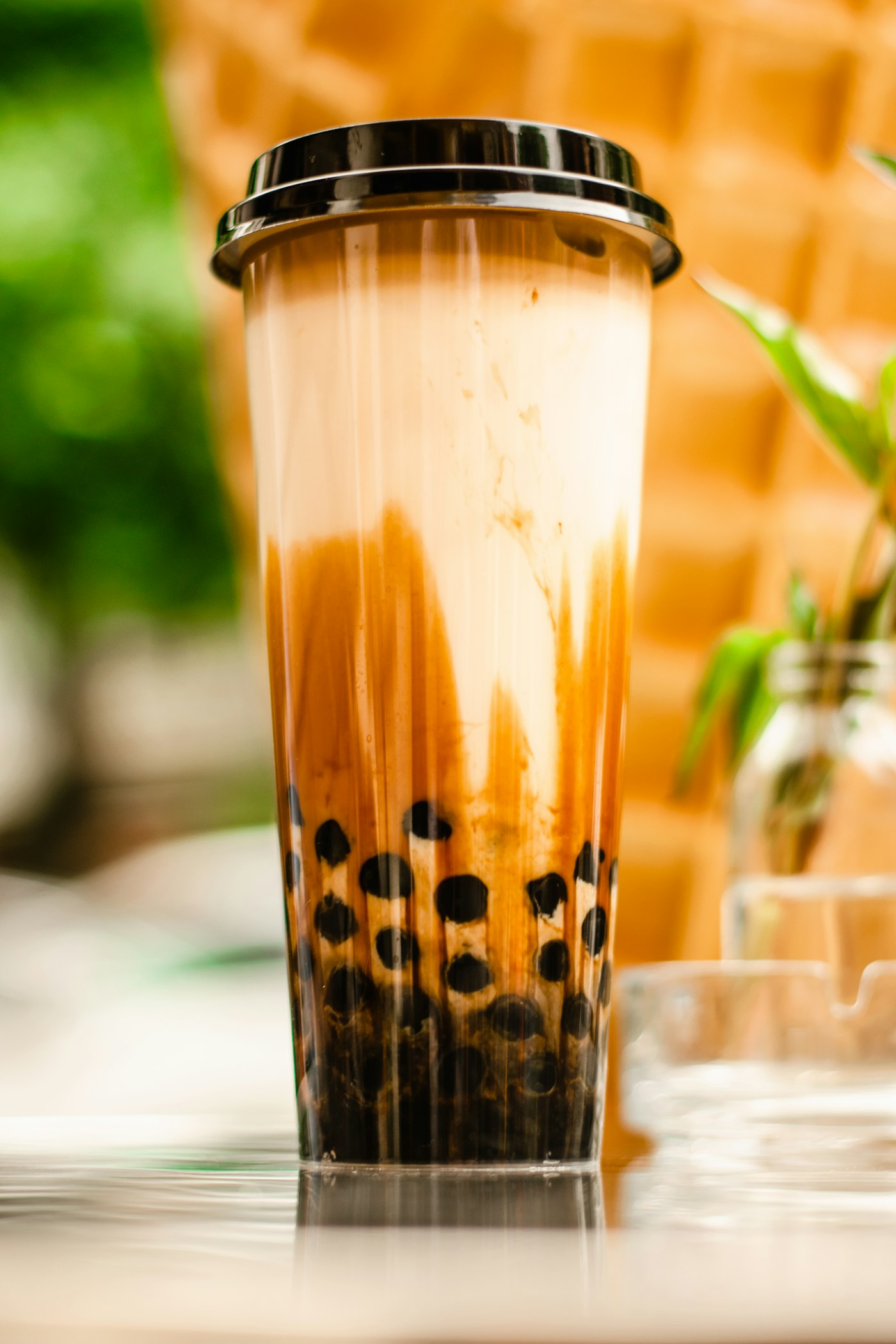
It is also easy to film and photograph. Milk skin, foam, dairy-fat layering, cup-wall cling, thick top layers, and before-and-after stirring contrast all work naturally in short video and static imagery. Consumers can caption it easily too: thicker, milkier, more real, like drinking milk skin, like turning a dairy snack into tea, more substantial than ordinary milk tea. The spread threshold is low, and the understanding threshold is low as well. Brands do not need much explanation work to get the idea across.
Most importantly, milk-skin tea can be framed as a “truer” kind of upgrade. On Chinese platforms today, “real milk,” “real tea,” “real fruit,” and “real ingredients” function almost like common currency. The phrase “milk skin” plugs directly into that value system. It encourages consumers to assume that this is not a flavoring-style milk note, but a dairy-product-style milk note. Even when the actual process is more complicated than the imagination, that cognitive advantage is already highly useful.
Milk-skin tea does not spread on name alone. It also spreads through a visual grammar of thickness: people first believe they can see denser milk, and only then decide whether they believe they can taste truer milk.As soon as a drink can be explained as regional flavor, real-milk upgrade, and the day’s worth-trying launch all at once, it has already won half the battle on social platforms.
6. How does milk-skin tea relate to light milk tea, salty milk tea, and breakfast-style tea drinks?
They do not replace one another. They sit at different coordinates on the same map. Light milk tea asks how milk tea can become lighter. Salty milk tea asks how sweet drinks can be rewritten into more debatable, heavier-flavor products. Breakfast-style tea drinks compete for everyday eating-and-drinking occasions. Milk-skin tea asks something else: if the market still wants to emphasize milk, but no longer wants the old greasy heaviness of classic milk tea, how else can dairy presence become fresh and layered?
In that sense, milk-skin tea is a very clever middle route. It does not go all the way toward lightness, and it does not veer as sharply away from mainstream milk-tea taste as more extreme savory experiments do. Instead, it stays inside the milk-tea frame while making milk feel thicker, truer, and more rooted. It can borrow from real-milk rhetoric and from regional-flavor rhetoric at the same time. It can serve winter hot drinks, but it can also be packaged as an everyday milk-tea upgrade. For chains, that kind of compatibility is extremely valuable.
That is also why I would describe milk-skin tea as a medium-risk innovation. It has more discussion value than standard fresh milk tea, more safety than extreme flavor experiments, and more scalability than direct regional reconstruction. For major chains today, that is almost an ideal launch position.
7. What happens next: short-lived hot word, or stable long-term line?
My guess is that it will probably stay, but not always under the literal label of “milk skin.” What usually survives is not the loudest product name, but the structural method behind it. If milk-skin tea continues to spread, the longer-lasting legacy will likely be a broader design logic: more visible top dairy structure, more concentrated milk feeling, more restrained sweetness, tea that does not disappear entirely, and some added value drawn from regional dairy or food memory. At that point, not every product will need to call itself milk-skin tea in order to benefit from the method.
Of course, this line also has boundaries. First, if milk skin is made too heavy, the category risks sliding back into the old milk-tea problem of becoming tiring by the second half of the cup. Second, if brands only borrow the name without delivering real layering, consumers will quickly read it as “thick milk” in costume. Third, the more a product leans on regional flavor identity, the more carefully it must balance origin feeling against everyday drinkability. Once a cup starts to feel like a concept demonstration rather than something worth buying again, its heat stays trapped at the trial stage.
So the most important thing to watch is not whether milk-skin tea stays hot for three months, but whether it can move from “everyone is filming it” to “people actually buy it again.” If it can make that shift, it will become one of the key standard moves of the thick-dairy milk-tea era. If it cannot, it will still leave behind a clear lesson: the industry is still actively searching for new ways to make milk worth talking about again.
8. Why does this belong in the ongoing story of Chinese new tea?
Because milk-skin tea shows that tea-drink innovation today is moving increasingly from “what do we add?” to “how do we explain it?” In many cases, the ingredients themselves have not become something entirely alien. What changes is the language brands use to organize them. Milk-skin tea did not invent the pairing of milk and tea from nothing. It reorganized preexisting dairy texture, regional flavor memory, and thick-milk demand into a form that fits contemporary tea-shop retail.
That is why it links so naturally with many other articles on the site. Light milk tea rewrites milk. Tea-base identity rewrites tea. Ingredient transparency rewrites explanation. Topping simplification rewrites structure. Milk-skin tea rewrites how milkiness itself should be understood. It shows that ready-made tea has not stopped chasing spreadability, but the kinds of words that spread best now are the ones that can connect mouthfeel, culture, image, and price logic all at once. Milk skin is one of the clearest such words in 2026.