Why tea drinks are cutting back on toppings: from maxed-out add-ons to a cleaner 2026 order
Created: · Updated:
If you want one of the clearest threads in the last decade of Chinese modern tea drinks, toppings are impossible to avoid. In the earlier expansion years, pearls, coconut jelly, pudding, milk foam, taro balls, popping boba, red beans, oats, barley, mochi, and every other chewable add-on worked as visible proof that a drink was worth the money. The fuller the cup looked, the stronger the chew, the more layers it seemed to contain, the easier it was for the customer to feel that the drink was substantial rather than empty. But by 2026, if you stand in front of the menus of many leading brands, another order is clearly taking shape. Brands are shifting attention back toward tea base, aroma, light milk structure, iced tea, fruit brightness, and overall drinking flow instead of automatically relying on ever more toppings to create satisfaction.
That does not mean toppings suddenly stopped mattering, and it certainly does not mean pearls, foam, and taro-ball textures have disappeared from the Chinese tea-drink vocabulary. What has changed is their position. Toppings are moving from the role of default lead actor back toward a more controlled supporting role. They are no longer the automatic answer every product uses to guarantee visible value. Instead, they have become something brands now have to weigh carefully as a cost item, an operational item, a repeat-purchase item, and a flavor-structure item. In other words, modern tea is not abandoning toppings. It is asking a more mature question: which toppings still deserve to stay, and which ones were only creating one-time excitement?
Once menus begin to emphasize tea base, iced tea, light milk, and a more direct drinking experience, toppings stop being a natural “more is better” bonus and become something that must be assigned a clearer place.
1. Why “more toppings” once almost automatically meant “better value”
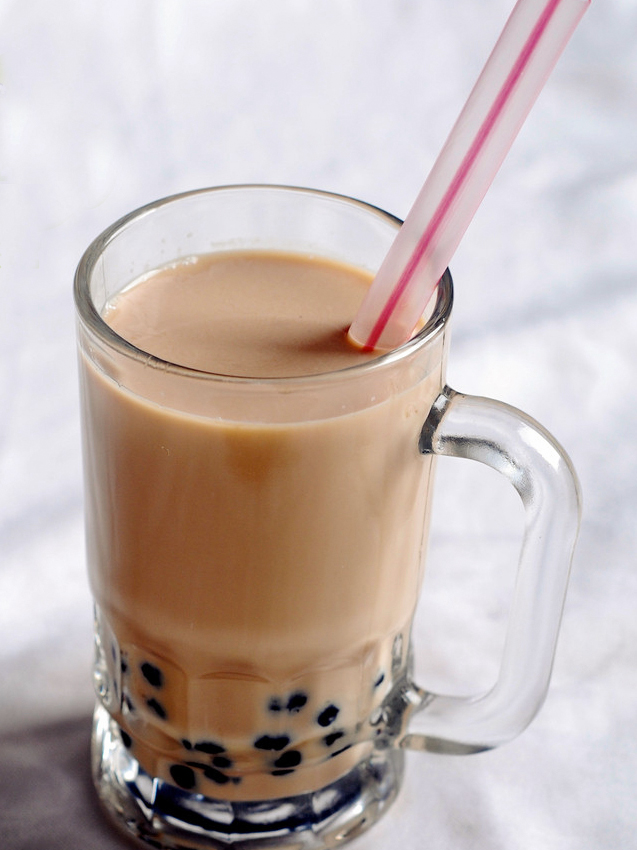
To understand why brands are cutting back now, it is important to admit that the earlier expansion was not irrational. Chinese tea chains grew in part by blurring the line between drinking and eating. Pearl milk tea became such a powerful mother form not only because tea and milk worked well together, but because it created a chewable, extended, physically substantial experience. Pearls turned a drink from liquid refreshment into something closer to micro-snacking through a straw. The later expansion of jelly, pudding, taro balls, mochi, and milk foam kept intensifying that same logic: this was not just a drink, but a more textured edible event.
That logic worked extremely well for its moment. Brands needed to educate the market quickly, and consumers needed an easy visual language for understanding what an upgraded beverage was supposed to look like. The easiest upgrade signal was never subtle tea processing or aroma layering. It was visible abundance. A fuller cup was easier to read. More toppings meant more sensory memory. At a similar price point, customers could feel they were buying more than liquid.
So in that earlier phase, toppings were not decorative extras. They were one of the central commercial languages that helped modern tea chains distinguish themselves from older forms of plain tea drinking.
2. Why brands are now increasingly wary of topping inertia
Because once the category matures, the same formula that drove early growth can start to drag on the next stage. More toppings do create first-purchase satisfaction, but they also create several problems that are getting harder to ignore: they blur the flavor focus, reduce drinking efficiency, increase heaviness, complicate store execution, and often weaken the logic for repeat purchase. Once those pressures pile up, topping-heavy design stops looking like an automatic growth formula.
The most important shift is this: when every brand can build a visually loaded cup, quantity stops being a real differentiator. Consumers have already seen overloaded pearl drinks, layered foam drinks, taro-ball cups, and “all texture” visual storytelling. The category has to search for another, more stable and more brandable way to stand apart. That is exactly what a series of recent drinks features on the site has been tracing: tea bases are being named more clearly, light milk tea is returning to the center, ingredient transparency is becoming a trust language, and iced tea is being rebuilt as a full category system. Read together, these pieces point toward the same direction: brands increasingly want the liquid itself back at the center.
And once the liquid has to stand up again, toppings cannot keep expanding without limit. Too many add-ons can easily bury tea character, aroma, and drinking rhythm, turning the whole cup into a chew-led dessert container rather than the tea product the brand now wants to clarify.
Toppings succeeded because they created immediate satisfaction. But for the same reason, they can also push tea base and aroma back into the background.
3. The first thing topping reduction solves is not aesthetics, but drinking efficiency
This is one of the most underestimated parts of the shift. Modern tea is no longer only a treat drink for occasional reward. It has entered high-frequency urban scenes: commuting, office pickup, afternoon refreshment, evening walks, quick errands, and routine daily purchase. Once a drink enters those scenes, a practical question becomes unavoidable: how easy is it to actually finish?
Too many toppings slow the whole act of drinking down. You keep adjusting the straw, sucking harder, chewing repeatedly, dealing with buildup at the bottom of the cup, and watching the flavor structure drift as the ice melts. In an earlier stage, that friction could even be part of the fun. But for brands now chasing habitual repeat purchase, that same friction can easily become a reason not to buy again.
That helps explain why many strong-selling products today no longer insist on maximum internal complexity. Instead, they emphasize whether the cup goes down smoothly, quickly, cleanly, and as a unified whole. Light milk tea, Oriental iced tea, floral iced tea, lower-sugar fruit tea, and even many ready-to-drink bottled teas are all getting traction, in different ways, partly because they fit better into daily pace. Consumers do not suddenly hate texture. They simply care more than before about whether a drink works with life instead of demanding that life stop to accommodate the drink.
In that sense, topping reduction looks like subtraction, but it is really making room for high-frequency use. It turns the product back into a beverage rather than half liquid and half chewable task.
4. Why the language of “lighter burden” naturally pushes brands to be more restrained with toppings
Toppings also sit awkwardly beside one of the category’s strongest current narratives: lightness. In the past, customers buying a milk tea often did not mind if it behaved more like dessert. Today, people increasingly care about sugar, calories, heaviness, digestive burden, late-night drinkability, and whether a product feels safe to buy repeatedly without guilt. Once the category’s dominant language shifts from maximum indulgence toward minimum burden, toppings become one of the first things to be reexamined.
That is because many toppings do not reinforce tea so much as they reinforce sweetness, density, stickiness, chew, and fullness. All of those can be pleasurable, but they also make the drink feel heavier before the first sip even lands. When a brand says low sugar, true tea, fewer additives, light milk, and freshness, yet still loads the cup with a dense chewing system, the narrative starts to feel inconsistent. The message says reduced burden; the body receives something else.
So many brands are not simply deleting toppings from the menu. They are trying to control the ratio between the main liquid and the add-ons. Who is the lead? Who is the accent? Is the product meant to make the customer feel that the cup is full, or that the tea is clear, aromatic, efficient, and easy to finish? Once those questions guide development, some degree of reduction becomes almost inevitable.
As the category increasingly asks whether a drink can feel lighter and easier to buy often, toppings have to move out of the automatic lead position.
5. From the store side, topping reduction is also forced operational optimization
Consumers see the cup. Stores see the workflow. Once topping options multiply, store complexity rises quickly: more prep, more freshness pressure, more waste risk, more customization branches, slower output, and less stable performance during rush periods. For chain brands, these are not small local problems. They scale into full-system execution issues.
A heavily loaded product may look lively in theory, but in practice it can mean slower preparation, harder consistency, higher loss, and more training pressure. The more mature and more standardized a chain becomes, the more likely it is to reevaluate whether that complexity is still worth carrying. Especially now, leading brands are not trying to win only as one impressive store in one city. They are trying to replicate clearly and quickly across a national network. Once that becomes the goal, menus have to simplify, drink construction has to simplify, and toppings become one of the first things to be reorganized.
That is why many mature brands increasingly make their high-frequency volume products more direct: clearer tea base, more focused flavor, fewer structural components, with some toppings retained as optional tools rather than default burdens built into everything. On the surface that looks like a store-efficiency question. In practice, it feeds straight back into consumer experience: faster pickup, fewer mistakes, more consistency, and easier repeat purchase.
6. This does not mean toppings have lost value; it means they are moving from “main dish” to controlled seasoning power
I do not think the category is heading toward a totally topping-free future where everything resembles plain tea. That would not fit either Chinese tea-drink history or actual consumer demand for texture. A better description is that toppings are shifting from default overload to justified use. Their value remains, but the conditions for using them are becoming stricter.
What counts as justified? Some products genuinely depend on chew and texture for their identity, and there toppings remain essential. Some seasonal launches need stronger visual drama. Some brands will keep classic mother-form products in which pearls or foam are inseparable from the drink itself. But for more and more players trying to build long-term brands rather than short-term spectacle, every topping has to answer a harder question: does it really make the product more complete, or does it only make the cup look fuller?
Once brands judge by that standard, many topping impulses get filtered out automatically. Not every extra layer makes a drink better. Quite often it only makes the flavor messier, the workflow slower, the price higher, the burden heavier, and the repeat logic weaker. The fact that the category is now seriously separating those outcomes is itself a sign of maturity.
The toppings most likely to remain are those with a clear function, not those added only to prevent the customer from feeling the cup is too empty.Once a product is designed for commuting, office drinking, and high-frequency repeat purchase, excessive add-ons often reduce rather than improve fit.
7. Why this belongs in the main 2026 story of Chinese tea drinks
Because it is part of the same broader movement already visible across the category. Light milk tea has returned to prominence. Floral language is becoming a brand asset. Tea bases are being named more explicitly. Bottled tea and iced tea are emphasizing true-tea feeling again. Consumers care more about ingredient-list transparency and lower-burden framing. Put together, these are not signs that the category is suddenly becoming old-fashioned. They show modern tea moving from an early growth phase built on stacked stimulation toward a more mature phase built on order, clarity, repeat-purchase logic, and brand identity.
Topping reduction is one of the most concrete and easiest-to-feel signs of that maturation. It shows the category re-deciding what should stand at the front of the cup. In the earlier phase, visible add-ons and instant satisfaction stood in front. Now more brands want tea character, aroma, light milk, freshness, drinking efficiency, and long-term repeatability to stand closer to the center. Toppings have not disappeared, but they are no longer treated as the only proof of value.
That is why this trend matters. Not because “less topping” carries any moral superiority, but because it reveals one of the category’s most important current transfers of weight: from “how much excitement can I pile into this cup?” toward “can I make this drink easier, more natural, and more frequent in everyday life?” Once you see that shift clearly, it becomes easier to understand why many of the products truly scaling in 2026 are less noisy than the products of a few years ago, yet look more likely to stay.