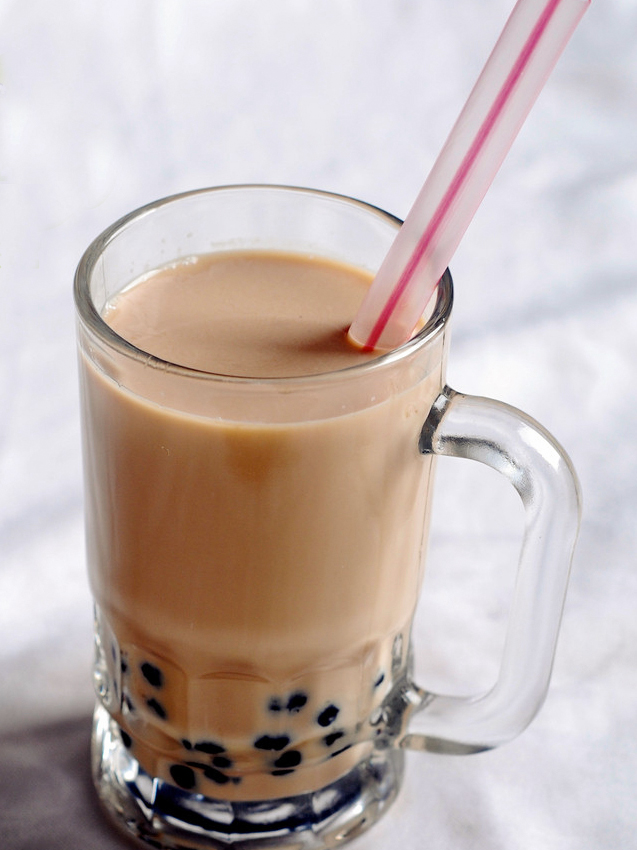
Why Salty Milk Tea Suddenly Became a Major New Tea Topic in China: Salted Cheese, Sea Salt, and the Search for Flavor That Feels Less Sweet but Not Bland
Created: - Updated:
If you have been following Chinese tea-drink conversation lately, one especially interesting phrase keeps surfacing: salty milk tea. This does not simply mean every drink with cheese foam or sea-salt topping automatically belongs to the category. What it signals is that more brands are deliberately moving saltiness, savory dairy notes, salted cheese, French-style salted cream, Thai-style salty profiles, and sea-salt accenting toward the center of the product story. In the Tea Drinks Category Development Report 2026 released by Hongcan Industry Research Institute, salty milk tea was identified as a meaningful direction, with report summaries noting that it accounted for 15.6% of milk-tea new product launches in the sample set for 2025. That is not just scattered novelty. It is a recognizable flavor line.
That is exactly why it deserves a full article. This site has already covered the return of light milk tea, the rise of low-sugar tea drinks, ingredient-list transparency, and the return of fruit tea. But salty milk tea is not just another version of those stories. It captures a different demand: consumers no longer want old-school high-sugar milk tea by default, but they also do not want flavorless restraint. Brands are therefore looking for a new middle ground—less sweetness, clearer tea structure, more mature flavor, and still enough pleasure to feel memorable. Salt has become unusually useful in exactly that space.
So the rise of salty milk tea is not simply about people suddenly craving sweet-savory contrast for its own sake. It is better understood as a product-level upgrade in China's 2026 tea market: the industry is replacing some of the satisfaction once delivered by sugar overload, dairy heaviness, and oversized toppings with a more layered structure built from salt, dairy depth, aroma, and balance.
The importance of salty milk tea is not the literal addition of salt alone. It is that salt allows modern tea drinks to feel more structured, more grown-up, and more intentionally designed.
Because China's milk-tea market can no longer tell its story through "sweeter, richer, bigger" alone. Over the last few years, consumers have become increasingly conflicted about the classic high-sugar, high-dairy milk-tea model. They still want emotional comfort and sensory pleasure, but they now also think more often about calories, burden, ingredient lists, real dairy, real tea base, and what counts as a drink they can justify buying repeatedly. In other words, the market has not abandoned indulgence. It is demanding a more controlled and more defensible form of indulgence.
Salty milk tea is well suited to that demand. Salt can make sweetness feel less blunt. Savory dairy notes can make milk aroma feel deeper and less childish. Tea character becomes easier to perceive. A drink does not need to become objectively light in order to feel less like pure dessert. For many consumers, that is the point: I am still drinking milk tea, but this cup feels less juvenile, less cloying, less obviously sugary, and a little more mature and composed.
That helps explain why salty milk tea has become a real topic in 2026 rather than a random curiosity. It emerges naturally after the larger waves of light milk tea, lower-sugar positioning, cleaner ingredient rhetoric, and renewed attention to tea base. Once "less sugar" becomes an industry default aspiration, brands need new flavor tools to keep products memorable and differentiated. Salt is one of the most effective tools available.
Today's tea-drink market is not abandoning dairy. It is trying to redefine what kind of dairy structure feels drinkable, modern, and repeatable. Salty flavor works because it gives that search more sensory credibility.
2. What is actually new here? It is not just a matter of pouring salt into milk tea.
At first hearing, "salty milk tea" can sound extreme, as if brands are simply flipping sweet milk tea upside down in the name of novelty. But the versions that actually work are usually much subtler than that. They are not meant to shock the drinker with obvious saltiness. Instead, they use salt in a more technical way: to restrain sweetness, sharpen aroma, deepen dairy notes, extend aftertaste, highlight tea character, or create associations with baked desserts, butter, cheese, sea breeze, or Thai-style sweet-savory treats.
In that sense, what is new is not weirdness for its own sake. It is that Chinese tea drinks are moving beyond simple sugar-level adjustment into more comprehensive flavor architecture. Many earlier milk-tea innovations were still, at heart, rearrangements of sugar, dairy, fruit notes, and toppings. Salty milk tea pushes the category one step further by making sweetness no longer the sole center of gravity. Salt becomes part of how the drink is organized.
This is actually close to what has happened in contemporary pastry and dessert culture. Why do so many strong desserts use sea salt, salted butter, or lightly savory cream? Because pure sweetness easily turns flat, short, and tiring, while a touch of salt makes sweetness clearer, aroma more interesting, and the whole experience feel more complete. Salty milk tea follows the same logic. It is not trying to turn milk tea into soup. It is trying to turn it into a more fully composed drink.
3. Why has Chinese internet culture become especially sensitive to it?
Because salty milk tea activates several high-efficiency discussion triggers at once. First, it creates immediate contrast. The phrase itself is attention-grabbing. It naturally invites curiosity and mild argument, which makes it ideal for short video, social posting, first-sip reviews, and friend-to-friend forwarding. Second, it produces divided reactions. Some people find it refined and impressive. Others call it liquid pastry. Others see it as overpackaged marketing. As soon as a new flavor line generates disagreement, it becomes easier for the topic to remain visible.
Third, it fits neatly into the current language of mature taste: "adult milk tea," "less sweet pleasure," "more layered dairy," "not so childish," "a more premium way to enjoy milk tea." Consumers increasingly like this kind of framing. It does not reject enjoyment. It upgrades the self-description of enjoyment. Salty milk tea is perfect for that because it can be sold as less bluntly sweet, more tea-aware, more balanced, and more like a designed flavor experience rather than a sugar bomb.
Fourth, it carries a faint sense of interpretive gatekeeping. Unlike mass-market sugary milk tea, salty flavor can be presented as something you have to understand slowly, or as a taste that signals discernment. That is exactly the kind of setup content platforms like: explainers, tasting notes, ranking videos, warnings, and recommendations. A niche flavor can quickly become a public conversation.
Salty milk tea is built not only to be drunk but also to be discussed. The name, the menu line, the launch poster, and the first-sip reaction all become part of the product itself.Once a market is mature enough, lasting novelty no longer comes only from adding more toppings. It comes from building more articulate flavor structure.
4. How does this relate to light milk tea and low-sugar tea drinks? Why is it not the same story?
Light milk tea answers one question: how can milk tea become lighter? It focuses on controlling milkiness, clarifying tea aroma, and cleaning up the overall structure. Salty milk tea answers another: if milk tea can no longer rely so heavily on sweetness, what else can carry flavor and satisfaction? The former is a kind of subtraction. The latter is a strategic recomposition. The two trends are clearly related, but they are not duplicates.
The same is true with low-sugar tea drinks. Low sugar is a value-coded term. It tells consumers that a drink better matches current expectations around burden and self-control. But low sugar alone does not guarantee flavor, and it definitely does not guarantee memorability. One of the hardest product questions today is this: if sweetness comes down, how do you keep a drink satisfying? Salty flavor gives a highly useful answer by replacing some lost sweetness-driven pleasure with dairy depth, aromatic contrast, and balance. In that sense, salty milk tea is not the opposite of low-sugar thinking. It is one of the flavor techniques that makes the low-sugar era workable.
So within the structure of this site, this article is not repetitive. It fills in a missing part of the map. We have already written about why consumers care more about lower burden, transparency, tea authenticity, and fruit-based refreshment. Salty milk tea reveals the other side of that same moment: even when the market becomes more restrained, consumers still need flavor with content. Brands cannot survive on subtraction alone. They also need smarter, more adult forms of addition.
5. Why does salt make milk tea seem more mature or more premium?
Here, "premium" does not necessarily mean more expensive. It means a different flavor order. Traditional sugary milk tea delivers satisfaction fast and directly: sweet, creamy, aromatic, rich. But that pleasure can also be short-lived. It tires quickly and leaves little room for nuance. Salt changes the distribution of attention in the cup. It prevents sweetness from occupying the whole stage. It makes dairy feel more like dairy rather than pure flavoring. It gives tea more room to emerge. The drink starts to feel less like a one-note pleasure and more like a composed whole.
That is one reason salty milk tea is so easily linked to the idea of "adult milk tea." The phrase is not about literal age restriction. It reflects a psychological self-image: I still want pleasure, but I do not want my pleasure to feel too cheap, too obvious, too uncontrolled. I want complexity, a little taste hierarchy, a little café or pastry-shop sophistication, something that feels deliberately arranged. Salt helps create exactly that atmosphere.
It also improves drinkability in a very practical sense. Many milk teas have a powerful first sip but become tiring by the third or fourth. A little salt can delay that fatigue. For brands, this matters enormously, because truly successful drinks are not only those with strong first-sip impact. They are drinks that still feel coherent by the time the cup is nearly finished.
As milk tea moves away from pure sugar pleasure and toward competition in nuance, stores are selling not only beverages but also a more mature and more explainable feeling of consumption.
6. Behind the trend, the industry is really searching for a new source of satisfaction
If you step back further, salty milk tea matters because it reveals a core industry problem. Once high sugar is questioned, heavy dairy is watched more carefully, and overloaded toppings look old-fashioned, what can still create satisfaction in milk tea? In earlier periods, the answer was relatively simple: sugar, dairy, pearls, cheese foam, whipped textures, oversized builds. Now consumers want something enjoyable, lighter in feeling, and easier to justify. That forces brands to find new sources of pleasure.
Salt is one of those sources. Together with clearer tea bases, more believable dairy, shorter ingredient rhetoric, and more distinctive aroma design, it helps build a new way for milk tea to feel complete. In other words, the market is shifting its idea of satisfaction away from blunt sugar-and-dairy intensity and toward finer-grained balance, aroma, length, and controlled sweetness. That is a meaningful upgrade in itself.
Seen this way, salty milk tea is not just a short-lived buzzword. It is a slice of a larger transition. The milk-tea industry has not abandoned pleasure. It is learning how to deliver pleasure with less crude force. That makes this a trend worth following over time rather than a one-cycle launch gimmick.
7. Could this still be mostly marketing talk? There will be hype, but it will not be only hype.
Of course. Every trend that heats up also attracts imitation, over-labeling, and conceptual emptiness. Not every product marketed with sea salt, salted cheese, French salted cream, or savory dairy notes actually has a convincing flavor structure. Some are simply relabeling familiar cheese-foam territory. Others are trying to use the phrase "salty milk tea" to manufacture social-media curiosity without doing much real formulation work. Consumers are not stupid about this. They quickly learn which versions are only renaming and which genuinely alter the experience.
Even so, the trend is not just empty packaging. The demand underneath it is very real. People do want milk tea that is less sweet but still interesting. Brands really do need a new language to explain why milk tea remains worth buying in an age of restraint. As long as those conditions remain, salty flavor will not disappear. What will disappear are only the hollow versions that cannot support their own names.
The products most likely to last are probably not the saltiest ones. They are the ones that control the boundary best: different enough that you clearly notice a shift from ordinary milk tea, but not so extreme that the drink feels like a stunt. The better the balance, the better the chance of becoming a stable menu asset.
8. Where does this trend go next?
First, salty flavor will increasingly be integrated with tea base itself rather than sitting only on top as foam. The strongest products will make salt, tea, and dairy act together as one structure. Second, salty flavor will continue to pair well with regional and style narratives—Thai-style salty notes, buttery pastry cues, French cheese framing, sea-salt lemon, matcha with salted cheese—because those names create both image and taste expectation very efficiently.
Third, salty milk tea is likely to become a lasting branch of mature milk tea rather than a universal blockbuster. Not every consumer wants it. But it is highly useful for brands that want to build depth, tonal range, and a more distinctive menu identity. Fourth, it will continue forcing better formulation discipline across the industry. Salt is easy to get wrong. But when it is handled well, the drink becomes noticeably more drinkable, less tiring, and more obviously designed with care.
My own judgment is that this trend may never become the single biggest common denominator in the way classic pearl milk tea did. But it could become something more interesting: a durable method of building milk tea for a lower-sugar era while preserving flavor tension and emotional reward.
9. Why does this belong in the larger story of Chinese new tea?
Because it shows something important about how innovation works in a mature market. Chinese new tea has not run out of ideas. It has shifted innovation away from more exaggerated visible add-ons and toward finer flavor engineering. Salty milk tea, light milk tea, fruit tea, ingredient transparency, and tea-base identity may look like separate topics, but they all point in the same direction. Consumers increasingly want drinks that both taste good and make sense; drinks that offer pleasure without seeming crude; drinks that still feel new without relying only on empty slogans.
Salty milk tea is one of the clearest pieces of that map. It shows that the current competition in tea drinks is not only about store expansion, launch speed, and collaborations. It is also a competition over how sweetness, saltiness, tea, and dairy can be rewritten for a more demanding audience. The brands that learn to write those relationships best are likely to define the next phase of the category.