Why a tea strainer stand is not just a tiny rest: drip control, dry tea tables, and why it matters again
Created: · Updated:
Many people think of a tea strainer stand as a small accessory that comes with the strainer: after filtering, you set the strainer down somewhere so the remaining liquor does not drip everywhere, and that seems to be the end of the story. But once you step into today’s dry-style tea tables, simplified office tea setups, or shared-serving situations, the stand stops looking optional. Its relationship with the tea strainer, the fairness pitcher, the tea tray, and the waste-water bowl reveals how someone understands drips, object exit, wet-zone boundaries, and tabletop order. The stand is small, but the problem it handles is not.
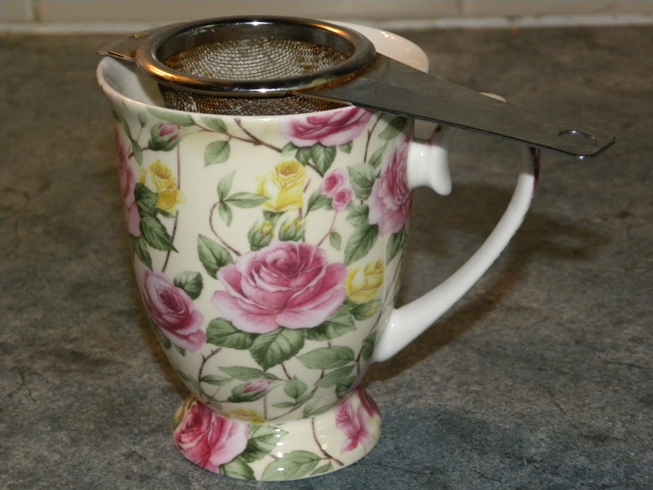
A tea strainer stand deserves its own article not because it is visually grand, but because it sits at an easily neglected point in the workflow: once the strainer has finished filtering, where does it go? Without a stable, drip-tolerant, easy-to-reach landing place, the strainer ends up balanced on the fairness pitcher, near the host cup, in a corner of the table, or on the tea cloth. Every one of those “just set it here for a moment” decisions leaves a little residue, hesitation, and disorder on the surface.
That is exactly why the strainer stand belongs to a class of tools that become visible only after the process itself begins to be taken seriously. Older tea setups often assumed that a tea tray would catch water anyway. Today, more tea tables emphasize dry brewing, negative space, control, and neat surfaces. In that setting, the post-use placement of the strainer can no longer be handled vaguely. The stand becomes important again not because people suddenly love tiny rests, but because contemporary tea practice cares more about how movements are closed and boundaries are kept clear.
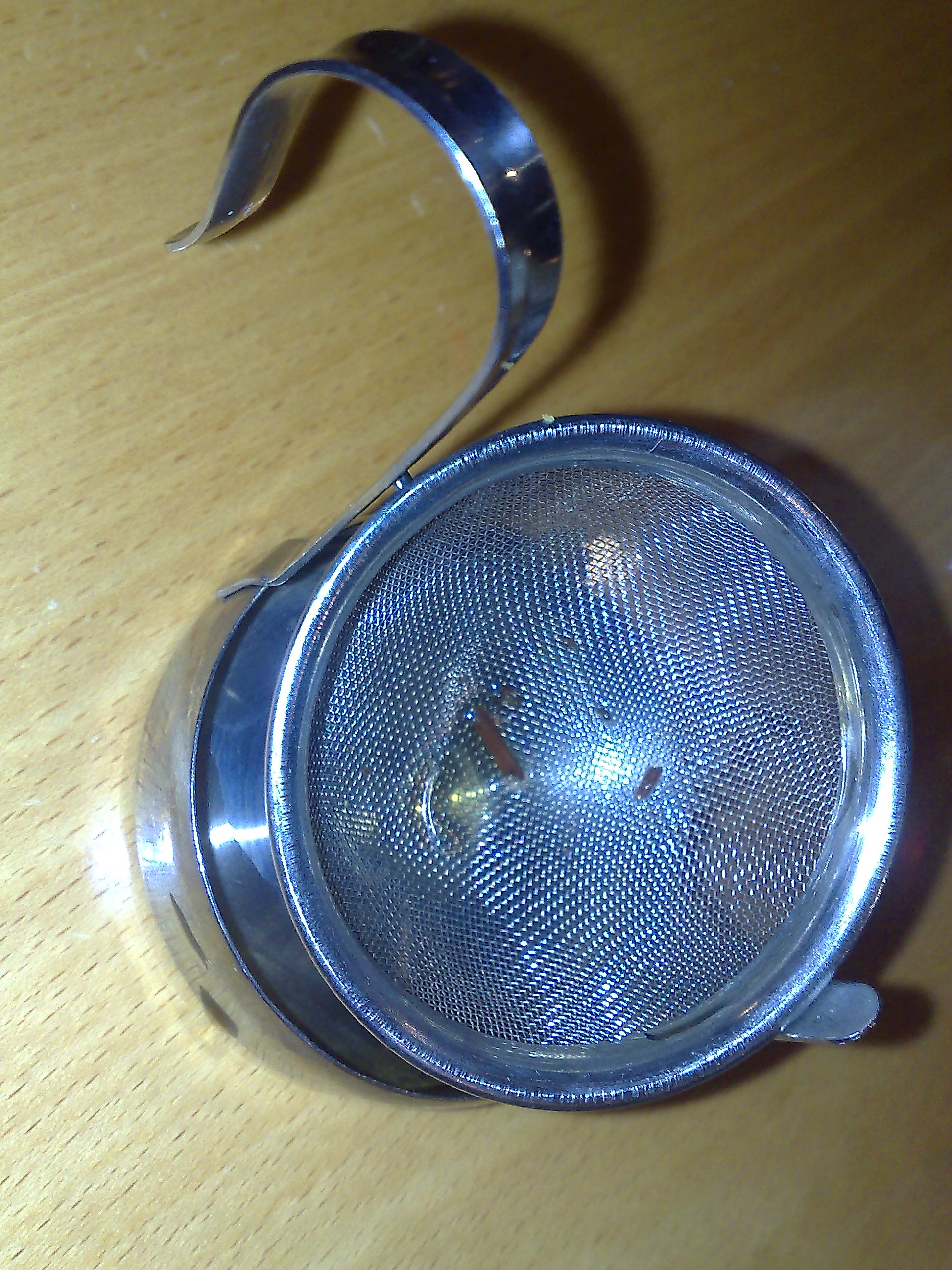
The tea strainer stand does not exist to complete a display set. Its real function is to give the strainer a place to exit, continue dripping, and stop spreading the wet zone across the table.
1. Why has the tea strainer stand become worth discussing again today?
One direct reason is that today’s tea table increasingly values a clean sense of process. Once people begin asking whether a tea strainer should be used, when it should be placed, and when it should be removed, the stand naturally appears as the next question. The moment a strainer is used, a follow-up action becomes unavoidable: where should this still-dripping small tool go once filtration is done? If that question is not answered well, all the earlier effort toward a clean liquor surface, steady serving, and visual order can collapse in the last step.
Another reason is the spread of dry-style brewing and simplified tea setups. Without a large tray constantly receiving water, every drip becomes more visible. Office desks, small tea tables, and display-oriented setups also have tighter space, so any extra wet mark quickly damages the sense of order. In that context, the stand is no longer just a “nice extra.” It becomes a specific node for defining where the strainer exits, limiting where residual liquor spreads, and reducing repeated wiping. It has become newly visible because tea-table attention has shifted from “arranging objects” to “making actions flow well.”
2. What does the strainer stand actually receive? Not just the strainer, but residual liquor and hesitation
Many people describe the stand simply as a base for the strainer. That is not wrong, but it is too shallow. On the first level, it receives the used strainer so the object has somewhere stable to sit without rolling, burning fingers, or searching for an edge. On the second level, it receives the liquor that continues dripping from the mesh after the pour is over, preventing that residue from landing randomly on the tabletop, the tea cloth, the rim of the fairness pitcher, or the area around the host cup. On the third level, it receives hesitation itself: after serving, the hand no longer has to pause and think, “Where should I put this for a second?” It can return the strainer directly to a known place.
A great deal of tea-table order is built on such low-hesitation landing points. A stand turns the strainer from a suspended working piece into a working piece with a fixed return point. In that sense it resembles what the lid rest does for a lid, what a pot stand does for the main brewing vessel, or what a cup stand does for a drinking cup. The purpose is not to multiply accessories, but to gather together wet actions that would otherwise spread outward.
Once a strainer enters the workflow, it does not become dry and harmless the instant pouring ends. The stand exists to give that dripping after-phase a clear and manageable place to land.
3. Why is it a tool of the dry-brewing era rather than just a leftover accessory from wetter tea-table systems?
Intuitively, some people assume that if older wetter tea tables already had trays to catch water, then the strainer stand must be a minor leftover from that world; and in dry brewing, perhaps one should simply avoid using a strainer. In practice, the opposite is often true. Precisely because dry brewing cares more about negative space, object boundaries, and controlled water paths, the stand gains a more independent role. In a wetter setup, one can simply place the strainer near the edge of a tray and let the residue run off. In a dry setup, the moment the strainer leaves the fairness pitcher it becomes a moving source of wetness.
So the stand is not merely a leftover of an older system. It is a product of a newer logic that isolates the exit movement and makes it visible. It separates the strainer’s working zone, resting zone, and residual-liquid zone: the strainer works over the fairness pitcher while filtering, then returns to its own stand to finish dripping, without turning the entire tabletop into a temporary buffer. Once one accepts that dry brewing does not mean “no water at all,” but rather “water must be managed,” the logic of the strainer stand becomes much clearer.
4. Is the stand always a fixed partner to the strainer? When is it needed, and when can it be skipped?
The stand is not a tool that must always be bought, displayed, and used together with a strainer in permanent fashion. Its necessity depends on how regularly you use an external strainer and how strongly your tea setup cares about clean surfaces and closed movements. If you almost never use a strainer, or use one only occasionally for sample tasting, then a stand may indeed spend most of its life unused. But once an external strainer becomes part of your normal routine, the stand quickly changes from “accessory” to “necessary parking place.”
This becomes especially clear in shared serving, repeated rounds of infusion, and situations where the strainer must be placed on and off the pitcher many times. Without a stand, the strainer tends to end up on the tea cloth, which becomes wet too quickly; balanced awkwardly on the cup or pitcher rim, which looks messy; or somewhere on the table, where it creates unnecessary wet rings. By contrast, in solo brewing with clean leaf material, where the strainer can be rinsed or cleared immediately, the stand may matter less. In short, it serves situations of repeated use without disorder, rather than every theoretically complete setup.
The working position of a strainer is usually over a cup or fairness pitcher, but that is not a good place for it to remain. The stand separates the working position from the resting position.When small tools each have a clear place to return to, the rhythm of the tea table becomes smoother. The value of the strainer stand is often not visual drama, but the prevention of needless tiny pauses.
5. What it really changes is table boundary: where the wet zone stops and the dry zone survives
It is easy to think the stand merely saves a little wiping. More deeply, though, it defines a boundary for wetness. Many tea-table order problems are not caused by large amounts of water, but by water having no clear place to stop. The waste-water bowl handles discarded liquid, the tea tray receives operational water, the pot stand defines a local wet zone for the main brewing vessel, and the tea cloth handles emergencies. The strainer stand handles a very specific trailing wet zone: the little remainder that keeps dripping after the strainer leaves its working position.
That residue may be small, but it is the kind most likely to create the irritating feeling that “everything is slightly damp everywhere.” It is not dramatic enough to force immediate cleanup, so it quietly spreads around the fairness pitcher, host cup, tea scoop area, or wooden table surface. The value of the stand lies in localizing that trailing wetness. It does not solve the largest problem; it prevents small problems from accumulating into a tired-looking table.
6. What should a good tea strainer stand actually do? Stay stable, accept an easy return, catch liquid, and clean well
If one understands the stand only as something that can hold a strainer, many real differences disappear from view. A genuinely useful stand should first be stable: once the strainer is placed back, it should not tip, slide, or sit in a precarious front-heavy balance. Second, it should allow an easy return. After serving, the hand should be able to send the strainer back almost automatically, without searching for an angle or worrying about knocking something over. Third, it should control residual liquid, at least by giving continued drips a limited area to gather instead of letting them run across the support surface. Fourth, it should be easy to clean, because any piece that receives residual liquor will quickly become a reservoir for stain and retained smell if maintenance is awkward.
So although the stand is small, it is a sharp test of whether design has really begun from use. Too light, and it shifts. Too deep, and liquid pools unpleasantly. Too narrow at the support points, and the strainer sits badly. Too decorative in the name of visual elegance, and different strainer sizes no longer fit well. A mature stand is often not the one with the strongest design statement, but the one you barely notice while brewing repeatedly, even as you find yourself depending on it.
7. Why does the tea strainer stand also enter aesthetic debate?
Because it sits exactly on the boundary between a working tool and a tabletop display object. The tea strainer itself is already easy to criticize as overly utilitarian. If the stand is also heavy, awkward, or too reminiscent of kitchen equipment, it can disturb the atmosphere of the tea table. So when people choose a stand, they are not only choosing a support object. They are choosing whether it can retreat quietly toward the edge of the tea setup while still feeling intentional rather than cheap.
But the most important warning here is not to treat “matching the set visually” as the first criterion. The stand must serve the work before it serves a decorative scheme. A highly ornamented stand that traps liquid, cleans badly, or cannot hold the strainer securely makes the tea table more embarrassing, not more refined. By contrast, a plain stand with a clear landing point, controlled drips, and fast cleanup often fits contemporary tea aesthetics better—because real order comes from quiet usefulness, not from multiplying delicate-looking small accessories.
8. The most common misconceptions around tea strainer stands
The first misconception is that a tea cloth can fully replace the stand. A tea cloth can of course absorb drips temporarily, but its proper role is emergency correction and wiping, not long-term parking for a working object. Keeping the strainer on the cloth too often leaves part of the cloth persistently wet and blurs the difference between an emergency tool and a fixed return point. The second misconception is that any stand will do. In reality, different strainer diameters, handle lengths, and basket depths all place different demands on the support shape. A badly matched stand can be more annoying than having no stand at all.
The third misconception is treating the stand as the least important item in a set and therefore never cleaning it carefully. The result is predictable: residual liquor builds up in the support area, bringing stains, retained smell, and a general look of not having been properly put away. The fourth misconception is assuming that only elaborate, highly formal tea tables need such a tool. In fact, small tea desks, office tables, and simplified setups often need it even more, because they have much less room for wet mistakes.
9. Why does the tea strainer stand reveal whether someone has real awareness of how a tea table ends its actions?
Many people seriously discuss leaf measure, water pouring, and decanting, but spend far less time thinking about how an object exits once each step is complete. Yet the maturity of a tea table often shows not only in its peak movements, but in whether its ending movements have been thought through. The stand addresses exactly that final-stage problem: once the strainer has finished filtering, is there a fixed, predictable place for it to return without creating additional wet disorder? If not, the setup may have thought a great deal about how work begins, but not enough about how work concludes.
That is why the tea strainer stand is worth taking seriously. Not because it has suddenly become a star object, but because it exposes a layer many people neglect: whether the tea table is understood as a complete process rather than a collage of attractive gestures. Mature judgement in teaware has never meant only knowing which object to bring in. It also means knowing how each object should leave with clarity and dignity once its work is done. The tea strainer stand is almost too small to notice, yet it stands right at the entrance to that judgement.
This is an internally written editorial draft based on the site’s existing teaware system and practical object logic. No bot-tasks were used.