Oolong Tea Feature
Why Zhangping Shuixian Is One of the Most Misread Minnan Oolongs: from paper-wrapped square tea and Jiupengxi mountain origin to orchid aroma and wooden-mold pressing
For many drinkers, the first thing they remember about Zhangping Shuixian is not the cup, but the shape: a small square tea cake wrapped in paper, neither strip-shaped nor rolled into pellets, but pressed into a compact block. Because the form is so unusual, the tea is often misread as a quaint regional curiosity or a convenient local specialty. That is exactly the misunderstanding worth correcting. What makes Zhangping Shuixian distinctive is not only the package or the shape, but a full flavor structure created by the Shuixian cultivar, western Fujian mountain origin, Minnan oolong processing logic, wooden-mold pressing, and paper-wrapped finishing. If one remembers only that it is square, one misses why it occupies such a hard-to-replace place inside Chinese oolong.
The most important thing to reread about Zhangping Shuixian is that it holds two traits that seem contradictory. On one side, it has unusually strong visual recognizability: the form is almost unmistakable. On the other side, its value does not depend on appearance at all, but on orchid fragrance, a clear mellow and finely moist liquor, a relatively complete leaf structure after brewing, and the way pressing and later finishing fire create an aroma that feels both gathered and gradually opening. It is not simply northern Fujian Shuixian transplanted south, and it is not merely the Shuixian cultivar processed as a substitute for Tieguanyin. It is an oolong system that took shape in Zhangping and the Jiupengxi area and developed its own sensory logic.
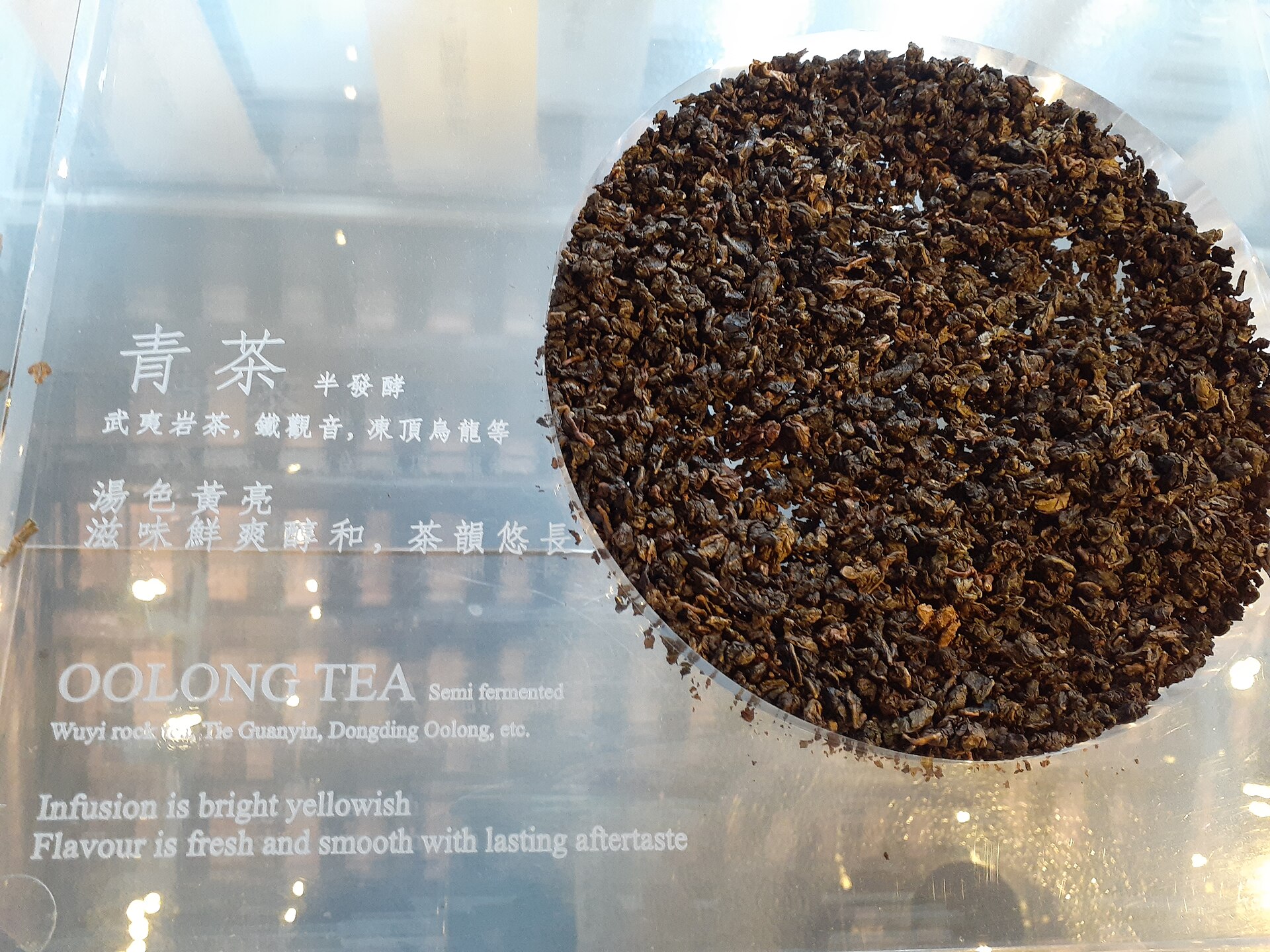
What kind of tea is Zhangping Shuixian, and why is it so often discussed on its own?
Zhangping Shuixian is an oolong tea produced around Zhangping in Longyan, Fujian, and is usually treated as a highly distinctive branch within the broader Minnan oolong world. The feature most often mentioned is its paper-wrapped square tea made from the Shuixian cultivar. The finished tea carries the oxidation and firing basis of oolong, yet takes a compressed square form that is rare among mainstream oolongs. Public descriptions often summarize it as the only compressed tea within the oolong category. The useful meaning of that phrase is not hype, but a reminder: the form is not incidental. It is part of how the flavor works.
If one spreads out a simple map of Chinese oolong, names like northern Fujian Shuixian, Wuyi Shui Xian, Tieguanyin, and Fenghuang Dancong usually occupy the center more easily because their market narratives are louder and their flavor labels more widely stabilized. Zhangping Shuixian is different. It borrows the cultivar name “Shuixian,” which naturally pushes many readers toward northern Fujian or Wuyi associations, yet it grows in western Fujian, enters a Minnan-style processing system, and then appears as a square pressed tea. That combination makes beginners think it is merely “another oolong made from the Shuixian cultivar.” In reality, it works because cultivar, place, process, and form all matter together.
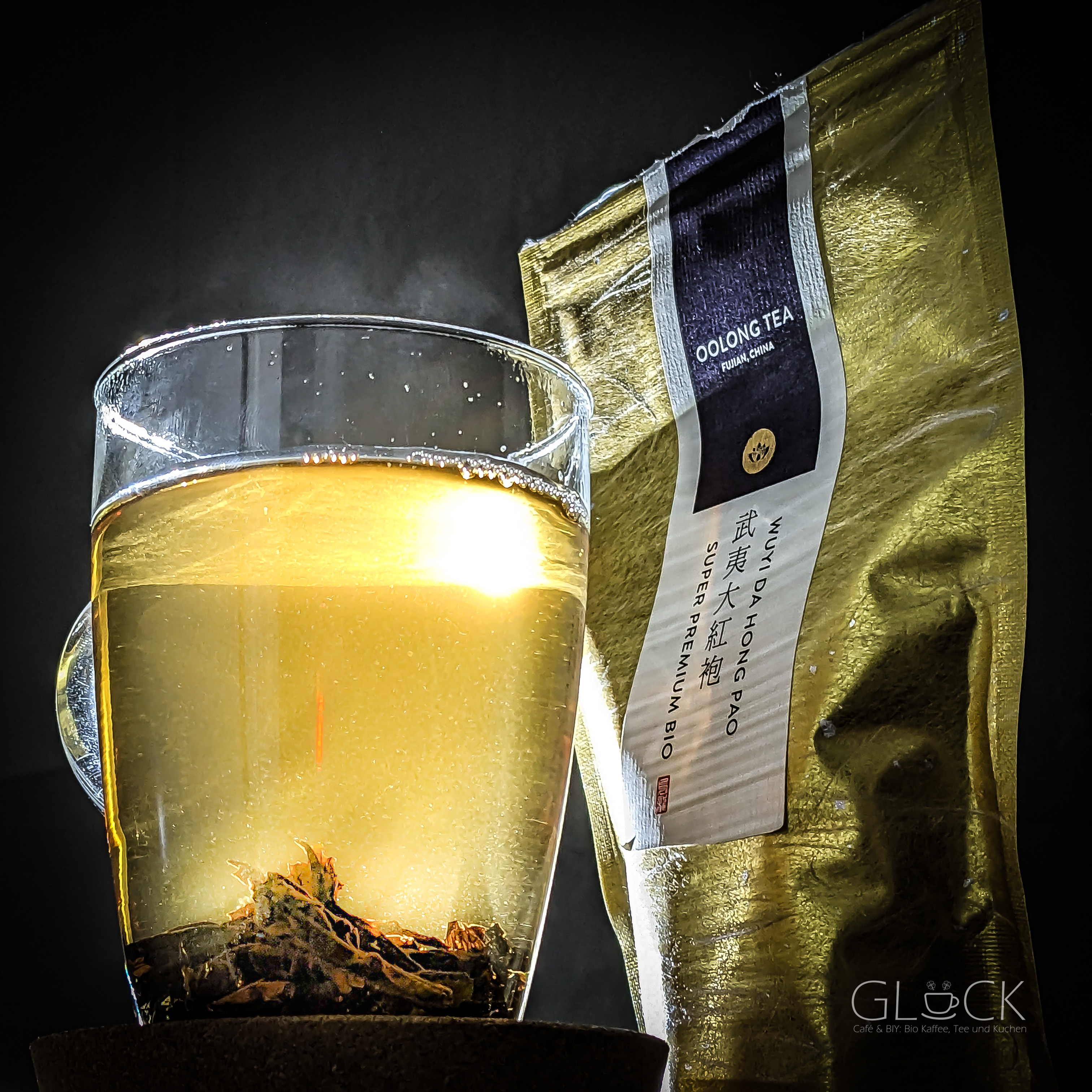
Why is the paper-wrapped square form not a gimmick, but the right entry point?
Because the pressing is not merely for transport, storage, or visual identity. According to common public descriptions, local tea makers complete the core steps of sun-withering, resting, shaking and oxidation, fixation, and rolling, then use a square wooden mold to press the leaves into compact tea cakes before wrapping them in white paper for setting and drying. That changes the tea directly: its density, how it receives heat, how aroma is gathered, and how it later opens in water. In other words, the square form is not an external shell detached from inner quality. It is part of the flavor mechanism itself.
That is why good Zhangping Shuixian often shows a distinctive relationship between restraint and release. In dry form, the fragrance is often not explosively high and open. It feels folded inward, slightly gathered by the mold and the paper wrapping. Once hot water enters, the aroma opens gradually and the floral notes, mellow cooked aroma, and light finishing fire appear in sequence. If the pressing and finishing are rough, the tea can feel stuffy, hard, or woody. If done well, the square form helps the aroma gather, the liquor stay steady, and the tea’s durability across infusions become easier to read.
What is the core flavor of Zhangping Shuixian, and why is orchid fragrance mentioned so often?
One of the most common keywords in public descriptions is “orchid fragrance.” But that should not be read mechanically as a sharp perfume-like floral note. More accurately, it is a composite floral impression built on the Shuixian cultivar, Minnan oolong oxidation logic, and controlled finishing fire: clear but not flighty, fine but not thin, slightly gathered, yet able to remain in the lid aroma, the leaf base, and the later stages of the mouthfeel. Often it is not the loudest thing in the first second. It becomes clearer as one keeps drinking.
Beyond orchid fragrance, the more important phrase is that the tea is clear, mellow, fine, and moist in the mouth. That traditional wording is actually quite precise here. “Clear” means the liquor and fragrance do not feel muddy. “Mellow” means there is substance without heaviness. “Fine and moist” means the tea does not rely on blunt force to create memory, but instead moves across the mouth in a smooth, gentle line with a light floral-fruit sweetness. If a Zhangping Shuixian has fragrance without moisture, or fire without flower, it is usually not a fully convincing example. At its best, fragrance, fire, liquor, and leaf base do not fight one another.
Is it the same thing as northern Fujian Shuixian or Wuyi Shui Xian?
No. All of them relate to the name “Shuixian,” but they should not be treated as different labels for the same tea. Northern Fujian Shuixian and Wuyi Shui Xian place more weight on northern Fujian mountain origin, the Wuyi rock-tea frame, strip-shaped form, and the corresponding roast structure. In many conversations, once people say “Shuixian,” they are already standing inside the Wuyi world. Zhangping Shuixian uses the same cultivar base, but enters a completely different local expression. It takes shape in Zhangping in western Fujian, and its flavor direction is built by square pressing, paper wrapping, Minnan oolong oxidation logic, and later firing.
If one insists on comparing them, Wuyi Shui Xian is more naturally read through rock character, roast, strip form, and mountain depth. Zhangping Shuixian is better read through floral fragrance, the square tea structure, its clear smooth texture, and the release rhythm created by compression. The two routes may share some woody, floral, or mellow qualities coming from the cultivar, but their relationship is not “orthodox original versus local variant.” They are two different developments of related plant material under different mountain and process systems. To call Zhangping Shuixian simply “compressed Shui Xian rock tea” is a very typical mistake.
How is it related to Tieguanyin, and why do some people feel it tastes a bit like Minnan oolong?
Because Zhangping Shuixian really does sit inside the broader Minnan oolong process world. Its oxidation logic, aroma organization, and drinking experience share some family resemblance with Minnan oolong, so it is not strange that some drinkers read a familiar Minnan outline in the cup. But it is still not a substitute for Tieguanyin. Classical Tieguanyin emphasizes the cultivar’s own identity, pellet-rolled form, and the later market spectrum of greener or heavier roast styles. Zhangping Shuixian, by contrast, stands on square pressing, the Shuixian cultivar base, and a more inward floral and finely moist structure.
In other words, both teas can lead drinkers into a “Minnan oolong” reading path, but they work in different ways. Tieguanyin feels like a central classic shaped by strong cultivar recognition and a full market aesthetic. Zhangping Shuixian feels more like a local branch that preserved its own craft personality and physical form. Because it is not fully like Tieguanyin and not fully like Wuyi Shui Xian, it deserves to stand by itself. Calling it merely “something between Shui Xian and Tieguanyin” may sound convenient, but it erases exactly what makes it independent.
How do wooden-mold pressing and paper wrapping change the brewing experience?
They directly change the tea’s opening rhythm. Compared with strip oolong or pellet-rolled oolong, Zhangping Shuixian often does not fully open in the first infusion, especially when the square tea is more tightly pressed or more firmly finished. It needs time for heat and water to move into the core. For that reason, it should not be judged only by whether the first infusion is fragrant. What matters more is the unfolding from the first infusion through the third or fourth: Does the fragrance become clearer? Does the liquor become smoother? Do the leaves gradually open well? Or does the tea begin stuffy and later fall apart?
Strong examples show an orderly stability in this unfolding. They do not throw all their information at the drinker immediately. Instead, flower, sweetness, traces of fire, and leaf texture arrive layer by layer as the tea opens. This is one reason experienced drinkers often call it “durable” or “easy to keep drinking.” Durability here does not only mean many infusions. It means that each infusion continues to add something. If a tea is pressed too hard, made from rough material, or fired out of balance, it easily turns stuffy in the early cups, woody in the later ones, and structurally loose overall. Even if the form looks typical, that is not a strong sample.
How should Zhangping Shuixian be brewed if the goal is a fair judgment?
If the goal is serious tasting, it is better not to begin with a large mug and a long steep. A gaiwan or a small pot is more suitable because it lets the square tea open gradually. A useful starting point is around 5 grams for 100 to 120 ml of water, with water near 95°C. The first infusion does not need to be too long; its main purpose is awakening and observation. From the second infusion onward, the key questions are whether the floral fragrance grows clearer, whether the liquor becomes smoother, and whether the finishing fire stays clean. Truly good Zhangping Shuixian does not fear repeated brewing, because its strengths naturally show through gradual layered opening rather than a single dramatic infusion.
For casual daily drinking, a large cup or thermos is of course possible, but that method makes it easier to brew the tea into stuffiness. The square form opens more slowly, and the tea also carries a certain finishing-fire basis, so prolonged soaking can exaggerate woody heaviness and muted cooked notes while hiding the fine moist texture that should define it. The safer mindset is to treat it as an oolong that asks for a little patience: first let it wake, then let it open, then judge whether it can close well. “Closing well” means the late cups should not become hollow, dry, or reduced to hard fire and paper-wrapped residue.
What are the most common mistakes when buying Zhangping Shuixian?
The first mistake is judging only by appearance. A neatly pressed square tea with retro-looking wrapping does not automatically mean good tea. What actually matters is whether the dry tea smells clean, whether the brewed liquor is bright, whether the leaf base opens well, and whether floral fragrance and finishing fire stay in balance. The second mistake is treating “orchid fragrance” as something that should become sharper and more aggressive with higher quality. In Zhangping Shuixian, the floral note should be clear, fine, and steady rather than piercing, floating, or thin. Overvaluing surface aroma too easily leads to teas that smell loud but drink hollow.
The third mistake is assuming that heavier fire is automatically more traditional and more correct. Zhangping Shuixian does need a certain level of firing to complete the form and gather the flavor, but the purpose of that fire is not to erase the flower or turn the tea woody and charred. The fourth mistake is expecting every tea named “Shuixian” to carry the same cultivar memory in the cup. Cultivar is only the starting point; origin, process, and form decide what the finished tea becomes. The best way to judge Zhangping Shuixian is not to ask whether it resembles Wuyi Shui Xian, but whether it fully realizes its own orchid fragrance, fine moist texture, square-tea release rhythm, and western Fujian local character.
Why does it deserve to be a key entry in the site’s oolong section?
Because it fills a space on the map of Chinese oolong that is often overlooked. If a site covers only famous central categories such as Tieguanyin, Wuyi rock tea, Shui Xian, and Fenghuang Dancong, readers may start to assume that the development of oolong is mainly defined by the loudest and most commercially dominant production centers. Zhangping Shuixian reminds us that there are also highly mature, highly localized tea types that are relatively underrepresented in national-level tea discussion. They are not footnotes. They are part of what explains why Chinese tea is so rich.
More importantly, Zhangping Shuixian is extremely suitable for a strictly aligned bilingual article. The Chinese source article enters through the paper-wrapped square form, wooden-mold pressing, orchid fragrance, and western Fujian local craft; the English article should follow the same factual spine and explain why this is not just a compressed oolong curiosity. Only then can English readers avoid reducing it to “a cute square oolong cake,” while Chinese readers stop treating it as merely a local tea name with an unusual shape.