Green Tea Feature
Yuexi Cuilan: why this Anhui green tea is about more than “orchid-like” beauty
Many people remember Yuexi Cuilan because the name is easy to remember: Yuexi, green, orchid. Those three words already seem to explain its place, color, and style. Public descriptions then reinforce the impression with recurring labels such as “orchid-like shape,” “floral note,” and the “three greens” profile. That makes it easy to reduce the tea to a graceful-looking Anhui green tea with an elegant name. But that is too thin. What really deserves attention is that Yuexi Cuilan is both a tea with a clear late-twentieth-century creation background and a tea that tightly binds mountain origin, linked-bud-and-leaf shaping, a clean fresh cup, and deliberate local brand building into one coherent famous green tea identity.
Yuexi Cuilan is not the kind of tea that stands mainly on ancient classical prestige. Public materials generally note that it was created in the mid-1980s, gradually fixed under the name Yuexi Cuilan, and later developed related local series. That makes it an especially useful example of something people often overlook: not every famous Chinese tea becomes important because it is extremely old; many also become important through modern processing goals, local organizational effort, and sustained regional branding.
Once that is clear, the name “Cuilan” becomes more interesting. It is not empty poetic decoration. It works together with shape, aroma, liquor color, and origin narrative. The real point of Yuexi Cuilan is not merely whether the dry leaf vaguely resembles an orchid. It is the way the tea stabilizes a whole cluster of requirements—buds and leaves linked together, natural blossom-like opening, lively green color, relatively high clean aroma, fresh mellow taste, and returning sweetness—into a recognizable and repeatable mountain green tea style.
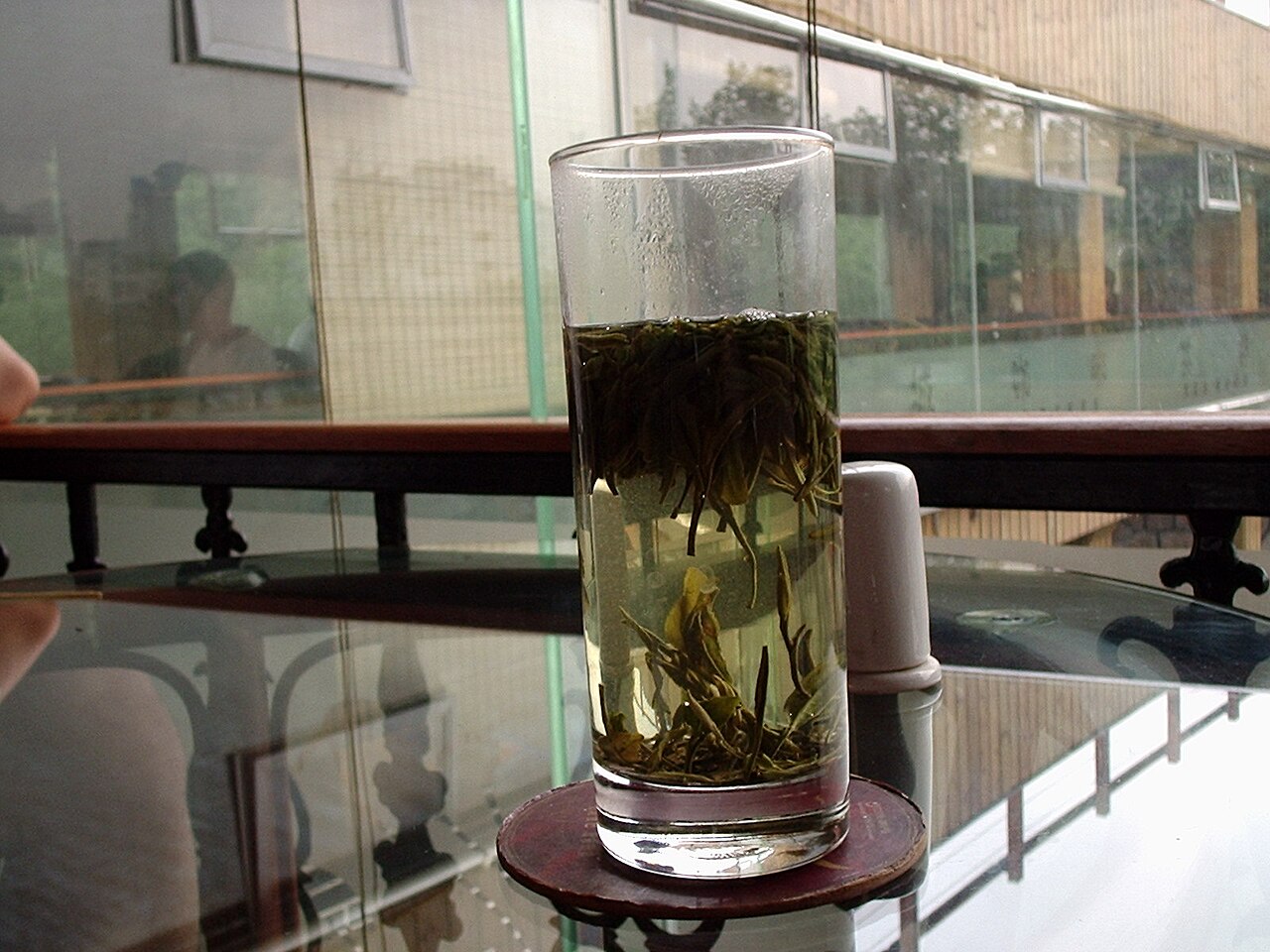
What kind of tea is Yuexi Cuilan, and where does it sit within Anhui green tea?
Yuexi Cuilan is a Chinese green tea closely associated with Yuexi County in Anhui. Compared with deeply canonized Anhui teas such as Huangshan Maofeng, Lu’an Guapian, or Taiping Houkui, one striking thing about Yuexi Cuilan is that its creation date is much more recent and the formation of its identity is clearer. Public materials usually note that it began standing out around 1984 and was more broadly recognized under the name Yuexi Cuilan around 1985. In other words, this is not a tea whose prestige depends on a literary trail extending deep into premodern history. It is a highly typical success story of a modern local famous green tea created in the reform-era landscape.
That does not make it less significant. If anything, it makes it more analytically useful. Yuexi Cuilan shows another way a famous tea can become established: local ecology already makes tea possible, and then a relatively fixed plucking standard, a recognizable processing route, a distinct shape goal, and continuing awards and geographical-indication work together to turn a local green tea into a name with real market and cultural weight. To understand it well, one has to move beyond the question of whether it is an ancient tribute tea and ask instead how it was stabilized as a famous tea in the modern period.
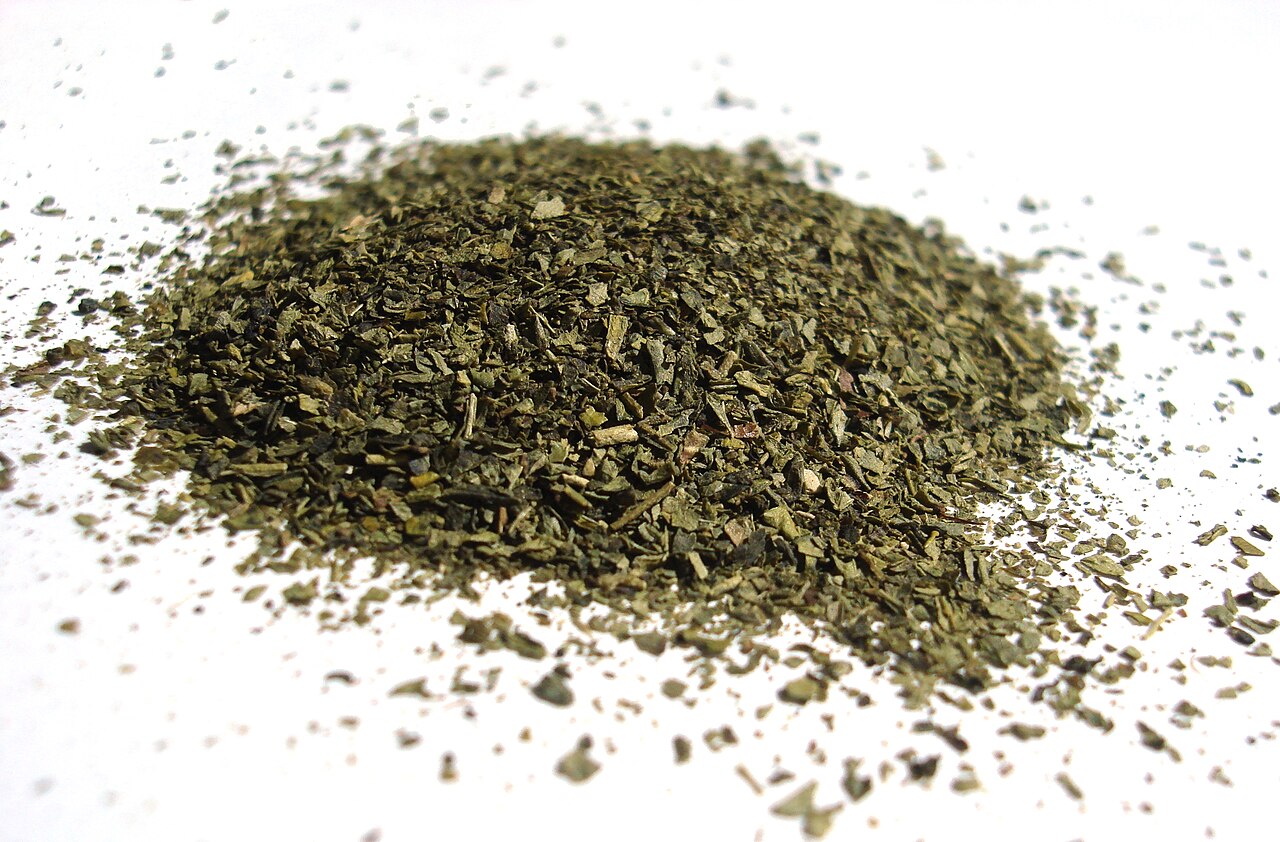
Why do descriptions so often emphasize “orchid-like,” “buds and leaves linked,” and “opening into blossoms”?
Because that is exactly where Yuexi Cuilan separates itself from many other Anhui green teas. It does not follow the flattened route of Longjing, the leaf-only route of Lu’an Guapian, or the dramatically elongated visual route of Taiping Houkui. Yuexi Cuilan instead emphasizes buds and leaves linked together, naturally opening, and showing a blossom-like form. These descriptions recur so consistently in public material that they are clearly part of the quality standard rather than loose metaphor.
Here, “orchid-like” is best understood as an overall gesture rather than a literal flower imitation. It points to a controlled naturalness: opened shape, lightness, elegance, and a certain living softness. That is why a good Yuexi Cuilan should not look rigid, hard, or mechanically over-formed. It should look guided, not forced. Its shape goal is not industrial uniformity, but a disciplined version of natural unfolding.
What does the “three greens” description actually mean?
Public descriptions often summarize Yuexi Cuilan through the phrase “three greens”: green dry leaf, green or pale-green bright liquor, and tender green leaf base. This matters because it links the tea’s appearance before brewing, during brewing, and after brewing into one single judgment frame. Many drinkers stop at whether the dry tea looks green enough or whether the liquor is bright enough. With Yuexi Cuilan, the idea is larger: the green character should run through the whole tea, not just the surface.
But this also needs restraint. First, greener does not automatically mean better. Overvaluing aggressively bright color can distort judgment. Second, the “three greens” idea is not the whole answer. A really good Yuexi Cuilan should also smell clean, taste fresh and mellow, and leave a smooth returning sweetness. If only the color survives while freshness and completion disappear, then the tea has become a visual exercise rather than a successful famous green tea. Its interest lies in getting shape, liquor, and inner quality to work together.
Why does the Yuexi mountain origin matter so much?
Public materials describing Yuexi’s tea environment are fairly consistent: mountainous terrain, layered elevation, humid climate, relatively cool temperatures, abundant rain and snow, and complex local microclimates suitable for tea growth. Related references also mention soil types and higher-altitude tea zones. Taken together, this places Yuexi Cuilan squarely inside the familiar logic of mountain green tea.
This matters because the name “Cuilan” can easily make readers think first of elegance and aroma rather than of mountain origin. But without those mountain conditions, the later ideas of linked buds and leaves, blossom-like unfolding, freshness, and returning sweetness would be far harder to realize. In other words, Yuexi Cuilan may be a successful modern famous tea, but its roots still lie in Yuexi’s mountain leaf conditions rather than in naming language alone.
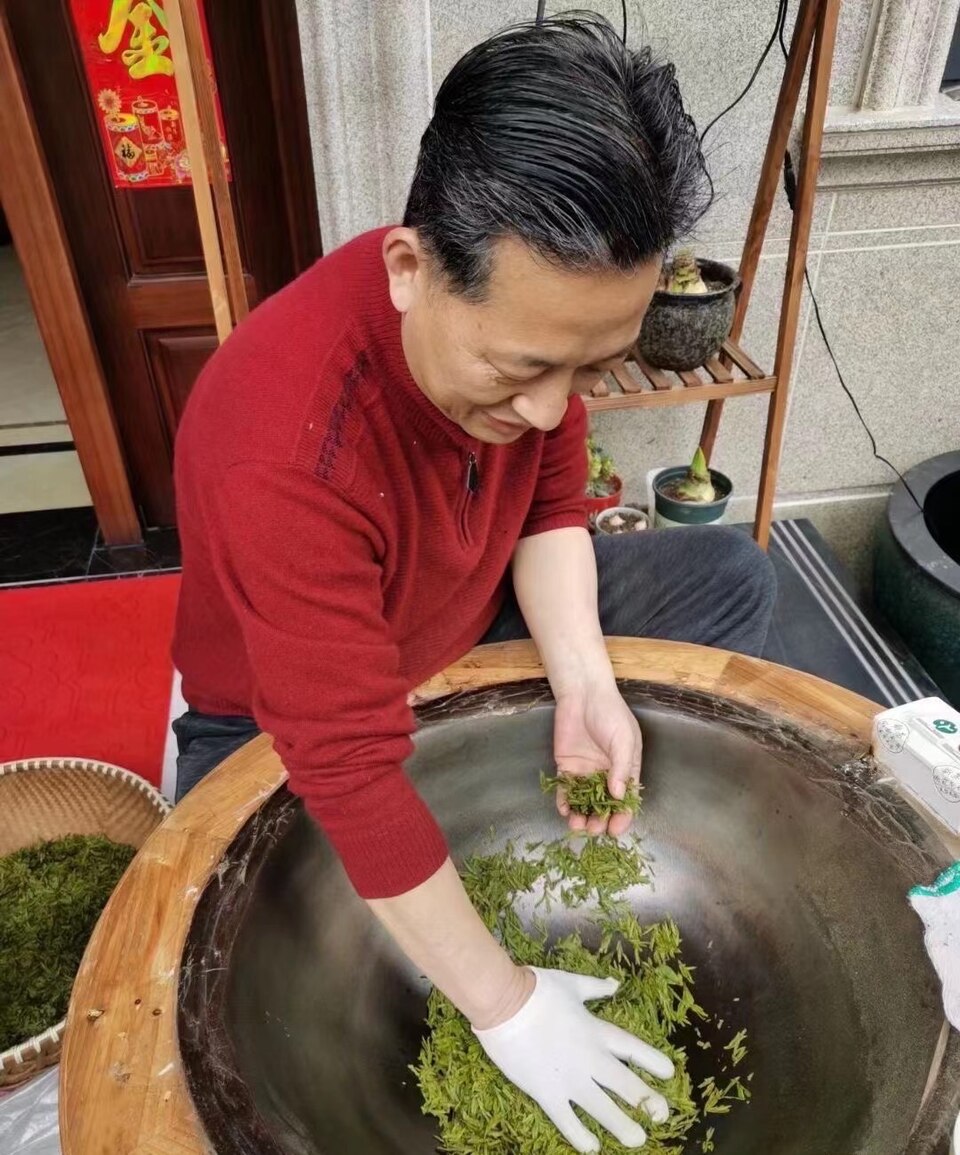
How is Yuexi Cuilan made, and where is the processing emphasis?
Public descriptions of Yuexi Cuilan processing are broadly stable: after plucking, the leaves go through resting or spreading, kill-green heating, strip arrangement, first drying, cooling, and final drying. Exact terminology differs slightly from one source to another, but the main line is clear—reduce some moisture and grassy sharpness, fix the green-tea direction through heat, then shape and dry in stages until both appearance and inner quality are established.
The key is not to force the tea into an extremely sharp needle form, but to process linked buds and leaves into something that remains open, neat, and fresh. Public sources even provide relatively specific ranges of processing temperatures and timing, which shows that this is not merely a loose village tea dependent only on oral transmission. It has been standardized to a significant degree. The most useful thing for readers to hold onto is not every technical number, but the logic behind them: Yuexi Cuilan must remain bright and fresh as a green tea while also achieving a blossom-like opened shape, which makes the balance between heat and shaping especially important.
What should it taste like when it is good?
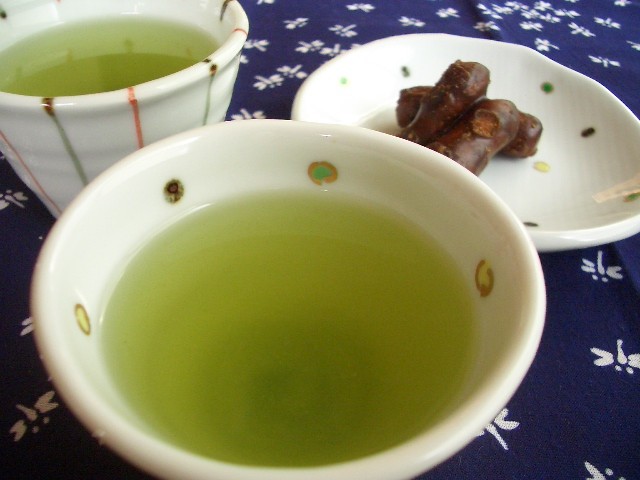
At its best, Yuexi Cuilan usually gives a sense of cleanliness and lift in the aroma first, then freshness and smoothness in the mouth. Public references often describe it as having a relatively high clean aroma, a fresh mellow taste, and obvious returning sweetness, and some explicitly note a floral impression. That floral note should not be misunderstood as a perfumed or scented-tea aroma. It is better understood as a clean, lifted, refined aromatic tendency produced by mountain leaf material and clean workmanship rather than by added flowers or strong roasting.
In the mouth, the ideal direction is not heaviness but freshness, softness, and a natural sweet return. If the tea tastes merely raw-green and thin, the completion is weak. If it turns dull, stuffy, or obviously fire-heavy, then the process likely failed to unify fresh inner quality with the intended shape. This style of tea is especially vulnerable to two failures: looking beautiful while tasting hollow, or pushing flavor too hard and losing the lightness that made it attractive in the first place. A good example should look elegant, drink cleanly, and leave a fresh sweet trace in the mouth.
How should it be brewed, and why should the handling stay gentle?
Yuexi Cuilan works well in either a clear glass or a small gaiwan. The glass shows its unfolding buds and leaves, blossom-like leaf base, and bright liquor; the gaiwan is better for closely judging aroma and completion. Water around 80°C to 85°C is usually the safer range, and the tea does not need a heavy leaf load. If one starts with fully boiling water and long steeps, the tea’s finer aroma and fresh character are easily flattened.
The real charm of this tea does not lie in rough questions like whether it is “durable enough” for hard brewing. It lies in whether the early infusions remain clean, lively, and well-opened. Watching it unfold in a glass is one experience; checking whether the aroma stays stable and the liquor remains fresh and mellow in a gaiwan is another. When both are convincing, one is getting closer to what Yuexi Cuilan is supposed to be.
Why is Yuexi Cuilan such a good example of successful modern regional famous-tea construction?
Because its development path is highly typical. First came a clear creation moment and early visibility in local competitions, then naming and market recognition, then line extensions, accumulated awards, expanding production, and eventually geographical-indication protection and regional-brand language. Public materials let one see this path from its 1980s creation, to 1990s line development, to the stronger award and GI identity built in the 2010s and after. It is a very modern path, and a very legible one.
That means the value of Yuexi Cuilan is not simply that it is “another Anhui green tea.” It is that it shows how a modern regional famous tea can be made to hold: mountain ecology provides the leaf base, a relatively stable process target unifies shape and flavor, and local brand and standards systems keep amplifying recognition. For a bilingual tea site, it is especially worth writing carefully because English readers can easily misread it as just a poetic-name tea, while Chinese readers can also reduce it to something merely pretty and orchid-like. The core structure should remain the same in both languages: it is an Anhui mountain green tea built on Yuexi leaf conditions, clearly shaped from the 1980s onward, and defined above all by linked buds and leaves, blossom-like opening, and a clean fresh elegant cup.