Oolong Tea Feature
What roasting, resting, and re-roasting mean in oolong tea: why some teas are awkward right after roast, steadier after a pause, and sometimes roasted again the next year
If there is one part of oolong tea that confuses newcomers almost immediately, it is often not the idea of shaking or oxidation control, but the cluster of fire-related words that seem similar while actually pointing to different things: roasting, post-roast resting, re-roasting, and the return of green notes. Many people hear them and assume they all just mean “bake it again” or “use more or less fire.” But as soon as you start buying, drinking, or storing roasted oolong, that simplification falls apart. Some teas smell impressive right after roasting but drink tight and dry. Some improve noticeably after a month or two. Some experienced drinkers wait for them to settle before opening them seriously. And some teas, especially traditional roasted styles, may be roasted again after a season or even the next year, not to make them more charred, but to bring them back into a cleaner and more stable condition.
That is exactly why this topic deserves its own page. Roasting in oolong tea is not just about “baking the tea dry,” but about finishing aroma, moisture balance, stray notes, liquor texture, and long-term stability after shaping and primary processing are already complete. And the language around resting, re-roasting, and the return of green notes describes what happens after that fire work is done. For a tea site, this is not a side detail. It is one of the clearest keys to understanding Wuyi rock tea, Phoenix Dancong, stronger roast Tieguanyin, old-bush Shuixian, and many other roasted oolong traditions. Many drinkers think they are learning to read “aroma” or “roast,” when what they really need to learn is whether the roast actually organized the tea, whether time allowed the fire and the tea to settle together, and whether a later re-roast is maintaining the tea or merely trying to hide a problem.
What exactly is roasting in oolong tea? Why is it more than simple drying?
At the most basic level, roasting is of course related to heat, moisture reduction, and further drying. After an oolong has already gone through major steps such as oxidation control, fixing, rolling, initial drying, and shaping, roasting continues to influence moisture stability, aroma containment, stray note cleanup, and overall finish. So yes, roasting does help dry the tea further. But if that is all one sees, one misses its most important function in traditional oolong. In many oolong systems, roasting is not a decorative final step. It is one of the main processes that determines whether the tea will feel stable, coherent, integrated, and suitable for later drinking.
More precisely, roasting is doing at least three things at once. First, it helps stabilize the tea by reducing the risk of unstable moisture leading to stuffiness, green edges, or later storage trouble. Second, it helps move aroma from a merely surface-level fragrance toward something more embedded in the liquor. Third, it tightens the overall structure. Some teas are lively and aromatic after their earlier processing, but if roast does not connect properly, they can remain floaty, scattered, thin, or hollow in the finish. Appropriate roasting can make them rounder, steadier, more durable in brewing, and more suitable for resting or holding. That is why roast is not just a flavor note. It is a finishing language. The real question is never simply “how heavy is the roast?” but “did the roast help this tea become complete?”
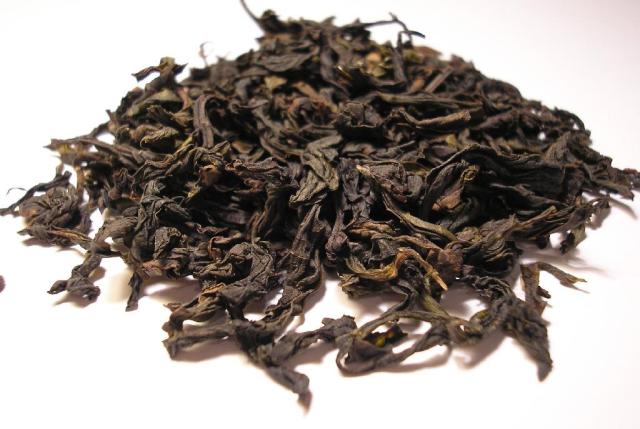
Why are many oolongs not actually at their best right after roasting?
This is one of the first things that surprises newer drinkers. If roasting is supposed to improve a tea, why do experienced drinkers often say not to rush in right away? The answer is simple: the technical act may be finished, but the tea is not necessarily in its most coordinated drinking state yet. Shortly after roast, a tea may still carry exposed fire energy, dryness, or a certain tightness. Put differently, the heat has done its structural work, but the relationship among aroma, roast, liquor, and moisture has not fully settled. That is why some freshly roasted teas can smell energetic and taste substantial, yet still feel somewhat tense, dry-edged, forceful, or not fully open.
This does not automatically mean the tea is bad, nor does it automatically mean the roasting was wrong. In many traditional roasted Wuyi teas, Phoenix Dancong, stronger-roast Tieguanyin, and other roast-defined strip-style oolongs, this is a normal transitional phase. Right after roast, the frame can feel tight, aroma can feel held in too stiffly, and the liquor may show a dry edge. After some time, that exposed roast character settles, aroma integrates, sweetness lengthens, and the water path becomes smoother. In other words, “freshly roasted” is not automatically the peak. It is often just the point at which a technical process has been completed, not the point at which drinking harmony has fully arrived.
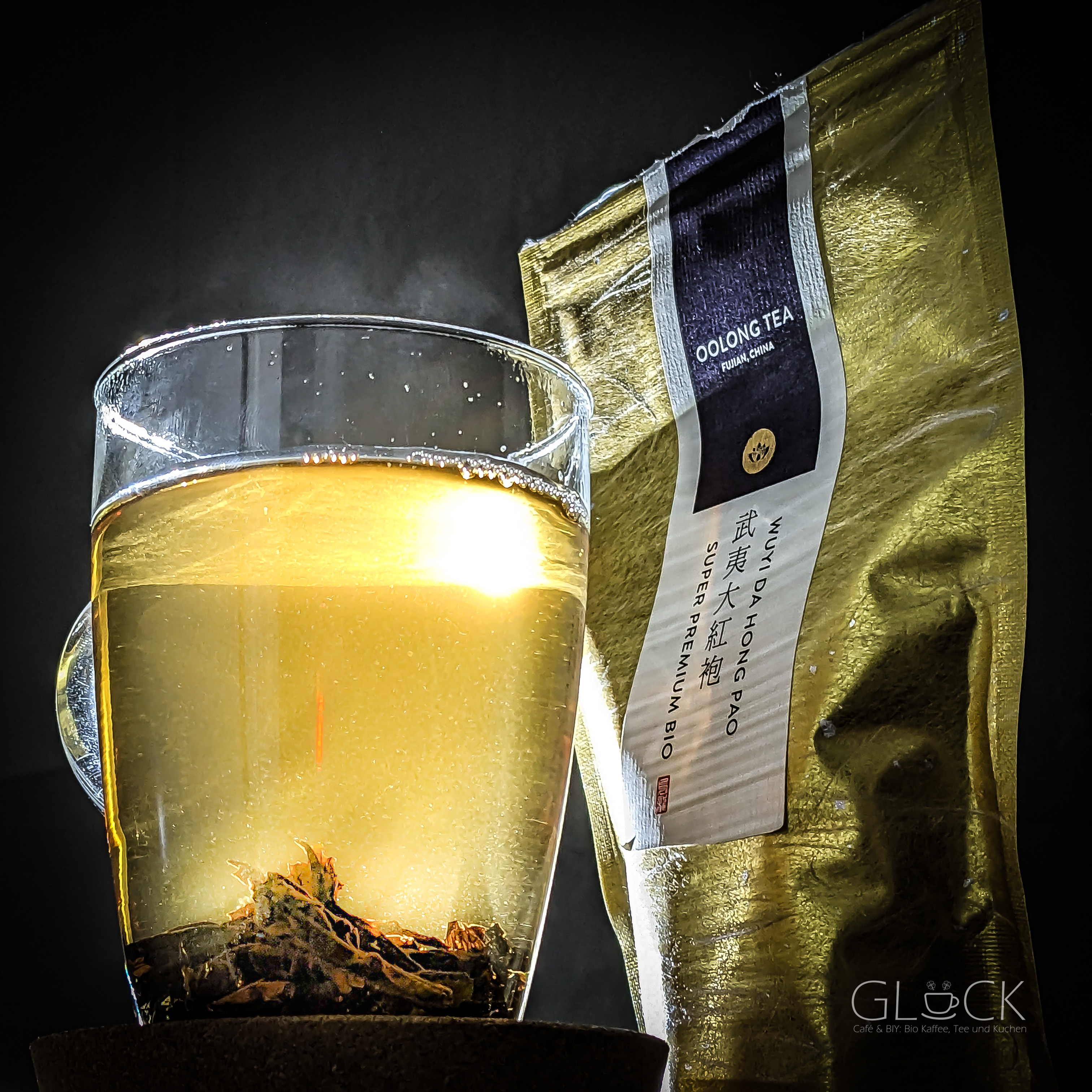
What does post-roast resting really mean? Is it just “letting the fire smell fade”?
Post-roast resting is easy to oversimplify. In one shallow version, people treat it as nothing more than “the roast smell disappearing.” In a more mystical version, it becomes some secret process only specialists can sense. The safer explanation is simpler: post-roast resting is the period in which a tea gradually moves from exposed fire and structural tightness toward better aroma integration, smoother liquor, and greater internal coordination. It is not about erasing roast, and it is not necessarily a sign that something went wrong. It is the period in which fire and tea settle into each other.
That is why resting does not mean a tea should lose all roast character. Some teas are built around a clearly roasted identity and will remain recognizably roasted even after they settle. What changes is the edge structure. Dryness softens. Forcefulness calms. Aroma and liquor stop feeling separate. Resting does not remove roast; it shifts roast from a conspicuous outer layer into a more internal structural role. If a tea merely goes dull, flattened, and lifeless after resting, that should not be romanticized as success. It more likely means the tea lacked sufficient depth in the first place, or the roast never organized it properly.
Then what is the “return of green notes,” and why is it so often discussed together with re-roasting?
If resting describes tea moving toward greater stability and integration, then the return of green notes describes one of the important risks in the opposite direction. It refers to cases where previously controlled green edges, stray notes, or floating instability begin to reappear during storage. It does not always show up as a literal grassy smell. More often, experienced drinkers notice that the tea begins to feel loose, aromatic in a shallow way, hollow in the liquor, or generally less settled than before. In some cases, it also points toward early humidity trouble, rising杂气-like off notes, or a loss of the balance between fire and tea.
This phenomenon is related to moisture balance, storage conditions, package stability, and the completeness of the original roast. Some teas that were left relatively light, high-toned, and structurally loose are more vulnerable to it. Others drift that way after humid weather, frequent opening, or unstable storage. That is exactly why the topic is often linked to re-roasting. One major practical purpose of re-roasting is to pull a tea back from that state when it has started to lose stability. But there is an important limit here: re-roasting is not magic repair. It can reorganize a tea that has drifted somewhat but is still sound. It cannot truly restore a tea that has already been badly stored, heavily muddied, or fundamentally damaged.
What is re-roasting really doing? Why are some teas roasted again after a season or even the next year?
Re-roasting can be understood as using another carefully judged fire step to reorganize, correct, and stabilize a tea. Its purpose is not automatically to make the tea darker, heavier, or older. Good re-roasting usually serves a few specific goals: it can suppress green notes or floating instability that have re-emerged in storage; it can pull aroma and liquor back together if the tea has started to scatter; and it can restabilize the tea for further holding. For certain roast-oriented oolongs with real structural backbone, re-roasting is not a scandal or a disguise. It is part of maintenance.
Why does it happen after time has passed? Because tea does not remain frozen after it is roasted. It continues to change in storage, and those changes are shaped by season, humidity, packaging, and how often the tea is opened. Traditional roasted Wuyi teas, some Dancong, stronger-roast Tieguanyin, and old-bush Shuixian-like teas may all make sense within a re-roast logic under the right conditions. This is especially true in more humid southern environments or in less-than-ideal storage. But sensible re-roasting depends on knowing what the tea was originally meant to be. If one simply re-roasts every disappointing tea blindly, the result can be worse rather than better: aroma gets flattened, surviving detail gets buried, and what remains is merely a generic layer of fire.
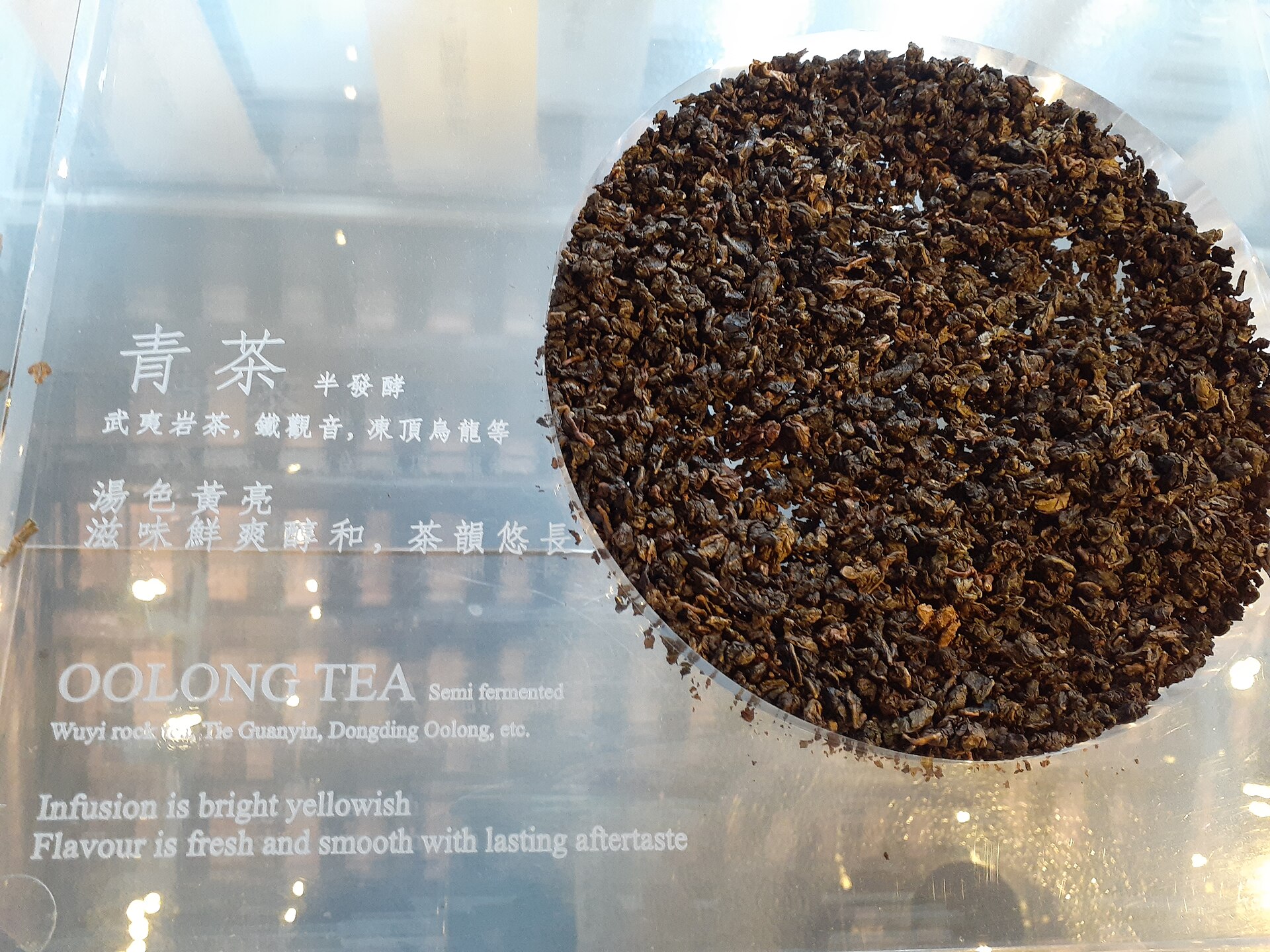
Which oolongs are more suitable for roast and re-roast, and which ones should not be pushed through fire for its own sake?
In general, teas with stronger raw-material structure, more complete earlier processing, and a natural place inside a roast-defined aesthetic system are better candidates. Typical examples include Wuyi rock tea styles such as Rougui, Shuixian, and old-bush Shuixian, along with some traditional Phoenix Dancong and stronger-roast Tieguanyin routes. These teas are not suitable simply because they are “hard to ruin with fire,” but because roast is already part of how they are supposed to speak. When handled well, roast can move them from floating fragrance toward condensed aroma, from green instability toward collected structure, and from surface sharpness toward more stable middle and later infusions.
But that does not mean all oolong should be pushed toward more roast. Many teas built around lift, freshness, direct floral expression, and immediate drinkability lose their greatest strengths under too much fire. Even inside the same category, not every tea wants the same roast path. Some Rougui benefit from having their sharpness gathered slightly into a steadier liquor. Some high-aroma Dancong become flattened if the fire goes too far. Some lighter, clearer oolong styles are not meant to derive their value from re-roasting at all. The mature question is never simply “can this tea take roast?” but “what is most worth preserving in this tea, and is roast protecting it or burying it?”
How can you tell whether roast is organizing a tea or covering it up?
The most useful method is not memorizing technical vocabulary, but watching for a few concrete signals in the cup. First, ask whether aroma and liquor feel separate. If a tea smells strong but drinks thin, hollow, or aromatically disconnected, the roast probably has not truly organized the tea. Second, look at continuity from early to later infusions. Good roasted oolong is not always loudest at the beginning, but it often becomes more convincing as it opens. If the first infusion is dramatic and the rest quickly collapse into dryness, woodiness, or one flat roast note, caution is justified. Third, pay attention to the finish. Even strongly roasted tea should not leave a dull, muddy, sour, or tiring aftertaste if the roast is good.
There is also a deeper question: did the roast preserve the tea’s own identity? Rougui should still feel like Rougui in its line and energy. Dancong should still keep its floral-fruit architecture. Shuixian should still carry its settled body and frame. Those traits need not all remain equally loud, but if roasting reduces everything into one vague “cooked roast tea” impression, then it is covering rather than organizing. Mature roasting does not make every tea speak the same sentence. It helps different teas speak their own sentence more completely.
How long should post-roast resting take? Is there a standard timeline?
There is no fixed number of days that works for every tea. Resting speed depends on roast level, raw-material structure, roasting method, moisture status, package stability, storage temperature and humidity, and how often the tea is opened. Some teas become noticeably smoother after only a few weeks. Some need one or two months. Some more heavily framed teas can keep shifting over a longer period. The practical lesson is not to memorize “one month” or “three months,” but to accept that the best drinking window for roasted oolong is often dynamic rather than immediate.
That also means the calendar cannot judge resting by itself. The better method is comparative drinking over time. Revisit the same batch after a pause and ask whether it has become more integrated, cleaner, and steadier; whether aroma has moved into the liquor; and whether the finish has become more complete. If the tea is merely less aggressive but has also lost energy, layers, and return sweetness, that is not ideal settling. Resting should not make the tea dull. It should make the tea stable. That difference is worth keeping very clear.
What are the easiest buying mistakes with roasted oolong?
The first mistake is to assume that heavier roast automatically means greater sophistication or higher quality. Many drinkers smell a strong roast impression and immediately read it as more traditional, more expert, or more suitable for serious tea drinkers. Real tea is not that simple. A heavy roast only means the fire presence is more obvious. It does not prove that the roast was better judged. The second mistake is to use “it just needs to rest” as a universal excuse. Some teas really do improve after post-roast settling, but not every tea that drinks poorly today is worth waiting for. If the tea is hollow, muddled, and structurally weak, time alone will not save it. The third mistake is to treat re-roasting as an automatic value label, as if “re-roasted,” “traditional roast,” or “multiple roasts” must always mean greater quality. In truth, re-roasting only matters when it genuinely restores order.
The fourth mistake comes from modern oversimplification. Roasted oolong is often sold as a single “cooked aroma” aesthetic, which trains buyers to chase char, caramel, or generalized fire impression while ignoring cleanliness, liquor integration, and finish. That is how one ends up buying teas that look traditional on the surface but drink in a tiring, heavy, one-dimensional way. A better buying logic is still the basic one: what tea is this, why was it roasted, what state is it in now, was it just roasted or already rested, is re-roasting meaningful here, and does it actually drink more completely rather than merely more heavily?
Why does this deserve its own article in the tea section?
Because it does more than explain a few terms. It fills a structural gap in how oolong tea is read. The site already contains broader oolong pages and specific articles on Tieguanyin, Phoenix Dancong, Wuyi rock tea through Rougui and Shuixian, Baijiguan, Shuixian, and related branches. Those pages establish different entry points through origin, cultivar, oxidation work, roast aesthetics, and market misunderstanding. But without a dedicated page that clearly separates roasting, resting, re-roasting, and the return of green notes, many of those terms remain only half understood. Readers may know that fire matters without understanding why a freshly roasted tea is often not yet in its best state, or why experienced drinkers wait, or why re-roasting can be maintenance rather than mythology.
Just as importantly, this is the kind of topic that works especially well in a tightly aligned bilingual format. English-language readers often encounter Chinese oolong through the word “roast” as if it referred mainly to flavor profile. The Chinese article makes clear that roast also belongs to the language of stability, resting windows, storage maintenance, and cup integration. The English version therefore needs to stay on the same factual and structural line, not turn into a separate lifestyle piece about “roasted oolong mood.” For a bilingual content site, a knowledge node like this often adds more long-term value than simply adding one more named tea profile.
Source references
- Wikipedia: Oolong
- Baidu Baike: Wuyi rock tea
- Baidu Baike: Fenghuang Dancong
- General public Chinese tea materials on oolong roasting, post-roast resting, re-roasting, the return of green notes, storage, and roast judgment.