Green Tea Feature
Gougunao Tea: why this famous Suichuan green tea is really about mountain character, tenderness, and returning sweetness
Many readers remember Gougunao Tea before they ever taste it, simply because the name is so unusual. Compared with names like Longjing, Bi Luo Chun, or Huangshan Maofeng, “Gougunao” does not sound like the standard literary vocabulary of famous Chinese tea. That is exactly what makes it interesting. This is not a tea that survives because of an eccentric name. It is a Jiangxi green tea with a fairly complete logic of mountain origin, plucking standards, processing method, and regional storytelling.
If one focuses only on the name, it is easy to misread Gougunao Tea as a local curiosity. But once you follow the trail of origin and manufacture, the tea becomes much clearer. It depends on mountain conditions, fine and even raw leaves, a tightly structured process, and a final cup that balances freshness, body, clarity, and sweetness. It is not a green tea that wins by loud aroma. It stands up slowly through mountain ecology and careful workmanship.
What kind of tea is Gougunao Tea?
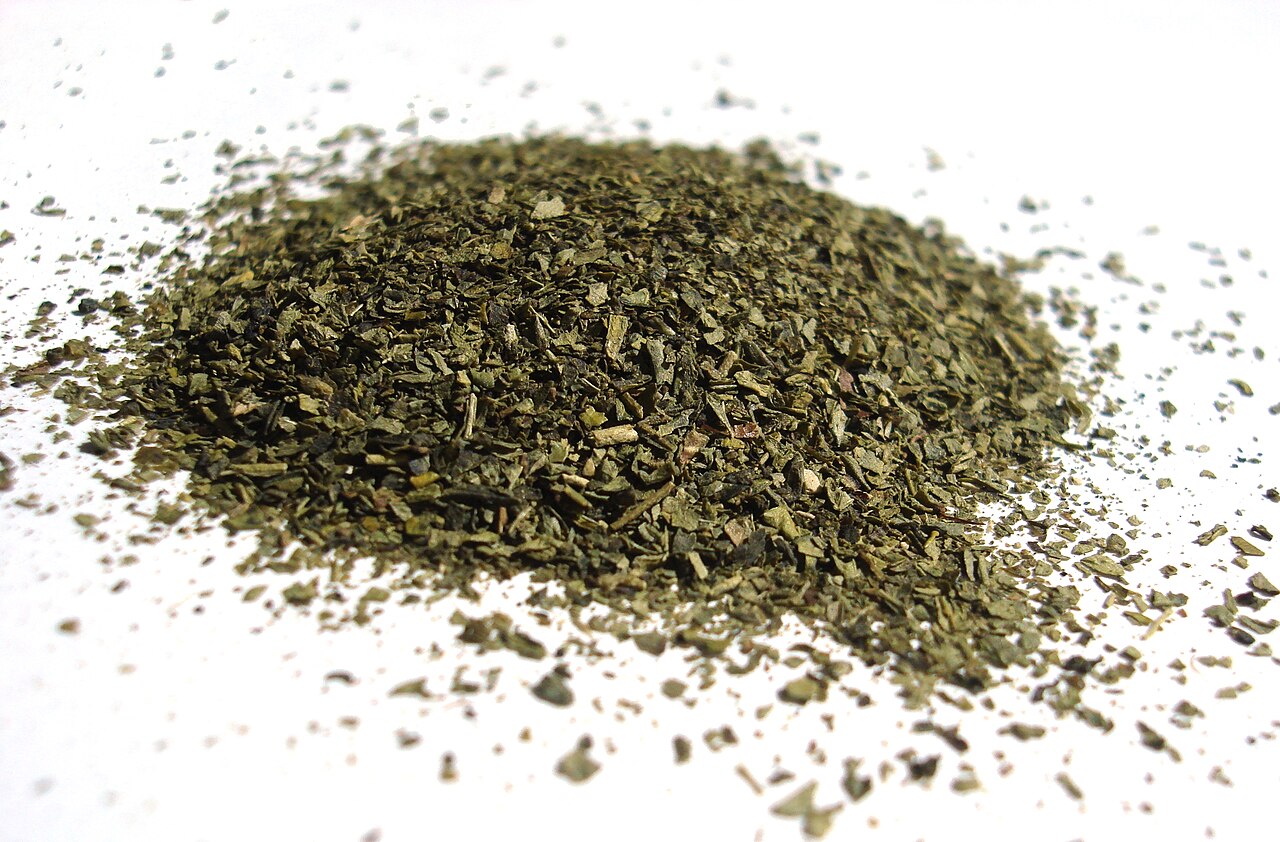
Gougunao Tea is a Chinese green tea centered in Suichuan County, Ji’an, Jiangxi. Public descriptions closely link it to Gougunao Mountain in Tanghu Town and note that it later developed into a geographically protected tea identity tied to Suichuan more broadly. As a tea category, it follows the classic green-tea path of using heat to halt enzyme activity and preserve a fresh profile. Stylistically, however, it does not rely on the flattened identity of Longjing or the heavily curled route associated with Bi Luo Chun. Instead, it is usually described through a coordinated set of qualities: elegant leaf shape, slightly hooked bud tips, visible white down, a high clean aroma, bright clear liquor, a full taste, and sweet aftertaste.
That means Gougunao Tea is not built around a single trick. Its recognizability comes from a whole set of relationships: the leaves should look refined, the aroma should stay clean, the liquor should feel clear, and the mouthfeel should not collapse into thinness or roughness. Good examples often do not feel explosive. They feel orderly, fresh, clean, and then slowly sweeter after swallowing.
Why are Gougunao Mountain and the Suichuan growing area so important?
The tea works first because of mountain conditions, not because of legend. Public material repeatedly places Gougunao Mountain on the southern flank of the Luoxiao range and emphasizes soil, altitude, rainfall, temperature difference, cloud cover, and diffuse light as conditions favorable to amino acids, sugars, and aromatic compounds in green tea. Phrases like dark sandy loam, cloud and mist, 600-1000 meters of elevation, and abundant rain are common. In green-tea terms, that logic is fairly straightforward: if a tea is meant to feel fresh, clean, and fine, it usually depends on a relatively mild and stable early-spring environment.
That is why Gougunao Tea should not be reduced to “that Jiangxi tea with the strange name.” Its real value lies in how tightly Suichuan has tied ecology, mountain identity, and long-term regional branding together. The more useful reading is simple: this is a mountain-dependent famous green tea whose style makes sense only in relation to its growing environment.
How should its history be understood?
The historical narrative around Gougunao Tea usually has two layers. The first is an origin story set in the Qing dynasty: public sources often place its beginnings around the Jiaqing period and repeat a local account of a Liang-surnamed timber worker returning from Nanjing with tea seeds and beginning cultivation on Gougunao Mountain. The second is a modern reputation narrative: in 1915, Suichuan tea merchant Li Yushan is said to have made tea from Gougunao Mountain leaves and won recognition at the Panama-Pacific exposition, with the tea at one stage also appearing under the name “Yushan Tea” before the more stable identity of Gougunao Tea prevailed.
These layers are not equally certain. A careful reading is that Gougunao Tea does appear to have a substantial local production history, that Qing-dynasty origin stories are widely repeated, and that the Republican-era award narrative helped it enter a broader public market as a famous Jiangxi green tea. In that sense, its history is not mainly an imperial or tribute-tea story. It is better understood as the rise of a mountain regional tea into the modern system of markets, prizes, and public recognition.
What kind of leaves are picked, and why are tenderness and evenness so important?
Public descriptions of Gougunao Tea are very specific about fresh leaves. Higher grades are usually centered on one bud with one just-opened leaf, and some grades emphasize single buds before Qingming or before Guyu. Picking rules also commonly say that leaves should not be taken when wet with dew, not on rainy days, and not under strong midday sun. After picking, the material is sorted again to remove purple shoots, single leaves, and other unsuitable pieces.
This shows two things. First, Gougunao Tea has a strict demand for tenderness, because older leaves cannot easily produce the fine appearance, visible down, and clean freshness it seeks. Second, it is highly sensitive to evenness and cleanliness. Once raw material varies too much in length, age, or cleanliness, the later process struggles to align aroma, form, and liquor together. In other words, it is not enough that the tea is picked young. It must be picked young, even, and clean enough to support the whole process that follows.
How is Gougunao Tea made, and why does the eight-step process matter?
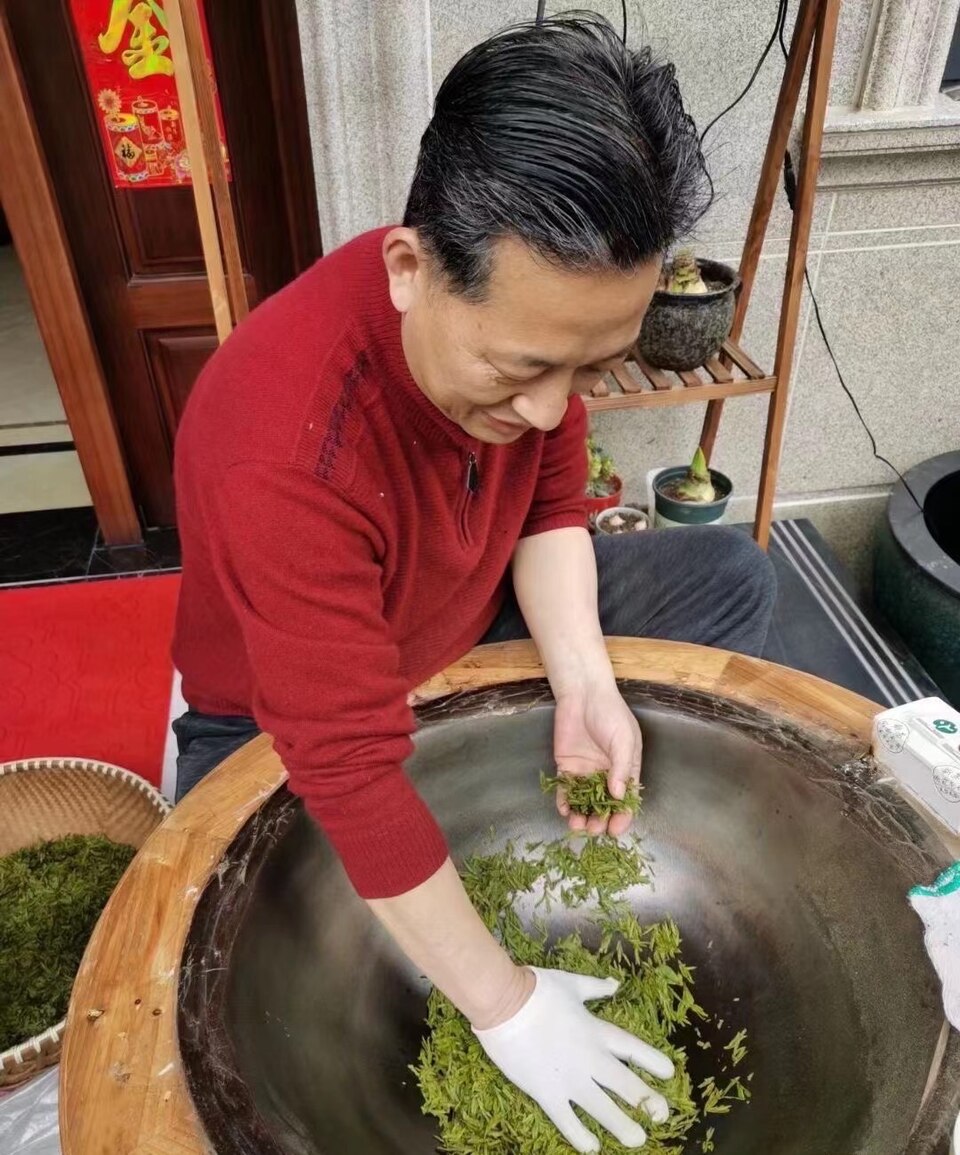
Public references often summarize the process in eight steps: plucking fresh leaves, resting or withering them lightly, kill-green heating, first rolling, second heating, second rolling, shaping while lifting the visible down, and final drying. Terminology varies slightly across sources, but the overall logic is clear. Surface moisture is reduced, grassy harshness is softened, green-tea identity is fixed by heat, and then repeated shaping and restructuring gradually bring the leaves, texture, and final stability into alignment.
The important point is that this is not a green tea made in one quick pass. The second heating, repeated rolling, and later shaping stage show that the tea is not merely being made dry and shelf-stable. It is being tuned toward a more coherent relationship between leaf appearance, downy surface, mouthfeel, and aftertaste. For readers, the simplest way to understand it is as a highly controlled famous-green-tea process in which each step serves the same final goal: clean aroma, bright liquor, fuller taste, and sweet return.
What should it taste like when it is good?
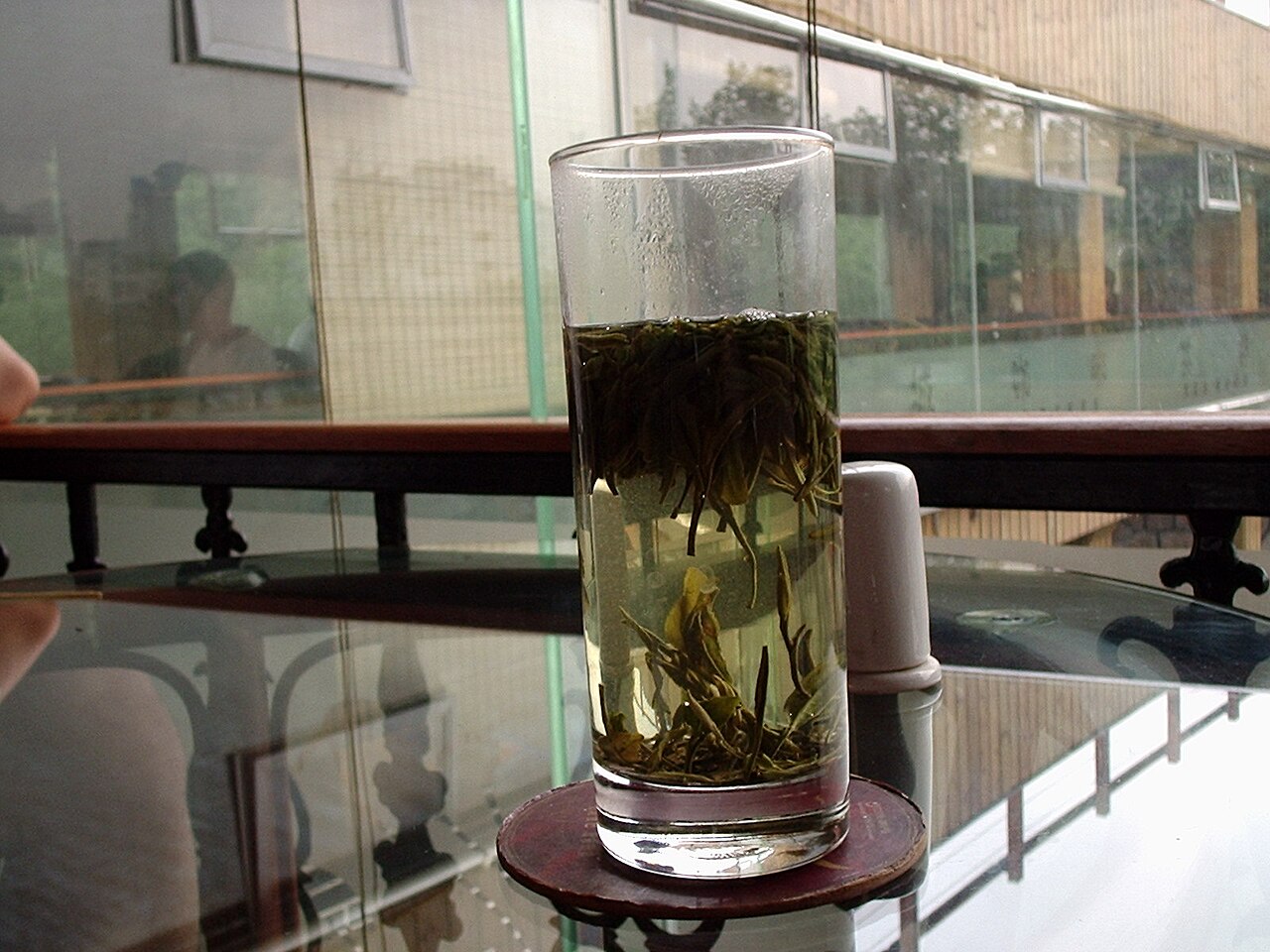
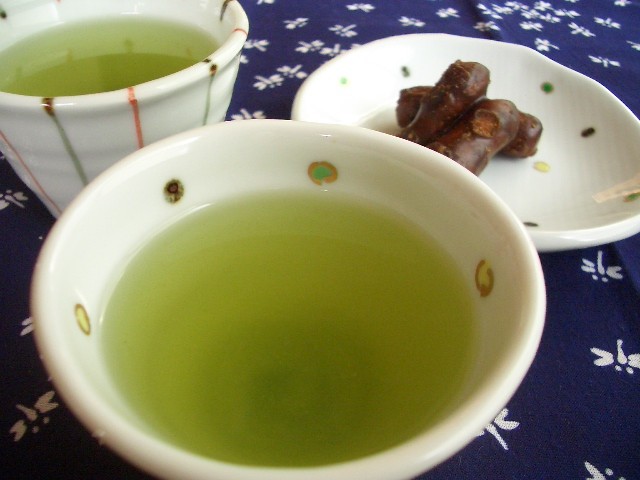
Public descriptions say that good Gougunao Tea should have elegant dry leaf, slightly hooked bud tips, visible down, and a high clean aroma. Once brewed, the leaves sink relatively quickly, the liquor surface shows little foam, the cup looks bright and clear, the taste is full rather than thin, and the finish carries a light cooling impression with clear sweetness. The useful part of this description is not any single adjective, but the whole pattern: the tea should look clean, drink smoothly, and continue rising in sweetness after swallowing.
When the tea is not good, the flaws are easy to notice. Some teas keep only the surface down while the aroma turns empty. Some smell high but taste thin, sharp, or hard. Others feel promising in the first second and then fail to return in the finish. What makes Gougunao Tea good is not intensity at the start, but the fact that freshness, clarity, body, and sweetness can all remain in the same cup without fighting each other.
How should Gougunao Tea be brewed?
Gougunao Tea works well in either a glass or a gaiwan. A glass helps readers observe leaf descent and unfolding, which matters for a fine famous green tea whose appeal includes visual clarity; a gaiwan gives better control over aroma and pour timing. Water temperature should not be too high. 80°C to 85°C is usually a safer range. Fully boiling water can flatten the freshness and push the liquor toward bitterness.
In a gaiwan, 3 grams of tea for 100-120 ml of water is a practical starting point, with the first infusion around 10-15 seconds and later steeps slightly longer. In a glass, adding the leaves after the water cools a little often helps preserve brightness, softness, and quick returning sweetness. Gougunao Tea is not a tea that needs to be brewed heavily in order to show its skill. Its appeal often appears after swallowing, when the mouth stays clean but the finish does not disappear at once.
Why is Gougunao Tea worth studying as a Jiangxi green tea?
Because it reminds readers that famous Chinese green tea is not confined to the most repeatedly written-about core regions. Jiangxi does not merely grow tea; it has its own mature line of famous green teas, and Gougunao Tea is one of the clearest examples. It has a strong dependence on place, a coherent processing explanation, a modern history of circulation and awards, and a stable geographical-indication identity. A tea like that should not be brushed aside as nothing more than a local specialty.
For international readers, Gougunao Tea offers something else as well: it makes clear that Chinese green tea is not just a set of minor variations on a few celebrity names. The differences come from how each region uses its own mountain conditions, raw-material standards, and technical choices to build a cup’s internal order. Gougunao Tea deserves attention precisely because so much of that order remains visible in it.