Research overview
Does decaf or low-caffeine tea mean caffeine-free? The real gap is between “less,” “almost none,” and “fine to drink late at night”
In recent Chinese-internet discussions about tea and sleep, one shortcut appears again and again: once a product says “low caffeine”, “decaf”, or uses a softer nighttime-friendly mood, people start reading it as “there is no caffeine left”, and sometimes even as “you can drink it at night without thinking about time or cup size.” That is where the trouble starts. In real-world product language, decaf usually means that most caffeine has been removed, not that the drink has become permanently and absolutely unrelated to caffeine.
The real point of this article is not whether decaf tea is useful. It is what problem it actually solves, and what it does not solve. If you switch from regular tea to decaf tea, caffeine exposure will usually go down. But if you turn that into “absolute zero caffeine” or “safe to drink whenever you want,” you have once again turned a dose-and-timing issue into a label-only issue.
This misunderstanding is common because the phrase “decaffeinated” sounds final. In ordinary language, “removed” feels complete. In shopping language, decaf is often heard as “no longer a stimulating drink.” But from a research and health-communication perspective, a more accurate reading is that decaf is a lower-caffeine option, not a universal exemption card for sleep problems.
That is why the more important question is not whether decaf tea is gentler than regular tea—usually it is—but how far “gentler” still is from “contains none,” “works for every sensitive person,” and “is automatically fine right before bed.” Many consumers get into trouble in exactly that gap.

Research card
Topic: why low-caffeine and decaf tea are often misread as caffeine-free Core question: what does decaf really mean, and why is it not the same as absolute zero? Evidence base: NCCIH background on tea and caffeine, Harvard’s discussion of tea and decaffeinated tea, and Sleep Foundation’s summary of caffeine and sleep timing Main reminder: whether a decaf tea works for you still depends on residual caffeine, cup size, timing, and your own sensitivity—not just the label
1. Why does “decaf” so easily get misread as “completely caffeine-free”?
Because in everyday language it sounds like a finished action. When consumers see “decaf,” they often do not hear “much less.” They hear “gone.” That makes shopping simple: if I picked decaf tea rather than regular tea, then I must have successfully avoided the whole sleep-and-palpitations problem. The issue is that this consumer shortcut does not fully match the real chemistry of many products.
A more accurate way to understand it is this: decaf is closer to a substantial reduction than an absolute erasure. Harvard Nutrition Source, when discussing tea polyphenols, treats decaffeinated tea as a special processed case rather than a naturally separate species of beverage. NCCIH’s basic explanation of tea also makes the starting point clear: teas from Camellia sinensis naturally contain caffeine, and whether a product is decaffeinated concerns later processing and how much remains, not a magical conversion into a totally different plant drink.
This is also why decaf tea should not be casually merged with herbal tea. Many herbal infusions are not made from the tea plant in the first place, so they are often naturally caffeine-free. Decaf tea, by contrast, is often still tea-plant tea with most caffeine removed. Consumers may place both into the same “good for nighttime” mental bucket, but the logic behind them is not the same.
2. In research-minded language, the safer wording is not “none,” but “usually less”
If you read product copy alone, decaf can sound like a neat verdict. But if you move back into research and health guidance, the language is usually more careful. Harvard’s tea overview notes that, aside from decaffeinated tea, most plain teas have broadly similar overall polyphenol levels. That wording already implies that decaf is a processed category of tea, not a fundamentally separate plant. And if it is still tea, it makes more sense to think of it as part of a spectrum of remaining caffeine rather than as a jump from “contains caffeine” to “contains absolutely none.”
The most useful translation for ordinary readers is simple: the real value of a decaf label is that it lowers probability and intensity; it does not cancel boundaries for you. It usually makes caffeine much lower than in comparable regular tea, which can be genuinely helpful for people trying to reduce stimulation. But if you are one of those people who can sleep worse even after a small late-day dose, then the fact that some caffeine may still remain can matter in real life. For that kind of person, “much less than regular tea” and “safe to ignore completely” are not the same conclusion.
That is why the most common mistake is not switching from regular tea to decaf. The mistake is what comes after: feeling that all limits have now disappeared. Bigger cup, later hour, several cups in a row, combined with other caffeinated drinks—suddenly all of that feels excused. A research-minded approach argues for the opposite. The label can help you lower exposure, but it cannot replace judgment.
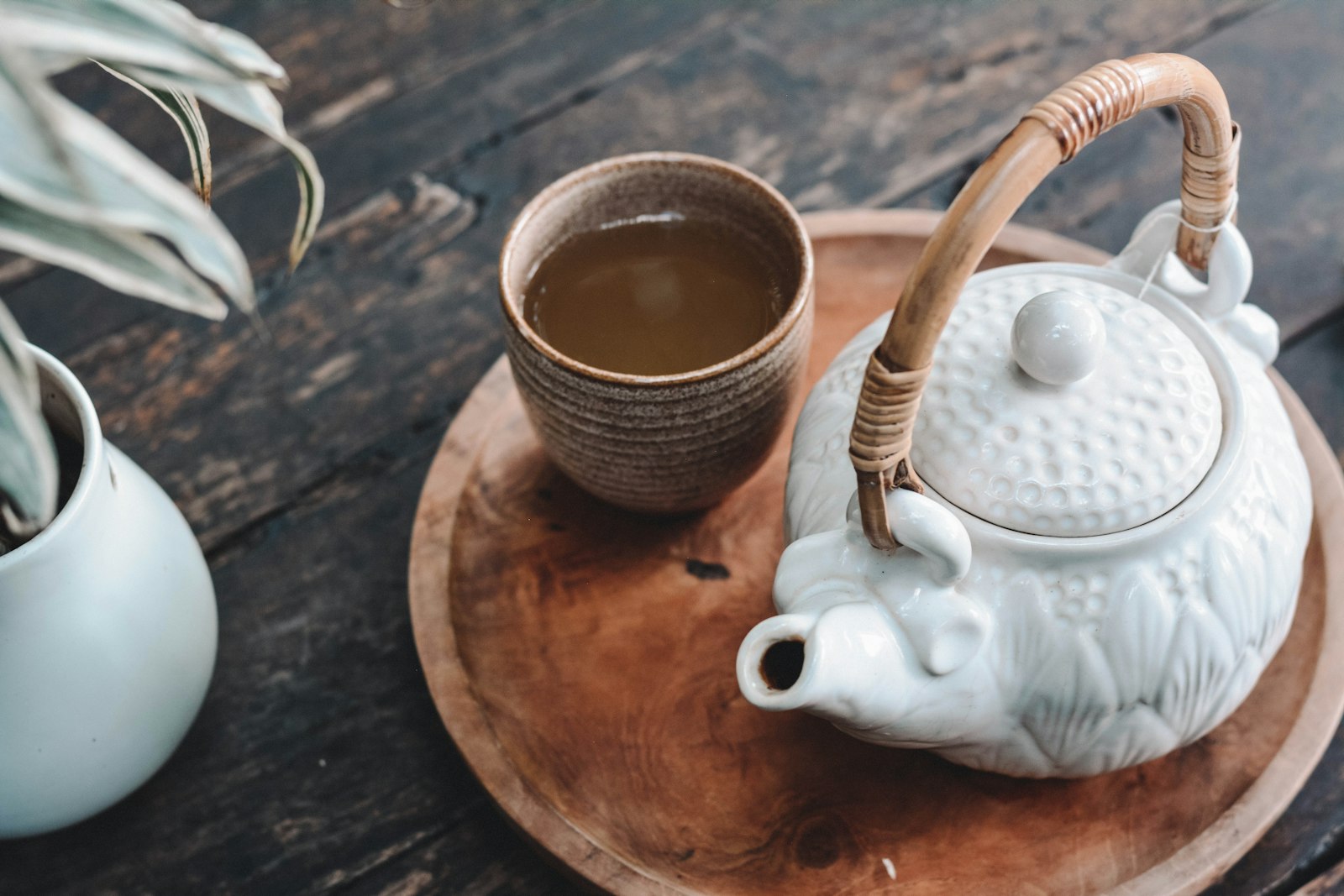
3. Why does the real question for sleep usually involve not just the word decaf, but residual caffeine plus timing?
Sleep Foundation offers a practical summary: caffeine promotes wakefulness by blocking adenosine receptors, and its effects vary widely with metabolism and sensitivity; a common recommendation is to avoid caffeine for at least eight hours before bedtime to reduce sleep disruption. The most useful lesson here is not to treat eight hours as a mechanical rule. It is to remember that sleep judgment is fundamentally a dose × timing × sensitivity problem.
Once you see it that way, the main way decaf gets misused becomes obvious. Many people assume that once caffeine has been “taken out,” the timing window no longer matters. So they swap their regular evening tea for a decaf version and assume the sleep problem has automatically disappeared. But if you are highly sensitive, or if you already had coffee, cola, or another caffeinated drink earlier in the day, and then drink two large cups of decaf tea at night, the fact that some caffeine may remain has not suddenly stopped mattering.
In other words, what decaf really does is pull total risk downward. It does not delete every variable. It can be a gentler evening alternative, but it does not automatically make questions like “how close is it to bedtime,” “how much caffeine have I already had today,” and “am I the kind of person who sleeps lightly after small amounts” disappear.
4. Why do some people feel nothing with decaf tea while others still report lighter sleep or palpitations?
Because caffeine response has never been evenly distributed across people. Sleep Foundation notes that caffeine half-life can vary widely and that genetics, pregnancy stage, smoking, everyday intake patterns, sleep debt, and other physical factors can all change how caffeine is felt. In practical terms, that means the same cup of low-caffeine tea may feel almost irrelevant for one person while still being enough to delay sleep slightly in another.
This is also why “my friend drinks it and sleeps fine” is never a reliable guarantee for you. For people who are not very sensitive, the remaining caffeine in decaf tea may indeed be too small to matter much in day-to-day life. But for people already prone to palpitations, anxiety, shallow sleep, or late-day sensitivity, the same residue may still count. That does not mean decaf is pointless. Quite the opposite. The research-friendly conclusion is a stratified one: most people will get lower exposure, but not everyone should read that as “no need to think anymore.”
The most misleading line in online discussion is often: “If it’s decaf, what are you even worried about?” A more careful line would be: “If it’s decaf, it probably is a gentler option—but if you are very sensitive, it still makes more sense to treat it as a lower-caffeine source rather than a fully caffeine-free one.”
5. Why shouldn’t low-caffeine tea, decaf tea, and herbal tea all be merged into one shopping category?
Because they solve different problems. Low-caffeine tea and decaf tea still mean “the tea remains, but caffeine is lower.” Herbal tea often means “this was not Camellia sinensis to begin with.” If a consumer’s real goal is to avoid caffeine as much as possible, mixing these categories together can easily lead to the wrong choice.
Likewise, “light flavor,” “floral,” or “not bitter” does not automatically mean caffeine is low. Sensory lightness and stimulant lightness are not the same line. Consumers often merge soft aroma, pale liquor, quiet packaging, and “better for nighttime” into one impression, but those cues can only help a little. They do not replace ingredient identity and label meaning.
If you are buying tea for evening relaxation, the first thing to check is not the emotional tone of the marketing copy. It is what category the drink actually belongs to: a naturally caffeine-free herbal infusion, or a tea-plant product that has been decaffeinated. Both can be good choices, but they are not the same thing.
6. Why does “decaf” create such a strong health halo?
Because it sounds as if it has already handled risk management for you. Just as “sugar-free” is often misread as “healthier overall,” “decaf” can be misread as “steadier overall, better for all sensitive people, almost like water or a sleep drink.” The shared problem with these health halos is that they make people stop asking about cup size, frequency, timing, and personal differences.
But research-grade health judgment is almost never completed by one label alone. Lower caffeine is a real advantage—especially for people who want less total stimulation without fully giving up tea character. But its value is better understood as turning the risk dial down, not declaring the risk gone. That difference is not just verbal caution; it changes how people actually use the product.
If someone reads decaf as “gentler, so I’m more comfortable having one later in the day,” that is usually reasonable. But if they read it as “since the label says decaf, I can drink two large cups at 11 p.m. without thinking,” then the label has once again replaced judgment. The more mature reading is to admit both things at once: it offers real help, and it does not automatically erase boundaries.
7. The most practical test for ordinary readers: ask these five questions before drinking decaf tea
First, is this a tea-plant decaf tea, or a naturally caffeine-free herbal infusion? That tells you whether you are choosing “less” or choosing something outside the caffeine line altogether.
Second, how sensitive are you to caffeine? If ordinary afternoon tea already makes your sleep lighter, do not automatically read decaf as absolute safety.
Third, how large is the cup, and how many cups are you planning to drink? Even low residual caffeine should not be mentally treated as infinite-volume immunity.
Fourth, how close is it to bedtime? If you are already entering the part of the day when you are easiest to affect, then decaf still works more like a reduction than a reset to zero.
Fifth, have you already had caffeine today from coffee, cola, energy drinks, chocolate, or other sources? In real life, many people’s problem is not one source but accumulation.
None of these questions is complicated, but together they are much more useful than “the package says decaf, so it should be fine.” They do not deny the value of decaf tea. They simply place it back inside a more realistic decision framework.
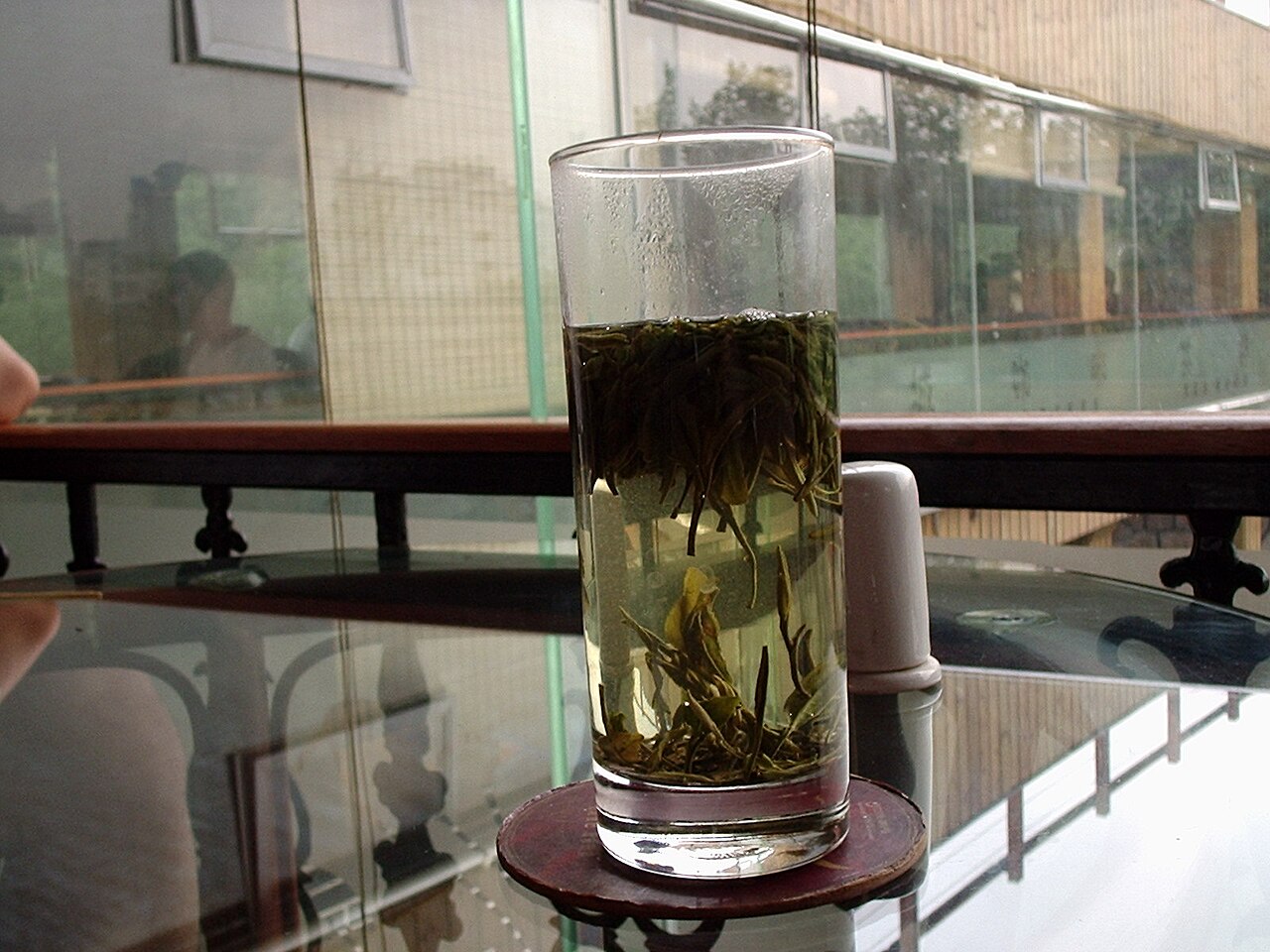
8. Conclusion: the real value of decaf tea is lowering exposure clearly, not making you forget limits
If this article had to be compressed into one line, it would be this: decaf tea usually means much less caffeine, not no caffeine at all; it can meaningfully reduce stimulation, but it cannot replace your judgment about timing, cup size, and sensitivity.
For many people, that is already very valuable. If you want less late-day stimulation, want to keep some tea character without the full lift of regular tea, or simply want to cut your overall intake, decaf tea may be more sensible than regular tea. It is just best understood as a gentler option, not as a label that removes the need to think.
So the real thing that needs correction is not the idea that decaf tea has value. It is the overconfident assumption that once a product says decaf, it must be absolutely caffeine-free and automatically fine late at night. The stronger research-supported conclusion is simpler: labels can help you, but boundaries still need to be judged by the drinker.
Continue with Sugar-free tea does not mean caffeine-free, How long does tea caffeine stay in the body?, and Can L-theanine really turn “tea wakes you up” into “tea helps you sleep”?.
Source references: NCCIH: Green Tea, Harvard T.H. Chan School of Public Health: Tea, and Sleep Foundation: Caffeine and Sleep.