Why Tang jiancha tea fell out of everyday mainstream use: from cake tea, The Classic of Tea, and the order of boiling, to the Song and Ming rewrites of Chinese tea
Created: · Updated:
Today, when people talk about the “ancient method” of Chinese tea, many immediately picture Tang jiancha: cake tea first roasted, then ground, then sifted, then added to a boiling vessel, with close attention to water stages, foam, and shared drinking—ideally with The Classic of Tea, a brazier, and a full set of old-looking implements nearby. The problem is that this image is so canonical that it easily produces a false impression: as if this method ought to have continued all the way to the present as the mainstream Chinese way of drinking tea, and as if later practice somehow drifted away from the real tradition. The actual history is much more complex. Tang jiancha was certainly important. It was one of the clearest mature expressions of early Chinese tea civilization. But it did not remain the long-term everyday mainstream, not because it lacked refinement, and not because it was crude. In fact the opposite is closer to the truth. It was too deeply tied to a whole cluster of ingredients, processing habits, vessels, and judgment systems specific to its own age. Once that larger system changed, jiancha lost its place at the center.
The better question is not “Was Tang jiancha good?” but “What conditions did it require in order to work?” Nor is the right question “Why did later drinkers stop respecting tradition?” but rather “What changed in Chinese tea history so thoroughly that jiancha was no longer the best fit?” Once the question is framed that way, the answer no longer collapses into a vague slogan about progress. It becomes a set of very specific historical shifts: cake tea and steam-processed compressed tea gradually lost their centrality; the Song redirected elite tea life toward whisked tea and bowl-surface judgment; the Ming then pushed the mainstream decisively toward loose-leaf steeping; the center of vessels moved from brazier and kettle toward pot, gaiwan, cup, and shared pouring; and the main sensory training of tea drinkers shifted from “Is the boiling stage right?” to “Can I read leaf, liquor, aroma, firing, and round-by-round change well?”
In other words, Tang jiancha did not fall out of the mainstream because it was individually defeated. It left the center because the larger center of Chinese tea moved—first once in the Song, then more decisively in the Ming. By later centuries, jiancha had not vanished, but it had become more like historical knowledge, a partially preserved practice, or something to be reconstructed, staged, and reimagined, rather than the most natural way for most Chinese people to drink tea every day.
What matters most about Tang jiancha is not simply that it is old. It represents a once highly mature tea system that depended strongly on specific historical conditions. It later left the center not because it was dismissed, but because newer systems gradually covered the ground it once occupied.
Tang jianchaThe Classic of TeaSong whisked teaMing loose-leaf teatea-history shift
1. Why is this worth treating as its own subject? Because people often confuse the earliest mature classic with the form that ought to have remained mainstream forever
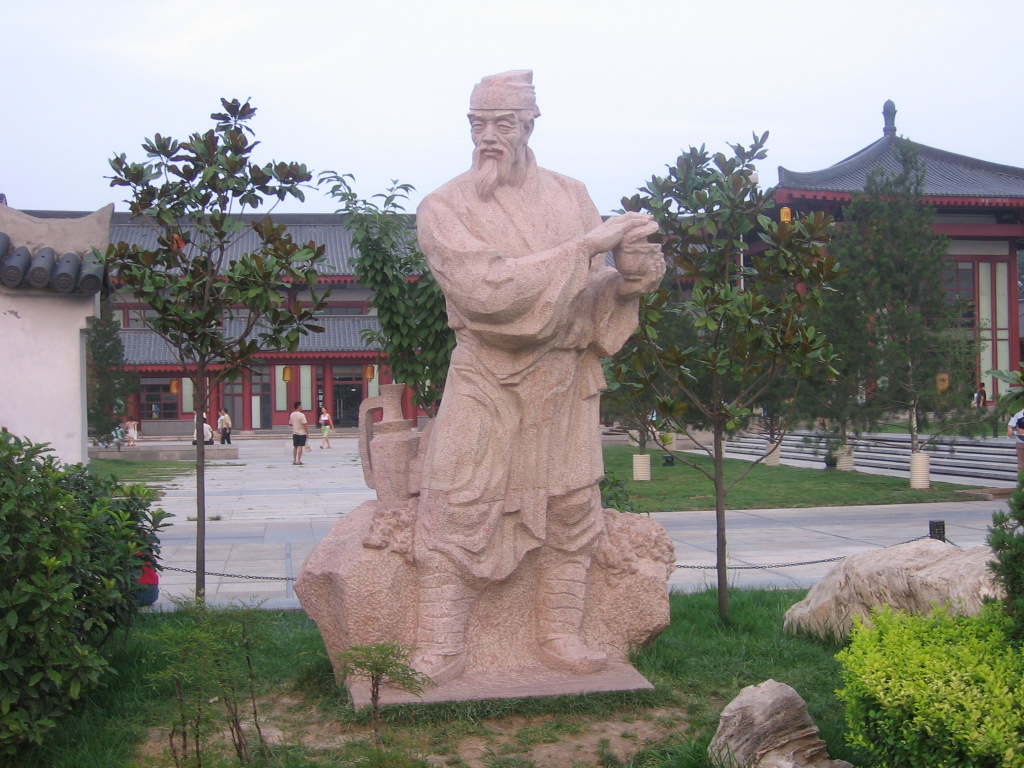
One of the most common mistakes in Chinese tea history is to treat what is most canonical as what must also be the final mainstream form. Tang jiancha has the authority of The Classic of Tea, the symbolic prestige of Lu Yu, and a complete enough structure—brazier, kettle, cake tea, boiling, and water-stage judgment—that it easily creates the impression that this was the proper Chinese way of drinking tea and ought to have continued unchanged. But history does not work that way. A method becoming classical in one age proves that it was highly mature for that age. It does not prove that it would remain the best fit forever.
The real question is why such a fully developed system did not continue to govern the next thousand years of everyday Chinese tea life. That question does not diminish Tang jiancha. It takes it seriously. Only by asking why it later stepped aside can we see the historical conditions that made it possible in the first place, and the two major tea-historical turns that later rewrote the center away from it.
So the point here is not to decide whether Tang jiancha was superior or inferior. It is to place it inside the longer history of Chinese tea: why it appeared, why it matured, why it was rewritten, and why it remains so compelling now. Without that, it becomes too easy to reduce it to a decorative “ancient style” performance rather than a real historical method system.
2. What did Tang jiancha fundamentally depend on? First of all, cake tea—not the loose leaves modern drinkers instinctively expect
To understand why Tang jiancha later lost its mainstream place, we have to begin not with the beauty of the brazier, but with its hardest material condition: cake tea. The mainstream refined tea of the Tang was not loose leaf in the modern sense. Tea was often steamed, compressed into cakes or rounds, then roasted, ground, sifted, and only then boiled. In other words, jiancha was not an independent technique floating free of raw material. It was the use-system of the cake-tea age. Remove that raw-material structure, and the whole chain of actions loses its basis.
This matters especially because many modern “Tang tea” reconstructions actually use contemporary loose-leaf tea, sometimes tea far better suited to steeping than to grinding and boiling. That can still create an atmosphere of historical elegance, but strictly speaking it is no longer the same logic that operated under original Tang conditions. Real Tang jiancha presupposed tea that had to be further handled before drinking. Tea was not yet a thing to be simply infused open. It was something processed again, interpreted again, and only then brought into the order of fire and water.
That is why the relationship between jiancha and cake tea is not merely one of convenience. They generated each other. Cake tea explains why jiancha made sense: the tea had to be treated before it could fully release itself. Jiancha in turn determined how cake tea was to be used, judged, and admitted into daily or refined settings. Once the mainstream form of tea was no longer this compressed-and-reground structure, the centrality of jiancha could not help but weaken.
The deepest material precondition of Tang jiancha was that tea first had to exist as something made, stored, and reprocessed for boiling. It did not belong to the later loose-leaf logic of simply taking a pinch of leaves and steeping them.
3. Why did jiancha depend so heavily on judging fire and water? Because its brilliance happened before the tea even reached the mouth
One of the most striking things about Tang jiancha is that it pushed the decisive act of tea judgment far forward, before drinking. Most modern tea drinkers know a sequence in which tea is first brewed, and only then smelled, viewed, tasted, and compared. In jiancha, many of the crucial judgments occur earlier: when the water first stirs, when it reaches linked pearls, when it begins to roll; when the tea should enter the vessel; how surface foam should be handled; whether salt is appropriate; when it is best to divide and serve. In that world, truly “knowing tea” often meant knowing how to read fire, water, and the state inside the kettle.
This is a very specific sensory discipline. It asks the brewer or drinker to keep attention fixed on the heating process itself rather than treating hot water as a neutral background condition. Fire is not merely support. Fire control is itself one of the main objects of judgment. Water is not an invisible medium. It has distinguishable phases that must be read closely. Jiancha therefore has a powerful sense of process. A tea’s success depends less on whether its origin name is impressive than on whether the whole boiling order has been judged correctly.
And this is precisely where the difficulty lies. Such a method is refined, but it also depends on stable fire, a relatively complete block of time, a certain level of concentration, and a life setting willing to treat the boiling process itself as the aesthetic and technical center. If later tea life moves toward methods easier to repeat daily, easier to handle at home, and easier to perform across many situations, then a system that places so much dense judgment into the boiling stage naturally loses its practical advantage. It is not that it becomes bad. It becomes less fitted to new rhythms of life.
4. Why did the Song already rewrite Tang jiancha once? Because the center of tea moved from boiling in the kettle to judging in the bowl
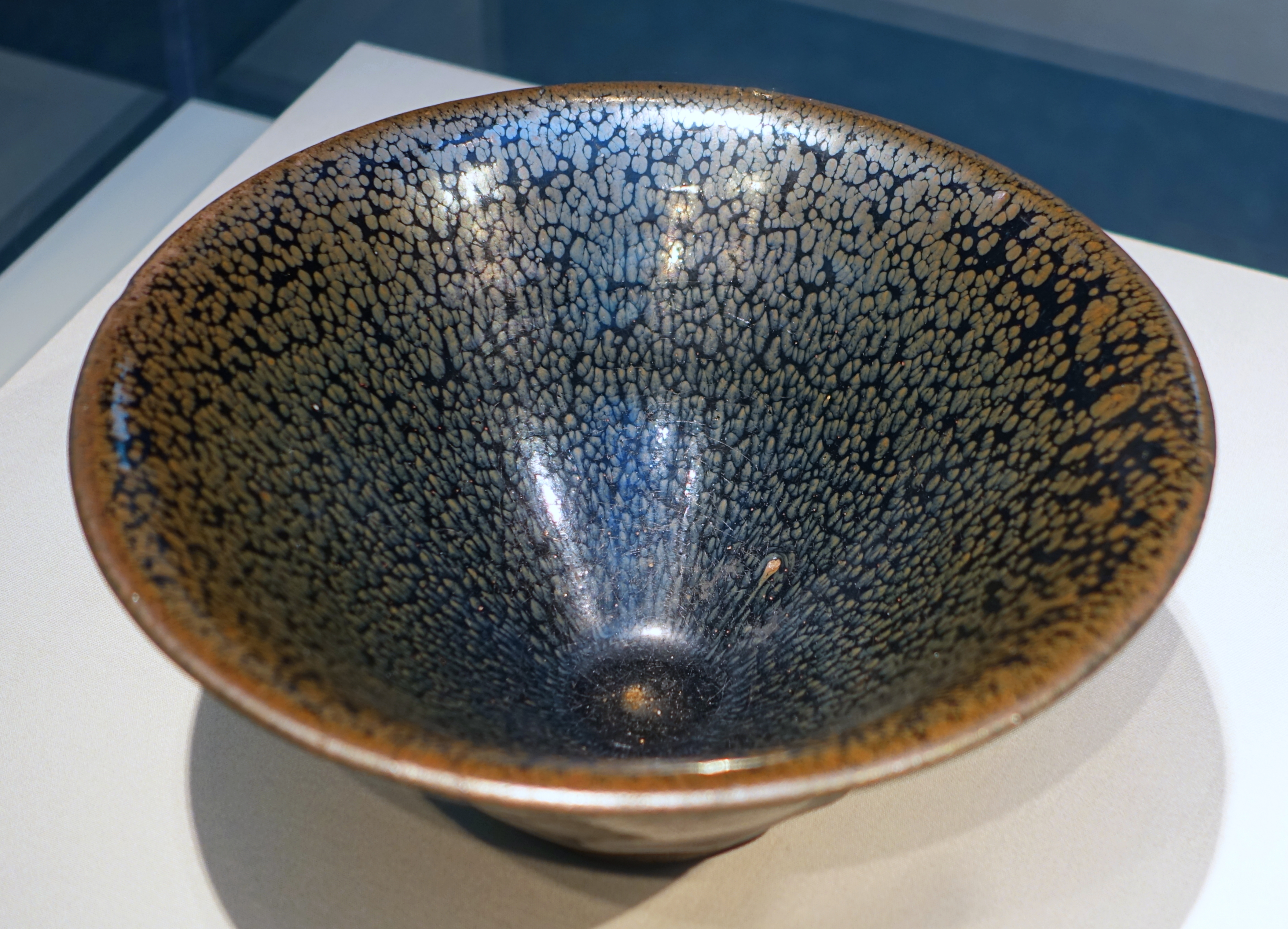
Many people assume Tang jiancha was directly displaced only in the Ming by loose-leaf steeping, as if the centuries in between were an empty pause. They were not. The first major rewrite of the Tang logic came in the Song through whisked tea. The Song did not simply fall back into casual brewing. It developed another highly exacting order: tea still depended on processing and fine grinding, and water, vessel, and technique still mattered intensely, but the center of gravity shifted. Instead of boiling stages and kettle control, the key drama moved into bowl testing, whisking skill, froth performance, and the visual arena created by dark bowls.
This is crucial because it shows that Tang jiancha did not leave the mainstream because Chinese tea culture suddenly stopped caring about refinement. Rather, refinement moved. The Tang world staged its technical drama between fire and kettle. The Song staged its own between bowl and whisk. Both were highly procedural and highly demanding, but they were not the same system. Jiancha did not continue smoothly into the Song. It was already being reorganized into another tea order.
In other words, Tang jiancha did not collapse all at once. It was first internally rewritten. The Song did not abandon sophisticated tea. It rebuilt its stage. What had once counted as excellence in boiling rhythm, water timing, and kettle judgment gradually gave way to excellence in pouring, whisking, bowl-surface texture, and tea-powder quality. Chinese tea did not yet leave the age of high technical threshold. It moved from one version of it to another.
The Song did not simply stop being exacting. It moved exactingness from the fire-order of boiling tea to the bowl-order of whisked tea. Tang jiancha was therefore not linearly continued, but first rewritten.
5. If the Song was the first rewrite, why was the Ming the decisive second one? Because loose-leaf tea changed the entire question
The truly decisive loss of mainstream ground for Tang jiancha came with the second great rewrite, when loose-leaf tea became dominant in the Ming. This went deeper than the Song shift. The Song had rewritten jiancha while still remaining inside a world of compressed tea, powdered preparation, and highly procedural drinking. The Ming changed not only method, but mainstream raw material, vessels, sensory training, and daily habit all at once. Once loose-leaf tea became central, tea no longer naturally demanded to be compressed first, ground again, and then boiled in a kettle. Nor did it need to prove itself through froth and bowl-surface performance. It could now unfold directly through leaf, aroma, liquor, firing, and round-by-round variation under steeping.
That changes everything. Jiancha did not merely face a new competitor. It lost the ground that had originally made it central. The advantage of loose-leaf tea was not just simplicity. It was openness. It could fit more tea kinds, more vessel forms, more settings—study, teahouse, household, travel, hospitality—and it moved the main axis of judgment into the chain of sensations after brewing: first aroma, then liquor, then taste, then the differences across rounds. A system as dependent as jiancha on fire timing, early-stage judgment, and cake-tea handling could no longer retain mainstream advantage under those conditions.
So the decisive retreat of Tang jiancha did not happen on the day the Tang fell, nor at some single moment when Song drinkers turned to whisked tea. It happened once the Ming loose-leaf order securely occupied the main axis. By then, the Chinese imagination of what it meant to “know tea” had been rewritten in another language: understanding gaiwans and pots, water temperature, pacing, aroma type, firing, shared pouring, and multiple rounds. Jiancha was no longer the default. It became a method requiring special historical explanation.
6. Why did the vessels of jiancha move to the margin as well? Because the center of the tea table shifted from brazier and kettle to pot, gaiwan, cup, and shared-pouring order
No tea method ever leaves the mainstream only in theory. It also leaves in material culture. The core vessels of Tang jiancha were organized around fire and kettle: brazier, kettle, grinder, sieve, scoop, and handling tools. This was a system structured around preparation, heating, boiling, and staged operations. The relationship among the vessels was essentially one of processing tea into drinkability.
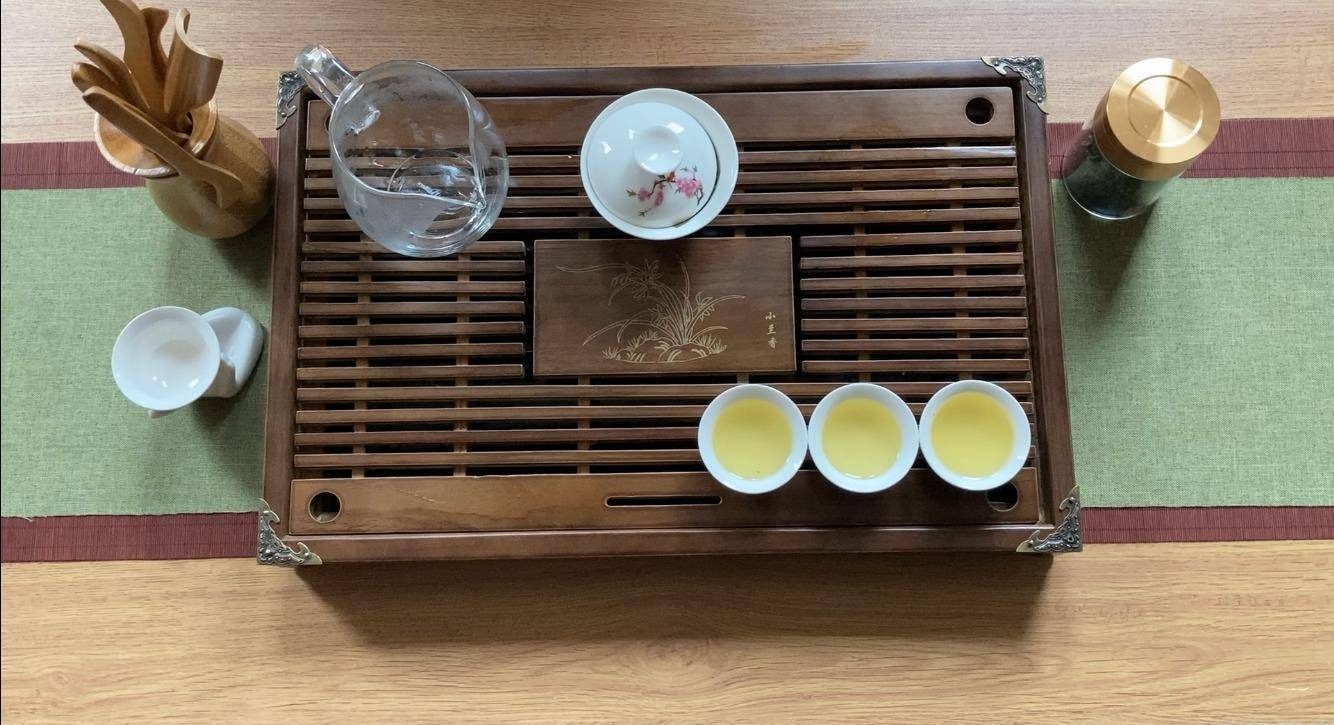
Once the mainstream method changed, the center of the table changed with it. In the Song, bowls and whisks formed the new center around whisked tea. In the loose-leaf age of the Ming and Qing, the center shifted further toward pot, gaiwan, fairness pitcher, cups, and later fuller systems of shared serving. The emphasis moved from boiling to steeping, from “completed in the kettle” to “unfolding in the pot or gaiwan,” and from preparatory handling to control of pouring rhythm. This was not a minor change in style. It was a transfer of authority across the entire tea table.
That is why Tang jiancha later came to look increasingly central in museums, texts, and reconstruction scenes, but not on the everyday tables of most households. Its vessels did not become meaningless or ugly. They simply no longer sat at the point where mainstream tea life organized itself. Once the main vessels changed, the method attached to them was unlikely to keep the center.
The mainstream center of the later Chinese tea table became pot, gaiwan, shared cups, and pouring rhythm rather than brazier and kettle. Once the vessel center moved, jiancha could not easily remain on the everyday main axis.
7. Does this mean jiancha completely disappeared? No. What it lost was mainstream status, not historical existence
This is an important distinction. To say that Tang jiancha fell out of everyday mainstream use is not to say that all boiling logics vanished from Chinese history. Chinese tea history is rarely a simple binary of total presence or total absence. More often the real distinction is: what sits on the main axis, what survives at the margin, what remains a local practice, what becomes a learned reconstruction, and what stays alive in seasonal or regional form.
Boiled tea did not disappear with a single cut. Certain regions, certain tea kinds, certain folk habits, and certain cold-season practices continued to preserve boiling logics. Even today, stove-boiled tea, boiled aged white tea, boiled dark tea, and mixed boiled tea drinks all show that the relationship between tea and fire never fully broke. But these survivals are not the same as Tang jiancha continuing as the mainstream system.
A more accurate way to put it is this: jiancha later changed from a mainstream tea technology into a historical model resource. It stopped governing everyday Chinese tea, but it remained preserved, cited, reconstructed, and imagined as one of the great early forms of mature Chinese tea civilization. That is exactly why it still deserves to be written about now.
8. Why do so many people want to return to jiancha today? Because it offers not efficiency, but a classical sense of time in which fire, water, and order are visible again
If jiancha left the mainstream long ago, why does it attract people again now? The answer is not mysterious. Mainstream modern brewing is efficient, mature, and extremely adaptable, but it also compresses many judgments into speed: boil water, add tea, pour, drink. Jiancha does the opposite. It lengthens time. It restores the phase in which fire, water, and tea are still becoming. One must wait, watch, and judge. Tea is not instantly available. It is made into drink through a visible process.
That is highly attractive today because it offers more than an “ancient method.” It offers a temporal structure opposite to high-efficiency modern life. It returns attention to burning, boiling, foaming, entering the kettle, and dividing the cups—actions that unfold step by step. People often love jiancha not because it would actually serve everyday life better than modern steeping, but because it makes classical order visible, tangible, and experienceable again. It works like a slow technical theatre.
That is also why present-day fascination with jiancha should rest on historical understanding rather than myth. It is compelling precisely because it belongs to a system that later history rewrote. If that appeal is misread as proof that this was the one true orthodoxy and everything after it was decline, tea history becomes flattened all over again. A better understanding is that jiancha matters because it lets us see Chinese tea as something that once fully existed in this form and was then carried onward into something else.
Today’s renewed attraction to jiancha does not mean it will become mainstream again. It shows instead that modern people still long for a temporal order in which fire, water, waiting, and judgment remain visible.
9. What value does the retreat of Tang jiancha have for understanding Chinese tea history as a whole?
If I had to give one short answer, it would be this: the most important question in tea history is not “Which method is oldest?” but “Which method makes the most sense under which conditions?” Tang jiancha matters because it was mature enough to show us how early Chinese tea civilization once organized itself around cake tea, fire timing, boiling, water phases, and divided serving. Its later retreat matters because it shows us that history does not stop changing simply out of respect for early classics. New tea types, new vessels, new sensory training, and new rhythms of life keep rewriting the mainstream.
It also reminds us that the “tradition” of Chinese tea has never been a single line. The Tang had a boiling order. The Song had a whisked-tea order. After the Ming and Qing came the loose-leaf steeping order, and later still the layered worlds of gongfu tea, gaiwan tea, tea evaluation, teahouses, and modern urban tea drinking. Jiancha is not the whole story, but it is one especially clear and easily misunderstood node in that long chain. Understanding why it fell out of the mainstream can tell us more than simply praising it ever could.
So the final point of this essay is not that “Tang jiancha lost.” It is that Tang jiancha fulfilled the historical work of its own age. It brought early Chinese tea civilization to a highly integrated stage, and then yielded the central stage to later whisked-tea and loose-leaf systems. It was not a failure. It was a former axis. Precisely because it once held the center, later rewrites became visible; precisely because it stepped aside, we can better see how Chinese tea repeatedly reorganized itself.
Source references: based on the Tang jiancha framework represented by The Classic of Tea, the major shifts in Chinese tea from Tang to Song to Ming, and this site’s existing articles on Lu Yu, whisked tea, the loose-leaf revolution, and stove-boiled tea.