History feature
Why Tea Shops Deserve Their Own Place in History: from mountain buying, grading, and blending to bookkeeping credit and how tea was turned into a durable commercial good
When people discuss Chinese tea history today, the first things they usually notice are the parts with the strongest visible shape: the Wanli Tea Road, the Tea Horse Road, tea tax, tea licenses, or merchant topics that are easy to retell today such as Huizhou merchants and tea. All of those subjects matter. But if we press one layer deeper into the everyday organization of tea commerce, we run into a term that is often passed over too lightly: the tea zhuang, usually translated loosely as a traditional tea shop or tea house of trade. Many readers first picture a street-facing storefront with a wooden signboard, counters, tea caddies, and shop assistants, and naturally reduce it to "a place that sold tea in the old days." That is not exactly wrong, but it is far too shallow. What makes the tea zhuang worth a separate article is not simply that it was an old tea shop. It is that once Chinese tea entered large-scale circulation, tea could no longer move through only three simple actions—making tea in the mountains, carrying it on the road, and selling it in the city. Between those stages there had to be a type of node that organized buying, inspection, grading, blending, storage, bookkeeping, credit, transshipment, and destination-market relations. The tea zhuang was precisely that kind of node.
In other words, this article does not really ask whether the tea zhuang was simply a premodern tea store. It asks four deeper questions. First, why does tea, once it becomes a cross-regional commodity, naturally require intermediary organizations like the tea zhuang instead of remaining forever in a simplified chain of grower, buyer, and market? Second, why is the tea zhuang important not only because it sells tea, but because it helps turn tea into something that can be sold, booked, stored, transported, credited, and repeatedly traded? Third, why does understanding the tea zhuang help us bring larger topics such as merchant groups, long-distance tea routes, taxation, and grouped transport back down to ground level? Fourth, why does rewriting the tea zhuang today help correct the old habit of telling tea history through famous teas, famous objects, and famous routes while leaving out the middle layer of commercial organization? Once these layers are clear, the tea zhuang stops being a nostalgic label and becomes one of the key joints in the commercial history of Chinese tea.
That is also why this subject relates closely to existing site features but cannot be replaced by them. Huizhou merchants and tea explains who helped turn tea into a cross-regional business. The Wanli Tea Road explains how tea entered larger trade routes. Tea tax and tea licenses explain how the state recognized and governed tea. Grouped tea transport explains how tea was organized into batches, routes, and transport order. The tea zhuang asks something more grounded: through what everyday commercial nodes did those larger systems actually run? Tea in the mountains does not grade itself. Cargo on the road does not generate credit by itself. Markets in destination cities do not automatically know where a batch came from, what it is worth, or whether it can be sold on account. It is precisely in these places that the tea zhuang becomes indispensable.
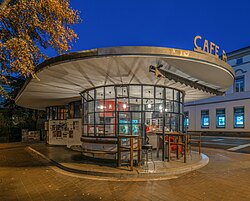
1. Why does the tea zhuang deserve its own article? Because the real question is not where tea was sold, but who organized tea into something that could be traded over time
Many goods can be sold, but not every good needs to grow a middle-layer institution like the tea zhuang. Tea needed it because tea is structurally unusual. It is not mainly a staple like grain, nor is it simply a luxury fabric like silk. Tea carries a dual character: it can be a large-scale everyday good, yet it also varies by origin, season, firing, cleanliness, grade, and flavor. In other words, tea is not the kind of thing that can be sold stably just because it exists. It first has to be organized into a form that can be identified, compared, explained, and entered into accounts. Once that is true, an intermediate node becomes necessary.
This is where the tea zhuang matters. It does not merely display already finished goods on a counter. It participates in making the commodity complete. Tea fresh from mountain districts may still be scattered tea from different slopes, seasons, firing styles, grades, and levels of cleanliness. What destination markets need, however, is not this fully unarranged state. They need tea that can be named, compared, reordered, and repeatedly bought. The tea zhuang performs this conversion. It turns leaves into goods, and turns made tea into tea that can enter stable commercial relationships.
So the tea zhuang deserves separate treatment not because it looks old-fashioned, but because it reveals a middle world in Chinese tea history that is often neglected. That world is not identical with mountain production, final consumption, or state regulation. It is the level that actually joins those things together. Without it, tea history easily becomes top-heavy: grand routes and tax systems above, named teas and tea-drinking life below, and a missing middle in between. The tea zhuang fills that missing layer.
2. Why can the tea zhuang not simply be equated with a modern tea shop? Because its core function was not only retail, but buying, sorting, storing, bookkeeping, and releasing goods
Today, when people hear "tea shop," they usually imagine a retail scene: a customer enters, tastes, buys, and leaves. That logic can be projected backward, but if we use it too directly, we make the tea zhuang too narrow. Historically, the most important thing about the tea zhuang was not just its street-facing storefront, but the larger set of organizing capacities behind it. It often connected producing-region buying with urban storage; it had to judge tea quality and arrange later movement; it dealt with cash transactions, but also with familiar customers on account, long-distance repayment, and bookkeeping cycles. In other words, the tea zhuang was never just a place of sale. It was a commercial operations center that organized tea goods.
This matters because tea differs from many standardized goods. Selling tea is not simply a matter of putting identical items on a shelf. Tea is vulnerable to moisture, contamination, odor transfer, grade confusion, and unstable batch identity. Buyers often purchase not only the tea in front of them, but the expectation that a similar lot will still be available next time. As soon as business reaches that level, the tea zhuang must shoulder responsibility for stabilizing the goods, explaining the goods, preserving the goods, and maintaining trust. It faces customers at the front, but it also faces supply sources and old accounts behind the scenes.
So the most important distinction between the tea zhuang and many modern tea retail shops is not just historical atmosphere. It is commercial depth. The tea zhuang often dealt with the problem of how goods become saleable goods in the first place, not just how to sell them once completed. That is why, when we try to understand it, we should not stare only at the tea canisters on the counter. We should also see the warehouse, the books, the order slips, the sample lots, the grade language, and the network of credit and familiarity behind the counter.

3. Why was the tea zhuang first of all a place of buying, inspecting, grading, and blending? Because tea's commercial value is often not born complete on the leaf itself
Today, people often begin with mountain origins, craft, fragrance, and taste, as if tea's value already exists in finished form before it leaves the producing region. Commercial history shows something more complicated. Origin matters, and processing matters, but once tea enters the market it usually must be reorganized again. Why? Because markets do not need a pile of isolated but individually interesting teas. They need tea arranged into product lines that can be graded, described, repeated, matched, and continuously supplied. The tea zhuang's role here is to reorganize dispersed production into an order of marketable goods.
That means buying tea is not simply purchase, and inspecting tea is not just casual looking. The tea zhuang has to judge firing, leaf shape, cleanliness, stalk content, aroma, appearance, and storability, while also asking whether a given lot can connect to existing routes, existing customers, and existing grade structures. A batch of tea is often not bought and then sold unchanged. It may need sorting, categorization, pairing, blending, or renaming before it can enter a more stable commercial structure. It is at this level that the tea zhuang truly participates in producing tea goods.
So the most important ability to emphasize is not whether the tea zhuang can praise tea attractively, but whether it can organize tea into something that can enter a durable market sequence. Today, blending is often misunderstood as something inherently low or deceptive. In many historical settings, however, blending first meant not adulteration but ordering. Its significance was to turn tea that was otherwise scattered, unstable, and hard to reproduce into goods of greater consistency. That stabilizing capacity is itself part of commercial civilization. The tea zhuang proves that Chinese tea did not run only on gifted origins. It also ran on deliberate organization.
4. Why was storage also essential to the tea zhuang? Because without the ability to hold tea well, there is no way to sell tea steadily
Tea is especially vulnerable to being written too romantically. Today we often stress freshness, aroma, and seasonal immediacy. None of that is wrong. But tea in commercial history is never only the instant it is drunk. It also passes through intervals of waiting. Waiting where? In storage rooms, behind counters, while waiting for the next buyer, the next transfer, the next repayment, or the next market turn. As soon as a commodity must survive between different moments, it requires storage. One reason the tea zhuang mattered is that it did not only buy and sell. It also had to hold.
And holding is not passive. Tea must be protected from dampness, odor contamination, insects, disorder among grades, and confusion between old stock and new arrivals. None of this is minor. Especially when one tea zhuang handles multiple grades, producing areas, and seasonal sources at once, storage capacity directly determines whether it can continue to deserve trust. Put bluntly: a business that cannot store tea properly cannot remain a serious tea zhuang for long. Once tea goods become disordered in storage, the earlier work of buying and grading and the later work of selling and maintaining trust both begin to collapse together.
This also reminds us that the tea zhuang is not only a street-facing image. It is an operation with depth. The storefront lets the customer see the goods, but storage determines whether the goods can remain what they claim to be. The tea zhuang survives as a commercial node not only because it has customers, but because it can manage time. Tea is not always sold immediately, nor does every batch leave as soon as it arrives. It often has to be received, stabilized, and held until price, route, and market are right. Whoever can carry that interval in time is the one who truly holds the tea goods.

5. Why was bookkeeping and credit also central to the tea zhuang? Because tea business was never only cash for goods, but heavily dependent on account periods, familiar clients, and repayment rhythm
When people imagine old tea shops, they often think first of counters, scales, tea barrels, and assistants, but overlook something equally important: the account books. A tea zhuang that handled only cash on delivery could certainly exist, but it would be much harder for it to grow or remain stable. The reason is simple. The chain from producing region to destination market is long. The arrival of goods and the arrival of money are often not the same moment. Buying tea upstream requires cash, while selling tea downstream may involve waiting for repayment. Familiar-client relations are often sustained by account periods, and long-distance sales often depend on credit extension. Once business is no longer one-off exchange, the bookkeeping room becomes one of the hearts of the tea zhuang.
This is also why the tea zhuang cannot be reduced to a retail endpoint. A mature tea zhuang often both sold goods and managed accounts; both handled inventory and managed trust; both faced walk-in customers and dealt with distant buyers, inter-shop allocation, and unpaid balances. Credit here is not an abstract virtue. It is a commercial technology: who may buy on account, for how much, for how long, which teas may safely be tied up in delayed payment, which must be settled in cash, and whether an old client's credit still stands this year. These judgments may seem less charming than mountains and aromas, but they determine whether a tea zhuang can survive across slow and busy seasons alike.
So to understand the tea zhuang, we have to place it back inside a structure where goods, books, and people move together. Tea as a physical object can be sold once. Tea once entered into accounts begins to live inside repeatable commercial relationships. What makes a tea zhuang truly formidable is not only that it sells one batch at a higher price. It is that it makes a relation hold again and again: upstream suppliers keep delivering, downstream clients keep ordering, the books can keep extending, and trust can keep carrying the business. That is why the historical importance of the tea zhuang was never just tea selling. It was the maintenance of a tea-credit order.
6. Why could the tea zhuang truly connect trade routes and destination markets? Because it translated road tea into city tea
Large-scale tea history loves to write about roads. Roads matter, of course. Without them, producing regions cannot move outward and cargo cannot reach distant markets. But the existence of a road is not the same as the existence of a market. Roads answer the question of whether goods can arrive. The tea zhuang often answered a different question: once tea arrives, what kind of goods is it, who will buy it, by what language will it be sold, and under what grade order? This is its crucial position. It stands between the end of a trade route and the beginning of a market, translating transport tea into commercial and consumer tea.
That translation is never automatic. Tea arriving from afar may still be unfamiliar, confusing in grade, hard to price, or imperfectly aligned with local taste and local habits of consumption. The tea zhuang has to complete the connection. It must know what kind of firing local buyers prefer, what price level the market can take, what names and descriptions are trusted, and what packaging or sales language the city accepts. In other words, it understands both upstream goods and downstream people. That is why the tea zhuang is not just a roadside appendage. It is the translator that lets routes become markets.
This also helps explain why many historical commercial centers mattered not merely because goods arrived there, but because goods were redefined there. Tea reaching such a city stopped being only mountain tea or transit tea. It became market tea: tea that local buyers could purchase, reorder, remember, and form preferences around. The tea zhuang performed that second definition. Without it, even a great route may remain only a line of transport. With it, transport becomes a stable market.
7. Why does understanding the tea zhuang also help us understand merchant groups and great tea routes? Because even the largest systems depend on middle-layer nodes like this to land on the ground
This site has already covered larger-scale themes such as Huizhou merchants and tea, the Wanli Tea Road, and the Tea-Salt Road. These topics naturally pull our eyes upward toward merchant groups, ports, borderlands, routes, and state structures. But history is never only large scale. The larger the system, the more it relies on middle-layer nodes to become real. The tea zhuang is one of those nodes. It prevents merchant-group history from remaining only a matter of famous groups and big profits, and prevents route history from remaining only a matter of where the goods passed. It forces us to ask who received the goods, sorted them, stored them, released them, waited for repayment, and maintained familiar-client trust at each important node.
In other words, merchant groups and great routes are certainly important, but without nodes like the tea zhuang they easily remain shells of long-distance movement. Tea becomes a durable business not because roads exist by themselves, and not because famous merchants happen to be active, but because countless middle-level organizations catch each batch and hold it together. Who connects to upstream supply? Who keeps the warehouse stable? Who releases goods downstream? Who turns unfamiliar arriving tea into familiar market tea? Who keeps the accounts from snapping? If these questions are left unanswered, the so-called great tea routes begin to look overlit, like lines on a map rather than trade on the ground.
So rewriting the tea zhuang does not diminish the importance of merchant groups and routes. It makes them more real. A mature history of tea needs not only macro-scale movement, but also meso-scale nodes. The value of the tea zhuang is exactly that it makes the question of how large systems land on the ground specific and visible.
8. Why is it still worth rewriting the tea zhuang today? Because it corrects the habit of writing tea history with named teas, famous objects, and famous routes but no commercial middle layer
Much tea writing today easily tilts toward two ends. One is cultural aesthetics: vessels, flavor, tea tables, famous mountains, and famous figures. The other is grand circulation: old roads, ports, trade networks, and frontier exchange. Both ends are rich and worth writing. But if a tea history section expands only outward toward those two poles, the middle becomes emptier and emptier. Readers begin to assume that Chinese tea history is either a story of refined consumption or a story of how tea traveled far. Yet what allowed tea to enter society in a stable and repeatable way was often the less photogenic middle layer of commercial organization. The tea zhuang is one of the clearest examples.
It reminds us that tea history cannot contain only famous teas and famous wares, nor only legendary roads and state systems. It also needs the business skeleton in the middle. Who organized tea from producing-region output into goods? Who kept those goods stable as product lines? Who turned product lines into trust? Who turned trust into repeat purchases and networks? If these questions are not written, tea history becomes too light, all surface scenery and too little weight-bearing structure. The tea zhuang may seem modest, but it carries exactly this structural explanatory task.
That is why it is still worth rewriting today. To rewrite the tea zhuang is not to indulge nostalgia, and not to add one more old street image to tea writing. It is to return Chinese tea to a fuller commercial history. Tea is both culture and goods; it enters both the cup and the ledger; it depends on both producing regions and nodal institutions; it relies on both roads and middle-layer organization. A mature tea history has to see all of these at once.
9. Conclusion: what makes the tea zhuang worth writing is not that it looked like an old tea storefront, but that it organized tea into a durable commercial object
If this article had to be compressed into one shortest conclusion, I would put it this way: the tea zhuang deserves separate treatment not because it represents an old commercial streetscape, but because it shows that Chinese tea did not naturally exist in a fully completed commodity form. Tea begins as leaf, mountain district, firing, season, batch, and difference. Only through buying, inspection, grading, blending, storage, bookkeeping, release of goods, and the maintenance of credit does it become tea goods in the full sense: goods that can circulate over time, be repeatedly traded, and be stably recognized by markets. The tea zhuang is one of the key nodes that completes this transformation.
That is why the tea zhuang should no longer remain a minor dictionary entry in commercial history. It deserves to be placed back into the middle structure of Chinese tea: above it, producing regions and trade routes; below it, markets and familiar clients; beside it, warehouses and account rooms; beyond it, merchant groups and larger trading networks. Without it, many tea-historical subjects can still be told, but they tend to float. With it, the path from mountain tea to market tea, from goods to ledger, and from one-time transaction to long-term commerce becomes much more complete.
Continue reading: Why Huizhou merchants deserve their own place in Chinese tea history, Why the Wanli Tea Road is being discussed again today, Why tea tax deserves its own rewrite, and Why grouped tea transport deserves its own rewrite.
Source note: based on general historical understanding of Chinese tea commercial history, including tea zhuang and tea hao institutions, tea buying, grading, blending, storage, bookkeeping credit, and destination-market organization; and developed in connection with this site's existing features on Huizhou merchants and tea, the Wanli Tea Road, tea tax, and grouped tea transport. The emphasis here is on explaining the structural meaning of the tea zhuang as a middle commercial node rather than reconstructing the archive of one individual shop or firm.