History feature
Why Pu’er Prefecture was more than a place-name, and became the key transfer and naming center that turned Pu’er tea from a southwestern mountain product into an interregional bulk commodity: the historical structure of Qing prefectural rule, tribute tea, transport routes, and regional integration
Today, many people encountering the history of Pu’er tea begin with a simple explanation: it is called Pu’er tea because it came from Pu’er. That sentence is not wrong, but it explains very little. The real question is why the name “Pu’er” eventually outweighed more fragmented identifiers such as individual mountain names, village names, local chieftain territories, and merchant labels, becoming a term that distant markets could recognize for generations. If the explanation were only that this region produced tea, then southern Yunnan was not alone in doing so. If the explanation were only that routes passed through it, then the southwest had more than one route. What made Pu’er Prefecture historically important was not only that tea was grown there, and not only that tea passed through it, but that after the Qing establishment of the prefecture it increasingly brought dispersed mountain tea, tribute extraction, administrative integration, long-distance transfer, and outside recognition into one more stable framework. In other words, Pu’er Prefecture mattered not merely as a point of origin, but as a place where institution, transport, naming, and commodity formation overlapped.
This article is about how that kind of centrality formed. First, why should Pu’er Prefecture be understood not simply as an administrative place-name, but as a key interface where Pu’er tea was renamed and reorganized? Second, why did Pu’er tea after the Qing period increasingly look like a commodity that distant markets could identify steadily, rather than a loose aggregate of separate mountain products? Third, why did tribute tea, frontier transport, regional demand, and prefectural administration all reinforce the name “Pu’er”? Fourth, why did the name survive even when later administrative boundaries, processing centers, and commodity structures changed? Once these questions are connected, Pu’er Prefecture stops being a mere footnote in the origin of a tea name and becomes one of the most important working platforms in Chinese tea history.
It also reconnects many topics already present on the site. The Tea-Horse Road is about routes; tribute tea history is about how courts extracted high-grade tea; compressed and brick tea explains how tea adapted to transport and specific consumption structures. What the Pu’er Prefecture topic adds is how all those lines were compressed into a node that could be managed, mobilized, dispatched, and named. Tea was not grown in the prefectural city itself, but it often had to pass through a structure of this kind before it truly became tea that could travel outward under the name Pu’er.
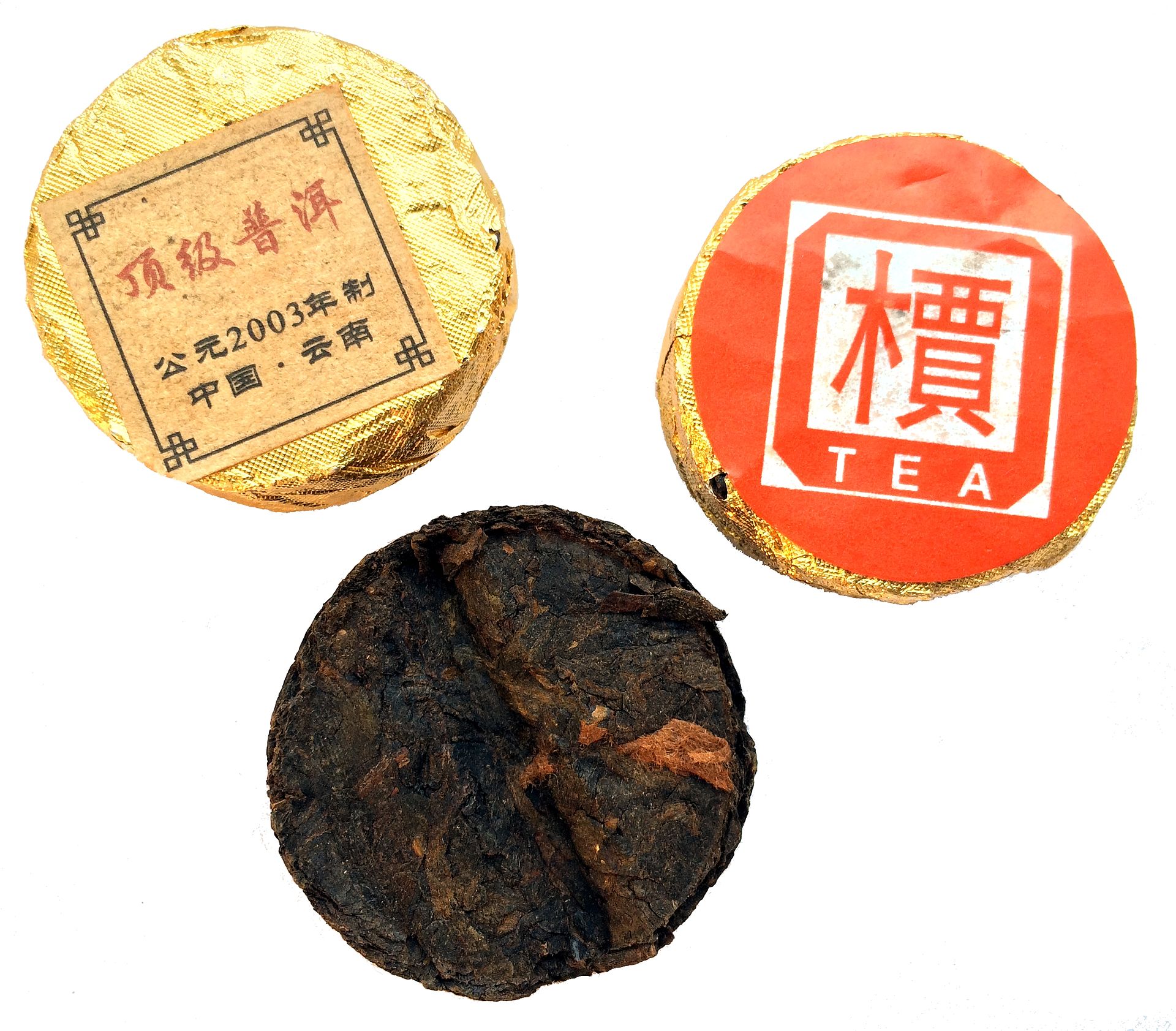
1. Why should Pu’er Prefecture not be understood simply as a place-name of tea origin? Because its greater historical function was to reorganize dispersed mountain tea into a commodity that could be recognized under one regional name
Many places produce tea, but not every place succeeds in turning its own name into a commodity term recognized far beyond the locality. The issue is not simply whether tea existed there, but whether a place had the capacity to reorganize what was originally dispersed tea into a category that larger markets could accept and remember. Pu’er Prefecture mattered first of all in this sense. When people say “Pu’er tea” today, they usually do not mean tea from a single narrow site around a prefectural seat. They mean a broader category drawing on multiple mountain districts, multiple forms, and multiple channels of circulation. In that sense, “Pu’er” became not a narrowly local origin mark, but an expanding regional label capable of absorbing and organizing broader outside recognition.
That sort of label does not appear naturally on its own. Tea in the mountains is more likely at first to move with the names of particular mountains, villages, local polities, and merchants. Who harvested it, who made it, and along which road it travelled often determined what it was called in local trade. Only when higher-order commercial and administrative structures intervene does tea gain the chance to shift from being “tea from many places” to “tea known under one larger regional name.” Pu’er Prefecture provided exactly such an interface. It drew originally fragmented mountain teas into a more stable system of extraction, transfer, record, trade, and re-identification. Over time, distant markets became less dependent on remembering every mountain name and more likely to remember the aggregate name Pu’er.
So to say only that Pu’er tea was called that because it came from Pu’er Prefecture is still too shallow. A better claim is that Pu’er Prefecture gave the name “Pu’er” the power to outweigh many smaller local names. It did not merely attach a label to tea; it supplied the administrative visibility, transport viability, extraction structure, and market recognizability that made the label keep working. Without those conditions, Pu’er would have struggled to become a tea name at all, let alone a durable commodity name recognized across wide regions.
2. Why was the Qing establishment of Pu’er Prefecture such an important turning point? Because it meant that the state more systematically brought southwestern tea mountains into a framework that could be managed, extracted, and named
Pu’er tea did not suddenly appear in the Qing. Earlier Nanzhao and Dali materials, as well as records about the tea-bearing mountain world associated with Yinsheng, already show that this region long had tea production and local use, and that it gradually entered wider circuits of movement. The issue is not whether tea existed, but when it was organized with greater force. The Yongzheng-era establishment of Pu’er Prefecture was a clear sign that this organizational power was strengthening. A prefecture meant that the region was no longer simply a distant frontier made up of scattered mountain districts and local chieftain territories. It was more legibly inserted into the imperial administrative map.
Once a prefectural center existed, information, taxation, extraction, roads, military-administrative oversight, and commercial organization could more easily concentrate around it. For Pu’er tea this mattered enormously. Tea is not a static mountain object. Its historical significance depends on whether it can be steadily gathered, named, moved, offered, redistributed, and written into larger systems. After the prefecture was established, “Pu’er” no longer functioned only as a local geographic expression. It became a name repeated in documents, account books, tribute systems, local gazetteers, and long-distance trade networks. Once a name is repeatedly confirmed in institutions, it no longer remains only a casual term. It gains both political and commercial hardness.
So the importance of establishing Pu’er Prefecture was not merely that administrative boundaries changed. It meant that a mountain tea world previously governed more by local experience acquired a new layer of state visibility. When the state can see a place, the market can more easily learn to see it too. When the state names it repeatedly, merchants and consumers far away are more likely to remember that name. The prefecture did not create tea itself, but it powerfully strengthened the circulation capacity of “Pu’er” as a collective designation. That is why so many discussions of how Pu’er tea became historically prominent return to the Qing prefectural framework as a turning point.
3. Why was Pu’er Prefecture so closely tied to tribute tea? Because tribute tea gave the name “Pu’er” a much higher level of institutional exposure than ordinary local produce
Any serious history of Pu’er tea runs into tribute tea sooner or later. It is easy to turn that into a simple glory story: because it entered tribute, it became famous; because emperors drank it, its prestige rose. That is not false, but it is too flat. The real importance of tribute tea lies not only in honor, but in the fact that it raised a tea previously circulating mainly within local and regional trade worlds into a much more visible institutional sphere. Anything entering tribute order is no longer merely a common commodity. It is selected, recorded, organized, described, and repeatedly made present within a larger political system. For a name, that kind of repeated exposure is immensely powerful.
Pu’er tribute tea worked in just this way. It meant that “Pu’er” was no longer only a frontier trading term, but increasingly a term that also stood in courts, offices, gazetteers, and larger commercial narratives. Tribute tea does not equal all output, nor all circulation, but it has very strong demonstrative force. It tells later actors which tea has been officially recognized as worth extracting, identifying, recording, and remembering. In that sense, tribute tea’s high-level visibility feeds back into the broader recognition of Pu’er as a tea name.
But this cannot be written only as a success story. Every tribute system also means pressure. To be chosen for tribute means stricter grading, clearer deadlines, and harder delivery obligations. For local society, that is elevation and burden at once. Yet precisely because the burden was real, the strengthening effect on the name “Pu’er” was also real. It was not a slogan. It was enforced through concrete extraction and material organization. That is why tribute tea in the history of Pu’er Prefecture must not be written merely as a picturesque memory. It should be written as one of the key mechanisms through which “Pu’er” received high-level institutional exposure.

4. Why was Pu’er Prefecture also a transfer center rather than only a naming center? Because a large commodity category must not only be called into existence, but also be sent outward in steady form
A name, however strong, cannot become a true bulk commodity if there is no stable capacity to transfer and redistribute the goods behind it. Pu’er Prefecture mattered because beyond naming, it also carried a strong transfer function. Pu’er tea was produced in dispersed mountain districts, not in the prefectural city itself, but these teas needed to pass through more stable nodes before entering longer-distance circulation. Whether moving toward inland markets or along tea routes toward frontier and Tibetan regions, tea had to be gathered, sorted, redirected, accounted for, and redistributed. Pu’er Prefecture was one of the key places where that intermediate organization became possible.
This is very different from merely having a road pass by. Many places sit on routes but never become commodity centers. A real center must be able to receive goods, store them, grade them, load them, extract them, record them, dispatch them, and rename them in larger batches. Pu’er Prefecture mattered because it provided a higher-order framework for these functions. Tea did not automatically become “Pu’er tea” the moment it was plucked in the mountains. It often had to be moved outward, recorded, traded, compressed into more transport-suitable forms, and included in larger shipments before it fully entered a wider commodity world. For a long stretch of history, Pu’er Prefecture functioned as one of the main workbenches where that translation took place.
This also helps explain why Pu’er tea later developed such strong traditions of compression, batch movement, and long-distance recognition. Distance forces tea toward forms that are easier to carry, store, split, and transact. A node that takes on transfer functions naturally feeds back into the way tea is shaped, packed, counted, and remembered downstream. In that sense, Pu’er Prefecture did more than let a place-name enter a tea name. It helped make place-name, trade route, commodity form, and market identity reinforce one another.
5. Why can we say Pu’er Prefecture integrated dispersed tea mountains into a larger regional commodity order? Because it allowed originally separate mountain products to enter the same external framework of recognition
The tea mountain world is naturally fragmented. Different mountains, villages, harvest seasons, and making traditions all produce variation. For short-distance use, such variation can itself be the value. But once tea enters larger and more distant systems of exchange, too much fragmentation becomes a problem. Distant markets do not always have the capacity to distinguish every local difference. They need a collective name that is stable enough, memorable enough, and broad enough to function. Pu’er Prefecture helped give that collective name a stronger historical foundation.
The key point is not that it erased local differences, but that it created an outer layer under which those differences could travel outward together. Mountains remained different, techniques remained different, and merchant grades remained different, but from the outside they could increasingly be gathered under the name “Pu’er.” Once that outer frame became stable, distant markets could first recognize the basket and only later learn to sort what was inside it. That is a classic path by which many regional commodities become large categories: internally diverse, externally unified.
So Pu’er Prefecture’s integrative effect did not mean making all tea the same. It meant enabling different teas to circulate outward under a shared recognizable name. That was crucial for commodity expansion. Before a commodity can be reliably subdivided, it must first be reliably recognized. One of the things Pu’er Prefecture helped accomplish was exactly this first transformation: from many local mountain teas to one large outward-facing tea category.

6. Why did the name “Pu’er” not disappear so easily in the modern period? Because although it came from an older prefectural structure, it had already grown into a durable commodity name inside the market world
From the late Qing onward, administrative boundaries, processing centers, trade routes, and export patterns all changed. The traditional structure of Pu’er Prefecture did not survive unchanged into modern times, yet the name “Pu’er tea” did not vanish with it. The key reason is simple: once a place-name becomes deeply embedded in commodity recognition and circulation, it can outlive the original political structure from which it came. In other words, Pu’er Prefecture as an administrative formation could change or disappear, but “Pu’er” as a market geography had already begun living a longer life.
This tells us how successful the old prefectural structure had been. Truly powerful historical nodes do not only organize goods for a short time. They also organize their own name into later market common sense. As long as merchants, consumers, exporters, and later regulators keep using the name, it will not easily leave the stage. Even when production boundaries, methods, and grading systems become more complex, “Pu’er” remains the first visible and most readily invoked layer of identification.
That is why modern discussions of Pu’er so often involve overlapping meanings: an old prefectural name, a tea category, a broader production region, and later administrative shifts. On the surface this can look confusing. In fact it shows how historically deep the name became. It is no longer just the shadow of one administrative map. It is a commodity term inherited, revised, and enlarged across multiple historical stages. Pu’er Prefecture’s importance survives inside that very durability.
7. Why is it still worth writing specifically about Pu’er Prefecture today? Because it corrects our habit of writing Pu’er tea history as if it had mountains but no center, raw material but no organization
Today writing on Pu’er tea often moves toward two extremes. One extreme talks only about mountains, old trees, flavor, and aging, reducing everything to raw-material difference. The other talks only about market myth, collecting, and modern popularity, as if Pu’er were largely a product of recent consumer desire. Both approaches miss a crucial middle layer: after tea left the mountains, how was it organized into larger systems of administration and circulation? Who made it into tea that could be extracted, moved, named, and repeatedly recognized beyond its place of origin? Pu’er Prefecture is one of the best entry points into that neglected middle layer.
It reminds us that the rise of Pu’er tea was not accomplished by tea trees alone, nor suddenly invented by later marketing. Between mountain and market stood very hard structures of administration, tribute, roads, transfer, and naming. Mountain origin absolutely matters, but if there were only mountains and no node capable of inserting them into a larger world, many teas would have remained only local products. Pu’er Prefecture helps explain why these teas could move beyond locality and eventually become a regional commodity name recognized across broad distances.
So to write about Pu’er Prefecture is not to pull attention away from mountains, but to put mountains back into a fuller historical structure. Mountain names explain raw-material difference. Pu’er Prefecture explains how those differences were organized, named, and sent outward. Without the first, Pu’er tea would not be rich. Without the second, it would have been much harder for Pu’er tea to become large. Both have to be seen together.
8. Conclusion: Pu’er Prefecture mattered not only because it left a name to Pu’er tea, but because it compressed tea mountains, tribute tea, administration, transfer, and outside recognition into one durable working center
If this article had to be reduced to its shortest conclusion, it would be this: Pu’er Prefecture mattered not only because the name “Pu’er tea” can be traced back to it, but because it allowed “Pu’er” to shift from a local place-name into a repeatedly usable regional commodity name. It could do this because after the Qing establishment of the prefecture several layers overlapped at once: dispersed tea mountains were made more visible administratively; tribute tea increased the institutional exposure of the name “Pu’er”; transfer routes and redistribution gave that name material circulation; different teas could increasingly be recognized outward under one broader frame; and even after the old prefectural system changed, the name had already become a lasting habit of the commodity world. Because these layers converged, Pu’er Prefecture was more than a place-name. It was one of the key historical interfaces that turned Pu’er tea from a southwestern mountain product into an interregional bulk commodity.
Once this is clear, many other topics on the site lock together more tightly: the history of Pu’er tea, the Tea-Horse Road, tribute tea, and compressed tea all begin to explain different parts of the same larger structure. Mountains explain where tea came from, tribute explains why certain teas were elevated, routes explain how tea moved, and Pu’er Prefecture explains how those things were actually organized in space and institution. It was not a mere background setting in the history of Pu’er tea. It was one of its most important workbenches.
Continue with: why Pu’er tea is more than a story of aging and collecting, why the Tea-Horse Road was more than a tea route, why tribute tea always changed the fate of local tea, and why compressed tea became such a stable long-distance form.
Source note: this article is based on widely available historical materials and broad scholarly consensus, including earlier evidence of tea production in the Yinsheng mountain world under Nanzhao and Dali; the stronger incorporation of southern Yunnan tea mountains into administrative and transport structures after the Yongzheng-era establishment of Pu’er Prefecture; the role of Pu’er tribute tea in increasing the high-level visibility of the name “Pu’er”; the long-term function of Pu’er Prefecture in tea extraction, naming, transfer, and regional integration; and the fact that while later administrative boundaries, processing centers, and commodity structures changed, “Pu’er” had already become a longer-lived commodity category. The emphasis here is on explaining how Pu’er Prefecture became a structural center of naming and transfer, rather than reconstructing every documentary detail one by one.