History feature
Why Mi Zhuan Tea Deserves Its Own Place in Chinese Tea History: from Yangloudong tea houses and Hankou machine pressing to Kyakhta and the Russian-European market
When many people first hear the term mi zhuan tea, the easiest explanation to remember is a very literal one: it was called “mi,” or rice-like, because the material was fine and granular. That is not wrong, but if we stop there, the real weight of mi zhuan in Chinese tea history becomes far too light. What matters is not only that tea particles were pressed into bricks. What matters is that this form reorganized one of the easiest parts of modern tea production to overlook—red-tea fannings, sifted fragments, and other fine material suited to mechanical pressing—into standardized commercial units that could be shipped, counted, and redistributed across very long distances. In other words, what makes mi zhuan tea historically important is not the “rice-like” fineness of the raw material by itself, but the trade chain behind it: Yangloudong, Hankou, Zhangjiakou, Baotou, Kyakhta, and the wider Russian-European market.
If we widen the frame just a little, mi zhuan tea clearly belongs in a history section rather than only in a technical entry on brick tea or black tea. It naturally links together several larger questions. Why did Hankou become such an important export node in the later nineteenth century? Why did machine pressing suddenly matter so much in that period? Why could tea material that looked less impressive than high-grade whole leaves become commercially powerful in cross-border trade? And why did compressed brick tea prove so suitable for Xinjiang, North China, Mongolian routes, Russian trade, and even European consumption? Mi zhuan tea ties these questions together unusually well.
Even more importantly, this is not just a story of local specialty tea, nor a nostalgic story about old brick tea. Its deeper value lies in making visible something easy to understate: modern Chinese tea exports did not depend only on elegant whole-leaf teas, famous terroirs, or literati imagery. They also depended on tea that could be sifted, blended, steamed, machine-pressed, packed, and fitted into the systems of ships, railways, caravans, and border depots. Mi zhuan tea is one of the clearest examples of that modern commodity logic.
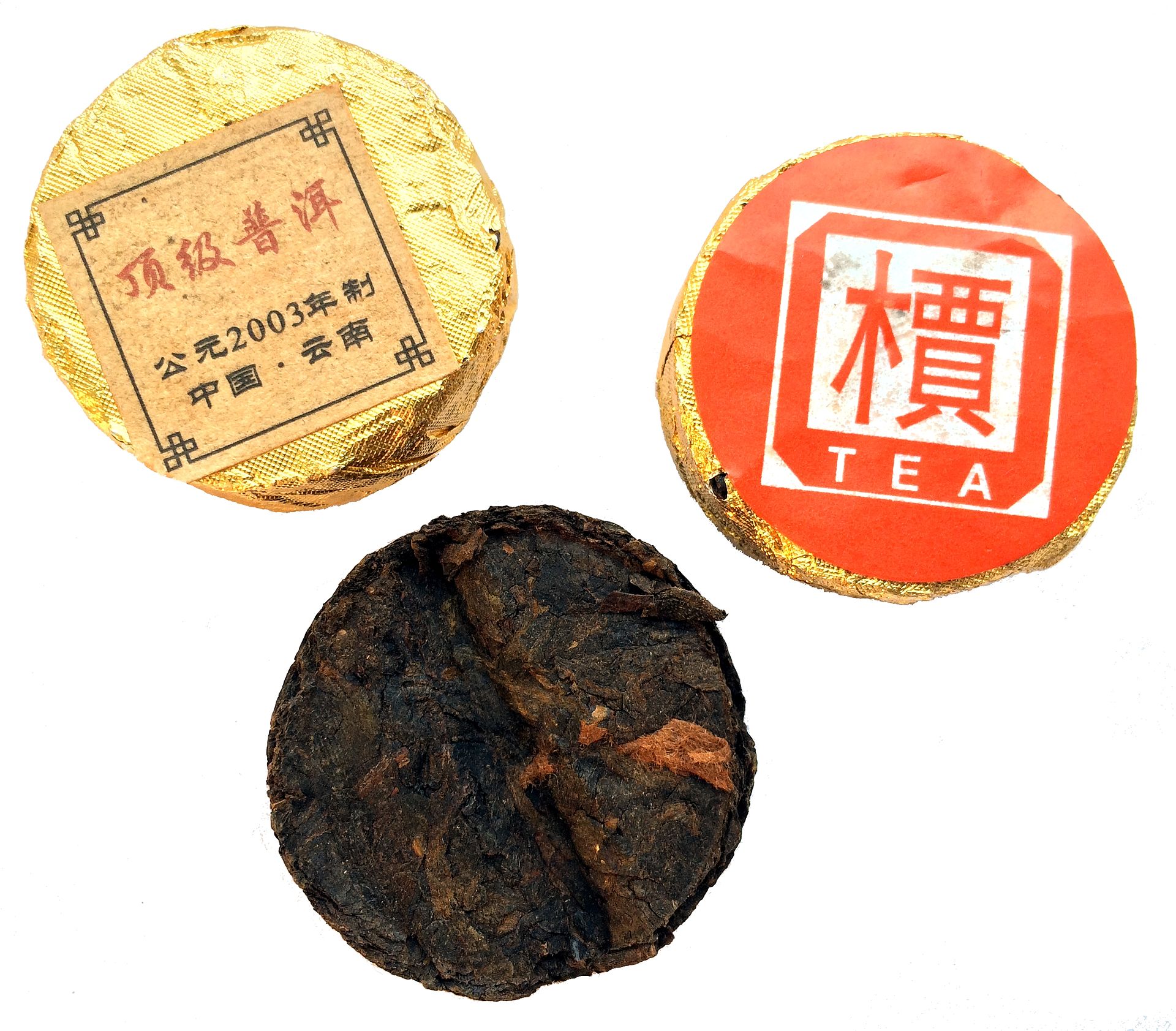
1. Why should mi zhuan tea not be understood only as “brick tea made from tea particles”? Because it really answers a harder question: how fine tea material was reorganized into long-distance bulk goods
There is nothing mysterious in the simple fact of pressing fine tea material into bricks. The real question is why such material became important in the first place. If we begin only from today’s specialty-tea aesthetics, it is easy to assume that the teas most worth attention are those with beautiful whole leaves, obvious grade markers, and visually legible buds and shoots. Fragments, sifted particles, and fannings then seem like leftovers by definition. But once tea enters a more industrial export system, that hierarchy changes. In long-chain trade, what matters is not only how beautiful the leaves look. What matters is whether the material can be processed stably, blended in volume, pressed into consistent units, and kept commercially legible during repeated transport and resale.
Mi zhuan tea sits precisely at that point. Its raw material was often not what would best display itself as elite whole-leaf red tea. It was material better suited to industrial reorganization. That is why its historical importance is not just a story of turning fragments into blocks. It is a story of transforming material that was less suited to direct prestige display into cargo fit for long-distance commerce. That makes mi zhuan tea something more than a by-product. It becomes evidence of how modern tea export systems reclassified and redeployed raw material.
So what matters most is not that the name sounds distinctive or that the brick face could look attractive. Mi zhuan tea reminds us that modern Chinese tea did not enter world markets only through origin prestige and leaf beauty. Very often tea had to be reshaped, compressed, and standardized before it could survive the route. Mi zhuan tea is one of the clearest examples of that commercial reorganization.
2. Why did mi zhuan tea become especially visible in the later nineteenth century? Because the Hankou export system needed brick-tea units better suited to machine pressing and long-distance transfer
Mi zhuan tea is so often connected with the late nineteenth century, especially the period after Hankou became an increasingly important treaty-port export node, because that was when tea entered much denser and more complex transport chains. Tea was gathered from production and collection regions into Hankou, then moved onward by river, sea, land transport, and border redistribution into northern, Mongolian, Russian, and wider overseas markets. In that setting, the commodity form had to become more suitable for repeated loading, stacking, counting, and resale.
This is exactly where machine pressing began to matter more visibly. Standard public references often mention that by the 1870s, Russian merchants established new factories in Hankou using mechanical pressing to produce mi zhuan tea for export. The key point here is not just that machines arrived as a sign of modernity. The deeper point is that machine pressing shows mi zhuan tea had already moved beyond small-scale workshop logic. It had entered a system that depended on reproducibility, regular size, and repeated output. Only when a commodity must be made and shipped in stable batches do the advantages of machine pressing become decisive.
Put differently, mi zhuan tea became conspicuous in this period not because it suddenly tasted better, but because it fit the organizational requirements of the export age. It allowed fine red-tea material to be pressed into regular bricks, packed more efficiently, counted more clearly, and kept more consistent across batches through blending and pressing. For a trade chain growing longer and more complicated, that consistency mattered enormously.

3. Why are mi zhuan tea, Yangloudong, and Hankou so often written together? Because they show the linkage between local processing zones and export-port organization
The story of mi zhuan tea repeatedly returns to Yangloudong and Hankou because those two places represent different but connected functions inside the brick-tea system. Yangloudong represents the older world of tea houses, purchasing networks, primary processing, and long-standing brick-tea practice. Hankou represents the treaty port, external capital, factory concentration, machine pressing, and export connection. Put together, they show that mi zhuan tea was not simply a local curiosity but the result of coordination across several layers of production and trade.
Seen in that way, mi zhuan tea makes much more sense. It was not a single-origin local item defining itself purely by terroir. It was the outcome of a chain: raw material from red-tea fragments and sifted tea particles, local tea-house and brick-tea experience, concentrated pressing and export capacity in Hankou, and then onward shipment into northern and border-market routes. The stronger that chain became, the less mi zhuan tea looks like a rustic specialty and the more it looks like a modern trade commodity shaped by multiple nodes.
That is why Yangloudong and Hankou belong together in the story. Their pairing is not just regional promotion. It reminds us that mi zhuan tea was made possible by the convergence of local tea organization and port-based export infrastructure. In modern tea history, some of the most important teas are defined less by a single origin name than by an entire chain of production, concentration, pressing, transport, and sale. Mi zhuan tea is one of those cases.
4. Why does mi zhuan tea connect so strongly with Zhangjiakou, Baotou, and Kyakhta? Because it was exceptionally well suited to long northbound routes and border redistribution
Mi zhuan tea did not stop at Hankou. It gains historical weight because it kept moving northward through much longer and more difficult trade systems. Public summaries often mention routes moving from Hankou onward through Shanghai, Tianjin, and Tongzhou, then by overland routes through Zhangjiakou, with related transfer links through Baotou and ultimately toward Kyakhta before entering Russian and wider foreign markets. Exact routes could vary, but the larger point remains the same: mi zhuan tea was not a short-range regional good. It was shaped for insertion into long-distance northbound trade.
The crucial word here is “node.” Places such as Zhangjiakou, Baotou, and Kyakhta were not simply names on a map. They were real points of transfer, recounting, exchange, and redistribution. If tea could not be recognized at those points as stable, countable, stackable goods, it would struggle to move smoothly through such a chain. Mi zhuan tea’s brick form, weight logic, and packing routines fit that nodal trade environment very well.
That is why these northern and border-market places appear so often beside mi zhuan tea. The association is not just there to give it frontier color. It shows that the commodity itself had been shaped to meet the demands of a long, multi-stage route. Mi zhuan tea did not happen to arrive at Kyakhta. In its commercial form, it had increasingly become the kind of tea that could survive Kyakhta-like trade systems.
5. Why is mi zhuan tea not only a transport story but also a market-stratification story? Because modern tea exports did not run only on beautiful whole-leaf teas
If we look only at the most familiar tea narratives today, it is easy to imagine Chinese tea exports as the story of famous teas, beautiful whole leaves, and visually refined products entering the world. There is truth in that image, but it hides an important reality. As tea exports expanded in the modern period, the market was strongly stratified. Different price levels, different consumer groups, different transport conditions, and different drinking habits required different forms of tea. Not every market was waiting for elegant whole leaves. Not every cross-border trade route placed leaf appearance at the top of the hierarchy.
Mi zhuan tea makes that much clearer. Built from fine red-tea particles and fragments, it did not lose value because of that basis. In some market settings, it gained value precisely because it was easier to standardize and move. For many systems requiring bulk supply, repeated transfer, and structured resale, standardized brick tea could be more commercially practical than loose tea that was bulky, fragile, and less uniform in unit form. In that sense, mi zhuan tea shows that modern Chinese tea exports succeeded not only through elite taste but also through commodity differentiation and formal adaptation.
Put more bluntly, tea-export history cannot be written only through the most beautiful teas. It also has to be written through the teas that could travel best. And the teas that travel best are not always the ones most admired in elite sensory language. They are often the ones that can be blended, pressed, standardized, and shipped in quantity. Mi zhuan tea belongs to that category.
6. Why could mi zhuan tea enter Russian and European markets, and even be displayed decoratively? Because it was both a drink and a visually recognizable export commodity
Another striking feature of mi zhuan tea is that it was not merely a functional transport brick. Public materials often mention embossed brick-face motifs such as gateway forms or locomotive imagery, sharply defined edges, and such a stable outward appearance that some Western households even framed mi zhuan bricks as decorative objects. These details may sound like curiosities, but they are historically revealing. They show that mi zhuan tea was marketed not only as compressed tea content, but as a complete and identifiable commodity object.
That matters because long-distance trade goods often need two things at once. They must be logistically stable—easy to stack, move, count, and repack—and they must also be market-readable, so buyers know what they are looking at. Brick-face imagery, brand marks, and a recognizable form all help create that readability. Mi zhuan tea was therefore not only pressed into a block. It was given a commodity identity legible across distance, language difference, and multiple trade layers.
So the fact that it could also be displayed decoratively should not be read only as an exotic afterlife. More deeply, it reflects the fact that mi zhuan tea already possessed a strong visual commodity interface. One aspect of modern tea export culture lies exactly here: tea was no longer recognized only by leaf appearance and origin talk, but increasingly by branded, standardized, and visually stable product form.
7. Why should mi zhuan tea be returned to the larger history of Chinese tea rather than left inside a small brick-tea subtopic? Because it links local tea industry, machine production, border trade, and world markets in one line
What makes mi zhuan tea deserve an article of its own is not just that it has a clear route. It is that it reconnects themes that are too often treated separately. If one writes only Yangloudong, the result can become a local tea-town story. If one writes only Hankou, it becomes a treaty-port story. If one writes only Kyakhta, it becomes a border-trade story. If one writes only brick tea, it becomes a processing story. Mi zhuan tea ties these layers together: local tea houses and raw-material acquisition, Hankou port capital and machine pressing, northbound nodal transfer, and stable demand in Mongolian, Russian, and wider overseas markets.
That means mi zhuan tea is not a peripheral detail. It is a strong historical connector. Through it, we can see more clearly how modern Chinese tea moved from regional product to cross-border bulk commodity. We can also see more clearly that “world tea trade” was not only the cultural spread of prestigious teas. It also relied on large quantities of standardized, industrially organized, and distributable tea goods.
If mi zhuan tea is removed from the larger history, modern tea exports become too elegant, too whole-leaf centered, and too detached from the actual commodity layers that sustained volume. Mi zhuan tea helps correct that distortion.
8. Why does rewriting mi zhuan tea today matter? Because it helps us understand how modern Chinese tea actually entered the world
The point of rewriting mi zhuan tea now is not just to add one more local-history entry. It is to acknowledge that modern Chinese tea entered the world not only as something elegantly brewed and culturally admired, but also as something sifted, blended, steamed, machine-pressed, packed, and routed through real trade systems. Mi zhuan tea forces us to see another reality of tea: not as a cultural symbol flying directly from mountain to cup, but as a commodity first made fit for transport and distribution.
That does not make tea history less interesting. It makes it more accurate. Once we understand mi zhuan tea, it becomes easier to see that modern Chinese tea was never a single-layer world. It included elite sensory teas, local everyday teas, border-sale teas, export loose teas, and compressed brick teas at different market levels. And the forms that best sustained wide circulation were often those best adapted to logistics and redistribution. Mi zhuan tea is one of the clearest pieces of evidence for that reality.
If you continue along this line, it helps to read why tea bricks became so important in Eurasian trade and frontier daily life, why the Wanli Tea Road keeps returning to discussion, why the Tea-Salt Road was more than an old mountain route, and why the tea-horse exchange system deserves to be reconsidered. Mi zhuan tea reminds us that tea entered the world at scale not only through prestige and flavor, but also through those forms most suitable for calculation, packing, compression, and long-distance trade.
Source note: this article synthesizes public materials on mi zhuan tea, lao qing tea, Yangloudong brick-tea production, and Hankou tea factories, especially the commonly repeated factual lines concerning late nineteenth-century mechanical pressing in Hankou, the Yangloudong-Hubei brick-tea system, northbound transfer through nodes such as Zhangjiakou and Kyakhta, and export toward Russian and wider European markets. It also builds on this site’s existing lines on tea bricks, the Wanli Tea Road, the Tea-Salt Road, and tea-horse exchange. The focus here is the historical significance of mi zhuan tea as a modern export commodity form rather than an exhaustive reconstruction of every brand, factory chronicle, or modern technical detail.