Why Mengding Tea Belongs Back at the Center of Chinese Tea History: How Shu Tribute Tea, Mount Meng Prestige, and the Idea of “Early Spring” Pushed Sichuan into the Front Rank of Early Tribute Tea
Published: · Updated:
When Chinese tea history is retold today, the topics most often revisited are still usually those closest to Jiangnan court imagination: the Guzhu Tribute Tea Yard, Beiyuan tribute tea, dragon-phoenix tribute cakes, and pre-Qingming tribute tea. But if we shift our eyes slightly westward, one more region of enormous weight appears inside early tribute-tea geography: Mengding. What makes Mengding tea worth rewriting is not simply that it is still famous now, but that it stood for a long time at the intersection of Shu tea, tribute tea, mountain prestige, early-spring timing competition, and the Song tea-horse order. In other words, Mengding is not just a local famous tea. It is one of the hardest lines through which Sichuan entered the central narrative of Chinese tea history.
Many people today hear “Mengding tea” and think first of specific product names: Mengding Ganlu, Mengding Huangya, Mengding Shihua. That is not wrong, but it flattens the history. Once one looks only at modern finished categories, Mengding begins to look like a set of later standardized, branded, tourism-friendly products. But once it is put back into the longer arc before and after the Tang and Song, the questions become much larger. Why was it praised as the finest of Shu? Why did “early spring Mengding” become a language of scarcity? Why was Sichuan important not only in tea-horse trade and border supply, but already inside the earlier geography of tribute tea? Those questions together form the real historical weight of Mengding.
That is also what makes this topic complementary to the site’s existing essays on the tea-horse exchange system, the Tea Horse Road, and the Guzhu Tribute Tea Yard. Guzhu shows how the Tang state organized tribute tea in Jiangnan mountain terrain. The tea-horse system shows how Sichuan tea entered border governance and military supply. Mengding, by contrast, asks how Sichuan had already secured a front-row position in earlier “mountain tribute tea” history, and how that status continued to shape later Chinese ideas of tea.
Mengding matters not simply because it is “a famous Sichuan tea,” but because it became tied very early to tenderness, early spring, priority harvest, and tribute-worthy ranking. What fixed its historical position was not only one mountain, but a full tea order built around time and grade.
Mengding teaShu teaTribute teaEarly spring MengdingSichuan tea history
1. Why is Mengding worth rewriting on its own today? Because it is not merely a modern famous-tea origin, but an early gateway through which Sichuan entered core Chinese tea history
In contemporary Chinese-language discussion, Mengding tea is often introduced through finished products: Huangya, Shihua, Ganlu, Maofeng, plus geographical indication labels, intangible heritage recognition, tea tourism, and modern claims about tea-cultural origins. That works for a production-area summary, but it is not enough for history. It assumes that Mengding matters mainly because modern famous-tea systems made it matter. The historical sequence is actually the reverse. Mengding still carries such cultural density today because it had already entered the upper levels of Chinese tea history very early, and modern famous-tea classification only continued and reworked that earlier status.
This matters because not every tea-producing region enters national memory. To do so, a region usually needs more than output and more than good taste. It needs early historical visibility, textual presence, elevation by court or literati or institutions, and some tie to scarcity. Mengding possesses all of these. It is linked both to origin narratives around early tea cultivation in Sichuan and to Tang tribute status, and it remained implicated later in Song tea-horse structures and mountain-tea prestige. In other words, Mengding was not a late-arriving star. It was already on the stage very early.
So rewriting Mengding is not about adding another article saying “Sichuan also has famous tea.” It is about correcting a common distortion. Many accounts of Chinese tribute-tea history instinctively place the center in Jiangnan, around Guzhu, Beiyuan, and dragon-phoenix tribute cakes. Mengding reminds us that Sichuan was not only later important in border tea and tea-horse systems. It had already secured a strong front-row place in the earlier history of high-ranking tea.
2. Why is the line “Shu tea was named through Mengding” so important? Because Mengding was not just one local tea, but the concentrated representative name of high-ranking Shu tea
One of the most revealing lines around Mengding is the idea that Shu tea gained its name through Mengding. What matters here is not just that it praises Mengding. It reveals a historical process. Tea from Sichuan did not first enter wider national view as a flat field of equal local names. At a higher level of description, it was gradually gathered, represented, and focused through a smaller number of especially powerful names. Mengding became one of the central names in that act of concentration.
In other words, Mengding’s status should not be reduced to the idea that “a very good tea happened to grow on Mount Meng.” A better reading is that within the broader regional frame of Shu tea, Mengding gradually came to stand for what was finest, earliest, and most tribute-worthy. This resembles a kind of historical brand concentration, but not in the modern commercial sense. It was produced jointly by texts, literati evaluation, court extraction, and mountain-area prestige.
That is exactly why “Mengding” weighs more in tea history than a mere product label. It is closer to a core sign within the wider world of Shu tea. For that reason, when later generations discussed famous mountain tea in Sichuan, early spring tea in the west, or tribute-worthy tea from Shu, Mengding repeatedly moved to the front. It was not the only tea in its region, but it became one of the names most easily remembered on the national stage.
From a historical perspective, the formation of such a representative name matters more than flavor notes. It shows that famous mountains in tea history are not simply born as such. They are repeatedly pointed out, amplified, and reaffirmed. Mengding succeeded not only because its mountain and climate were favorable, but because it was successfully written as the high point of Shu tea worth remembering.
What brought Mengding into the center of Chinese tea history was not nature alone, but its repeated transformation into something nameable, comparable, and tribute-worthy. Only after mountain buds entered shared language could they become national historical objects.
3. Why does Tang tribute status matter so much for Mengding? Because it pushed Sichuan from being a tea-producing region into the front rank of tribute tea competition
Once Tang tribute tea enters the discussion, Mengding’s importance rises immediately. Tribute tea is not ordinary production history. A region that produces tea has climate, craft, and labor. A region that enters long-term tribute order has already been elevated into a higher layer of state and cultural ranking. That is what Tang tribute status means for Mengding. It does not merely say “Sichuan also produced fine tea.” It says that high-grade tea from Sichuan had already entered court vision and could stand alongside other famous mountain teas in the wider imperial order.
This is especially important for Sichuan, because later narratives often treat Sichuan tea primarily as border tea, Tibetan tea, or tea-horse trade tea, as if its main historical value were large-scale supply and frontier circulation. Tang Mengding tribute tea corrects that picture. Sichuan tea was not only large-scale, not only for frontier demand, and not only valuable in transport systems. It also held a high-ranking place inside tribute tea order itself. In other words, the historical image of Sichuan tea was never one-dimensional.
Even more importantly, tribute status reshapes the producing area itself. Once a region enters tribute order, harvest timing, bud-leaf standards, production precision, transport speed, and local organizing capacity all become more tightly pressured. Mengding stops being only a geographical place and becomes a production place compressed by both institution and prestige. It is a natural famous mountain, but it is also a mountain redefined through state attention.
So what deserves emphasis is not only the date on which Mengding entered tribute supply. The deeper point is that Sichuan had already entered the national ranking of high-grade tea. That ranking would later shape literary evaluation, local self-description, and long-term authority around the producing area.
4. Why did “early spring Mengding” become such a powerful idea? Because competition among high-ranking tribute teas was ultimately competition for a narrow window of time
One of Mengding’s most important historical keywords is “early spring.” Those words carry enormous weight because they are not merely poetic. In tribute-tea order they are among the hardest languages of scarcity. Earlier usually meant tenderer, rarer, harder to organize, and therefore easier to elevate. The competition among high-grade tribute teas looked on the surface like a contest among mountains and names, but at a deeper level it was also a contest over who could seize the narrow earliest spring window.
Mengding’s tie to “early spring” shows that it was seen not only as a mountain producing good tea, but as a mountain capable of being first in time. This was not marketing language. It was a real advantage inside early tribute tea logic. If a producing region could provide sufficiently high-grade bud tea earlier than others, it was more likely to gain priority in both state extraction and literati imagination. Early spring meant scarcity; scarcity meant high rank; high rank made a mountain name easier to fix in memory.
Seen this way, Mengding forms a strong dialogue with this site’s essay on pre-Qingming tribute tea. That article focuses more on how tribute systems kept pushing the calendar earlier and earlier, producing a growing collective fascination with “earliness.” The Mengding topic, by contrast, helps show that Sichuan was not marginal in that race. Mengding was one of the early regions able to turn “first spring” into a stable producing-area identity.
So what deserves rewriting in “early spring Mengding” is not simply that it sounds elegant. It reveals one of the hardest rules in tea history: the history of high-grade tea is often first a history of timing before it becomes a history of taste. The earlier a tea is seen, the more likely it is to enter the center.
“Early spring” was not just aesthetic language. It was a form of hard temporal capital inside high-grade tea competition. Earlier meant tenderer, scarcer, and easier to pull into tribute and famous-mountain ranking.
5. Why can Mengding not be reduced to a later famous green tea? Because historically it also connects Huangya, Shihua, Ganlu, and multiple layers of mountain-tea evolution
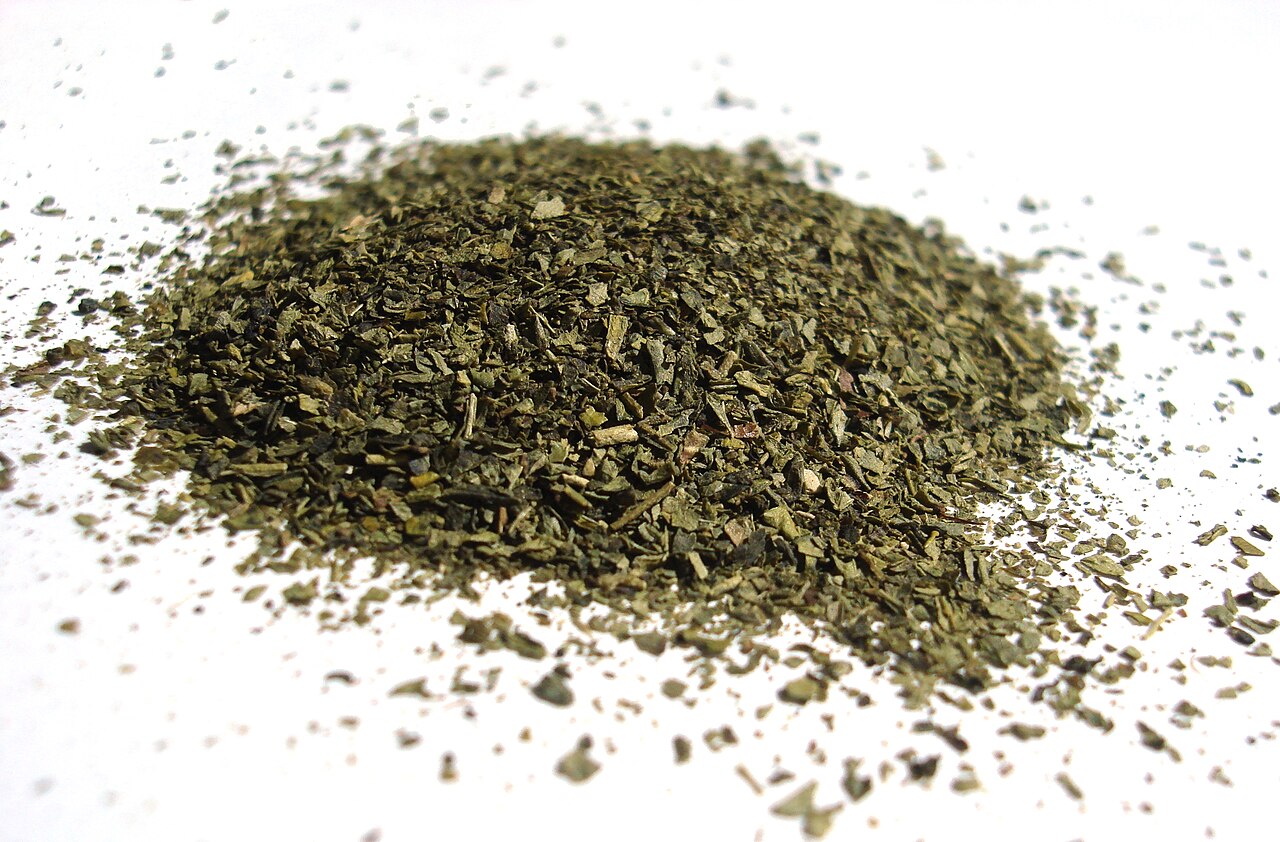
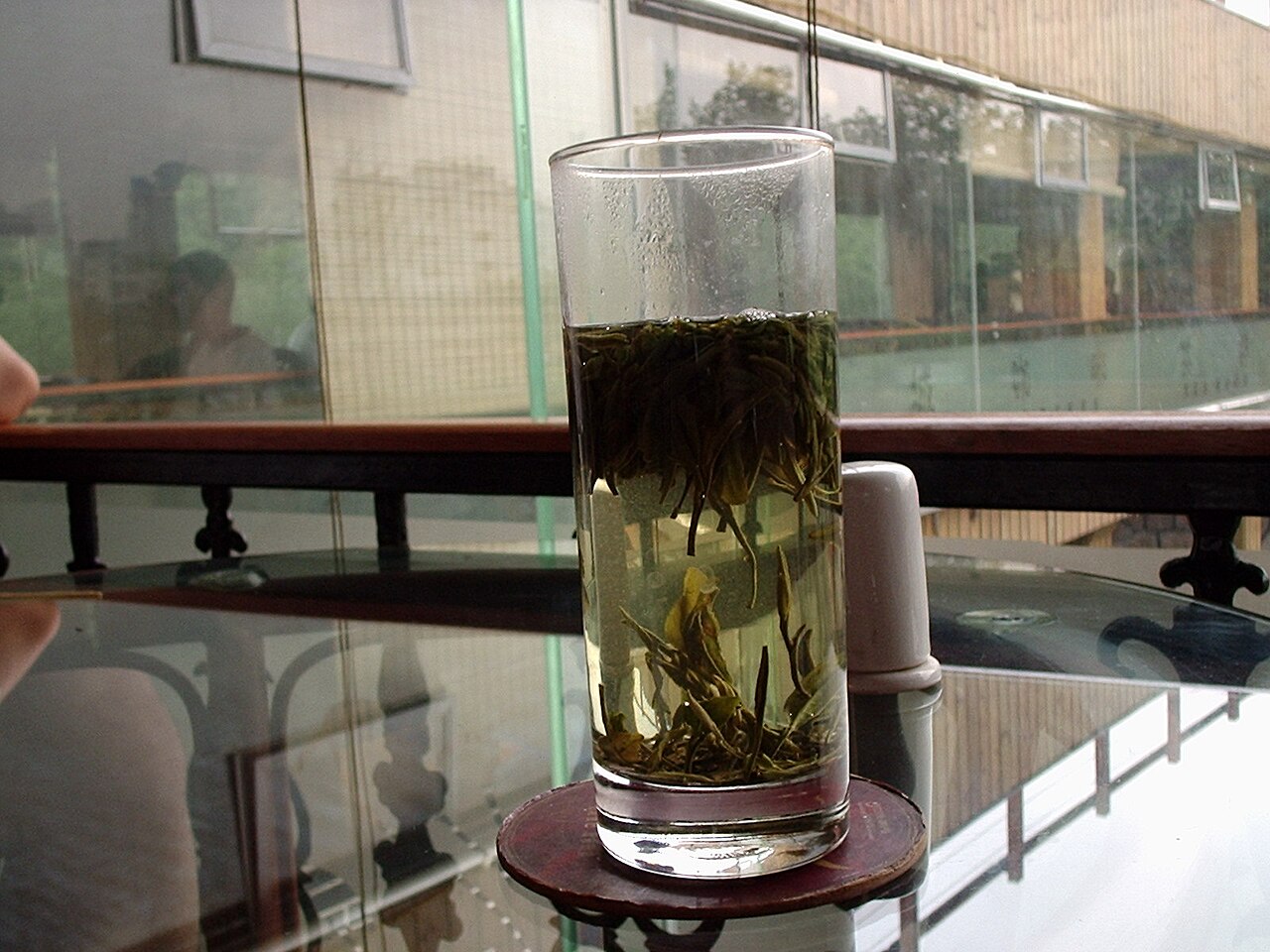
Modern consumers often approach Mengding through finished categories: Mengding Ganlu as green tea, Mengding Huangya as yellow tea, Shihua as an older, more historical name. Such classification is useful, but if history is cut apart entirely by modern product categories, Mengding is misread. The deeper importance of Mengding is that it did not survive by way of one single product. It sustained, across long periods, the ability to produce and rename high-grade mountain tea. Huangya, Shihua, and Ganlu are different later expressions of that older capability.
That means Mengding did not first become important because modern categories were standardized around it. Rather, because Mount Meng had already secured a place as a source of high-grade tea, later generations kept returning to the mountain to produce, name, and refine new representative teas. Shihua, Huangya, and Ganlu obviously differ in process and category, but they share a deeper precondition: Mount Meng had already been written as a place from which one expected superior tea to continue emerging.
This also explains why Mengding has been able to retain a richer cultural discourse than many other producing regions. Some places preserve only one famous tea name. Mengding preserves the stronger expectation that the mountain itself should continue yielding high-ranking tea. For historical writing, that matters more than the details of any one single product. It reveals not merely how one tea became famous, but how one producing area sustained a long-term upper-grade identity.
So to write Mengding only as a modern green or yellow tea is to shrink its scale drastically. A more accurate account recognizes Mengding as a mountain system repeatedly capable of generating new high-grade tea names rather than as a place that simply happened to produce a few successful products.
6. Why did Mengding remain important in the Song? Because it not only continued as a tribute mountain, but was also folded into Sichuan’s larger tea-horse and border order
If the Tang pushed Mengding into national high-grade tribute tea visibility, the Song proved that it was no passing appearance. Song Sichuan tea was extraordinarily important, as this site’s essays on the tea-horse exchange system, Tea Horse Bureau, and tea-horse law have already shown. But it is crucial to remember that the importance of Sichuan tea in the Song did not mean all Sichuan tea was treated as flat and uniform. Inside that larger, more institutionalized world, Mengding still retained the special status of a famous high-ranking mountain tea.
That shows two things at once. First, the historical structure of Sichuan tea was always layered: one layer belonged to large-scale supply, border consumption, and administrative allocation; another belonged to mountain prestige, high-grade tea, and names still recognizable to courts and literati. Mengding appears exceptional because it leaves traces in both layers. Second, the Song did not erase the older prestige of Tang Mengding. It continued to recognize Mount Meng inside the more expansive Sichuan tea system. Song history therefore did not push Mengding off the stage. It preserved it in a more complicated order.
This matters because many Song narratives shift too quickly toward Beiyuan, dragon-phoenix tribute cakes, and whisked-tea aesthetics, as if the history of high-grade tea had become entirely southeastern. From a Sichuan angle, the picture is more complex. National tea prestige in the Song certainly leaned strongly toward southeastern court aesthetics and tribute craftsmanship, but that did not mean Sichuan mountain teas disappeared from high-ranking history. Mengding’s continued prominence is itself evidence that Chinese tea history never had only one center. It had several centers operating at different scales at once.
Mengding’s distinctiveness lies in the fact that it did not belong to only one historical scene. It could exist at once inside famous-mountain, high-grade tea imagination and inside the larger institutional tea networks of Sichuan. It was both prestige tea and system tea.
7. Why can Mengding represent Sichuan’s “front-row” place in Chinese tea history? Because it combines origin narrative, tribute status, temporal scarcity, and institutional continuity
If I had to compress the deepest reason for Mengding’s importance, I would put it this way: it did not gain historical status through one advantage alone. It stacked several unusually strong advantages at once. The first was origin narrative. Whether in stories about early tea cultivation or in later language about tea-cultural beginnings, Mengding was easily placed very early. The second was tribute qualification. Tang tribute status gave it a formal front-row place in state ranking. The third was temporal scarcity. “Early spring” tied it to one of the most valuable moments in the annual calendar. The fourth was institutional continuity. Even inside the larger Song system of Sichuan tea, it did not disappear; it remained legible as a famous mountain tea.
Together, those layers give Mengding a rare historical solidity. Many producing areas may be early but not durable. Others may be prestigious but not early. Some may once have entered tribute supply but never built lasting mountain authority. Others may be famous now but lack a sufficiently hard early history. Mengding deserves to be rewritten at the center precisely because it is one of the few places able to connect earliness, prestige, scarcity, and endurance at once.
From the perspective of Sichuan, that solidity is especially valuable. It means Sichuan’s place in Chinese tea history does not need to be justified only through later border tea, tea-horse exchange, or Tibetan tea systems. Those systems matter, of course, but Mengding shows that even if we wind the clock back much earlier, Sichuan was already occupying an important position in high-grade tea history. That is essential for rebalancing the national map of tea history.
For that reason, Mengding should not be written merely as an article of local pride. It should be written as a correction of perspective: when we redraw the center of Chinese tea history, Sichuan should appear not only as a land of transport routes and frontier demand, but also as a land of famous mountain tribute tea, early-spring competition, and early high-grade tea order. Mengding is one of the best handles for making that correction.
8. Conclusion: what matters most is not only that Mengding later became famous tea, but that it placed Sichuan in the front rank of high-grade Chinese tea very early
If this entire essay had to be reduced to one short conclusion, it would be this: Mengding tea deserves rewriting not because it can still be sold, promoted, or turned into cultural tourism today, but because very early on it already stood at the crossing point of Shu tea representation, Tang tribute tea, early-spring scarcity, and the institutional tea world of Song Sichuan. In other words, Mengding was not a famous tea that was noticed late. It was a famous mountain tea already written into the front row of high-grade Chinese tea history.
That also means rewriting Mengding is really about redrawing the map of Chinese tea history itself. We have grown too accustomed to imagining high-grade tribute tea as excessively southeastern: Guzhu, Beiyuan, and dragon-phoenix tribute cakes are all undeniably important, but they should not form the only center. Mengding reminds us that Sichuan not only later supported tea-horse systems, border supply, and large-scale circulation; it had already secured its own front-row position in the earlier order of tribute tea and famous mountain tea. That position was not invented after the fact. It was supported jointly by texts, timing, institutions, and lasting prestige.
So when we look at Mengding tea today, what is most worth preserving may not be any single finished product name, but the historical thickness it still carries: how one mountain was repeatedly proven worthy of earlier harvest, earlier tribute, earlier memory, and how later generations kept translating that “priority position” into new tea names, new processes, and new cultural identities. What matters most is not tea leaves alone, but a long-lasting qualification for historical front-row status.
Source references: this essay is based mainly on publicly available Chinese materials on the historical development of Mengshan/Mengding tea, Tang tribute records, the Song background of Sichuan tea-horse institutions, and repeated phrases around “early spring Mengding.” It especially draws on the basic timeline information preserved in the publicly accessible Baidu Baike entry on Mengshan tea regarding Tang tribute status, Song famous-mountain tea, and the Wu Lizhen/Mengshan tea-cultivation legend, then cross-checks that line against this site’s existing essays on Guzhu tribute tea, pre-Qingming tribute tea, tea-horse exchange, and tea-horse law. The emphasis here is on explaining Mengding’s structural place in the history of high-grade Chinese tea rather than on listing modern product categories encyclopedically.