Why Pre-Qingming Tea Is More Than a Flavor Label: From Tang Guzhu Tribute Tea and Urgent Court Delivery to an Early-Spring Time Order, How Qingming Became China’s Best-Known Tea Boundary
Published: · Updated:
Today almost everyone who follows Chinese tea has heard the phrase “pre-Qingming tea.” In tea shops it works as a price signal. In short-video culture it appears as a seasonal hotspot. For many consumers it simply means more tender, more delicate, more expensive, and more worth buying quickly. But if we treat the phrase only as a modern marketing slogan, the question becomes far too thin. The real question is why Qingming, why this festival marker rather than another one, and why “before Qingming” became one of the most recognizable time boundaries in Chinese tea culture. If we follow that question backward, we return to the Guzhu Tribute Tea Yard, Tang tribute tea, urgent court delivery, and the moment when the state entered mountain production calendars.
In other words, the core of pre-Qingming tea is not only flavor but time order. It shows that Chinese tea history developed a very strong idea quite early: the first slice of spring was not just naturally tender, but institutionally urgent. Once tea entered tribute, presentation, fast transport, and ranked selection systems, time itself could become more important than taste. Whether tea could be picked, finished, dispatched, and delivered before Qingming directly affected whether it still qualified for a higher value order.
That is why this article relates to but remains distinct from existing pieces on the Guzhu Tribute Tea Yard, the tea-yin system, and the tea-horse trade. The Guzhu essay is more about tribute tea and the state’s early organization of tea; the tea-yin article is about circulation permits; the tea-horse article is about frontier exchange and resource transfer. This essay asks something narrower and sharper: how was early-spring time itself shaped into a standard that could be chased, checked, and eventually treated as sacred?
“Pre-Qingming” was not originally a packaging phrase. It was a struggle over an early-spring time window. Once tea became valuable enough, a festival marker stopped being merely seasonal and became part of production, selection, transport, and status.
pre-Qingming teaQingmingGuzhu tribute teatribute teatea history
1. Why does pre-Qingming tea deserve an article of its own? Because it shifts “good tea” from taste evaluation to time evaluation
Chinese tea history contains many ways to describe good tea: high fragrance, freshness, clear liquor, long aftertaste, excellent mountain origin, strong craft, careful firing. But “pre-Qingming tea” is different. It is not primarily a taste adjective. It does not first tell you the aroma style, cultivar, or processing method. It tells you where the tea stands in time: it was picked before Qingming. In that sense, pre-Qingming tea is first a temporal category.
This matters because it means that some forms of tea value in Chinese history were fixed before later tasting ever began. Once tea entered the “pre-Qingming” window, it immediately carried assumptions of higher grade: finer buds, greater scarcity, more concentrated labor, greater sensitivity to weather, and lower yield. Modern markets certainly amplified these assumptions, but they did not invent them from nothing.
That is exactly why the subject deserves separate treatment. It forces us to recognize that Chinese tea history is not only a history of processing, drinking, and aesthetics. It is also a history of time. Tea was never produced in a calm, evenly distributed annual flow. Its grades, prices, and reputations were often pulled sharply apart by the earliest slice of spring.
2. Why did Qingming become the famous line? Because it was both a seasonal turning point and a social threshold people could actually remember and enforce
Today people often speak as if Qingming were naturally destined to be tea’s key dividing line. But that is not self-evident at all. Spring tea could have been divided by subtler phenological signs, by specific mountain observations, or by official picking batches. Why did the most stable and widely recognized line settle on Qingming? Precisely because Qingming had both natural and social force.
On the natural side, Qingming falls at a crucial moment between mid-spring and later spring. Temperature, rainfall, and bud expansion can all shift noticeably around this time, and tea growth is extremely sensitive to those changes. In many green-tea areas, tenderness, amino-acid expression, polyphenol balance, and visible leaf character may all differ meaningfully around this point. So the line does have a real basis in seasonal change.
But the deeper reason is social. For a moment in time to become a durable order, it must be clear, memorable, and easy to communicate upward and downward. Qingming was exactly that sort of node. It was not a private mountain term understood only by tea pickers. It was a public agricultural marker known across society. The state could issue commands around it; local producers could organize harvest around it; transport schedules could use it; markets could explain it to buyers. That is why Qingming became more than a seasonal event. It became an ideal threshold for institutionalization.
In that sense, Qingming became famous not because it was mystical, but because it satisfied both natural difference and social enforceability at once. Many of the strongest standards in tea history are never purely natural or purely administrative. They are stable because the two layers mesh. Qingming is one of the clearest examples.
3. If we return to Tang Guzhu tribute tea, the key issue is not simply that the emperor liked fresh tea, but why it had to arrive before Qingming
When people write about the history behind pre-Qingming tea, they often mention Guzhu tribute tea and the famous lines about tea having to reach the capital before Qingming. Yet many popular accounts frame this too narrowly: the emperor liked the freshest spring tea, so local officials rushed to satisfy him. That is not entirely wrong, but it reads too much like court anecdote. The real point lies in the structure behind the rush.
Within the Guzhu tribute system, tea was not an ordinary commodity. It had to be picked, selected, steamed, fired, shaped, packed, dispatched, and delivered within a tightly compressed time window. The issue was not merely that early-spring tea was precious. Preciousness itself had to be turned into a temporal and logistical standard. Once tea entered tribute logic, lateness meant more than a slight loss of freshness. It meant a shift in institutional meaning. Tea could fall from “timely new tribute” into something already out of season.
That is why Guzhu matters so much for understanding pre-Qingming tea. It shows that early harvest was not invented by later commerce. Long before modern marketing, high-ranking tea already had to be early in a very hard sense. The market amplified an older logic; it did not create it from nothing.
The earlier the spring bud, the less delay it can tolerate. For tribute tea, time shaped not only quality but whether the tea still counted as properly in season.
4. What the Guzhu Tribute Tea Yard really created was not only tribute-tea rank, but a system in which early spring had to obey an upward route
The site’s existing Guzhu Tribute Tea Yard essay already explains how the tribute tea yard functioned as a place where the state entered mountain production and tea making. But in the specific context of pre-Qingming tea, the tribute tea yard also had another major significance: it bound early-spring time to an upward route. By “upward route,” I mean the path by which tea moved from mountain production zones into higher political and ritual centers. Once such a route exists, time is no longer merely local springtime. It is reshaped by distance, urgent transport, and a deadline.
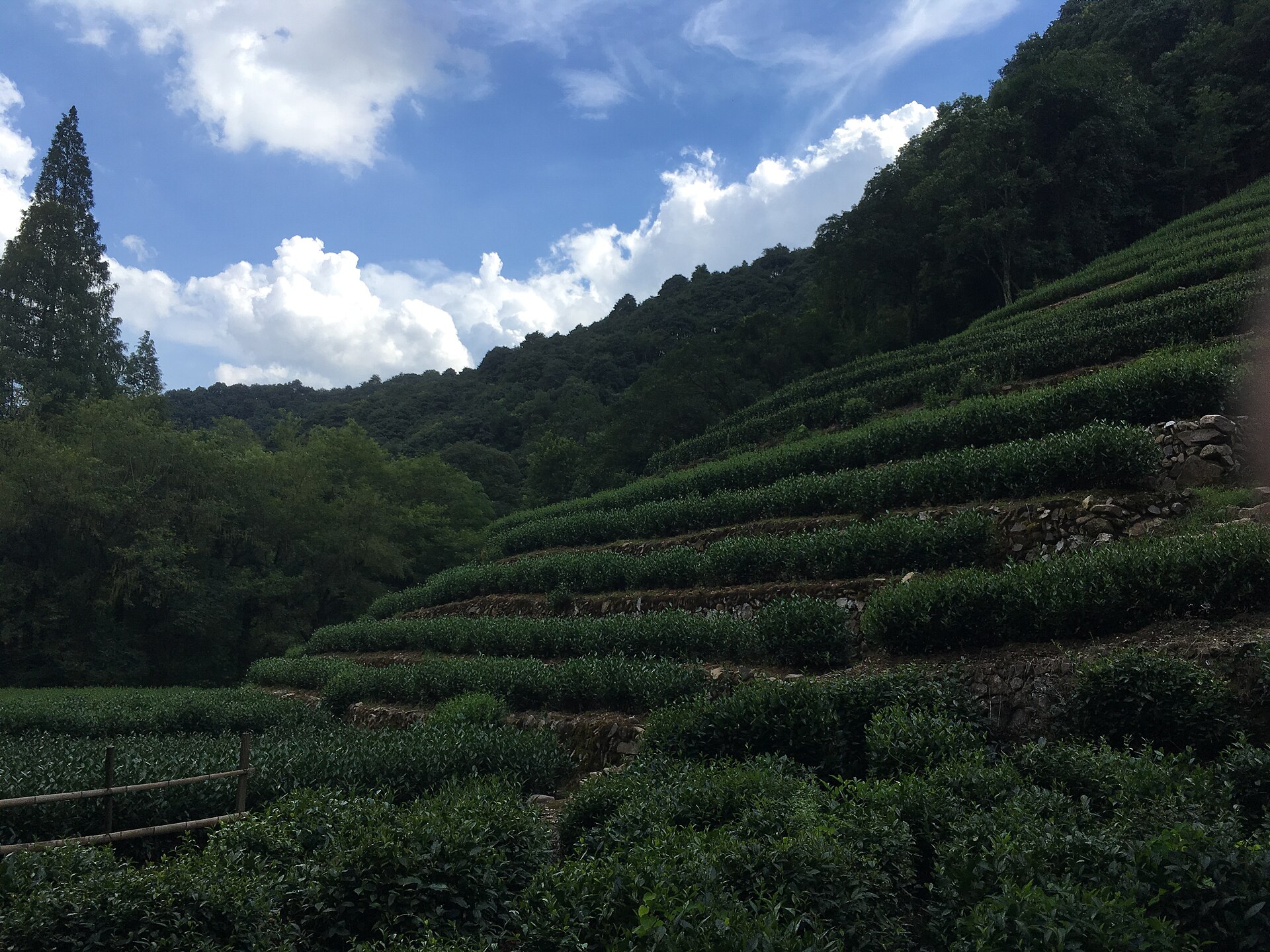
This deserves emphasis. Tea buds emerge according to local conditions: slope, elevation, sunlight, weather. But once tribute tea systems intervene, those dispersed natural rhythms are compressed and aligned. Even if mountains differ, institutions tend to force them into a cleaner schedule: picking must begin before a certain point, dispatch must happen before another point, arrival must be secured before another. Time shifts from “experienced spring” to “commanded spring.”
From that angle, the Guzhu Tribute Tea Yard shaped not only tribute tea, but also a model of tea time with very long afterlives. Even today, many people instinctively assume that the best spring tea must be chased early, and that value drops once a clear line has passed. Modern markets are not Tang tribute administration, of course, but the two share a strongly similar imagination of time.
5. Why could “pre-Qingming” leave tribute systems behind and become market language? Because it was unusually easy to translate from institutional language into consumer language
Many institutional terms disappear once the systems that created them disappear. “Pre-Qingming” did not. It survived and grew stronger, eventually becoming a high-value signal across the tea market. The reason is simple: it was extremely easy to translate.
Inside tribute logic, “arriving before Qingming” meant timely, qualified, and suitable for upward presentation. Inside market logic, the same idea could be rephrased as more tender, rarer, fresher, and more precious. The first was institutional qualification; the second became consumer desire. But both rested on the same core principle: the earlier in spring, the higher the value.
“Pre-Qingming” also has another market advantage. Unlike more technical processing terms, it requires almost no specialist knowledge. Unlike many mountain-origin terms, it does not require deep terroir literacy. It is a public time phrase anyone can understand. Even buyers with limited tea knowledge know that Qingming is a clear marker in spring. That made the term highly portable. It could be attached to Longjing, Biluochun, and many other spring green teas, and eventually come to stand for an entire high-end spring tea imagination.
That helps explain why many consumers are effectively buying a time identity as much as a flavor profile. What is being sold is not only tea, but the feeling of having secured the earliest spring before others did.
6. But why should pre-Qingming tea not be over-mythologized? Because not every tea benefits equally from being as early as possible
At this point it is easy to fall into a second simplification: if the historical logic is so strong, then surely all tea must be better the earlier it is picked. That is obviously false. The fact that “pre-Qingming” became a powerful category does not mean it carries the same significance for all tea types, all regions, and all processing styles. The more the category is absolutized, the more it obscures tea’s real diversity.
Different tea classes relate to early harvest differently. Many famous green teas genuinely depend on the delicacy and freshness of very early spring material. But some oolong teas, dark teas, white teas, or teas that depend more on fuller leaf development, layered structure, later transformation, or specific leaf positions are not best understood through an “earlier is always better” formula. Even within green tea, mountain conditions, cultivar, weather, and processing capacity can make the advantage of extreme earliness vary sharply.
So the historical prestige of time cannot replace judgment about tea itself. Pre-Qingming matters because it had strong explanatory power in certain systems and certain tea types. Once it becomes a universal truth, it turns from insight into myth. One of the most useful things a history article can do is preserve the category’s importance while also restoring its limits.
Qingming is a strong line, but not the only line. The more seriously one reads tea history, the more clearly one sees that good tea is never made by earliness alone.
7. Why is pre-Qingming tea also a labor history? Because the earlier the window, the greater the pressure of picking, sorting, and rushing
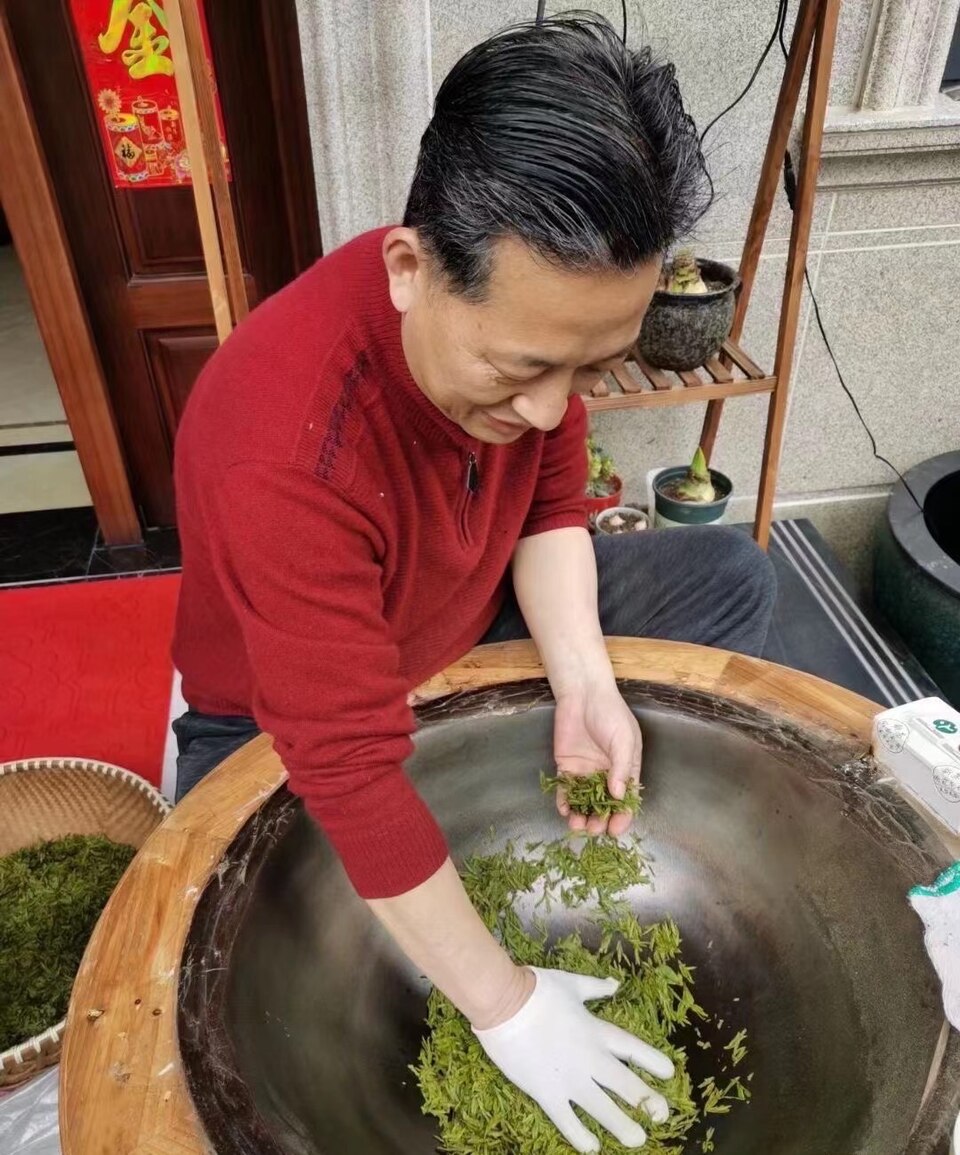
Many contemporary stories about pre-Qingming tea are strangely light. They emphasize tender buds, high prices, and the atmosphere of seasonal urgency, but skip over labor. Yet pre-Qingming tea is very much a labor history. The earlier the window, the shorter the possible harvest period, the stricter the tenderness standard, the denser the concentration of labor, and the higher the risk of failure. A sudden weather shift changes the bud state. Too few pickers slows the pace. A mistake in processing wastes the most precious early material first.
This was true in tribute periods, and it remained true in later famous-tea production. “Pre-Qingming” really means fighting for the finest and most acceptable batch of leaf inside a very narrow slice of time. It is not like summer or autumn tea, which often enjoys a broader raw-material window. Spring’s earliest tea compresses pressure into the front edge of the season.
That deserves to be seen again. Contemporary consumption culture often treats high value as if it were a natural gift. As if the tree itself simply produced a “pre-Qingming” identity. But early spring tea has never been nature alone. It is almost always the result of highly coordinated work between people, weather, timing, and craft. The earlier the tea, the more precise the labor.
8. Why do tea shops and e-commerce still repeat “pre-Qingming” constantly? Because it remains one of the most efficient and emotionally powerful value symbols in Chinese tea
If a historical label remains in constant use, it usually means it is extremely effective. “Pre-Qingming” is exactly that sort of label. It requires very little explanation and almost no tea scholarship on the buyer’s part. The moment people hear it, they think of early spring, tender buds, scarcity, freshness, higher price, and urgency. That semantic efficiency almost guarantees repeated use in modern sales contexts.
But it is not just an efficient signal. It is also an emotional signal. Many people buying pre-Qingming tea are not buying flavor alone. They are buying the feeling of getting to spring first, before others, before the line, before the season thickens. It functions almost like a seasonal race. Whoever drinks it first feels closer to “the year’s first spring.” Structurally, that emotion is not so distant from earlier systems in which tea also had to arrive first at a higher center.
So it is no surprise that pre-Qingming tea remains so strong. It compresses seasonality, scarcity, tenderness, speed, and status into a very small phrase. For markets, that is powerful. For consumers, it is easy to believe and easy to desire. In that sense, pre-Qingming tea is not only a product category. It is one of the most durable time brands in Chinese tea.
9. Looking back, what matters most is not whether pre-Qingming tea is expensive, but that Chinese tea learned very early to cut spring into ranks
If this essay must be reduced to one short conclusion, it would be this: the real importance of pre-Qingming tea does not lie in modern price premiums. It lies in showing that Chinese tea culture learned very early how to cut spring into ranks. Spring does not flow evenly, and tea value does not distribute itself evenly either. Through seasonal markers, tribute systems, urgent transport, selection, and later market language, the earliest slice of spring was separated out and made into the most desirable part of the season.
That matters far beyond the claim that younger buds taste better. It shows that Chinese tea was shaped not only by mountain origin and craft, but also by calendars and orders of time. Tea trees of course bud according to nature, but people divide that continuous process into named, comparable, price-bearing, and prestige-bearing segments. “Before Qingming” is one of the most successful and most enduring cuts ever made.
Once that is understood, the phrase “pre-Qingming,” now everywhere from shop posters to livestream scripts, stops looking like mere hype. It is certainly hype now—but hype built on a very long historical path. It is not an empty phrase. It is an old time order still speaking through the modern tea market.
Source references: based on basic factual outlines from the Baidu Baike entries on “Zisun tea” and the “Great Tang Tribute Tea Yard,” especially their material on Guzhu Zisun, the Tang tribute tea yard, urgent pre-Qingming presentation, and tribute growth in the Huichang era, and developed in dialogue with the site’s existing Guzhu Tribute Tea Yard feature. The emphasis here is on explaining how “before Qingming” became a time order in tea history rather than on line-by-line local textual verification.