How gongfu tea took shape in the Qing: from loose leaf, oolong, and small pots and cups to a full Chaozhou everyday system
Created: · Updated:
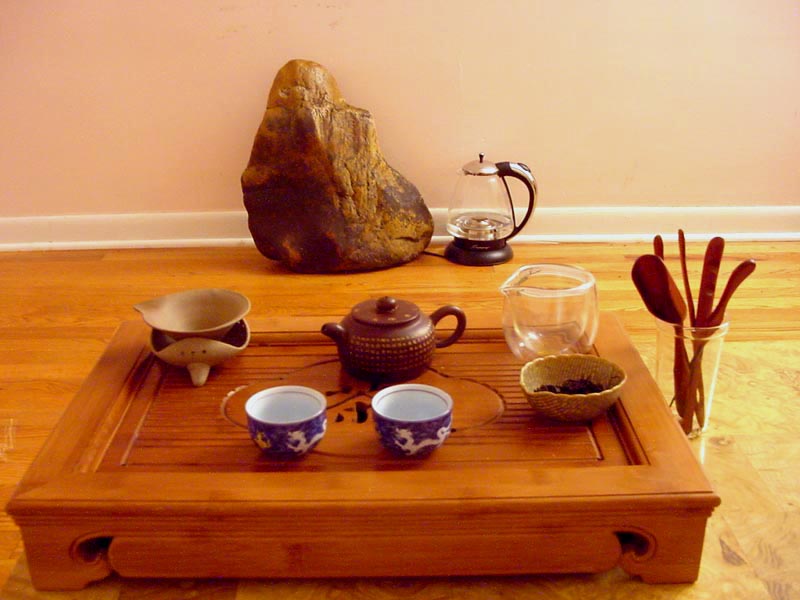
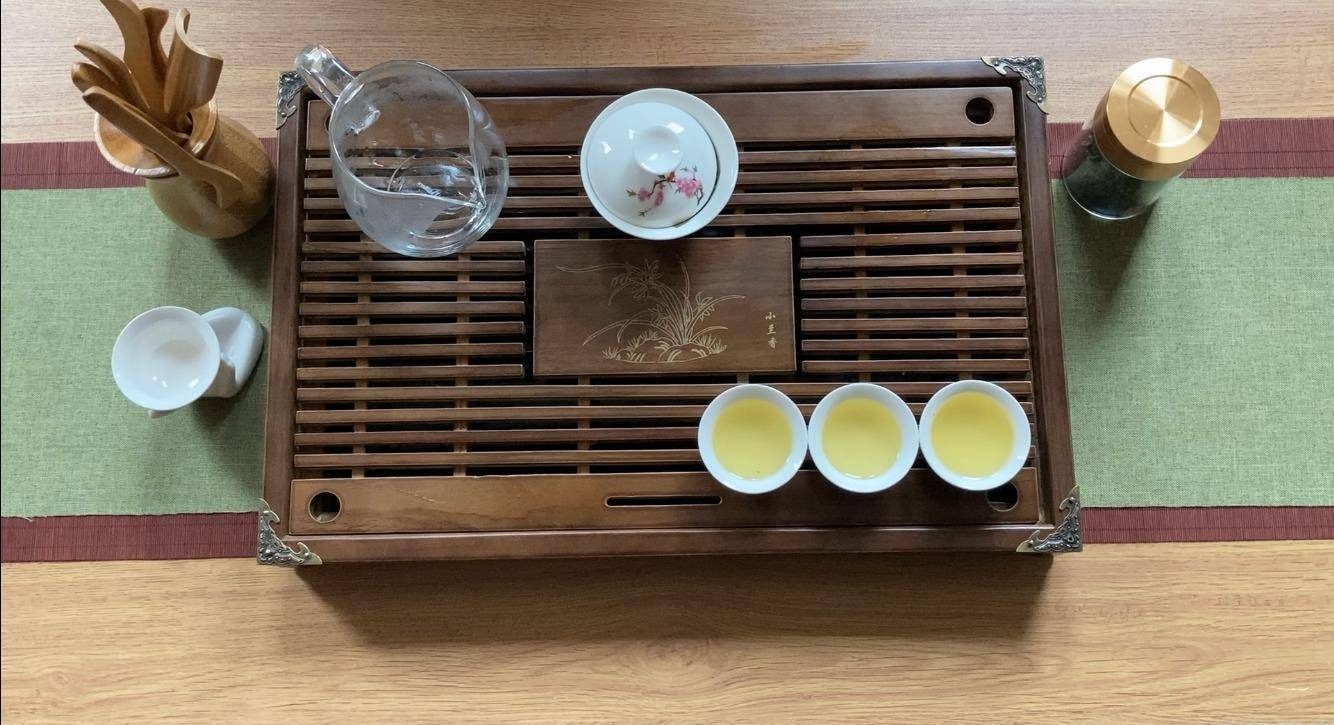
Today, when many people hear the phrase “gongfu tea,” they immediately picture a stable set of images: a small pot, tiny cups, hot water poured high, quick infusions, several people gathered around a table, and a tea rhythm that looks both exacting and fully domesticated. The problem is that this picture is too complete. It can make gongfu tea look as if it had always existed in this finished form, like a fixed object preserved from the past. It did not. Gongfu tea was not suddenly “invented” as a complete set of gestures. It took shape gradually after the rise of loose-leaf tea, through the maturation of oolong, the spread of small pots and cups, the growth of a finer tasting culture, and the long interaction between Chaozhou–Minnan–Lingnan coastal life and everyday tea drinking.
If gongfu tea is reduced to “a way of brewing tea more strongly and more carefully,” most of the historical question disappears. Why a small pot rather than a large one? Why tiny cups and close, repeated rounds rather than big bowls or one large serving? Why did gongfu tea become so deeply tied to oolong, especially the fragrant and durable teas of Fujian and Guangdong? Why did it look highly exacting while also becoming something that ordinary households in Chaozhou could practice every day? These questions show that gongfu tea is not one isolated trick. It is the result of tea type, vessels, pacing, sociability, and local culture locking together over time.
More importantly, gongfu tea represents one of the major turns in Chinese tea history. Tea moved from the Song system centered on whisked tea, foam, dark bowls, and surface aesthetics into a later system centered on loose-leaf steeping, aromatic layering, repeated pouring, and serial comparison. Gongfu tea is not a marginal folk custom. It is one of the densest local expressions of the mainstream tea structure that emerged after the Ming. To understand how gongfu tea formed is also to understand why Chinese tea moved from “making one bowl” to “brewing one pot,” and why later Chinese tea culture could become so rich in pot brewing, gaiwan brewing, multi-infusion comparison, and regional drinking traditions.
The most striking thing about gongfu tea is not one individual movement, but the stable relationship among small pot, tiny cups, hot water, the brewing zone, and the order of sharing. It looks like a “method,” but historically it became something closer to a mature everyday system.
1. Why should gongfu tea be written as a historical subject, not just a tea-art subject?
Because the phrase “gongfu tea” is now used far too loosely. Some people use it specifically for Chaozhou gongfu tea. Some use it for almost any careful small-vessel brewing. Some even label any tea video that looks “refined” as gongfu tea. That convenience flattens the history. The real questions are these: why did gongfu tea become recognizable, repeatable, and transmissible after the Qing? Why did it stabilize so strongly in Chaozhou? What exactly is its relationship to oolong, Yixing teapots, small porcelain cups, local etiquette, and the coastal trade networks of the southeast?
Once the question is framed this way, gongfu tea is no longer merely a performance topic. It becomes a proper tea-history topic. It belongs to the history of changing drinking forms, vessel history, local social history, and the shift in sensory judgment from “Is the foam white enough? Does the bowl surface look right?” to “Is the aroma lifted? Is the liquor full? Is the returning sweetness deep? Does the tea still hold after several rounds?” In other words, the formation of gongfu tea is itself one of the clearest historical outcomes of the transformation that carried Chinese tea from the Song-Yuan order into the Ming-Qing loose-leaf order.
It matters because it is both local and national in its implications. It is local because Chaozhou speech, Chaoshan everyday life, Fujian–Guangdong coastal tea routes, and local etiquette gave it its strongest historical form. It is national because many later Chinese assumptions about “careful tea brewing” — small pots, divided cups, quick pouring, repeated rounds, attention to aroma, and concern for endurance — can all be traced clearly through this system. Gongfu tea is not all of Chinese tea, but it shaped a great deal of how later Chinese tea came to be imagined.
2. What was the precondition of gongfu tea? Without the Ming loose-leaf revolution, there would be no later gongfu tea
To understand gongfu tea, the first step is not to look at a Chaozhou tea table but to return to an earlier historical precondition: the rise of loose-leaf tea as the mainstream form. This may sound familiar, but it is absolutely decisive. At the height of Song tea culture, tea life was built around compressed tea, powdered tea, whisking, foam, and bowl-surface aesthetics. By the Ming, as the tribute-cake system weakened and loose-leaf infusion became mainstream, the center of tea action changed. Tea no longer depended mainly on grinding, mixing, whisking, and judging surface foam. It depended more and more on the relation among leaf, water, vessel, and time.
The historical significance of this shift is that tea ceased to be something completed in one act and became something that could be read in stages during brewing. Loose-leaf tea made it possible to look at leaf shape, smell dry fragrance, watch leaves open, control water temperature, control infusion time, and compare changes across multiple rounds. It was naturally more compatible with pots, gaiwans, fairness pitchers, and repeated infusions. Without this loose-leaf foundation, gongfu tea would have had no room to grow. One of gongfu tea’s deepest attractions is exactly this: using a relatively high leaf ratio and relatively short infusion rhythm to let one tea gradually unfold over several rounds instead of finishing everything at once.
This is why gongfu tea, although often treated as a local Chaozhou practice, in fact stands on a much broader restructuring of Chinese tea after the Ming. It was not a lone anomaly suddenly emerging from Lingnan. It was one highly matured result of the loose-leaf era, pushed to special refinement within the fragrant, durable teas of Fujian and Guangdong and the everyday life built around them.
The real precondition of gongfu tea was not one famous pot, but the rise of loose-leaf brewing as the mainstream. Only when tea became something that could keep unfolding during brewing did the logic of small pots, tiny cups, and repeated rounds fully make sense.
3. Why did gongfu tea become so deeply tied to oolong tea?
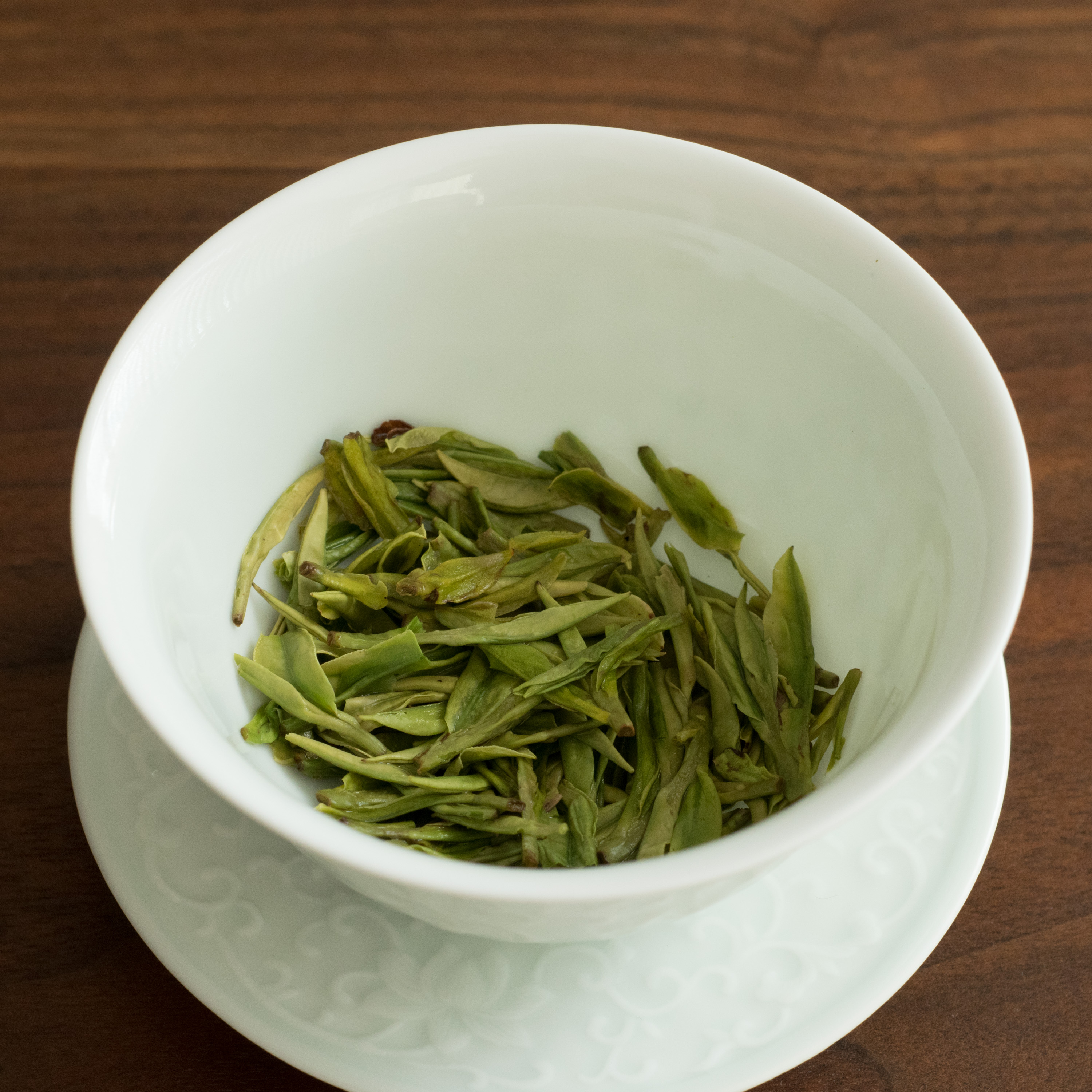
Because not every tea needs gongfu tea, but oolong is especially suited to it. This relationship is fundamental. Historically, the regions in which gongfu tea matured are also the regions in which Fujian–Guangdong oolong traditions matured, spread, differentiated, and were interpreted locally. Oolong is not like very tender green tea, which often depends on freshness and can be easily spoiled by heavy steeping. Nor is it like some coarse bulk teas valued mainly for endurance in boiling. Oolong’s great attraction lies in aromatic layers, changing liquor texture, extended returning sweetness, and readability across multiple infusions. Those qualities are naturally suited to high leaf ratios, short steeping, small brewing volume, and repeated comparison.
This is especially true in the Minnan, Wuyi, and Chaozhou oolong worlds. For these teas, long steeping in large vessels can flatten aroma and blur structure. A small pot or gaiwan with quick pours enlarges round-by-round change. Gongfu tea is therefore not simply “brewing stronger.” It is a whole reading method designed for a certain kind of tea. It turns oolong from “tea with fragrance” into tea that can be judged continuously for aroma, liquor, aftertaste, returning sweetness, and staying power across many rounds.
This also corrects a common misunderstanding: many people think gongfu tea is mainly about refined vessels and that the tea itself is secondary. In fact the opposite is closer to the truth. Gongfu tea is first of all a response to the structure of the tea leaf. The vessels became smaller, the rhythm became denser, and sharing became finer largely because these choices allowed this kind of tea to show itself more completely. It was not that an empty ritual appeared first and tea was later poured into it. A kind of tea especially suited to fine-grained reading gradually forced out the matching system of vessels and movements.
4. Why were the small pot and tiny cups so important? This was not mere refinement, but a redefinition of the unit of drinking
The most visible material feature of gongfu tea is the small pot and tiny cups. Modern readers often react by saying it simply looks more refined, more meticulous, or more ceremonial. That is not entirely wrong, but it is still superficial. The real historical significance of the small pot and tiny cups is that they redefined the basic unit of tea drinking. The logic of large pots and large bowls is closer to thirst-quenching, hospitality through volume, sharing, and capacity. The logic of the small pot and tiny cups is to divide one brewing into many short, dense, comparable tasting units.
A small pot means a higher density of leaf, stronger control over timing, and a shorter path from infusion to cup. Tiny cups mean the drinker no longer meets tea with large gulps, but concentrates attention into one small mouthful: where does the aroma arrive first, how full is the liquor, what lingers in the throat, how does the second cup differ from the first? In other words, the small pot and tiny cups did not merely change the size of vessels. They changed the way the body uses tea. Tea ceased to be something merely “drunk down” and became something judged in segments.
This shift is deeper than it looks. It turned tea from a large-scale, coarse-grained form of satisfaction into a small-scale, high-density training of perception. Gongfu tea was never only “small and pretty.” Its smallness enlarged variation, shortened movements, increased the frequency of comparison, and stretched one brewing into a continuous sequence with rhythm. The change in vessel size was really a change in sensory scale and time scale.
The small pot and tiny cups are not just miniature aesthetics. What they really change is the unit of drinking: one pot is no longer completed all at once, but broken into many short, dense, comparable sensory fragments.
5. Why did Chaozhou become the most stable historical setting of gongfu tea?
It is impossible to discuss gongfu tea without Chaozhou. This does not mean only Chaozhou people drank tea in this way. It means Chaozhou preserved, domesticated, and stabilized the system with unusual force. Elsewhere gongfu tea could appear as a refined gathering style, a regional habit, or a brewing adaptation for certain teas. In Chaozhou it became closer to a basic grammar of everyday life. It could appear in hospitality, business conversations, family sitting, gaps between meals, and ordinary neighborhood time, as well as in more formal ritual settings. Precisely because it was not just an occasional “performance,” but something repeated at high frequency in daily life, it became especially solid there.
Chaozhou matters because several conditions met there at once. First, it stood for a long time at the intersection of Fujian–Guangdong coastal tea circulation, commerce, and regional cultural exchange, which made it unusually receptive to both oolong and the vessel systems associated with it. Second, its local rhythm of life and social structure suited a dense, small-round form of drinking that could accompany conversation. Third, the local meaning of “gongfu” itself carried ideas of care, effort, measure, order, and fine handling. This meant gongfu tea was not only a technique but also a value judgment: whether tea was brewed well was also a question of whether the host showed measure, composure, and attentiveness.
Even more importantly, Chaozhou did not lock gongfu tea inside a tiny elite circle. It was exacting, but ordinary; detailed, but domestic. It could reach vessels, water, rhythm, and guest order at a very fine level, yet still remain part of everyday homes and neighborhood life. This is crucial. Traditions that survive only as elegant gatherings or staged performances often become fragile. Gongfu tea endured because it entered daily repetition.
6. Why is gongfu tea not merely “tea art”? In essence it is a set of social movements
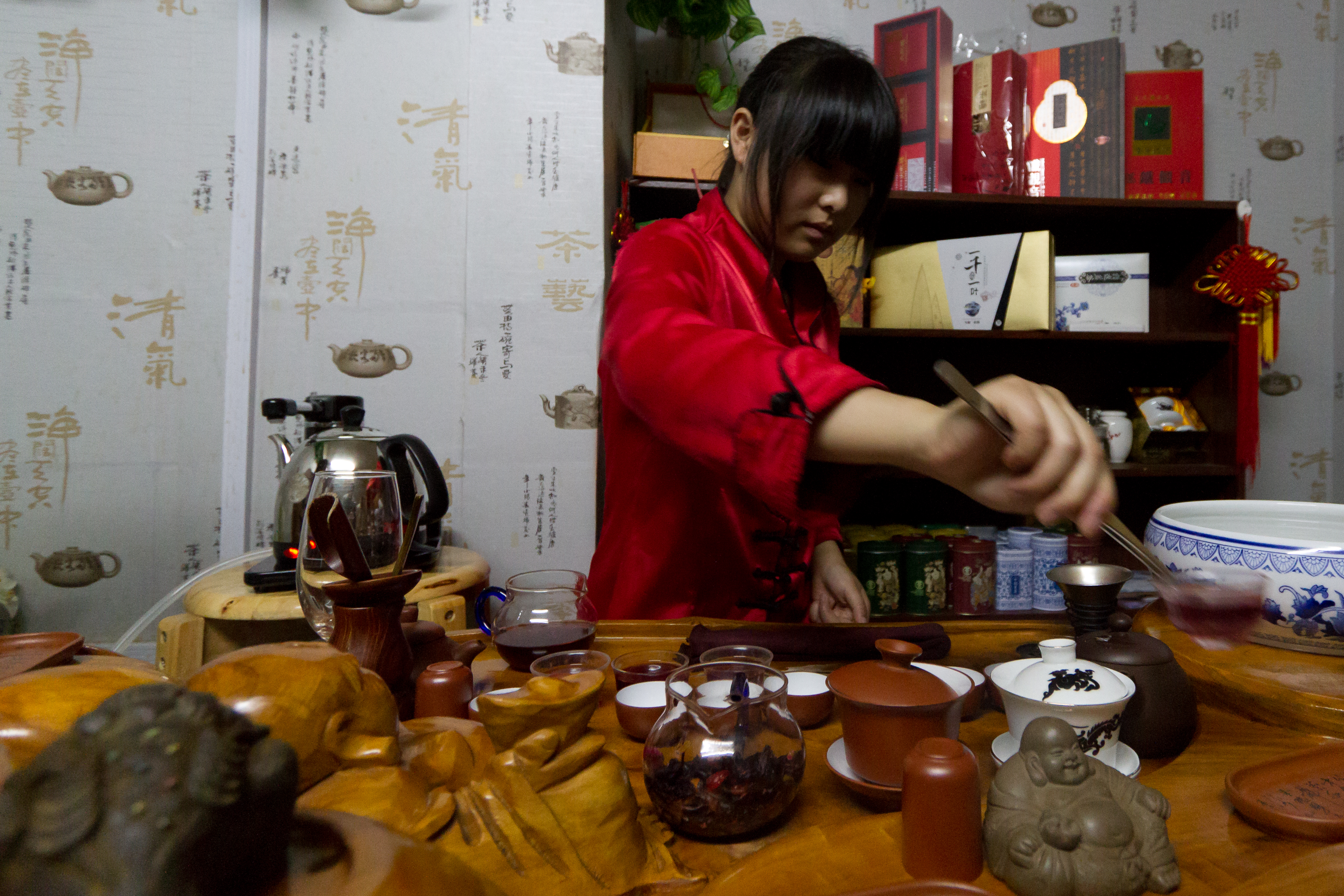
Today many people encounter gongfu tea through short videos, classes, tourism displays, and staged demonstrations. That makes it easy to reduce it to a standard procedure: warm the pot, add tea, pour high, skim foam, rinse, divide into cups. But if we see only the procedure, we miss something essential. Gongfu tea is, at bottom, a set of social movements. It serves shared drinking, waiting, turn-taking, pacing, and order among people.
How the main brewer holds rhythm, how guests receive cups, how water is renewed between rounds, how conversation continues through the pauses, even who receives tea first and how full the cup should be — these are not isolated technical matters. They are part of social order. This is one reason gongfu tea sits so naturally inside Chaozhou everyday life. It does not insert a “tea-art performance” into life. It lets life itself carry a stable tea order.
People drink while talking, observing one another, and maintaining a balance between courtesy and ease through repeated movements. The historical vitality of gongfu tea comes exactly from this structure: it is neither casual, formless brewing nor a wholly solemn ceremony. It occupies a deeply socialized middle zone. That is also why it is difficult to translate simply as “tea ceremony.” It certainly has refinement, aesthetic judgment, and procedure, but ceremony is not always its highest goal. Many times it functions more as an everyday technique for making relationships move smoothly through time.
7. Why was the Qing the key period in which gongfu tea was truly seen, named, and recorded?
If we return to historical description and local records, gongfu tea is usually discussed in a Qing context because by then it had become stable enough not merely to exist in scattered practice, but to be named, written about, and recognized as a distinctive system. In other words, the Qing does not necessarily mark the instant in which gongfu tea was suddenly born. It marks the stage at which the practice had become sufficiently formed: the tea types were more mature, the vessels better matched, local social life more fixed around it, and outside observers more able to recognize that this was a tea system distinct from ordinary large-pot drinking.
This point matters. Many historical systems do not appear overnight. They first exist as practices, then at some stage language and writing stabilize them. Gongfu tea seems to be one of those cases. After the Qing, it became easier for people to see it as a coherent object because the crucial pieces had assembled: loose-leaf dominance, maturing oolong, widespread use of small pots and tiny cups, and local social routinization. It was no longer just “some people drink tea this way,” but “people here drink tea in this ordered way.”
That is why “gongfu tea taking shape in the Qing” should be understood as a historical maturation stage rather than a single invention moment. It is more like a plant bearing fruit than a machine leaving a factory. Long before the fruit is visible, there has already been growth, fitting, elimination, local adaptation, and the fixing of habit. By the Qing, the branches, blossoms, and structure had simply become clear enough to describe.
What “taking shape in the Qing” really means is not that gongfu tea was invented in one year, but that by then it had become stable enough to be clearly recognized and described as a system.
8. Compared with the earlier world of whisked tea, where does gongfu tea differ most?
This question deserves a careful answer because it places gongfu tea back into the longer history of Chinese tea. Compared with Song whisked tea, gongfu tea represents an entirely different set of central concerns. The whisked-tea world cared about powdered tea, whipping, foam, bowl color, and surface aesthetics. The gongfu world cared about leaf tea, steeping, aroma, infusion rhythm, tiny-cup sipping, and repeated comparison across rounds. The former unfolded around the finished quality of one bowl. The latter unfolds around the process of one pot.
This is not a simple question of which system is “more advanced.” It is a shift in the sensory center. Whisked tea emphasized surface and instantaneous completion. Gongfu tea emphasizes layers and continuous unfolding. Whisked tea made the bowl — especially the dark bowl — the visual center. Gongfu tea made the small pot, tiny cups, shared division, and brewing order the new center. Whisked tea depended heavily on the technical chain of powdered tea. Gongfu tea depended heavily on the technical chain of loose leaf and infusion. Both were exacting, but the exactingness moved to a different place.
Once we see this clearly, it becomes impossible to describe gongfu tea as merely “a local version of old tea brewing.” It actually represents one of the structural turns completed in Chinese tea after the Ming and Qing transition. It is not the shadow of an older system. It is a highly crystallized form of a newer one.
9. Why do so many people today misread gongfu tea as an eternal and unchanging tradition?
Because what we usually see today is already the relatively stable version left behind after long historical selection. Its vessels, movements, terminology, and visual form all look so mature that they produce an illusion: as if it had always been exactly like this. Modern cultural communication also likes to package tradition as something complete, orthodox, and unchanged. Gongfu tea is therefore especially easy to narrate as a ready-made ancient script that simply needs to be repeated.
But the actual history was more complex. Gongfu tea itself went through internal variation. Different regions understood it differently; the principal brewing vessel was not always identical; there were overlaps with teas beyond oolong; and there were always differences between more everyday and more highly elaborated versions. What we now call “standard gongfu tea” is in large part a stabilized image shaped jointly by long local practice, modern tea-art organization, tourism display, visual media, and mass education.
This does not mean today’s gongfu tea is fake. It means we should understand it more clearly. It does have deep historical roots, but the way it is seen today has also been reassembled in modern times. The best attitude is not to mythologize it as an unchanging ancient template, but to recognize it as a living system: one that took shape gradually in history and continues to be reinterpreted in the present.
10. What value does gongfu tea have for understanding Chinese tea history as a whole?
If I had to give one short answer, I would say this: gongfu tea lets us see that what matters in Chinese tea history is not only the evolution of tea plants and tea categories, but also how people organize the time of a cup of tea. Gongfu tea matters not just because it is brewed carefully, but because it concentrates the key abilities of the loose-leaf era — dense leaf use, short pours, repeated comparison, aromatic layering, tiny-cup sipping, an order of shared drinking, local sociability, and vessel matching — onto one table.
It also reminds us that the “tradition” of Chinese tea has never had only one form. Chinese tea could have the Song summit centered on foam and bowl aesthetics; it could also have the Ming-Qing gongfu system centered on leaf tea, infusion, and serial tasting; and from there it could continue into later gaiwan brewing, pot brewing, tea evaluation, urban tea tables, and even modern tea-drink entry points. Gongfu tea is not the whole story, but it is one crucial link for understanding this chain of continuous transformation.
That is why the part of gongfu tea that deserves the most respect is not simply that it looks “traditional.” It is that it tells us clearly that tradition is not a frozen library of gestures. It is an order formed over time through the interaction of tea, vessels, local life, and sensory judgment. When gongfu tea took shape in the Qing, what truly took shape was not a set of pretty movements, but a whole way of life capable of bringing layered tea out, repeatedly and steadily.
Source references: Wikipedia: Gongfu tea, Wikipedia: Yixing teapot, together with this site’s existing articles on the Ming loose-leaf turn, oolong, Fenghuang Dancong, and the vessel system around gongfu tea.