Why Low-Caffeine Tea Drinks Are Becoming a Standalone Narrative: From “You Can Still Have One at Night” to the Reorganization of Light-Stimulation Tea in 2026
Created: · Updated:
If I had to pick one of the most important but still under-explained changes inside 2026 tea drinks, I would pick low-caffeine tea drinks. This does not mean strictly decaffeinated products in the medical or labeling sense, and it does not mean every brand is already publishing caffeine numbers on the menu. What it does mean is that more and more tea drinks are trying to prove that they feel less aggressive, easier to drink later in the day, friendlier to repeat purchase, milder than coffee, and less like hard stimulation tools. In other words, brands are beginning to turn “lighter stimulation” into a full product logic that can be read, repeated, and fitted into a daily schedule.
This matters not because Chinese tea drinks suddenly no longer need to help people stay alert, but because consumers now place two desires inside the same cup at once: they still want some state, but they do not want that state to feel too costly. They want a little clarity during the workday without feeling overly pushed. They want something for the evening without making the whole night feel heavier. They want a second or third cup that does not feel like too much. Low-caffeine tea drinks are rising because they answer this more contradictory and more realistic everyday demand.
This shift also connects naturally to several themes already running through the site. Night-oriented tea asks what people can still drink at night. Office survival tea asks what can be bought at high frequency during a workday. Tea-base identity asks what tea is actually in the cup and why it matters. Low-caffeine tea drinks sit right where these lines intersect. They still need to feel like tea, but gentler than many consumers expect tea to feel. They still need to preserve a little alertness, but without turning themselves into an endless daytime extension.
The key to low-caffeine tea drinks is not pretending a cup has no effect at all. It is making a drink feel tea-centered and slightly supportive without pushing the consumer back into hard-stimulation mode.
low-caffeine tea drinkslight stimulationnight-oriented teaoffice repeat purchasereal tea base
1. Why does low-caffeine tea become believable now?
Because drinks have entered a phase of stimulation management. Earlier discussions focused more on lower sugar, light milk, real tea bases, hydration feel, floral notes, or stronger tea identity. Those threads are still important, but together they have pushed consumers toward the same deeper question: what kind of state will this cup leave me in? Will it feel too heavy? Too sharp? Too stimulating for the evening? Good in the morning but wrong at night? Fine as a first cup but too much as a second?
Once those questions become frequent, brands can no longer rely only on broad words like “refreshing,” “real tea,” or “energizing.” They need more precise ways to describe the relationship between a drink and the consumer’s daily rhythm. That is why more products now get written as lighter, softer, easier at night, less aggressive, or more suitable for one extra cup. Not all of those descriptions literally say “low caffeine,” but together they point toward the same thing: a lower-stimulation narrative that lowers the psychological barrier to more time slots and more repeat purchase.
This is similar to what happened in coffee with half-caf, softer milk builds, and “night-friendly” language, but tea has a different grammar. Tea already carries a traditional cultural assumption of being gentler than coffee, so brands do not have to make the argument in such a hard, functional way. They can build low-caffeine feeling through floral notes, lighter dairy structures, cleaner tea visuals, white-tea or light-oolong cues, calmer naming, and softer store atmosphere. In tea, low-caffeine is often sold as a life-fit rather than only as a number.
2. Here, “low caffeine” is not strict decaf. It is a readable consumer narrative.
This point matters. In many current tea-drink cases, “low caffeine,” “light stimulation,” or “night-friendly” does not yet mean a unified, public, and highly comparable caffeine labeling system. More often, it means a consumer-facing reading: compared with drinks that people associate with being too sharp, too tense, or too disruptive late in the day, this cup appears softer, smoother, and more compatible with a wider range of hours.
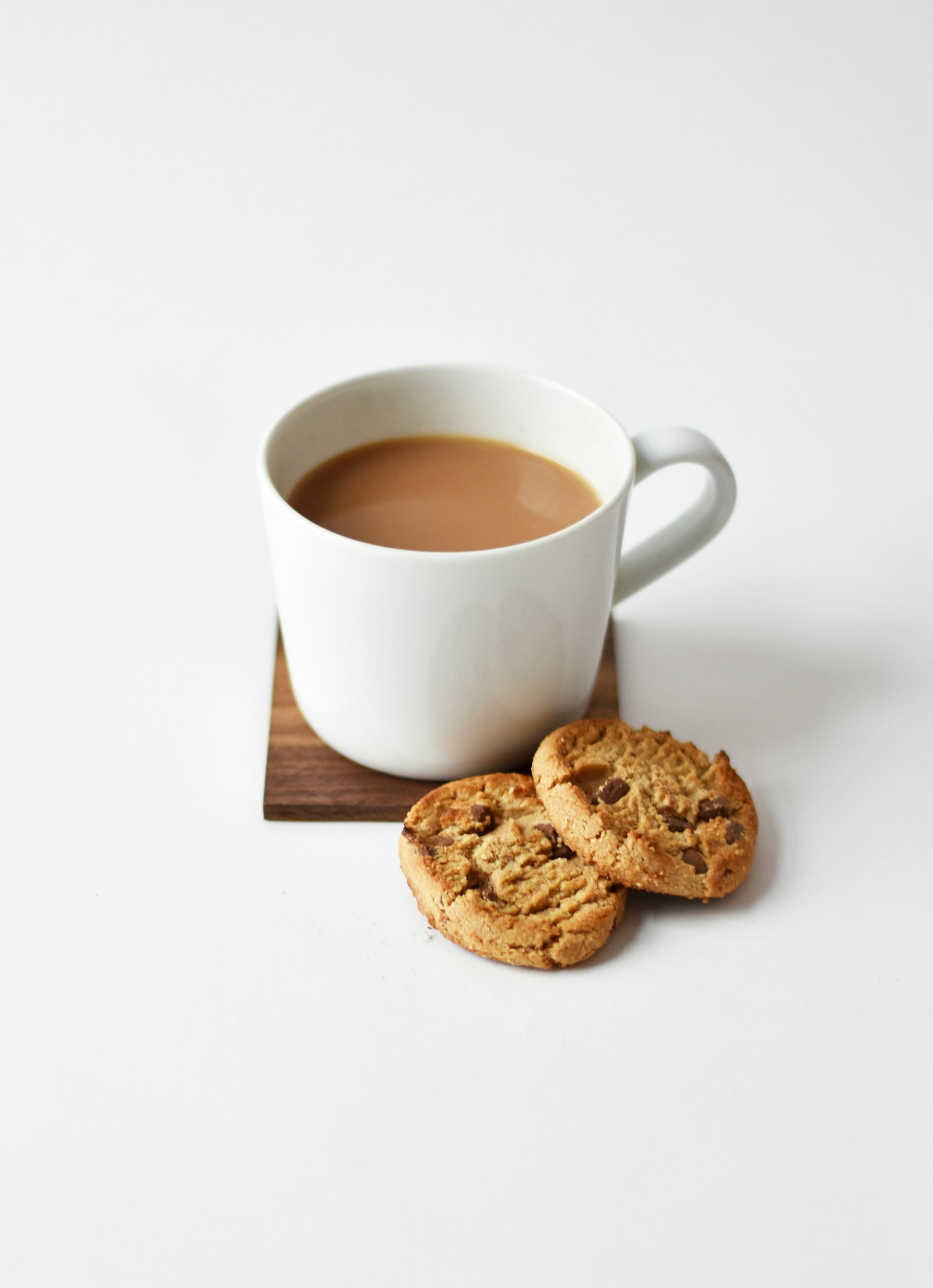
That is not a trivial distinction. Most consumers do not walk around comparing exact caffeine values between a light milk oolong, a jasmine tea, and an Americano. What brands are really competing for is not just lab precision, but the first mental category a drink enters. If a cup looks lighter, reads softer, and tastes less like a hard stimulation tool, it becomes much easier to place inside decisions like “I can still drink this tonight,” “I already had one today, but this one is probably okay,” or “I want another cup without going too far.”
Of course, this also creates a boundary. A low-caffeine narrative can help consumers read a drink, but it cannot replace real physical response. Tea type, extraction style, cup size, and individual tolerance all still matter. So the most accurate way to understand low-caffeine tea drinks is not as universal safety promises, but as a deliberately packaged low-stimulation consumption band. What they sell first is plausibility.
Very often, the consumer reads the feeling before they read any number. Low-caffeine tea begins as a designed sense of “this cup does not look too pushy.”
3. Why is it so naturally tied to night-oriented tea?
Because nighttime consumption is exactly where people become most cautious about going too far. In our feature on night-oriented tea drinks, the key point was that the evening cup follows a logic completely different from the daytime cup. Daytime can tolerate brighter, louder, more stimulating choices. Night needs something that does not feel too heavy, too loud, or too activating. Low-caffeine tea gives that night-oriented narrative a more concrete product skeleton. It does not just say the drink is gentle. It makes gentleness in stimulation terms feel like part of the point.
That is why many drinks suited to the evening are not built as extra-thick, extra-heavy, or dessert-like cups. They lean clearer, floral, lighter in milk, or softer in tea style. If night-oriented tea has no lower-stimulation support, it easily becomes only atmosphere. If low-caffeine tea has no nighttime scenario, it can remain vague. Together, they help the consumer understand that this is not just a drink that happens to be softer. It is a drink for which softness matters more because of when it is being consumed.
Night also amplifies self-awareness. During the day, many people are willing to push harder. At night, consumers ask more seriously whether a cup is worth it, whether it will affect them later, and whether tomorrow will feel different because of it. That makes low-caffeine logic more effective in the evening than in the middle of the workday. It does not have to become the biggest headline on the menu. It only needs to become part of naming, recommendation, and repeat-purchase memory.
4. Why does it also feel closely tied to office tea logic?
Because office repeat purchase is also about managing stimulation thresholds. In our piece on office survival tea drinks, the central question was not only what makes a drink enjoyable, but what makes it usable again and again inside a workweek. If every cup is too sharp, it becomes hard to repeat. If every cup is too flat, it loses presence. Low-caffeine tea fills the space between those two failures. It offers a little support without feeling medicinal and a little tea character without making consumers hesitant about the next cup.
That makes low-caffeine tea especially easy to write as a second workday cup, something still manageable in the back half of the afternoon, or a drink that does not feel too aggressive if the evening still has commitments left in it. What is being sold here is not pure function but schedule compatibility. A drink with higher compatibility can enter daily life more deeply than a drink that is only stronger.
So low-caffeine tea is not really trying to defeat all high-stimulation drinks. It is trying to win the many moments when consumers think: I do want something, but I do not want every cup to feel this intense.
In office scenarios, the value of low-caffeine tea is not that it does nothing. It is that it becomes easier to repeat, easier to trust, and easier to fit into a timetable.
5. What kinds of products are easiest to read as low-caffeine tea drinks?
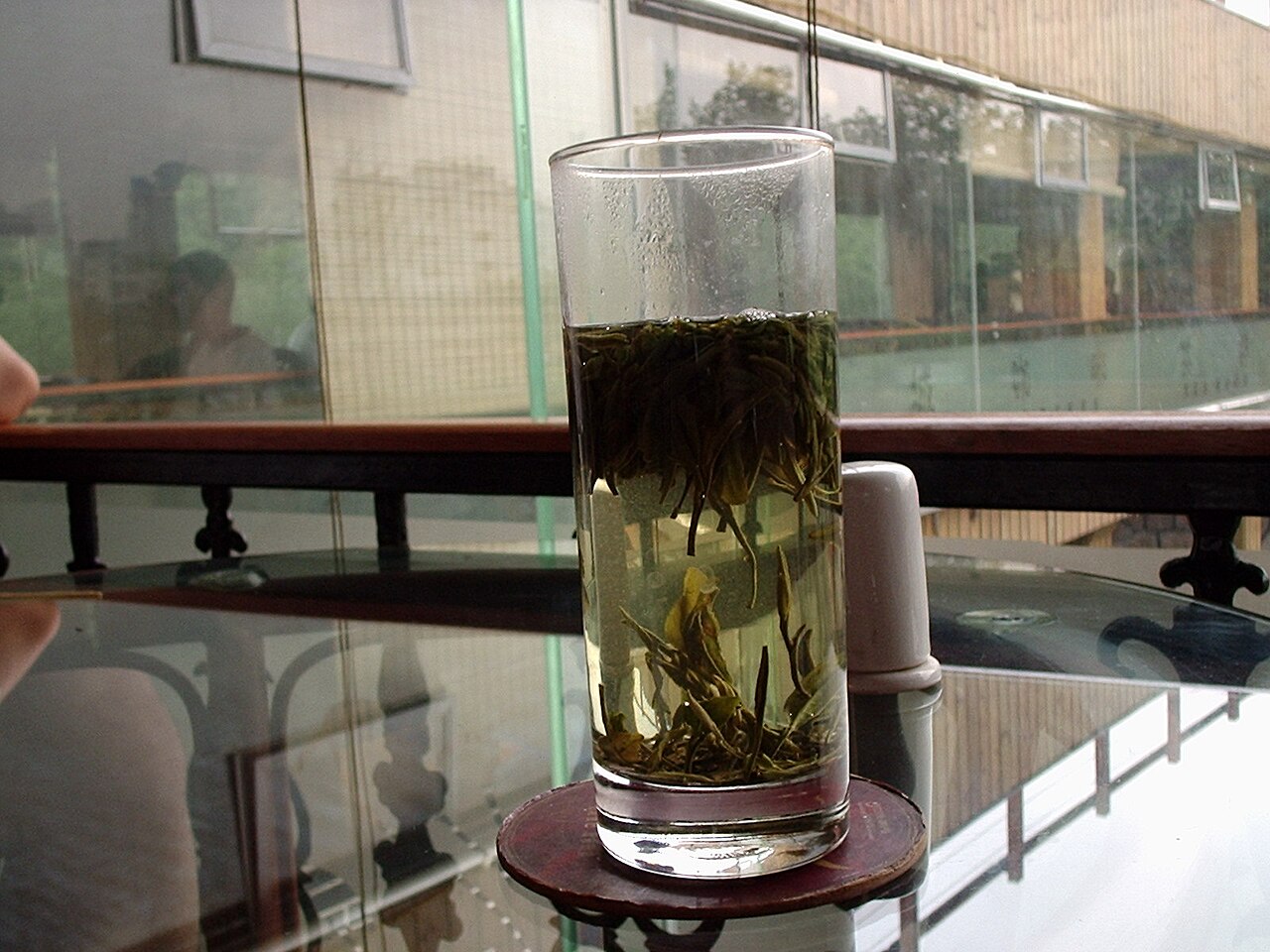
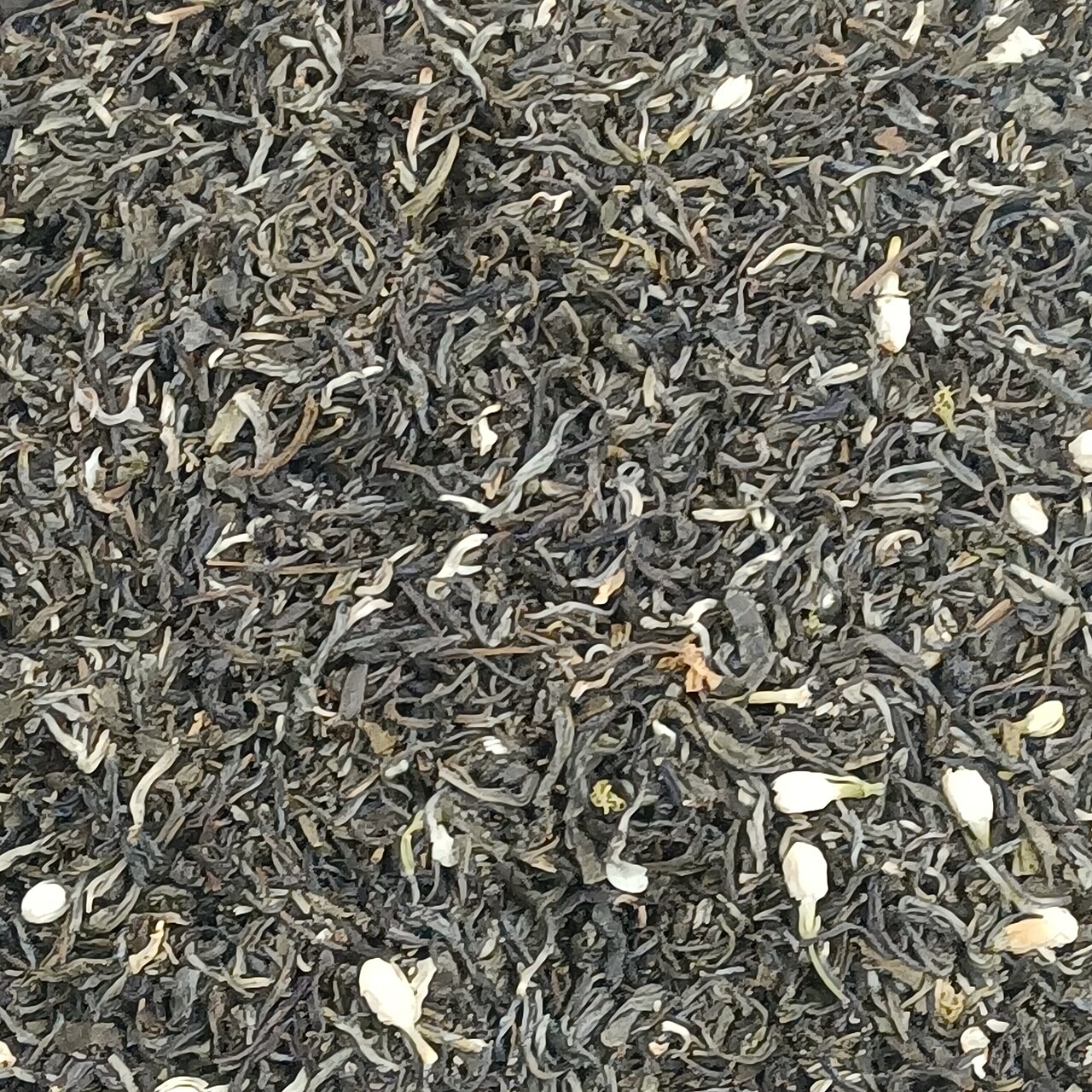
First, floral clear teas and lighter oolongs. Jasmine, magnolia, gardenia, lightly roasted or cleaner-style oolongs are easier to read as lighter and less pressuring. That does not automatically mean their actual caffeine level is always low, but in consumer language they enter the lower-stimulation band more easily than darker, heavier, or thick-milk builds.
Second, light-milk structures rather than heavy-milk structures. One reason light milk tea remains so strong in 2026 is that it occupies a naturally useful middle position: softer than plain tea, but not as weighty as thicker milk-heavy drinks. For consumers who still want some tea feeling but do not want the body and mind cost to feel too high, light milk often gets permission more easily than either plain tea or a richer milk tea.
Third, naming and copy built around the logic of “one more cup without too much consequence.” That may appear in language such as lighter, gentler, easier later in the day, mildly waking rather than intensely waking, smooth enough after work, or still okay at night. The key is not any single phrase. It is the fact that more products are now being organized around second-cup logic, late-hour compatibility, and repeatable use. Once that becomes systematic, low-caffeine tea stops being just a vague feeling and starts becoming a real narrative lane.
Floral notes, light milk, transparency, and smoothness do not automatically equal low caffeine, but they often form the reading path through which consumers understand low-caffeine tea drinks.
6. Why does this trend still depend on tea-base identity?
Because low-caffeine narrative becomes weak very quickly if it floats free of the tea base. A brand can keep saying a drink is gentle or low-burden, but consumers eventually ask: what tea is it, then? Why does it feel this way? Is it actually built on a tea base more suited to this time of day, or is the copy simply softer? That is why low-caffeine tea is not the opposite of tea-base identity. It often depends on tea-base identity becoming clearer. Once consumers understand that a cup is jasmine, white tea, cleaner oolong, or a softer floral tea base, the claim that it feels lighter, gentler, or more evening-friendly has a more believable foundation.
That is also why I do not think low-caffeine tea will dilute the real-tea trend. If anything, it pushes brands to take the relationship between tea base and time slot more seriously. In the past, a brand may only have needed to prove that it contained tea. Now it increasingly needs to prove that it knows what tea it is using, what time of day it fits, and why it feels more appropriate than another tea at that moment. Low-caffeine is not de-tea-ification. It is more finely timed tea usage.
From that angle, low-caffeine tea reveals a change deeper than flavor. Modern tea drinks are moving from product categories toward time categories. Consumers are no longer only choosing milk tea, fruit tea, or clear tea. They are increasingly choosing morning tea, second-cup tea, or tea that still feels acceptable later at night. Once that happens, the tea base can no longer stay a background element.
For low-caffeine tea to feel credible, the tea-base identity often has to become clearer. Floral, cleaner, and softer-reading tea bases fit more easily into “later is still okay” consumption frames.
7. What is the main limit of this trend?
First, low-caffeine reading does not mean universal suitability. A brand can make a drink feel softer and write about it more gently, but people still react differently to stimulation. It is reasonable to understand low-caffeine tea as a softer consumption band. It is not reasonable to treat it as a one-size-fits-all nighttime guarantee.
Second, the narrative is highly vulnerable to copy convergence. Once every brand starts writing lighter, softer, later-friendly, floral, light milk, and transparent, the real test becomes very basic: does the drink actually feel less stressful, or is it merely described that way? Does it still feel empty, flat, or more stimulating than promised? Would the consumer actually want it again?
Third, if low-caffeine tea becomes nothing but “low,” it becomes boring. Consumers are not buying tea drinks in order to feel nothing. They want a feeling that suits them better, not the disappearance of feeling altogether. The versions that truly survive are usually the ones that still preserve floral appeal, tea character, light milk texture, cleanness, aftertaste, and emotional value while lowering the perceived stimulation cost.
8. Why does this deserve a place in the continuing 2026 drinks storyline?
Because it is not the story of one isolated product. It is evidence that the daily rhythm of tea-drink consumption is being sliced more finely again. The previous round brought light milk tea’s return, fruit tea’s rewriting, sparkling tea’s comeback, tea-base identity, ingredient transparency, office survival logic, and night-oriented tea. Low-caffeine tea feels like a tightening of all of those threads at once. Once consumers want both companionship and flavor and a little alertness, but also want to manage stimulation more consciously, brands need a way to keep selling tea across more parts of the day.
One answer is low-caffeine tea. It will not replace every high-stimulation drink, and it will not turn tea into a purely rational utility category. What it does offer is a very practical middle band for modern city life: you do not want to drink too hard, but you do not want to drink nothing; you want a little tea feeling, but you do not want the cost of that cup to feel too high; you want tea to fit into the workday, early evening, after dinner, a second cup, even a third cup. In that sense, low-caffeine is moving from a vague feeling to a product grammar that brands can operate deliberately.
That is exactly why it is worth continued tracking. For the 2026 drinks section, low-caffeine tea is not a minor patch. It is a new way of managing time and stimulation through tea. Brands are no longer competing only over who tastes better, who goes viral, or who photographs best. They are competing over who can manage a consumer’s daily stimulation budget more intelligently. That goes deeper than it first appears, and it is likely to last longer too.