Why Tea Drinks Are Starting to Seriously Build the “Gentler-on-the-Stomach Cup”: From the Return of Hot Drinks and Post-Meal Logic to 2026’s Rewrite of Warm, Low-Stimulation Tea
Created: · Updated:
If the past two years of tea drinks have already broken down “the breakfast cup,” “the second cup,” “office supply tea,” “the lower-caffeine cup,” and “the post-meal cup” into increasingly fine categories, then another entrance worth pulling out on its own in 2026 is the “gentler-on-the-stomach cup.” This does not mean a medically defined stomach-care program, and it does not mean anyone can solve all digestive issues with one made-to-order tea. What it does mean is a more mature consumer language: not too cold, not too sharp, not too sour, not too heavy, not too greasy, not too burdensome, and ideally carrying some warmth, smoothness, and the feeling that “this is the steadier way to drink today.” Brands are increasingly trying to answer a very practical question: when consumers still want tea drinks, but no longer want to push their bodies further toward excess coldness, sweetness, acidity, or stimulation, what kind of cup is most easily understood as the gentler option?
This is worth writing about not because Chinese consumers only began caring about “the stomach” in 2026, but because tea drinks are now writing these everyday bodily feelings into menu logic more systematically. Brands have long talked about hot drinks, less ice, lower sugar, real tea bases, light milk, and smoothness, but those terms often served mainly to explain formulas. Now brands increasingly want to organize a fuller translation of state: I do not want something too cold today; I just ate and want something smoother; I still want a cup in my hand, but my appetite is fragile; I already had coffee this afternoon and want something softer tonight; I do not want another drink that shoves me upward too hard. In that sense, the “gentler-on-the-stomach cup” is moving from a loose everyday phrase toward a narrative line supported by product design, menu language, and repeat purchase.
That is also why this works so well as a high-frequency scenario. It is not as dramatic as a “reward yourself” drink, and it does not need the hard proof demanded by truly functional beverages. It sits in a very stable middle band. The consumer is not indulging, but neither are they assigning themselves a wellness task. They simply want an option less likely to go wrong today. For tea shops, this is valuable because the need is both ordinary and frequent: after breakfast, after lunch, during a tired afternoon, before overtime, after overtime, when the weather turns cooler, after several days of outside food, or after the previous drink already felt too aggressive. What it sells is not strong effect, but low-risk comfort.
What the “gentler-on-the-stomach cup” is really competing for is not the strongest stimulation or the biggest reward, but the sense of steadiness that consumers are most willing to choose again and again during ordinary workdays.
gentler on the stomachhot drinks returnpost-meal friendlywarm low-stimulation tealight milk tea
What this article is looking at
Core question: why tea brands in 2026 are seriously building the “gentler-on-the-stomach cup”
Key signals: the return of hot drinks, post-meal tea, light-milk structures, low-caffeine reading, less ice and warm serving, lower sugar and lower stimulation, and high-frequency workday repeat purchase
Best for: readers who want to understand why modern tea drinks are increasingly organized through bodily burden management, time slots, and self-care language rather than only through static categories like fruit, milk, and tea base
1. Why is the “gentler-on-the-stomach cup” becoming visible on its own, instead of remaining just “something hot” or “something with less ice”?
Because “gentler on the stomach” works like a fuller life action than “hot.” “Hot” only describes temperature. “Less ice” only describes an adjustment. “Gentler on the stomach” answers a linked bundle of concerns: I do not want something too cold right now, too sharp, too sour, too sweet, too forceful, or too heavy in my stomach and mouth. I do not only want a warmer drink. I want a drink that feels more compatible with my condition today. Once brands realized consumers were willing to pay for that language, they stopped leaving all warm options inside a generic “hot available” bucket. Instead, they began splitting them more finely: which drinks suit post-meal moments, which work later in the day, which feel better after several days of cold drinks, and which function as the low-risk default cup for today.
In that sense, the “gentler-on-the-stomach cup” is not a casual phrase. It describes a real consumption terrain. It covers light workday replenishment, but also softer evening entry points; it can connect to post-meal comfort, to cooler weather, to bodily fatigue, to a run of outside meals, and to the desire not to be over-stimulated twice in a row. Consumers may not formally say, “I want a stomach-friendly made-to-order tea,” but they very naturally say other things that mean nearly the same thing: not too cold today, not too sour today, something warmer today, I just ate and want something smoother, my stomach feels a bit empty and I do not want anything too aggressive. Those vague but high-frequency phrases are exactly what brands now want to translate into products.
So this cup is not selling warmth alone, or softness alone. It is selling a low-threshold posture of self-care. It allows consumers to make a choice that feels steadier, more contained, and more in tune with the body they have right now, without entering a complicated wellness system.
2. What this really sells is not a medical conclusion, but a correction toward warmth, smoothness, steadiness, and lower stimulation
This is the key point. Many drinks can talk about warmth, but not all of them can credibly talk about being gentler on the stomach. Consumers read certain warm tea drinks, light milk teas, and softer floral tea bases as more self-caring not because they have calculated ingredients one by one, but because these products carry a strong everyday association system: a bit warmer, a bit smoother, less harsh on an emptier stomach, not too icy, not too sweet, and not leaving the body feeling blocked. Once those associations take hold, a drink shifts from “reward consumption” toward “state-management consumption.”
State-management drinks usually share several traits. First, the opening sip has to feel soft. The drink should not feel aggressive at first and only become tiring later. Second, the structure cannot be too heavy. Once milkiness, creaminess, fruit pulp density, or ice sensation becomes too dominant, consumers stop reading the drink as a light-burden choice for this kind of moment. Third, the finish cannot drag. A cup suited to the “gentler-on-the-stomach” scenario needs a cleaner finish rather than leaving behind stickiness, sweetness, heaviness, or blockage. Fourth, the drink must be easy to explain to oneself: I am not choosing this for novelty or celebration, but because this feels like the steadier choice today.
This also explains why more brands stress hot availability, light milk, real tea bases, lower sugar, less ice, warm serving, floral notes, grain notes, softer roast, and smoother return sweetness on this line. What they are selling is not a complete health guarantee. They are selling a state transition that consumers can easily complete in their own minds: from cold to warm, from urgency to calm, from emptiness to steadiness, from over-stimulation to something easier. Once that transition feels natural enough, repeat purchase becomes much easier.
The real value of the “gentler-on-the-stomach cup” is not making a drink sound more functional. It is helping the cup complete a transition from sharpness to softness, from coldness to warmth, and from burden to smoothness.
3. Why does the return of hot drinks provide such natural ground for this trend?
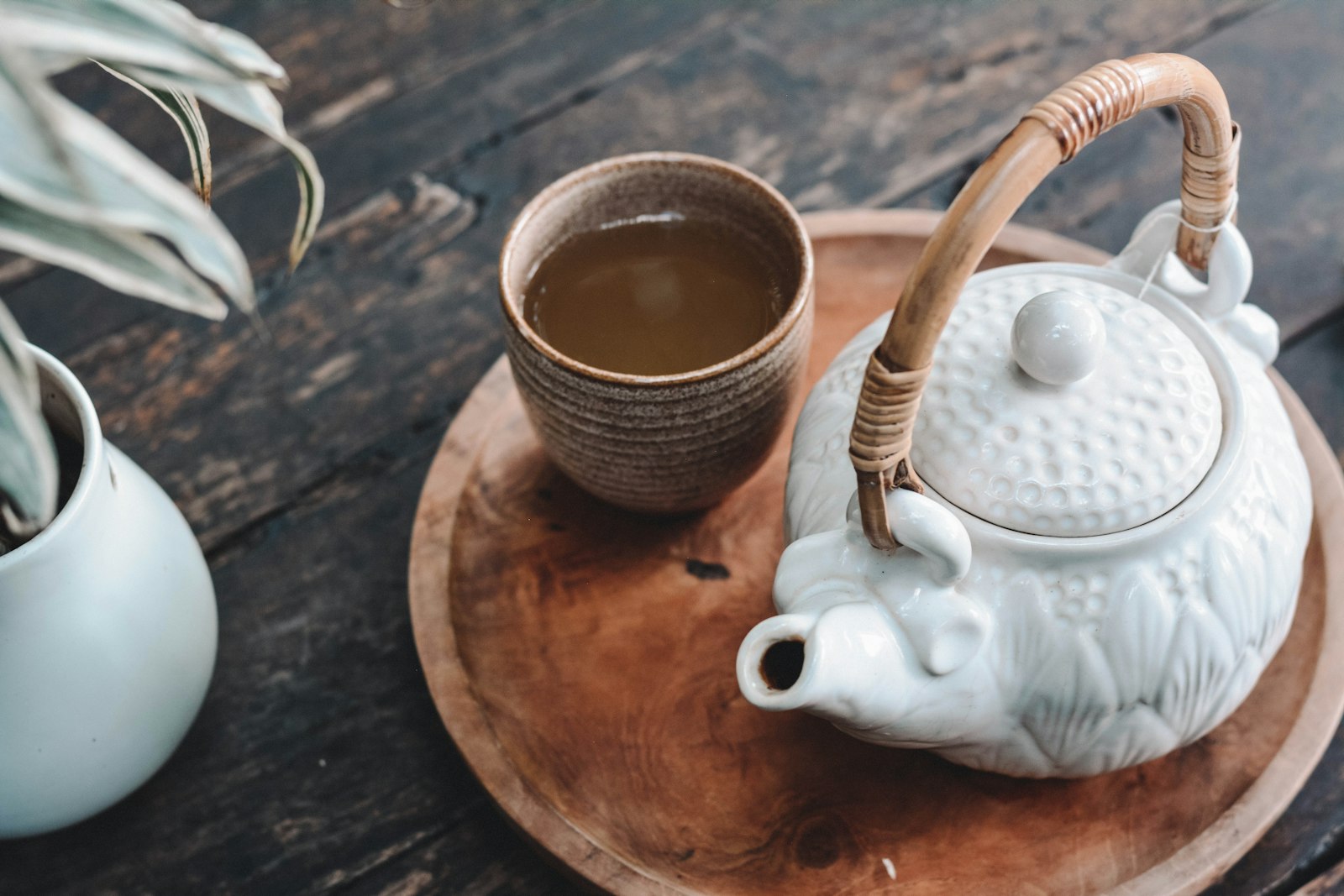
Because hot drinks are the easiest physical entry point through which consumers can understand this narrative. We have already covered the return of hot tea drinks elsewhere on the site, and that return is not simple nostalgia. It is a response to the backlash against the high-frequency cold-drink life. Not everyone wants to build everyday beverage consumption through ice and extreme freshness. By 2026, more and more people buy drinks frequently during workdays, and the real problem they want to solve is no longer only “what tastes refreshing,” but “can I still find a cup that does not make my state worse?” Hot drinks provide a very legible answer. At the very least, they do not start by pushing the body toward more coldness.
What matters even more is that hot drinks are no longer just a seasonal option. They are being reorganized into an all-day lower-risk entrance. In the past, hot drinks were easy to read as something mainly for winter, menstruation, or overt acts of care. Now brands are increasingly willing to write them as suitable after meals, during overtime, later in the day, in cooler weather, or when the body feels tired. In other words, hot drinks are no longer just a temperature format. They are becoming a more stable grammar of consumption.
This is a major precondition for the “gentler-on-the-stomach cup.” Without hot drinks, it is hard for brands to make warmth, smoothness, and lower aggression concrete enough. But if there is only heat without further structural support, the product easily collapses back into “we can serve this hot if you want.” The genuinely new part is the combination of heat, light milk, tea-base choice, sugar level, post-meal scenarios, and evening scenarios into a more deliberate gentle cup rather than merely a heated version of a cold formula.
The biggest value in the return of hot drinks is not simply that beverages become warm again, but that “I want to drink more steadily today” now has a more natural menu entrance.
4. Why does “post-meal friendly” become the strongest real-world scenario inside this trend?
Because post-meal moments naturally demand that drinks not go too far. The question after eating is not whether to drink at all, but whether the drink can have presence without pressure, clear the mouth a little without pushing the body back toward stimulation, and offer some warmth and smoothness without turning into a heavy dessert. In our article on post-meal tea drinks, we argued that the key advantage of post-meal tea is not that it is louder or more dramatic, but that it interferes less. The “gentler-on-the-stomach cup” is almost made to amplify that logic.
For consumers, post-meal moments are exactly where bodily negotiation becomes most visible. People still want something, but they do not want another round of heaviness, intensity, or burden. They want the mouth to clear a little, but not with too much ice or acidity. They want a cup, but not one that pushes them into the regret of adding more burden after the meal. That is why smooth, warm, less-iced, light-milk, softer tea-base, floral, or grain-note products gain so much legitimacy in this slot.
For that reason, “post-meal friendly” may become the most stable long-term entrance for the “gentler-on-the-stomach cup.” It does not require especially dramatic copy or highly novel ingredients. It only has to make consumers trust that this drink will not fight with the body that has just eaten. For repeat purchase, that simple trust can be worth more than many temporary viral points.
5. Why do light milk teas stand on this line more easily than heavier milk teas?
Because light milk tea is better suited to the task of being smooth without feeling clogged. Heavy milk, thick cream, rich milk caps, and high-sugar structures all have their own market, but once a brand wants to write a drink as the cup that is not too cold, too sharp, or too burdensome today, the lighter milk structure has a clear advantage. It is softer than plain tea, but it does not push the entire drink toward heaviness, greasiness, fullness, and drag the way richer milk structures often do.
That is why this line naturally runs alongside the return of light milk tea that we have already covered on the site. Light milk tea is not inherently stomach-protective, but it naturally reads as a compromise in the best sense: some dairy softness to round out the opening, enough room left for the tea base to remain visible, and a finish that still knows how to pull back. For many consumers, this state of “not too hard, not too clogging” is exactly the kind of comfort they now want from tea drinks.
Just as importantly, light milk tea layers well with hot serving, lower sugar, post-meal friendliness, and low-caffeine perception. Serve it a little warmer, keep the milk lighter, let the tea base stay cleaner, pull back the sweetness a little, and the whole cup quickly shifts from “reward-style milk tea” to “this is the steadier choice for today.” That is part of why it still has strong content value in 2026: it is not just a flavor, but a highly useful structural template.
What makes light milk tea so suitable to the “gentler-on-the-stomach” line is not that it is somehow more nutritious, but that it can more easily deliver softness on entry, visible tea character, and a finish that does not drag.
6. Why is this line also inseparable from low-caffeine perception and second-cup logic?
Because when many consumers talk about “being easier on the stomach,” what they fear is not only temperature or acidity. They are also wary of the whole sensation of being pushed upward again. As we have already discussed in our articles on low-caffeine tea drinks and the second cup, more and more tea drinks are competing for the psychological space of “one more cup without going too far.” The “gentler-on-the-stomach cup” belongs to that same space. Consumers may not analytically separate ice sensation, acidity, caffeine, an empty-stomach feeling, sweetness, or fullness, but they can clearly say one thing: I do not want another drink that hits too hard.
That is why low-caffeine perception, softer floral profiles, light-milk structures, hot availability, less ice, and post-meal friendliness all slowly merge. They serve the same basic judgment: this cup is less likely to push me past the line. For stores, that is exactly what makes these products so valuable. They are not dramatic necessities, but they can become default options people are willing to order across more times of day.
Put differently, the “gentler-on-the-stomach cup” is not just selling the stomach. It is also selling threshold management. It helps consumers manage not only post-meal comfort, but a full day’s alertness about coldness, sweetness, acidity, stimulation, fullness, and the risks of repeated drinking. The brands that can make this feel natural are the ones most likely to turn tea drinks from occasional indulgence into durable habit.
7. Where are the boundaries of this trend?
First, “gentler on the stomach” is a consumer language first, not a complete medical conclusion. Brands can absolutely write warmth, smoothness, less ice, light milk, and softer tea bases into very persuasive cups, but what they are doing first is organizing how consumers read the drink, not replacing serious bodily guidance. Second, this line is highly vulnerable to sameness. Once every brand starts talking about warmth, smoothness, post-meal friendliness, light milk, lower stimulation, and less ice, what actually stays with consumers is still the same old question: whose tea base is cleaner, whose sweetness and milk level are more honest, and whose cup truly does not drag.
Third, this line is easy to fake. Raise the temperature a little, soften the copy, give the drink a gentle name, and it becomes easy to pretend that the “gentler-on-the-stomach” narrative has already been achieved. But if the structure is wrong, consumers quickly discover that the drink is just another ordinary milk tea or ordinary hot drink. In other words, this line gives brands a new reason to build products, but it also forces the product itself to become more honest. Without real smoothness, a real finish, and a real lower-burden feeling, the wording collapses very fast.
So the boundaries are clear. You can market this feeling, but the feeling has to survive the first sip, the finish, and repeat purchase. You can say, “this is the steadier way to drink today,” but you cannot rely only on making it look that way.
A true “gentler-on-the-stomach cup” does not win because the copy is full. It wins because the drink is genuinely smoother, more contained, and less likely to fail in bodily experience.
8. Why does this deserve a place in the continuing 2026 drinks storyline?
Because it once again shows that the deepest change in made-to-order tea today is not just that there are more flavors, but that brands are increasingly organizing themselves through bodily feeling, time slots, and self-care language. The return of hot drinks, post-meal friendliness, the return of light milk tea, lower-caffeine perception, second-cup logic, office supply tea, and night-oriented tea all look like separate menu moves, but they point toward the same deeper shift: consumers do not just want something tasty. They want something that makes them feel they are drinking in the right way for today.
This matters especially for the drinks section because it reveals that many very small product moves — serving a drink warmer, reducing the milk a little, cleaning up the tea base, lowering the sugar slightly, reducing the ice feel, clarifying post-meal use — are not isolated at all. Together they point toward a more mature consumption psychology: people still want tea drinks, but they increasingly want tea drinks to respect their thresholds instead of asking them to keep absorbing stronger stimulation, heavier burden, and larger emotional swings.
From that angle, the “gentler-on-the-stomach cup” is not a timid phrase. It is a piece of the map worth continuing to track. It shows how made-to-order tea is learning to translate “taking care of yourself” from an abstract value into a realistic product: a cup that is warmer, smoother, lower in stimulation, and easier to buy again.
Existing site features on the return of hot tea drinks, post-meal tea, the return of light milk tea, low-caffeine tea, the second cup, office supply tea, and night-oriented tea (March–April 2026).
Ongoing menu observation of Chinese chain tea brands around hot serving, light milk, less ice, post-meal friendliness, lower stimulation, and high-frequency workday repeat purchase language.