Why the Tea Horse Road keeps being rewritten today as a “cultural route”: from frontier trade networks and heritage narratives to modern Chinese tea-history imagination
Created: · Updated:
In today’s Chinese-language internet, when people mention the Tea Horse Road, what often appears first in the mind is not institutions, taxation, or frontier markets, but a mountain route made for photographs and documentaries: stone paving, caravans, gorges, snowy peaks, relay stations, old towns, porters, and bell sounds. Those images are real, and they do capture one visible side of the route. But if we stop there, the Tea Horse Road is too easily reduced to a scenic ancient transport legend. The question worth explaining is why it is now so often written as a “cultural route.” Why is it no longer told only as a road that moved tea, but increasingly as a large historical line capable of holding together sites, trade, local memory, ethnic contact, cultural exchange, and heritage protection?
The answer is not especially complicated. The Tea Horse Road was never just a single line of travel. It was a historical network operating across regions. It linked the mountain southwest to the plateau, production zones to consuming zones, caravan transport to relay supply, frontier markets to dynastic governance, and local life to the larger circulation history of Chinese tea. That is exactly why, once contemporary narration stops being satisfied with “this section of old road is beautiful” or “that caravan story is dramatic,” the Tea Horse Road naturally gets rewritten as a line-shaped historical object. The phrase “cultural route” is not simply a fashionable new shell placed on top of it. It is a belated recognition of the structure it always had.
In other words, the Tea Horse Road keeps being rewritten today as a cultural route not only because heritage discourse is fashionable, but because it truly fits that narrative form. It can be grounded in very concrete remains—road fragments, bridges, wharves, old inns, caravan stations, and frontier tea depots—while also opening onto a larger scale story about tea crossing terrain, populations, and institutional boundaries. It belongs to tea history, but also to frontier history, transport history, trade history, and local social history. It is naturally a historical line that has to be told by connecting things, not a mere collection of scenic points.
The Tea Horse Road is repeatedly rewritten today as a “cultural route” not because later generations enjoy inventing new labels for old roads, but because it was never only a stretch of mountain path. Roads, nodes, markets, relay stations, sites, and local life were always different faces of the same network.
Tea Horse RoadCultural routeFrontier tradeHeritage narrativeChinese tea history
1. Why does the phrase “cultural route” fit the Tea Horse Road especially well? Because it was never a point-like site, but a network held together by linked nodes
Many historical subjects are not especially suited to being told as a “route.” Some are single buildings, some are individual artifacts, and some are clearly centered site clusters. In those cases, one point, one courtyard, one palace, or one kiln may be enough. The Tea Horse Road is different. Its historical meaning did not originally sit in one place, but in the repeated connections between places. Without the road itself, without conversion between stations, and without frontier markets repeatedly tied to mountain transport, the idea of the Tea Horse Road would not really stand.
That is also why it slips so easily into cultural-route narration today. Cultural-route frameworks are especially suited to historical objects that cannot be explained through one isolated site and instead must be explained through a continuous network. The Tea Horse Road is not one building, one relic, or one solitary old town. It has to be told through roads, bridges, passes, stations, merchant houses, tea firms, official depots, mule inns, market towns, mountain crossings, wharves, and the repeated movement of people along them. Remove any one layer, and the story narrows too much.
For that reason, whenever people today deal with the Tea Horse Road seriously—whether in heritage protection, local cultural work, scholarship, or mass communication—they almost inevitably move toward a line-based expression. Only that form can reconnect scenic fragments to historical structure. For the Tea Horse Road, “cultural route” is not an artificial new wrapper, but a way of speaking that comes closer to its original shape.
2. Why was the Tea Horse Road not one single ancient road, but a multi-centered network? That is the basic reason it could later be cultural-route-ized
People still often ask a simple question: where exactly did the Tea Horse Road run from and to? The question is not wrong, but the desire for one uniquely correct answer can make history too linear. The Tea Horse Road was never a numbered corridor with fixed origin and destination in the modern sense. It was a plural network composed of branch lines, transfer routes, mountain passes, and frontier collection nodes. The Sichuan direction, the Yunnan direction, the Tibetan direction, and even more distant extensions all carried different weights at different historical moments.
This plurality matters. Once a historical object is already a multi-centered network, it becomes especially suitable for reorganization as a “cultural route.” A single-site relic asks to be protected as one place. A network-type object asks for the relationships among its nodes to be reinterpreted. The fact that the Tea Horse Road is being constantly rewritten today shows that people are beginning to recognize that what really requires protection and expression is not just one surviving stone path, but the operating system once connecting that path to nearby market towns, relay stations, storage spaces, temples, official depots, and ferry points.
This also explains why the Tea Horse Road today appears simultaneously in transport history, local history, ethnic-contact history, heritage lists, and tourism promotion. It can genuinely be entered from several directions: one can tell it through mountain transport, through frontier supply, through tea circulation, or through site preservation. Because it is not a single line but a network, it is very hard to lock into only one narrative.
3. Why did it later become especially easy to place inside heritage protection language? Because what it left behind was never only “the road,” but a whole chain of visible remains
The Tea Horse Road entered contemporary heritage language not simply because the words “ancient road” sound naturally preservable. More importantly, it left behind many things, and those things are structurally diverse. What can enter preservation vision today includes not only surviving road segments, but also bridges, wharves, relay stations, mule inns, guild halls, old cities, passes, tea gardens, tea firms, cliff inscriptions, steles, official depots, and many other spatial remains connected to frontier tea transport, transfer, and exchange. Once these remains are read together, the Tea Horse Road naturally shifts from “old road” to “route heritage.”
This differs sharply from preserving a road in the narrow sense. To preserve one ancient road, it may be enough to confirm its paving, base, and direction. To preserve the Tea Horse Road, however, is really to preserve traces of a compound transport-trade-life system. An old town matters not because it is quaint today, but because it once served as a landing node on the route. An official depot matters not because the building is grand, but because it proves tea was once institutionally aggregated and allocated there. A surviving wharf matters not because the waterside is picturesque, but because it shows how tea changed transport modes and continued forward.
Once the route is understood in this way, it becomes easy to see why it is written today as a cultural route. Cultural-route narratives do not merely list isolated sites. They explain why those sites once belonged to the same operating historical chain. The Tea Horse Road has exactly that chain-like quality, which is why it is so easy to organize into a heritage narrative now.
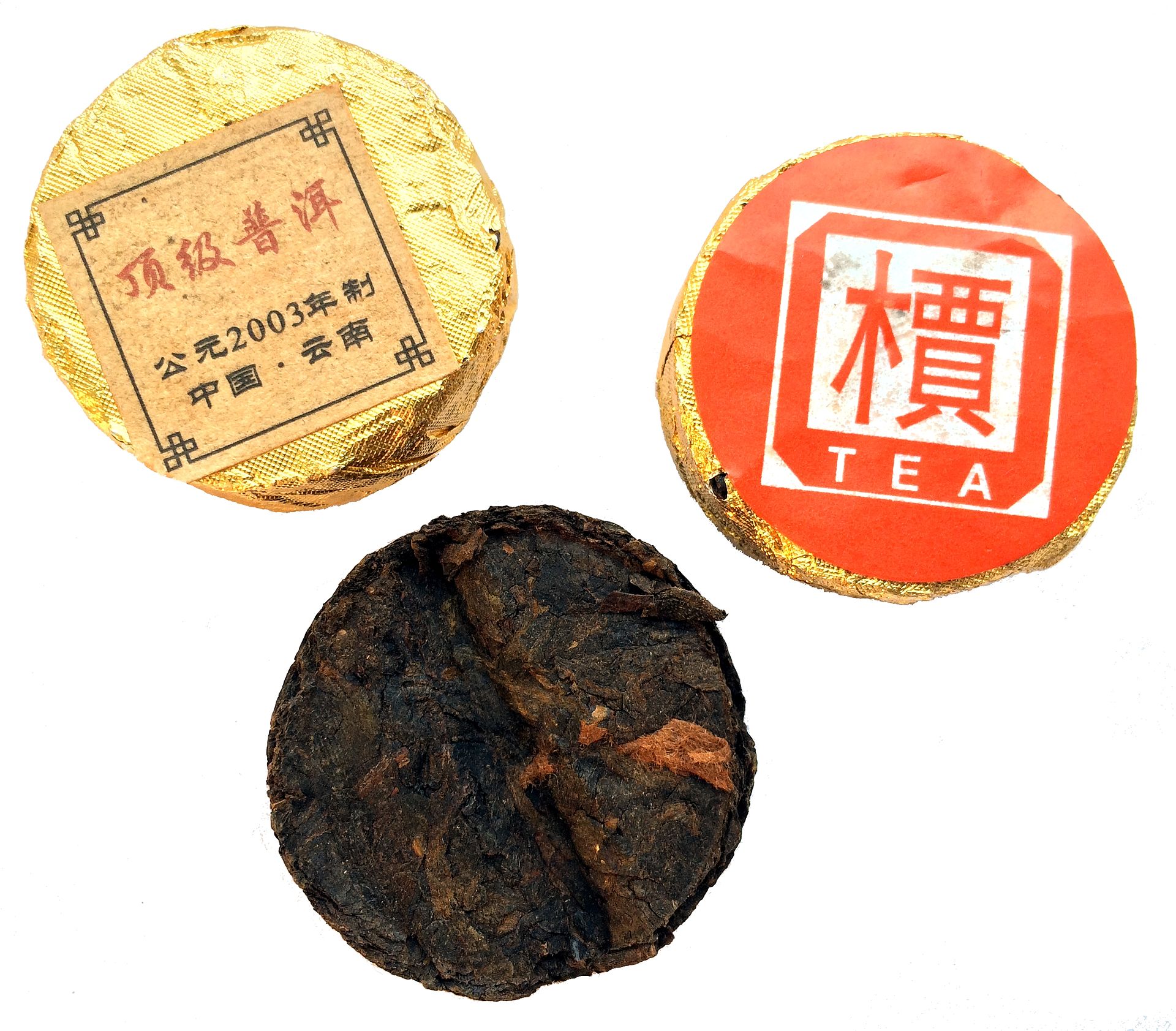
Once the Tea Horse Road is restored to a cultural-route framework, even tea’s material form becomes important. Compressed tea suitable for long-distance transport, storage, and frontier consumption is not merely a commodity detail, but part of the route’s history.
4. Why do contemporary local narratives so often use the Tea Horse Road to speak about “exchange,” “connection,” and “shared memory”? Because this route naturally carries cross-regional storytelling
If a place today wants to describe its own history in relation to a larger region, the Tea Horse Road is almost an ideal entry point. The reason is simple: it is naturally connective. It is hard to use the Tea Horse Road to tell a self-enclosed local story, because the route’s significance came precisely from cross-regional operation. It forces one to see producing zones, transfer nodes, frontier towns, plateau consumers, and long-term contact among different populations at the same time.
That is why contemporary local storytelling especially likes to use the Tea Horse Road to talk about cultural exchange, ethnic contact, regional cooperation, shared memory, and even urban renewal. It offers an extremely convenient narrative line: this locality was not isolated, but once stood inside a larger transport and trade network; its remains are not scattered curiosities, but traces of participation in a structure crossing mountains, ecological zones, and populations. For places that want to speak of openness, connection, and historical depth, the Tea Horse Road is useful—and not entirely as empty rhetoric.
Of course, this way of telling the story also carries risk. Once “connection” is told too sentimentally, the Tea Horse Road can turn into a cultural-exchange fairy tale with warmth but no friction. In reality, behind the route stood requisition, regulation, taxation, risk, hard mountain labor, and frontier governance. A mature cultural-route narrative should not erase those harder layers. It should admit that connection was never weightless. It always passed through real institutions and real labor costs.
5. Why does the rewriting of the Tea Horse Road into a cultural route also suggest a change in how Chinese tea history is being told? Because the perspective is shifting from “tea in the cup” to “tea on the road”
For a long time, one of the most common ways of writing tea history was to write tea in the cup—that is, to write around origin, category, flavor, vessels, brewing, literati taste, and aesthetic experience. That kind of tea history is entirely legitimate and important. But it has a built-in limitation: it easily turns tea into something indoor, static, refined, and attached to desks, studies, and teahouse tables.
The fact that the Tea Horse Road is repeatedly rewritten today as a cultural route shows that another way of writing is becoming more important: tea on the road. Tea had to be compressed, packed, transferred, stored, reloaded, inspected, and allocated. It had to cross mountains, pass bridges, enter markets, cross checkpoints, and move into depots. It had to enter different food structures, climates, and social orders. In other words, tea history is moving from a purely aesthetic-consumption history toward transport history, frontier history, circulation history, and local social history.
This is not a rejection of older tea history. It is a completion of it. Because the Tea Horse Road can explain the “tea on the road” dimension with unusual clarity, it feels more and more important today. Cultural-route narration fits it precisely because this form naturally demands that roads, nodes, goods, institutions, memory, and local society be viewed together. That is exactly the part of Chinese tea history that has often been underwritten in the past.
6. Why can we not treat “cultural route” as nothing more than tourism packaging? Because although the phrase is contemporary, it still answers a real historical structure
It is true that many people become wary the moment they hear “cultural route.” They assume it is simply a tourism-era repackaging: old roads renamed, rebranded, and put back on the market. That wariness is not groundless. Many places do flatten complex history into influencer-friendly “ancient roads,” scenic check-in routes, and light ethnic-experience narratives. But if one uses that alone to deny the explanatory value of “cultural route” for the Tea Horse Road, that is not accurate either.
The more precise statement would be this: the Tea Horse Road is indeed tourismized today, and that is a fact; but it is also genuinely suited to being told as a cultural route, and that is equally a fact. The first is a contemporary mode of use. The second is the historical structure itself. The problem is not whether the term may be used, but whether it is used shallowly or deeply. A shallow version leaves only old towns, specialty products, performances, and landscape. A deeper version asks why the route formed, why it endured, why these remains were left behind, and why those remains can still explain one another today.
So the real thing worth being cautious about is not the term “cultural route” itself, but the emptying out of the term. As long as one still explains the trade networks, frontier supply, labor costs, transport structure, nodal remains, and local social worlds behind the route, the term genuinely fits the Tea Horse Road. In fact, it comes closer to history than the mere idea of “ancient-road scenery.”
Even the grandest cultural route must finally return to life. The Tea Horse Road mattered not only because tea was moved outward, but because it eventually entered the real daily worlds of different regions.
7. Why is it still worth writing about the Tea Horse Road in the history section today? Because it brings tea back from isolated facts into large-scale history
For a tea-history site, the greatest value of the Tea Horse Road is that it almost naturally possesses the power to widen historical scale. Many tea articles are easily written as isolated units of knowledge: one tea type, one dynasty, one vessel, one technique, one famous figure. The Tea Horse Road is different. It demands that one mobilize space, institutions, commodities, labor, local society, and contemporary memory at the same time. For exactly that reason, it is especially suited to becoming one of the history section’s axial themes rather than a one-off scenic topic.
It also forms real intertextual links with much of the site’s existing content. Compared with “Why the Tea Horse Road is not just a road for moving tea”, this article places more emphasis on how contemporary narrative reorganizes the subject. Compared with “Tea-horse exchange”, this one leans more toward heritage and memory as layers of reinterpretation. Compared with “The Wanli Tea Road”, this article highlights a southwest China–plateau route-type history rather than a broader Eurasian outward-trade scale. Taken together, such pieces let readers see more clearly that Chinese tea history contains not only tea types, but tea pathways; not only flavor, but routes.
At bottom, the fact that the Tea Horse Road is repeatedly rewritten today as a cultural route is not an accidental change in wording. It is a sign that Chinese tea-history narrative is becoming thicker. People are becoming less satisfied with asking only “what tea is this,” “how is it brewed,” or “which tea is better,” and are beginning instead to ask how tea was moved, how it changed local worlds, how it left behind sites, and how it is remembered again today. That shift itself is worth recording.
8. Conclusion: the Tea Horse Road is being written today as a cultural route not because it is farther from history, but because we are finally closer to its real shape
If I had to compress this article into one shortest conclusion, I would say this: the Tea Horse Road is repeatedly written today as a “cultural route” not because later generations have added a beautiful shell to it, but because it already had the shape of a route. It was never one point, and never one single line. It was a historical network jointly composed of roads, nodes, remains, markets, relay stations, official depots, local societies, and transregional circulation.
Contemporary heritage storytelling certainly repackages it, but that packaging does not stand because it is invented from nothing. It stands because it really does answer a historical structure that existed. The real question was never whether it may be called a cultural route, but whether we are willing to tell the harder history behind that route as well: how tea crossed terrain, how frontier demand formed around tea, how nodes rose because of roads, how remains became meaningful because of networks, and how contemporary localities now reorganize their own historical narratives through those remains.
So for today’s history section, the Tea Horse Road matters not only because it is visually appealing, and not only because it is famous, but because it forces us to admit that tea history was never only history inside the cup. It was also history on the road, history of nodes, history of frontier worlds, history of remains, and history that later generations keep reinterpreting.
Source references: written by synthesizing public overview materials on the Tea Horse Road, general background on southwest frontier trade and tea history in China, and the public narrative framework that increasingly treated the Tea Horse Road as a route-type heritage object after its 2013 inclusion in the seventh batch of Major Historical and Cultural Sites Protected at the National Level; the purpose here is to explain why the Tea Horse Road is especially suited to being understood as a cultural route, rather than to reconstruct every route segment in full detail.