Duck Shit Aroma Dancong: why one oddly named Phoenix tea opens into aroma type, mountain origin, oxidation craft, and fresh-drink fame
· Long-form feature
If one looked only at the name, Duck Shit Aroma might be the Chinese tea most likely to make a first-time reader stop mid-sentence. It does not sound elegant in the way Longjing or Bi Luo Chun do, nor does it arrive already wrapped in grand legend like Da Hong Pao. The name feels earthy, awkward, almost mischievously anti-refined. Yet anyone who has actually drunk a good Duck Shit Aroma tea quickly realizes that the name is only the loud signboard at the entrance. The real destination is the larger Phoenix dancong world behind it: mountain origin, aroma categorization, yaoqing craft, roasting judgment, old-bush character, and the Chaoshan gongfu tea habit of pushing one small pot of tea through many articulate rounds.
Its rise across the Chinese internet in recent years is not only a matter of a catchy name. Once fresh-tea-drink brands began popularizing menu items such as Duck Shit Aroma lemon tea, milk tea, and light milk tea, many urban consumers met the phrase first on a drinks board and only later asked what it actually was in original leaf form. Why does a traditional oolong keep appearing on modern menus? Why do some people insist the old name should stay, while others prefer the more elegant Silver Flower Aroma? These are not trivial side questions. Together they make Duck Shit Aroma one of the best possible long-form tea subjects: it has current public pull, yet it also leads deep into the internal knowledge structure of Chinese oolong.
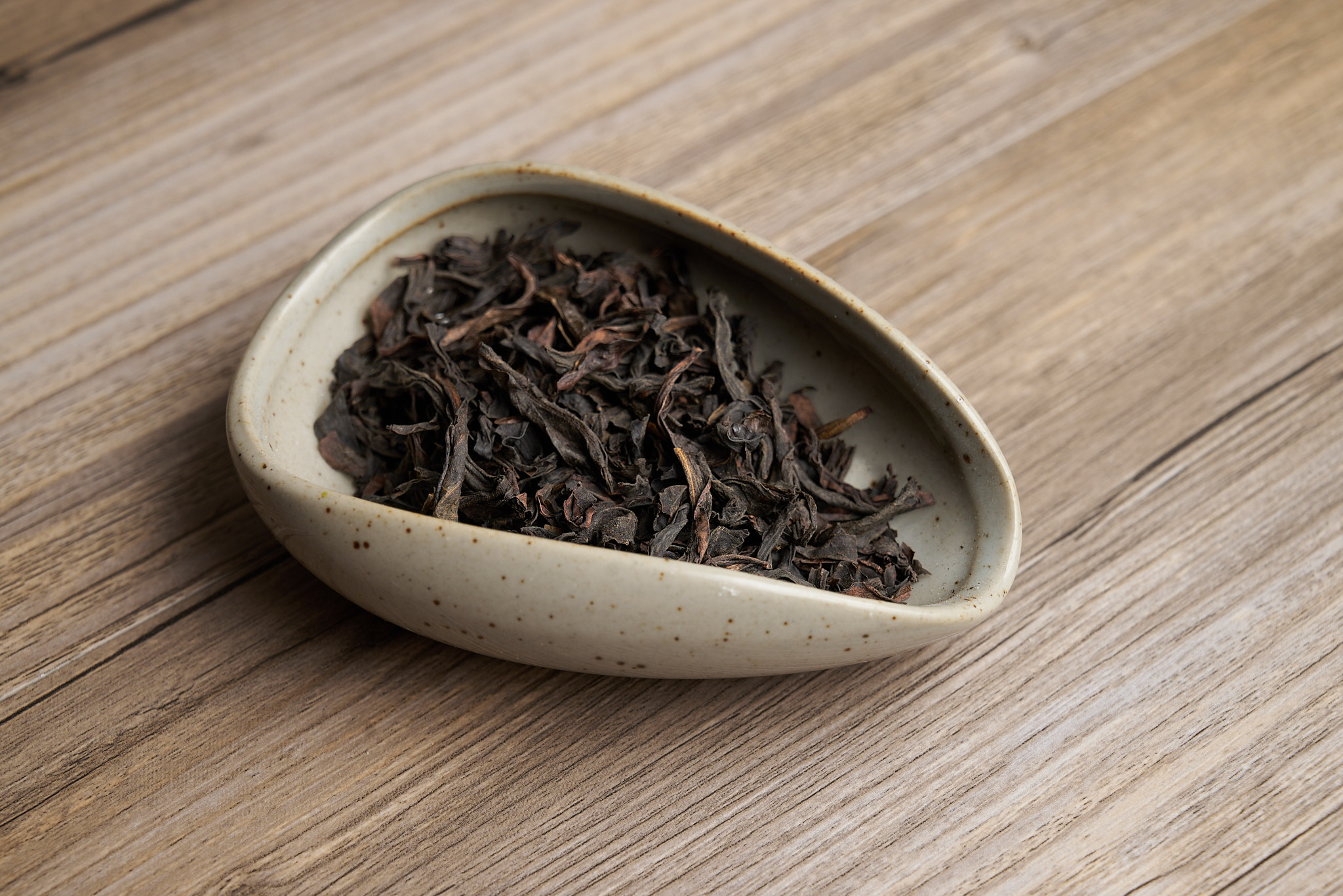
Duck Shit Aroma should not be reduced to its name. The real entry lies in leaf shape, rising aroma, liquor texture, and aftertaste. This oolong image helps readers enter the visual logic of high-aroma semi-oxidized tea.Source noted at end of article
What exactly is Duck Shit Aroma, and how does it relate to Phoenix dancong?
The first confusion to clear up is simple: Duck Shit Aroma is not an isolated meme-tea floating outside any tradition. It belongs to the wider category of Phoenix dancong, the famous family of oolong teas produced around Fenghuang Mountain in Chaozhou, Guangdong. Within the Chinese oolong map, Phoenix dancong is perhaps the category most strongly associated with fine aroma differentiation and mountain individuality. Compared with better-known international reference points such as Wuyi rock tea or Tieguanyin, dancong often announces itself first through aroma naming: Honey Orchid, Gardenia, Almond, Ginger Flower, Tongtian, Duck Shit Aroma, and many more.
But dancong is not just an aroma catalogue. Historically it refers to selected individual bushes or lineages separated from larger populations, then observed, propagated, and preserved because of distinctive quality. Over time, the term evolved into a layered system involving cultivar logic, aroma style, mountain source, and commercial naming. So when one says Duck Shit Aroma, one should not imagine merely “a very fragrant oolong.” More accurately, it is one especially recognizable branch within the Phoenix dancong universe—famous enough that its popular name often overshadows the category that gave birth to it.
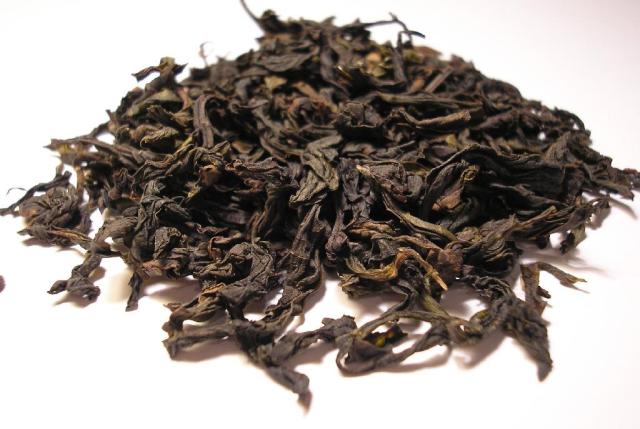
With Phoenix dancong, dry-leaf reading matters: twist, tightness, color, and surface sheen are all part of the first judgment. This image is not literal Duck Shit Aroma, but it works well as a reader-facing guide to how semi-oxidized strip teas are visually read.Source noted at end of article
Why is it called “Duck Shit Aroma”? Is the strange name itself part of the story?
Yes, very much so. The name is one of the main reasons the tea became so widely discussed. Several origin stories circulate, but the most common thread is that the tea grew in soil locally nicknamed “duck shit soil,” and that growers may also have used an intentionally unattractive name to keep outsiders from paying too much attention to a valuable tea tree line. Over time, the tea became so famous that the supposedly inelegant name turned into its strongest market identity. The Chinese internet returns to it again and again precisely because of the contrast: a rough name attached to a tea often praised for a lifted, refined, floral fragrance.
This also explains the later naming debate. In the 2010s there were efforts to replace Duck Shit Aroma with the more refined-sounding Silver Flower Aroma. The reasoning was easy to understand: the old name felt rustic, even vulgar, and less suited to polished market presentation. Yet many tea drinkers resisted the change because it flattened the tea’s local memory and erased part of what made it memorable. In content terms, this is excellent material. Naming is not decorative trivia. It shows how local tea identities are negotiated, softened, defended, and repackaged in modern markets.
What kind of “aroma” does Duck Shit Aroma actually have? Why do serious drinkers say it is not just loud fragrance?
The first thing new drinkers remember is usually the fragrance. But the more important lesson is that good Duck Shit Aroma is not merely a perfume bomb. At its best it feels high, clear, fine, and penetrating, often carrying floral lift, honeyed sweetness, and a light fruit-toned brightness. The key point is that the fragrance should not stay only at the nose. It should descend into the liquor and continue as returning aroma in the mouth and throat. This is why experienced drinkers often insist that dancong cannot be judged by the first aromatic burst alone. One must ask whether the liquor body, aftertaste, and internal structure can support the aroma.
This is also why confusing dancong with cheap flavored tea is such a basic misunderstanding. It is easy to make a tea smell loudly fragrant. It is much harder to make it smell clean, stable, and structurally alive. If the aroma floats without body, the tea will feel sharp, hollow, or thin. If roasting fails to suppress green roughness, the fragrance will feel messy. If roast goes too far, the tea loses lift and becomes heavy. Truly good Duck Shit Aroma is not defined by maximum attack. It is defined by fragrance that remains elegant, supported, and drinkable.
Why does mountain origin matter so much? Why do dancong drinkers talk constantly about altitude, villages, and bush character?
Any serious discussion of Duck Shit Aroma soon arrives at mountain origin. A major part of Phoenix dancong’s power lies in its refusal of total standardization. Instead of chasing the same profile every time, it keeps pointing back toward place: Is the tea from a core Phoenix area? What is the altitude? Which slope? How strong are day-night temperature shifts? What is the drainage and moisture pattern of the soil? How old are the bushes? Even the same named aroma type may show obvious differences from one village or mountain pocket to another. For urban consumers trained to think in brand flavor templates, this is a radically different idea. Tea is not a formula. Terroir keeps speaking inside it.
Chaoshan tea drinkers often use the phrase “congwei,” roughly the inner character of the bush line. The phrase reminds us that the value of dancong is not exhausted by a catchy aroma label. A memorable Duck Shit Aroma is not one that merely smells distinctive at first sniff. It is one with body, depth of returning sweetness, throat resonance, and layered aroma movement across many infusions. Good mountain source, sound leaf material, and stable craft all have to work together before a tea becomes more than just recognizable.
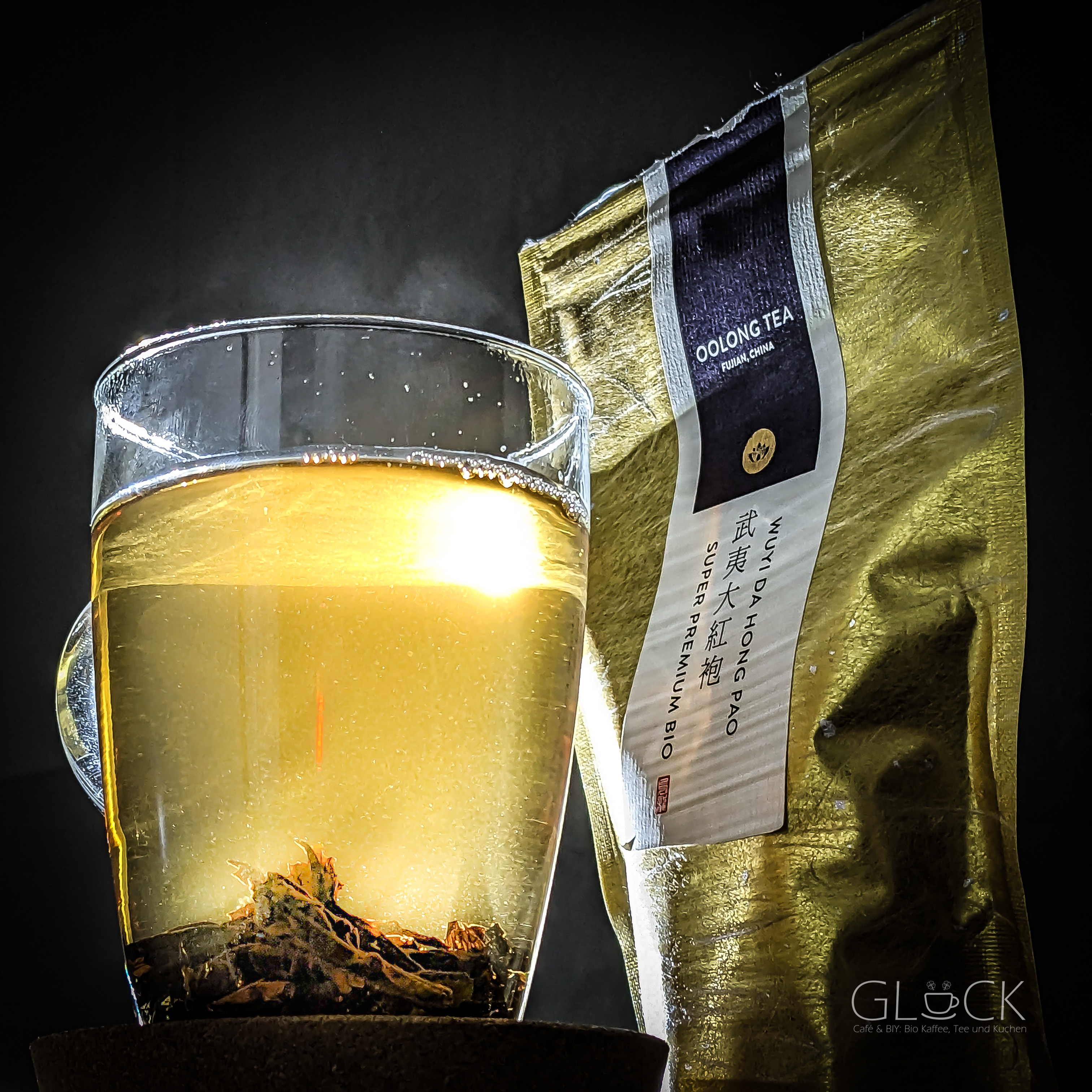
High-aroma oolong should not be judged by nose alone. Liquor brightness, density, and balance matter just as much. With Duck Shit Aroma, the fragrance must settle into the water to count as real quality.Source noted at end of article
How is Duck Shit Aroma made? Why do yaoqing and roasting determine whether it becomes serious tea rather than random floral oolong?
As a semi-oxidized oolong, Duck Shit Aroma is shaped through a sequence that includes sun-withering, resting, yaoqing or shaking/bruising, fixation, rolling, and roasting. The style-defining stages are usually yaoqing and roast. Yaoqing is not simply “oxidizing the leaves a bit.” It is a rhythmic process of agitation and rest in which green harshness is reduced and floral-fruit aromatic potential is gradually drawn out. This stage is highly dependent on judgment: temperature, humidity, leaf elasticity, timing, and the maker’s sensory reading all influence the result.
Roasting is not a minor finishing touch either. High-aroma dancong sits on a narrow ridge. If the roast is too light, green edges and floating fragrance remain exposed. If the roast is too heavy, the tea loses its aerial complexity and turns dull or drying. Many readers who meet a tea that smells dramatic but collapses quickly are actually tasting a failure of balance in oxidation and roast. Well-made Duck Shit Aroma, by contrast, unfolds in sequence: lid aroma, cup aroma, aromatic lift in the mouth, then a cleaner returning sweetness after swallowing.
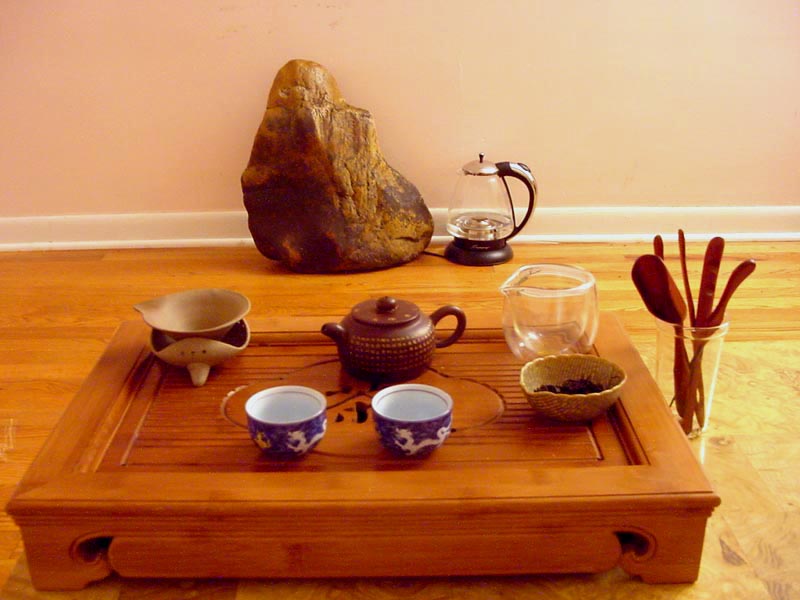
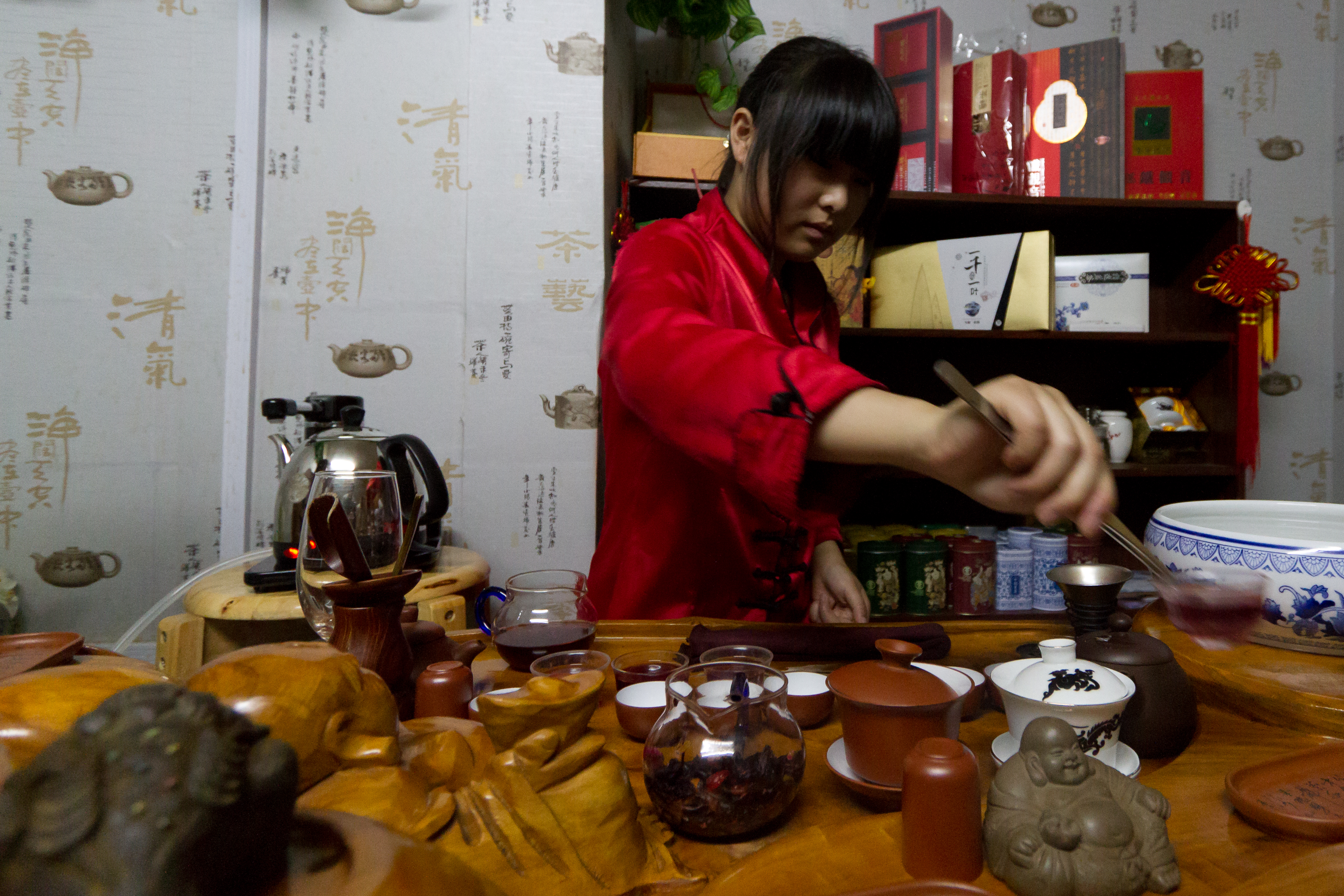
Duck Shit Aroma makes the most sense inside a gongfu-tea frame: high leaf ratio, quick pours, and small cups are not empty ritual, but practical ways to separate fragrance, body, and aftertaste across infusions.Source noted at end of article
How should it be brewed so it does not become all aroma or all bitterness?
Duck Shit Aroma is best brewed in a gaiwan or a small gongfu-style vessel. The reason is not ceremony for its own sake. This is a tea with many internal transitions, and large-volume slow brewing often blurs them. A practical starting point is roughly 5 to 7 grams of tea for a 100 ml gaiwan, with water near boiling. The first infusion can be quick, then the early rounds may begin around 5 to 10 seconds and lengthen gradually. Unlike tender green tea, this tea does not need cool water. It generally benefits from real heat so that aroma and liquor texture emerge together.
But high temperature does not mean prolonged stewing. The two most common beginner mistakes are using too little leaf with too much water, which produces thin scattered cups, or assuming that a fragrant tea must be endlessly long-steeped, which drags out roughness and roast dryness. Better brewing lets the tea show drive in the opening rounds, body in the middle, and a cleaner sweet after-echo later on. The deepest charm of Duck Shit Aroma is rarely the first shock of fragrance alone. It lies in the way different dimensions keep rotating through the session without collapsing immediately.
How does it differ from Wuyi rock tea or Tieguanyin?
Comparison helps locate it clearly. Against Wuyi rock tea, Duck Shit Aroma usually foregrounds lifted floral fragrance more strongly, while rock tea more often leads with roast, mineral resonance, and rock-rhyme structure. Against traditional roasted Tieguanyin, Duck Shit Aroma often feels quicker, sharper, and more specifically aromatic, with mountain-source differences discussed more openly. It does not seek the same kind of tightly standardized commercial repeatability as some commodity teas. Instead it behaves more like a class of teas whose identity is continually shaped by season, origin, roast, and maker.
That is exactly why Duck Shit Aroma is so useful as an educational tea. Many readers enter Chinese oolong thinking only in broad terms such as “more fragrant than green tea, lighter than black tea.” Once they step into Phoenix dancong, that simplification breaks apart. Oolong becomes a huge internal universe: some styles teach firework, some teach mineral depth, some teach floral height and bush character, some teach mountain source, and some teach what post-roast stability actually means. Duck Shit Aroma matters not only because it tastes good, but because it forces readers to recognize how internally complex Chinese tea categories really are.
Why do fresh-tea-drink brands love putting “Duck Shit Aroma” on menus? Does it really work in lemon tea and milk tea?
From a packaging point of view, the answer is obvious. The name is unforgettable, instantly discussable, and easy to spot on a menu. More importantly, the underlying tea really does have enough aromatic definition to survive citrus, milk, and sugar more successfully than many flatter tea bases. In lemon tea especially, the lifted fragrance can still remain legible inside the acid structure. That is why the tea name has become not only a tea-table reference but also a recurring city-drink keyword.
Yet this popularity also creates a new misunderstanding. Many consumers now assume Duck Shit Aroma is basically a trendy beverage flavor rather than a serious leaf tea. Some who first met it in drinks expect the original tea to be just as direct, explosive, and sweet in a simplified way. But original-leaf Duck Shit Aroma is finer, more layered, and much more dependent on brewing rhythm. Fresh-tea-drink culture has done something useful by spreading the name widely. The problem comes when that menu recognition is mistaken for understanding.
Compared with a takeaway cup, the gongfu tea table shows Duck Shit Aroma in its native form: not a single flavor label, but a tea meant to be experienced in stages.Source noted at end of article
What buying mistakes do ordinary drinkers make most easily?
The first mistake is trusting the name alone without asking about the system behind it. Many products use “Duck Shit Aroma” on packaging, yet source area, leaf grade, blending level, and roast style can differ enormously. The second mistake is treating maximum fragrance as the only quality standard. Fragrance matters, but if it floats without body, if the liquor feels thin, or if the mouth dries out after drinking, the tea is probably not well balanced. The third mistake is carrying menu expectations from sweet drinks directly into original-leaf tea. Original Duck Shit Aroma is not a syrupy profile in tea form. Its beauty lies in the relationship between aroma and water, not in brute sweetness or novelty.
A practical buying framework can be reduced to four questions: Is the tea clearly rooted in the Phoenix dancong system? Is the aroma clean or merely loud? Does the liquor have body and returning sweetness? Does the tea remain coherent after several rounds? These questions are usually more useful than memorizing lists of popular products. Duck Shit Aroma is an especially good training tea because both its strengths and weaknesses show themselves quickly. After a few sessions, one begins to tell the difference between high fragrance and floating fragrance, between clean sweetness and empty sweetness.
Why is Duck Shit Aroma such a strong next subject for this tea site?
Because it forms almost the sharpest possible contrast with the site’s current green tea features. Longjing explores the ordered clarity of a flattened Jiangnan spring green tea. Xinyang Maojian examines the timing, authenticity, and mountain logic of an early-spring strip green tea. Duck Shit Aroma sends readers straight into another world: semi-oxidized oolong, high-aroma dancong, Chaoshan gongfu tea, naming controversy, menu-driven fame, and the intertwined logic of mountain origin and craft. It is not merely different. It meaningfully expands the site’s internal tea map.
More importantly, it satisfies two goals at once. It has strong current Chinese-internet attractiveness, because many readers already know the name from popular culture and drink shops. At the same time, it is not a disposable topic. It can anchor a much larger knowledge system: future features on Phoenix dancong generally, Honey Orchid Aroma, gongfu brewing, roast styles, mountain-source reading, and the way fresh-tea-drink culture reshapes public understanding of original-leaf tea. For a tea knowledge site, that combination of current pull and long-term depth is unusually valuable.
Source references
Baidu search result aggregation: public Chinese material on the Duck Shit Aroma / Silver Flower Aroma naming debate, Phoenix dancong naming logic, and cultivar background.
Baidu search result aggregation: public Chinese reporting excerpts on fresh-tea-drink demand for Duck Shit Aroma tea base and wider market discussion around Phoenix dancong.
General Chinese tea reference material: public explanations of Phoenix dancong yaoqing, roasting, aroma style, and mountain-origin judgment.