Why Tea Households Were More Than "People Who Grew Tea": from Tang-Song garden households and tea monopoly controls to Ming registered tea households, why tea growers were singled out by the state
Published: · Updated:
When Chinese tea history is discussed today, the first things people usually see are the most visible ones: how tea was made, how it was brewed, which objects looked most elegant, which routes became legendary, and which mountains became iconic origins. But if we push our attention inward, into the production side of tea history, we hit a simple-looking but actually very hard term: the tea household. Many readers first take it to mean no more than “the people who grew tea,” like any other occupational label. That understanding is not exactly wrong, but it is far too light. What makes tea households worth revisiting is not merely that premodern China had tea growers. It is that, from the Tang-Song period onward, tea could generate a class of households separately identified, separately managed, separately taxed, and sometimes restricted in how freely they could dispose of their own output.
In other words, tea households were not just background figures in tea history, not the anonymous people who happened to be standing on the mountain when tea was picked. Once a commodity matters enough that the state pulls its producers out from the larger mass of ordinary agricultural households, gives them a more specific identity, and builds taxes, delivery obligations, monopoly restrictions, or supply duties around that identity, the commodity is no longer merely an ordinary crop. It has entered a deeper field of governance. The weight of the tea household as a historical subject lies exactly there.
That is why this article needs to be distinguished from the site’s existing pieces on tea law, the tea-yin licensing system, tea monopoly policy, and tea-horse law. Those essays mainly explain how the state regulated tea through law, licenses, monopoly controls, routes, and anti-smuggling rules. The tea household asks another question one layer closer to the ground: once the state decided to govern tea seriously, how were the people who actually grew and delivered tea redefined? Why did some of them stop appearing simply as ordinary farmers and begin appearing as households bound specifically to tea?
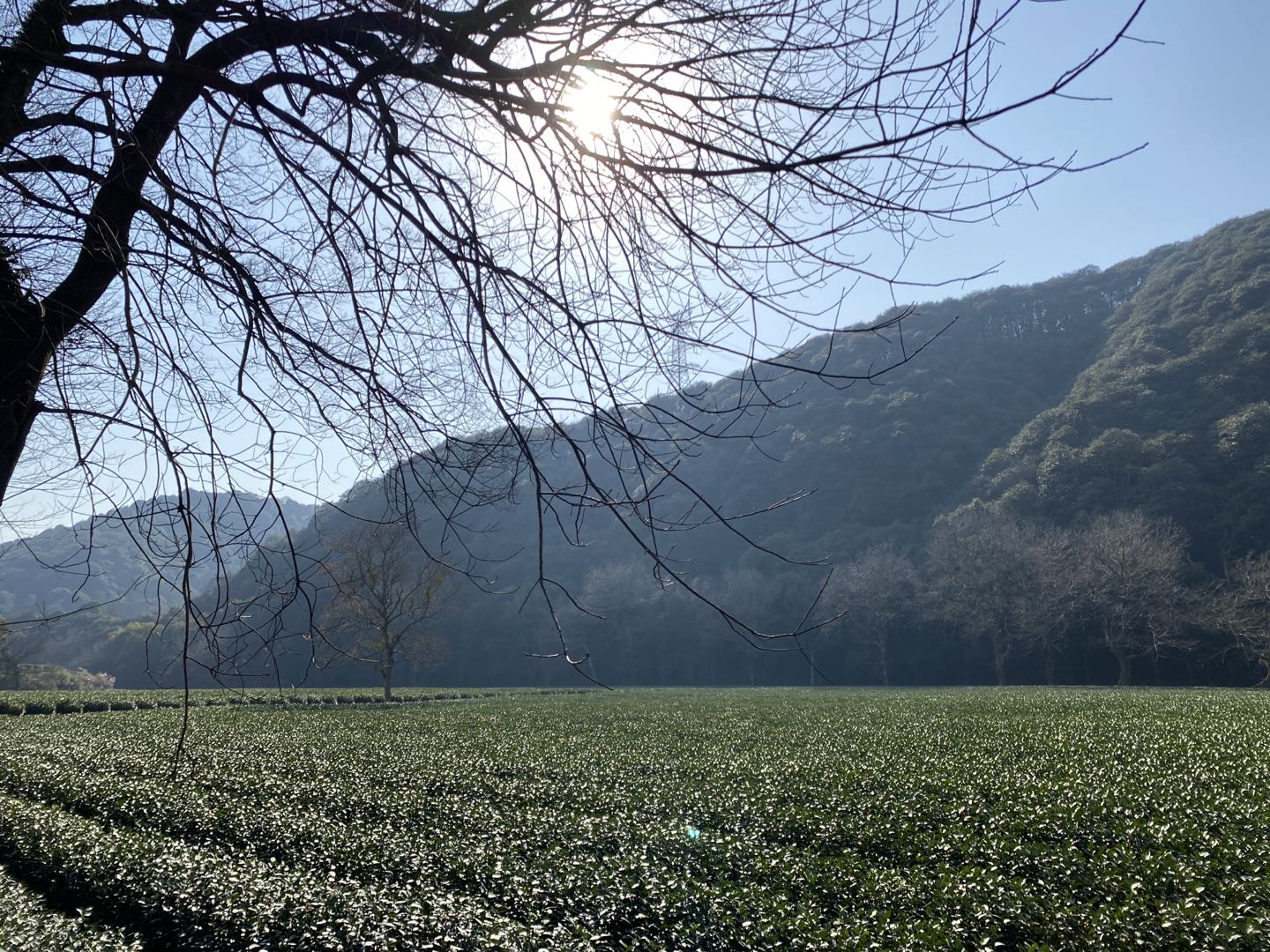
Once we look through the lens of tea households, tea stops being only something in the cup. It first becomes a crop rooted in a specific mountain landscape, produced by specific households, and tied to specific obligations of tax, delivery, and control. What the state saw was not only tea leaves, but the people attached to them.
tea householdsgarden householdstea monopolytea lawtea history
1. Why do tea households deserve an article of their own? Because the real question is not who grew tea, but who was identified by the state through tea
Many institutional terms shrink automatically in modern reading. “Tea household” is a perfect example. The easiest explanation is simply: a household that grew tea. That catches the surface fact, but not the real point. In any tea-producing society, of course there are tea growers. What matters historically is not whether such people existed, but why a stable and repeatedly documented category of tea-producing households emerged at all. Once the producers of a commodity are separately named, separately registered, or separately burdened with duties tied to that commodity, the state has already stopped treating it as an ordinary agricultural yield. It has become something worth organizing in a special way.
This is important because it shows the state reaching beyond the external taxation of trade and toward the production side itself. In other words, the state was not only asking how much tax could be taken after tea entered circulation. It was also asking which people were responsible for producing tea, whether those people should bear obligations different from ordinary farmers, and whether certain mountain plots and certain households could be held inside a predictable supply structure. Tea households deserve separate attention because they show that tea governance did not happen only on roads, at checkpoints, in markets, or in tea offices. It also happened inside mountain production zones, within household registration, and inside the rhythms of everyday labor.
From that angle, tea households are one of the clearest signs that tea had become institutionalized. If tea had remained just another upland product, the state could have taxed it at sale. Only when tea became a stable source of revenue, a managed commodity, a frontier supply resource, or a tribute good did the state begin to care about the producers themselves as a separately visible class. The tea household is exactly the result of that shift.
2. What exactly was a tea household? Not just an occupational label, but a household whose production, tax, and delivery obligations were bundled together
Public Chinese references usually define tea households as households that grew tea, also called “garden households,” and in some contexts they may refer more broadly to people engaged in tea work. But in historical institutional terms, the category needs to be understood more precisely. A tea household was not simply the premodern equivalent of a modern farmer whose main income happened to come from tea. It was closer to a specifically recognized status tied to tea production. These households were visible not only because they cultivated tea, but because tea taxation, tea delivery, tribute obligations, monopoly arrangements, or licensed circulation were tied to them.
In that sense, the term contains not only labor division but institutional division. In an ordinary farming world, one household might grow grain, vegetables, mulberry, or fuel crops without the state feeling any need to redefine its identity around each one. Tea was different in many periods. A tea household might owe tea taxes, might have to deliver tea to official channels or licensed merchants, might be restricted from private sale, and in some periods might bear fixed obligations connected to tribute tea or frontier tea supply. So a tea household was not just “a household that produced tea.” It was “a household required to produce and deliver tea under a recognized system.”
This also explains why historical materials often place tea households and garden households together. “Garden household” emphasizes their tie to tea gardens and fixed producing landscapes. “Tea household” emphasizes their place as a separately recognized social unit. The two often overlapped, but the key historical fact is that tea production became stably tied to certain people, certain plots, and certain chains of obligation. The state did not only want tea in the abstract. It wanted to know who produced it, who owed it, and through which order it should move outward.
3. Why did more clearly defined tea and garden households emerge from the Tang-Song period onward? Because tea had become important enough to separate its producers from ordinary farmers
Public references often note that as tea production expanded in the Tang and Song periods, specialized tea-producing households appeared and were called tea households or garden households. This sounds like a simple piece of background history, but it is actually crucial. It means that tea had already moved beyond scattered mountain gathering, local consumption, or small-scale exchange. It had become large enough, steady enough, and regionally concentrated enough to support distinct production zones, stable labor, and predictable extraction. Only under those conditions does it make sense for state and local society to recognize a producing group separately.
Behind this lies a larger transformation: tea was moving from being “a mountain product people drink” to being “a commodity that can be continuously organized.” Once tea entered that stage, its values began to stack. It could be taxed. It could supply court or official use. It could generate revenue through monopoly or licensed sale. It could support broader frontier arrangements. And once the state saw those possibilities, the people who produced tea in the mountains became easier to classify and organize. The emergence of tea or garden households shows that tea production was no longer merely a matter of natural growth and private exchange. It had become something that state and local authorities wanted to identify, record, and structure.
For that reason, the tea household matters not only to agricultural history. It reminds us that tea history cannot be reduced to brewing history, object history, or route history. The state did not wait until tea left the mountains to become interested in it. In many cases, it wanted to know already, inside the production zone, which households, which gardens, and which obligations were tied to the crop.
Once tea became stable enough, large enough, and valuable enough to tax and organize, it stopped being only a scattered mountain produce. It began to generate a whole way of identifying gardens, households, and delivery duties. The emergence of tea households is one sign that this step had already happened.
4. Why are tea households in monopoly regions especially important? Because in those regions even the producer’s right to dispose of tea could be taken away
One of the most important points about tea households appears again and again in public materials: in regions operating under tea monopoly systems, garden households often did not possess full control over the tea they produced. They might have to pay tea taxes in tea itself and then sell the remainder only to official channels or specially licensed merchants, without the freedom to dispose of it privately. This may sound like a technical detail, but it is a very heavy one. It means that in some historical settings tea households were not normal market producers. They were more like front-end suppliers embedded inside the state’s tea machinery.
That is to say, the tea produced by these households did not automatically belong to a private world of free disposal. At least in monopoly regions, that tea entered the institutional world first: taxes had to be considered first, authorized buyers first, and official pathways first. The producer’s reduced control over self-produced tea shows that the state was not merely taking a cut from circulation. It was entering the production relationship itself and helping define what counted as lawful tea cargo.
From the perspective of institutional history, this is a decisive step. Once a commodity reaches the point where even its producer cannot freely dispose of it, it is no longer just a heavily taxed good. It has become a managed good. The tea household here is not simply a labor identity. It is a constrained supply identity. And once that is understood, it becomes much easier to see why tea monopoly policy, tea law, and the tea-yin system pressed downward all the way to gardens and households. Only by doing so could the state ensure that the tea to be taxed, licensed, and circulated was still the same tea and had not already leaked away at the point of production.
5. Why must tea households be understood together with tea licenses? Because one governs the production side, while the other governs the circulation side
If the tea-yin system answered the question of who had the right to take tea away and move it lawfully, then tea households answered the earlier question: who was responsible for producing tea and placing it into that lawful system of movement? The two should not be confused, but they also cannot be pulled too far apart. If we speak only about tea licenses and not tea households, it becomes easy to imagine the state merely issuing permits to merchants. If we speak only about tea households and not licenses, it becomes easy to imagine the state merely taxing the mountain producers. In reality, the two form a chain.
Public materials often describe a sequence in which merchants first secured a tea license through payment and procedure, then used it to purchase tea from garden or tea households, after which the tea would be inspected, sealed, and moved onward according to specified time, quantity, and place. What matters here is not only the order of procedure. What matters is how the state locked the front end and back end together. At the front end stood identifiable tea and garden households. At the back end stood verifiable licenses and transport routes. In between stood inspection grounds, seals, and checks that turned tea from a mountain product into a recognized institutional commodity.
That is why tea households cannot be written merely as rural social history or the history of tea growers’ daily life. They certainly belong to mountain labor, harvest rhythm, and picking seasons. But they also belong to the larger system. Tea households were defined on the production side; tea licenses were defined on the circulation side; and together they show that the state was not satisfied with seeing tea only once it had entered the market. It wanted tea under a visible order from the point of production onward.
6. Why did the Ming register tea households more tightly and explicitly? Because the state wanted not only tea revenue, but stable frontier tea supply
One of the most important lines in the history of tea households belongs to the Ming. Public references note that in the early Ming, in order to control the tea-horse exchange system, the state grouped tea-producing farmers in places such as Sichuan and southern Shaanxi into registered tea households, exempted them from some other labor duties, and assigned them to tea cultivation and official delivery obligations. On the surface this can look like a form of professional specialization with partial privilege: you focus on tea, and some other burdens are reduced. But the real institutional center was not privilege. It was binding. These households were being pulled out of the general fiscal and labor order and inserted into another, more specialized obligation. They were no longer just ordinary farmers. They were fixed nodes in a frontier tea supply system.
This is especially important because it shows that Ming interest in tea households was not only about easier taxation. It was about securing specific sources of tea more reliably. Ming frontier tea, tea-horse exchange, and border policy in the northwest and southwest were deeply entangled. The state’s central concern was not whether people somewhere were growing tea. It was whether tea meant for a particular official supply structure would be absorbed elsewhere before it entered that structure. Once tea households were grouped, registered, and bound to delivery duties, certain mountains, certain labor, and certain volumes could be more firmly locked into frontier tea arrangements.
This is also why exemption from some other corvée should not be read too quickly as a benefit. It functioned more like an exchange. The state removed some duties in order to make tea production itself more specialized and more continuous for official purposes. In that sense, the tea household in Ming practice represented not freer specialization, but more precisely allocated specialization. You were allowed to focus on tea because the state had already decided it needed you to do so.
What we know best today is tea as an object of consumption. The Ming tea-household system shows another side that mattered just as much: tea as a supply resource whose stability depended on binding specific producing households to specific obligations.
7. Why could temples and religious institutions also count as tea households? Because what mattered was who controlled the tea garden, not only who picked the leaves by hand
Public Chinese materials also preserve a very revealing point: in places such as Fujian, “tea households” did not refer only to individual peasant families. Temples and Daoist institutions could also be registered as tea households. This deserves real attention. It shows that the category was not purely based on the physical act of tea picking. Not everyone standing in a tea garden with a basket necessarily became a tea household. More important was who possessed or controlled the tea garden, who bore the institutional responsibilities attached to it, and who could be held answerable for the tea associated with that plot.
This further reveals the institutional nature of the category. What the state cared about was not only who physically harvested the tea, but who organized the land, who owed the deliveries, who could be pursued if obligations were unmet, and on which social unit taxation and control should rest. Once temples could appear as tea households, it becomes obvious that the concept was not simply an agrarian labor label. It was a unit of production responsibility. It could attach to persons, or to institutions that owned gardens and organized output.
That is one reason historical tea households differ from the modern image of the small tea farmer. Modern discussion tends to focus on the grower’s livelihood, price, branding, and market opportunity. The historical category placed greater weight on gardens, output, registration, delivery, and liability. A tea household was first a production-responsibility unit seen by the state, and only second a human grower inside a social world. Once that is clear, tea households stop looking like an overly romantic image of mountain peasants and begin to reveal a harder chain of property, duty, and taxation.
8. Why is it still worth rewriting the history of tea households today? Because they correct our habit of writing tea history as if there were tea but no tea growers
A great deal of tea writing today naturally revolves around products, brands, mountains, craft, objects, and scenes of consumption. Which tea tastes better, which producing zone has the stronger story, which technique feels more “traditional” — all of that is valid. But if Chinese tea history ends there, it becomes too light, as if tea simply grew in the mountains and then naturally flowed into markets and cups. Tea households matter now because they remind us that tea never entered history on its own. It was always organized through specific households, specific plots, and specific relations of duty.
More deeply, tea households remind us that “origin” is not only a geographic concept. It is also an institutional one. Today origin is easily discussed in terms of terroir, elevation, soil, and cultivar. But in many historical periods origin also meant a place that could be registered, taxed, assigned delivery duties, and folded into official supply order. Without tea households, origin risks becoming only landscape and aesthetics. Once tea households return, origin becomes again a real field of labor, obligation, pressure, and management.
This does not make tea history dull. It makes it whole. A mature tea history should not only tell us which tea was admired, which objects were beautiful, or which roads became famous. It should also tell us who grew the tea, how much of that tea did not automatically belong to a free market, and why some households were specially recorded, taxed, and constrained because of it. Tea households are one of the most useful clues for seeing that tea history happened not only on the tea table, but also inside household registers, tea gardens, and official delivery structures.
9. Conclusion: tea households tell us not only that people grew tea, but that tea became important enough to pull its producers into the state’s field of governance
If this article has to be reduced to one short conclusion, it would be this: the importance of tea households lies not in proving that premodern China had specialized tea growers, but in proving that tea had become important enough for the state to regulate not only how tea was sold, transported, and taxed, but also who grew it, who delivered it, and who bore responsibility for the land that produced it. Once producers themselves were separately identified, tea had already ceased to be just another agricultural crop. It had entered a deeper machinery of finance, circulation, and governance.
That is exactly why tea households have to be read together with tea law, the tea-yin system, tea monopoly policy, and tea-horse law. Tea law defined the boundaries, tea licenses verified circulation, monopoly policy secured revenue and control, tea-horse law pulled some tea into frontier policy, and tea households show that none of these systems floated above society. In the end, they all pressed down onto actual households and actual mountain gardens. Without tea households, we may understand how the state governed tea. We may still miss how far downward that governance actually went. Once we understand tea households, we see more clearly that tea mattered not only because it was worth drinking, but because it was long judged worth governing together with the people who produced it.
Source references: synthesized from public Chinese reference materials on “tea households,” “garden households,” and related tea institutions, especially the lines noting the emergence of specialized tea-producing households in the Tang-Song period, the separate registration of tea farmers as garden households, the requirement in monopoly regions that they pay tea taxes and sell remaining tea only through official or specially licensed channels, the continuation of tea-license systems in later periods, the early Ming grouping of some producing populations into registered tea households for official supply purposes, and the registration of temples or religious institutions as tea households in parts of Fujian. These lines are read together with the site’s existing essays on tea law, tea licenses, tea monopoly policy, and tea-horse institutions. The emphasis here is on explaining the historical meaning of tea households as an institutional status rather than reconstructing every dynastic regulation line by line.