Why Border Tea Was More Than “Tea Sold to the Frontier”: from tea-horse exchange and border-sale systems to how the state made tea part of frontier order
Published: · Updated:
When people speak of “border tea” today, the first explanation is usually very simple: tea sold to frontier regions, or more specifically tea sent into highlands, pastoral zones, Tibetan areas, or Inner Asian markets. That is not wrong, but it is too thin. It reduces border tea to a sales-destination label, as if any tea that happened to reach the frontier would naturally become border tea. What really deserves explanation is not merely where tea ended up, but why some teas were long organized by the state, by transport routes, by frontier markets, and by borderland daily life into a special category of stable supply goods for frontier use. Once the question is asked that way, border tea stops being only a geographic term and becomes an institutional one.
In other words, the most important thing about border tea is not simply that it was consumed in frontier regions, but that it was made, moved, regulated, and sold as tea specifically suited to sustained frontier demand. It was often not the tea best suited to fine connoisseurship in inland aesthetic terms, nor the tea most admired in mainstream elite taste. But it had to be stable, durable in transport, convenient to compress, count, store, and dispatch in bulk. It had to be capable of entering tea-horse exchange, border-sale systems, tea-license arrangements, and other forms of regulation, while also fitting into the real and repeated rhythms of life in the frontier. Only when tea satisfied all of those conditions did it stop being just “tea” and become “border tea.”
That is exactly what this article is trying to explain: why border tea was not a naturally given tea name, but a historical category jointly shaped by transport conditions, frontier demand, market structure, and state governance; why it is always entangled with topics such as the tea-horse law, the Tea Horse Bureau, brick tea and compressed tea, and processing hubs such as Ya’an; and why, if border tea is not explained on its own, many accounts of how tea entered the history of China’s frontiers, institutions, and transport systems will remain missing a crucial layer.
What mattered most about border tea was not simply that it was sold to frontier regions. Once tea had to enter a long-term, stable, organized supply system for borderland life, it had to be remade into a commodity form suited to distance, storage, allocation, and institutional control.
1. Why should “border tea” not be understood only as “tea sold to the frontier”? Because it really points to an institutional tea category built around frontier supply
Many historical terms, once they enter everyday language, are quickly flattened into one memorable sentence. Border tea is one of them. The most common explanation is simply that it means tea sold to the frontier. That does capture the idea of frontier destination, but destination alone is not enough. Not every tea that reached a frontier market was historically treated as border tea. On the contrary, only teas repeatedly absorbed into a specific supply structure, transport logic, and consumption pattern truly formed the category.
That means border tea was not just the result of where tea happened to go. It was a supply identity produced through repeated organization. It implies that such tea was not merely sent to frontier regions occasionally, but processed, classified, compressed, moved, and regulated in relation to frontier demand from the start. Once that happened, border tea was no longer simply tea that ended up in the borderlands. It was tea organized for the borderlands.
That is why border tea deserves its own discussion. It reminds us that tea categories were not always defined only by origin, cultivar, processing, or taste. Sometimes tea acquired another, harder identity because it entered a special transport structure, market structure, and state structure. Border tea was that kind of identity. It was not merely a sensory classification. It was also a circulation classification, a governance classification, and a frontier-supply classification.
2. Why did border tea emerge as a distinct category? Because frontier regions needed not occasional famous teas but tea that could be supplied, transported, stored, and distributed continuously
To understand why border tea emerged as its own category, we first have to recognize that frontier demand structures were not identical to inland ones. In many highland, pastoral, and frontier societies, tea was not consumed primarily in the literati mode of delicate, occasional clear drinking. It became part of daily diet, hospitality, labor rhythm, and bodily habit. Once tea enters that level of life, the central questions are no longer simply whether it tastes refined, but whether it can arrive steadily, be stored over time, be supplied in repeated batches, and fit local ways of drinking.
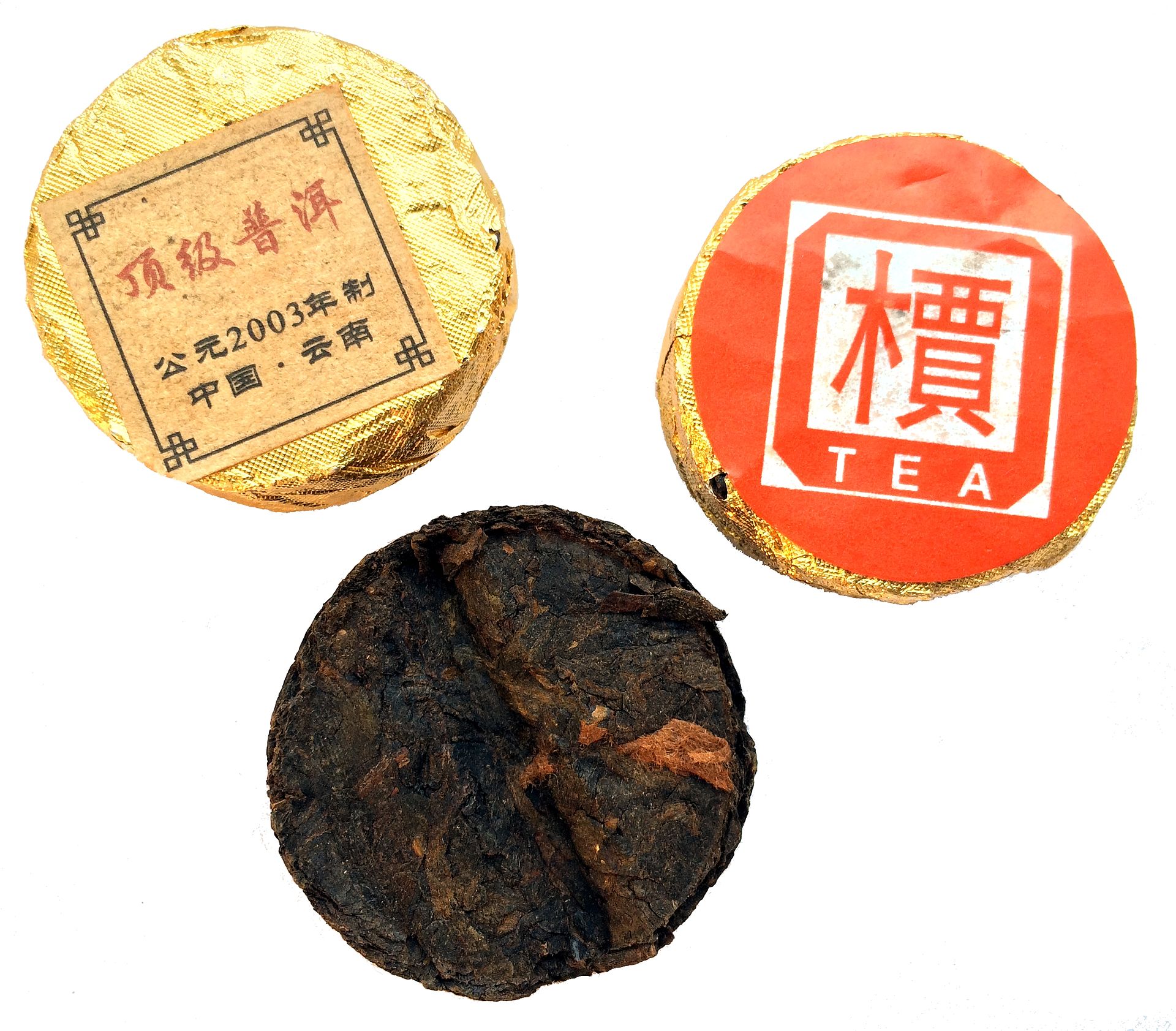
That directly reshapes the commodity form of tea itself. Tea needed in the frontier had to be transportable and supply-efficient before it could be aesthetically prestigious. It had to withstand long-distance movement, repeated loading and unloading, and intermediate storage. Ideally it would also be easy to compress, pack, count, and ship in bulk. That is why border tea is so often linked to compressed forms such as brick tea and other shapes suited to distance. This is not to say border tea had only one craft or one appearance. It is to say that what made border tea into border tea was its fitness for durable supply.
So border tea was not primarily an aesthetic category. It was a supply category. It answered first the question of how frontier regions could continue to receive tea, and only afterward the question of how inland taste might rank it. Once that order was established, border tea could move from ordinary tea within local production into a clearly bounded historical category of its own.
The key step in the history of border tea was not simply plucking leaves in the mountains, but reorganizing tea into more stable units that could be counted, moved, and redistributed into frontier supply systems.
3. Why is border tea always linked to tea-horse exchange? Because once tea entered systems of horse procurement and frontier governance, it ceased to be only a consumption good and became a frontier resource
The term border tea became historically harder and more specific largely because it was repeatedly embedded in tea-horse exchange. Once tea was used to obtain horses, it was automatically drawn into military, fiscal, and frontier-governance vision. Horses were not ordinary goods. They were strategic resources tied to mobility, cavalry, and defense. Once tea helped secure them, tea itself was elevated into institutional significance.
In that structure, border tea was not merely tea consumed in frontier society. It was tea that could be allocated into frontier regions and could perform institutional work inside frontier exchange. It had to be stable, controllable, and suitable for official or semi-official supply chains. In other words, border tea did not become important only after it was consumed in the borderlands. It acquired a distinct historical role the moment it was selected into such systems.
This also helps explain why “border tea” and “border-sale tea” often overlap without being identical. Border-sale tea emphasizes destination and target market. Border tea more easily carries institutional and historical depth. The former sounds closer to a trade term; the latter closer to a historical one. They are obviously related, but if we speak only of border sale and not the institutionalization behind border tea, the issue is easily reduced to market distribution and loses sight of why tea repeatedly entered the center of frontier governance and frontier trade.
4. Why is border tea always tied to tea-horse law, tea licenses, and anti-smuggling rules? Because without circulation control there could be no stable border tea
Once tea was recognized as a long-term need in frontier life, and once the state also cared intensely about where it went, border tea could not be left entirely to spontaneous market supply. The logic is straightforward. Frontier demand was stable, and tea was a transportable, storable, bulk-organizable commodity. Without institutional boundaries, private merchants could easily bypass official or designated channels. For the state, that was not only a tax problem. It was a problem of frontier resource control.
That is why border tea almost always appears together with tea licenses, tea monopoly arrangements, anti-smuggling restrictions, offices, checkpoints, and route controls. The deepest logic is this: the state had to define which teas could legally move to frontier regions, who was qualified to trade them, who could transport them, which routes were legitimate, and which private flows had to be suppressed. Otherwise border tea would lose its institutional boundary and dissolve back into undifferentiated commodity circulation.
So border tea was never a category formed by market habit alone. It was also a category shaped by rules. The state wanted tea to enter frontier regions, support frontier supply, and stabilize frontier exchange, but it also wanted to prevent tea flows from slipping entirely beyond supervision. Border tea became border tea not only because it moved outward, but because its legal routes, commercial qualifications, and supply paths were repeatedly defined.
Border tea still looked like tea on the surface, but behind it stood a whole structure of licensing, transport, taxation, and frontier governance. The real issue was not only tea drinking, but who was allowed to receive tea and through which channels.
5. Why is border tea repeatedly associated with Ya’an, Sichuan, and other route nodes? Because border tea was not an abstract concept; it depended on concrete processing and distribution hubs
No long-lasting supply system can survive as a mere concept. It needs real nodes. Border tea was no exception. Places such as Ya’an mattered not only because they sat close to frontier corridors, but because they could simultaneously receive raw material, process it, compress it, warehouse it, dispatch it, and connect it to institutional arrangements. Border tea had to be reorganized through such nodes before it could enter frontier circulation as stable batches.
That means the making of border tea was never as simple as tea from a producing area naturally flowing outward. It usually had to be re-sorted, blended, compressed, packed, and aggregated at intermediate centers so that it could become a commodity better suited to frontier routes and frontier use. That is why border tea is always tied to specific cities, firms, workshops, route systems, and storage arrangements. It was not a concept existing only at the final point of consumption. It was the outcome of organization across the entire path from raw material to frontier life.
This also marks a deep difference between border tea and many ordinary famous local teas. Famous local teas are often discussed through origin and flavor. Border tea is better understood through the question of how tea was made into a durable good for frontier supply. Once that angle is adopted, many places once treated as minor background suddenly become central, because they were not scenery. They were the actual workbenches on which border tea was made possible.
6. Why is border tea not only a trade-history issue but also a frontier-history and daily-life issue? Because it reshaped both supply order and consumption order
Border tea deserves its own treatment partly because it naturally crosses two scales. On one side, it is a problem of trade and supply. On the other, it is a problem of everyday life in frontier regions. Once border tea entered certain places steadily over long periods, it ceased to be only an outside commodity and gradually became part of local diet, hospitality, and daily routine. At that point border tea was no longer merely an object of trade. It was part of life itself.
This matters enormously. Many histories of frontier tea still emphasize either transport legend or state regulation, as if border tea were only an arrow on a route map or a name in official paperwork. In reality, its historical weight comes precisely from the fact that one end of it connected to institutions while the other connected to life. The state kept setting rules because frontier societies really did need tea over the long term. Frontier habits deepened partly because states and trade routes really did keep sending tea in. Supply and consumption were not separate here. They formed each other.
That is why border tea cannot be written only as institutional history, but neither can it be written only as a story of custom. It is one of the rare tea-history themes through which we can see both how the state classified, controlled, and allocated tea, and how tea was actually drunk into ordinary life. Precisely because border tea carries both layers, it is one of the key ways to pull Chinese tea history back from pure aesthetic history into social and frontier history.
7. Why is border tea still worth revisiting now? Because it corrects our habit of writing tea history too lightly, too beautifully, and with too little state in view
The easiest tea writing today focuses on famous teas, vessels, space, brewing, aesthetics, and lifestyle. None of that is wrong. But if that becomes the whole story, Chinese tea history starts to resemble a de-institutionalized cultural landscape film. Tea seems always to rest quietly in cups, on tables, in tea rooms, and in mountain scenery, while the ways it entered frontier life, taxation, transport, and governance disappear from view. The value of border tea as a topic is that it pulls that hidden reality back into the frame.
It reminds us that Chinese tea culture never belonged only to Jiangnan literati or urban tasting practice. It also belonged to frontier towns, relay roads, mountain passes, warehouses, wholesale systems, and long-distance transport. Tea can be written into poetry, but also into law. It can enter tea tables, but also frontier policy. It can be a matter of flavor, but also a matter of supply. Once that layer is restored, many themes that seem separate begin to reconnect: why brick tea mattered, why tea licenses mattered, why the tea-horse law mattered, why Ya’an mattered, and why the Tea Horse Road was never only a scenic route.
So rewriting border tea today is not about making tea dull. It is about making tea complete. Without this line of inquiry, the part of Chinese tea history that concerns frontiers, institutions, transport, and long-term supply will always remain strangely thin. Once border tea is properly explained, the skeleton connecting many scattered articles becomes much clearer.
8. Conclusion: border tea did not simply mean “tea drunk in frontier regions,” but a historical category formed around frontier supply, frontier trade order, and state governance
If this article must be reduced to one short conclusion, it would be this: what mattered about border tea was not merely that it was tea sold to frontier regions, but that once tea entered long-term frontier supply, tea-horse exchange, border-sale allocation, and state oversight, it was transformed from an ordinary tea type into an institutional commodity category. That category included not only origin and destination, but also processing form, transport conditions, storage logic, consumption structure, commercial qualification, and governance boundaries.
So when we speak of border tea today, it is better not to treat it merely as one more name in a regional product list. It is better to reopen it as a question: why did the state feel that some teas could not simply circulate freely through ordinary market channels, but had to be continually made into specialized supply goods suitable for frontier demand, long-distance movement, and official control? Answer that carefully, and Chinese tea history immediately becomes much thicker.
Source note: this article synthesizes the site’s existing lines on tea-horse exchange, tea-horse law, the Tea Horse Bureau, brick tea, and Ya’an’s border-tea processing role. Its emphasis is the historical logic of “border tea” as an institutional category rather than a catalogue of every dynastic local border-tea name. The core factual frame used here is the long-term tea demand of frontier societies, the transport and storage conditions of long-distance circulation, the state’s repeated regulation of tea flows and trading qualifications, and the durable place of border tea within tea-horse and border-sale systems.